1. Introduction to Stellar
In 2014, Ripple co-founder Jed McCaleb decided to leave the team due to differences in development philosophy and started a new venture by founding the Stellar project. If Ethereum was created to build a “world computer,” Stellar’s vision is more focused. It aims to build an open, global financial network that allows money to move between different countries and institutions at low cost and within seconds, just like email. Drawing on his extensive experience in decentralized systems, Jed positioned Stellar as a “financial middleware layer” connecting banks, payment systems, and everyday users. In its early days, Stellar received funding support from well-known payment companies such as Stripe, and the non-profit Stellar Development Foundation (SDF) was established to lead development.
Stellar’s native token is Stellar Lumens (XLM), which is mainly used to pay network transaction fees and serve as a bridge asset during conversions between different assets. Unlike Ethereum, which pursues a complex decentralized application ecosystem, Stellar maintained a relatively streamlined functional design for a long period of time. Although its original codebase was initially derived from Ripple, it was later completely rewritten and evolved into a totally different consensus mechanism. Over the decade since its launch, Stellar has indeed secured a place in cross-border remittances and asset tokenization, especially by making meaningful attempts to improve financial inclusion in developing countries.
2. Stellar: The SCP Consensus Mechanism
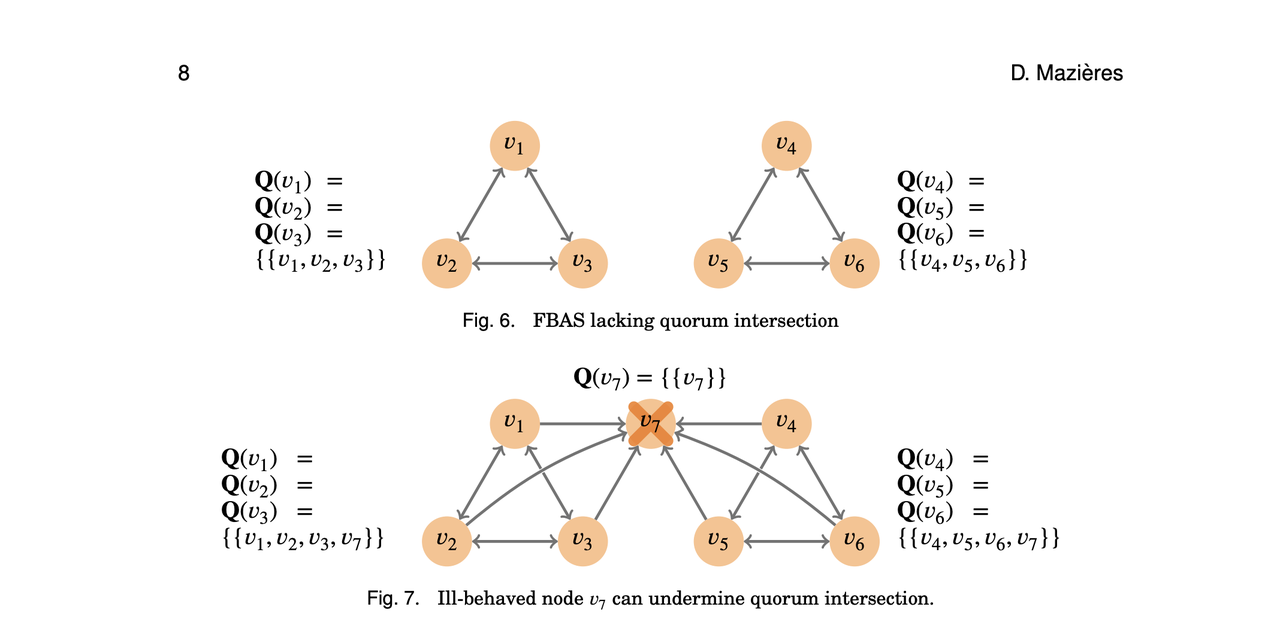
Stellar’s most important technical breakthrough lies in its original Stellar Consensus Protocol. Unlike Bitcoin’s PoW (Proof of Work), which requires massive electricity consumption, and unlike Ethereum’s current PoS (Proof of Stake), which relies on staked assets, SCP is a new mechanism based on Federated Byzantine Agreement (FBA). In the Stellar network, nodes do not compete with computational power to validate transactions. Instead, they reach consensus by selecting a group of trusted nodes, known as quorum slices. As long as enough trust circles overlap across the network, the entire network can reach agreement on the legitimacy of a transaction within a few seconds.
This mechanism gives Stellar very high transaction efficiency and extremely low costs. A transfer on the Stellar network usually takes only 3 to 5 seconds to confirm, and the fee is negligible, making it an ideal tool for small payments and cross-border transfers. In addition, Stellar was designed from the start with built-in asset issuance and decentralized trading functions. Users can issue on-chain tokens representing fiat currencies such as the US dollar or euro, or other assets, while the network’s built-in order book can automatically match trades between different assets. This path payment function allows the sender to pay in one currency while the recipient automatically receives another, with the system finding the best conversion path in the background.
3. Stellar Lumens: Economic Model and Use Cases
Stellar Lumens (XLM) plays a dual role in the network. First, it serves as “fuel” to prevent spam. Second, it acts as a bridge asset for cross-border transactions. To prevent malicious users from congesting the network by initiating large numbers of invalid transactions, Stellar requires every transaction to pay a very small amount of XLM as a fee, with the base fee being only 0.00001 XLM, and each account must also hold a small amount of XLM as a minimum balance. This design ensures that network resources are not abused. As a bridge asset, when two illiquid tokens lack a direct trading pair, XLM can act as an intermediary to facilitate the flow of value.
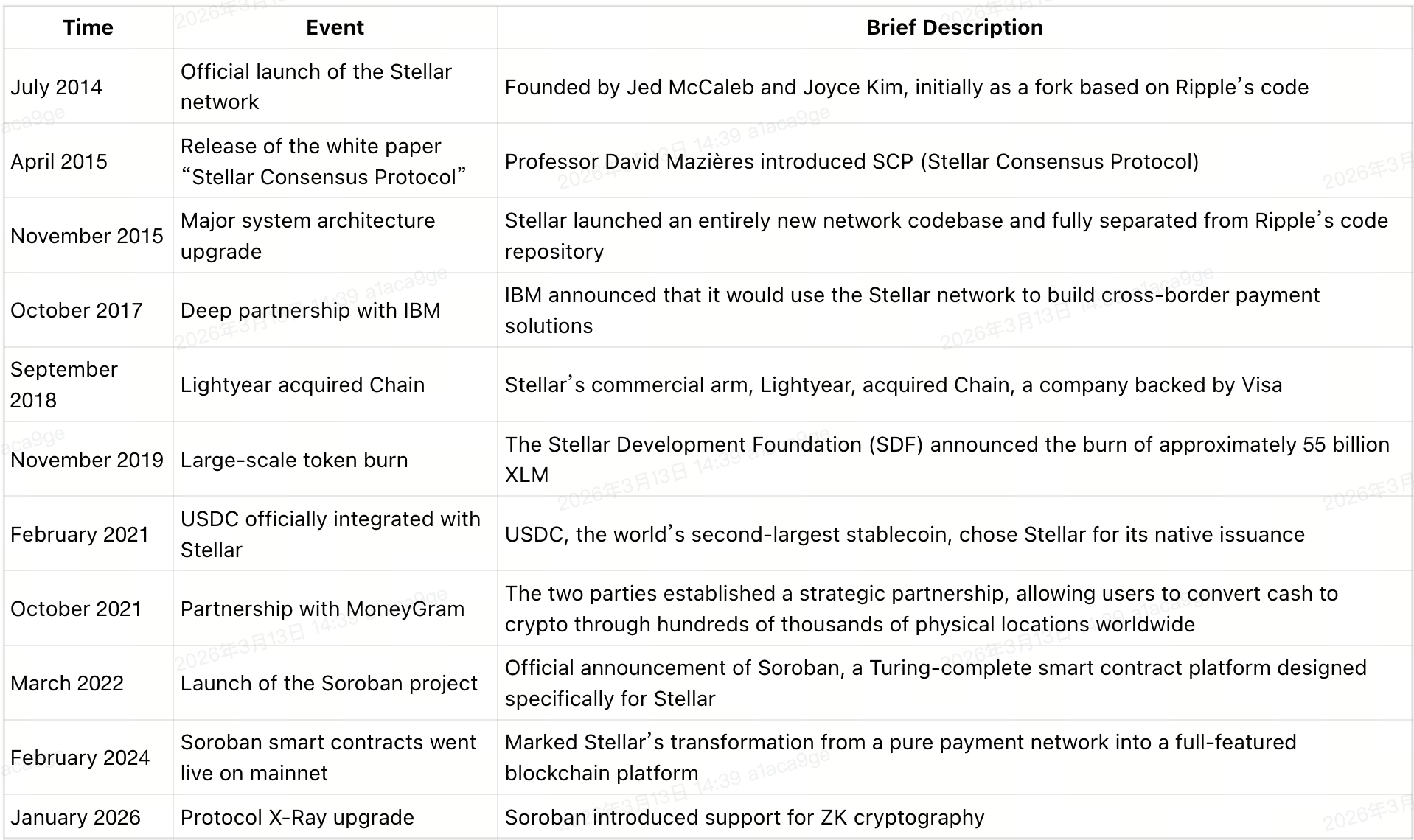
In terms of supply, XLM’s design has gone through major adjustments. Stellar originally had a 1% annual inflation mechanism, but in 2019 the community voted to remove it because it did not promote ecosystem growth as expected. The Stellar Development Foundation burned around 55 billion XLM, reducing total supply from 100 billion to below 50 billion. At present, more than half of the total supply is in circulation, while the remaining portion is held by the foundation for marketing, operational support, and ecosystem grants. This highly concentrated supply structure is also one of the reasons Stellar is often questioned over its level of decentralization.
4. Stellar Development Foundation
The Stellar Development Foundation (SDF) is the core driving force behind the Stellar ecosystem. Its role is similar to that of the Ethereum Foundation, but it operates in a more centralized manner in terms of administration and decision-making. Under the leadership of current CEO Denelle Dixon, SDF has maintained active communication with regulators in various countries and is committed to promoting blockchain applications within a compliant framework. SDF has invested substantial resources into global partnerships and hackathons, attempting to attract developers to build applications on Soroban and supporting fintech companies using Stellar technology through equity investments.
Unlike the Ethereum Foundation, which emphasizes technical research, SDF’s work leans more toward enterprise-style market expansion. It frequently appears at political and business events such as the World Economic Forum, attempting to persuade governments to use the Stellar network to issue central bank digital currencies (CBDCs). While this strategy has helped Stellar build a strong reputation in compliance and enterprise-grade applications, crypto purists who emphasize “code is law” and full decentralization sometimes see Stellar’s development path as overly dependent on centralized entities.
5. How to Buy Stellar Lumens on Bitunix Exchange
At present, the new supply of Stellar Lumens mainly comes from the orderly distribution by the foundation. For ordinary investors, XLM is already listed on the world’s major mainstream exchanges. Because Stellar itself offers very fast transfer speeds and extremely low fees, many users choose to convert their assets into XLM when moving funds between exchanges, which has also become a distinctive use case for XLM in the market.
By purchasing Stellar Lumens through centralized cryptocurrency exchanges such as Bitunix, the platform acts as a trusted trading intermediary and supports users in directly purchasing crypto assets with fiat currency or stablecoins, greatly lowering the barrier to entry. The Bitunix platform provides a convenient “One-Click Buy Crypto” feature and supports multiple payment channels such as credit cards, debit cards, SEPA transfers, and MoonPay, allowing users to complete the asset purchase process quickly. At the same time, Bitunix offers a relatively user-friendly fee structure, giving long-term investors and active traders certain cost advantages. In terms of asset security, the platform protects user funds through the separation of hot and cold wallets, multi-signature mechanisms, and real-time risk control systems, while also regularly disclosing Proof of Reserves to ensure transparency and verifiability of platform assets. Before first use, users are still required to complete account registration and identity verification procedures to comply with global anti-money laundering and counter-terrorist financing regulations.
6. Timeline of Major Stellar Events
Disclaimer
This article is not intended to provide: (i) investment advice or investment recommendations; (ii) an offer or solicitation to buy, sell, or hold digital assets; or (iii) financial, accounting, legal, or tax advice. Digital assets (including stablecoins and NFTs) involve high risk and may be highly volatile. You should carefully consider whether trading or holding digital assets is suitable for you based on your financial situation. For your specific circumstances, consult your legal, tax, or investment professionals. You are responsible for understanding and complying with all applicable local laws and regulations.
About Bitunix
Bitunix is a global cryptocurrency derivatives exchange trusted by over 3 million users across more than 100 countries. At Bitunix, we are committed to providing a transparent, compliant, and secure trading environment for every user. Our platform features a fast registration process and a user-friendly verification system supported by mandatory KYC to ensure safety and compliance. With global standards of protection through Proof of Reserves (POR) and the Bitunix Care Fund, we prioritize user trust and fund security. The K-Line Ultra chart system delivers a seamless trading experience for both beginners and advanced traders, while leverage of up to 200x and deep liquidity make Bitunix one of the most dynamic platforms in the market.
Bitunix Global Accounts
X | Telegram Announcements | Telegram Global | CoinMarketCap | Instagram | Facebook | LinkedIn | Reddit | Medium