

Crypto markets move quickly, and futures markets can move even faster. For many users, the hardest part of trading is not finding ideas. It is executing them consistently, especially during volatility.
Crypto copy trading is designed to reduce the execution burden by letting you mirror a lead trader’s strategy automatically. On the Bitunix exchange, Bitunix copy trading is positioned as a real-time mirroring feature where the system attempts to replicate a lead trader’s orders in a follower’s account.
That convenience can be useful, but it also introduces a responsibility: your results depend heavily on how you configure your copy settings, how you choose traders, and how you manage risk. This guide covers the mechanics, key rules like settlement and profit sharing, common copy failures, and the risk framework you should apply before you start.
What Is Copy Trading in Crypto?
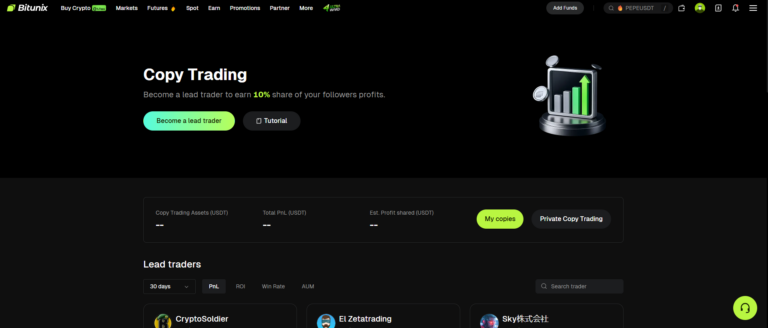
Copy trading in crypto is a feature that allows a follower to mirror the real-time trading actions of a lead trader. In practical terms, when the lead trader opens, reduces, or closes a position, the platform attempts to replicate those actions for followers according to the follower’s configured settings.
Lead Trader vs Follower
- Lead trader: A trader whose orders can be copied by followers.
- Follower: A user who subscribes to a lead trader and copies their orders based on selected copy settings.
Copy Trading Crypto vs Signals
Many beginners compare copy trading crypto with “signals.” Signals usually require manual action. Copy trading is execution-based, meaning the platform tries to place the trade for you automatically. This difference is important because automation changes how risk shows up. When trades can trigger automatically, you need stricter guardrails on allocation, margin usage, and limits.
The Most Important Reality Check
Copy trading can reduce decision fatigue, but it does not remove market risk. You are still exposed to volatility, liquidation mechanics, and execution differences. You should treat copy trading like a structured trading method, not a passive product.
How Crypto Copy Trading Works on the Bitunix Exchange
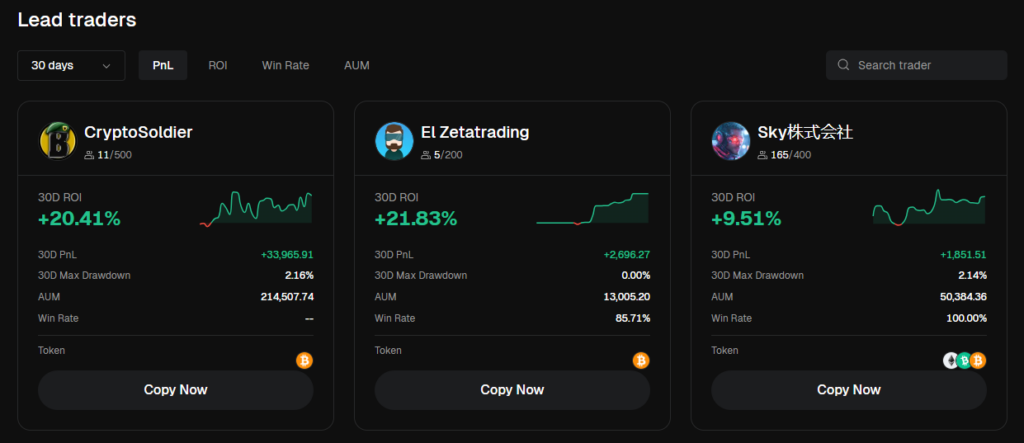
On the Bitunix exchange, the high-level workflow is straightforward: select a trader, configure copy mode and capital, then monitor performance.
Where You Select Traders: Copy Square
You typically select traders in the Copy Square and choose to copy them. Bitunix also allows a follower to follow multiple traders at the same time, up to a stated maximum.
Practical note: more traders does not always mean better diversification. It can also mean overlapping exposure and more complexity. If you are new, starting with one or two traders is often easier to manage.
Where You Monitor Results: My Copy
Bitunix provides a My Copy area where followers can monitor positions, trading history, and real-time profit and loss. This is where you validate whether the trader’s behavior matches what you expected when you started copying.
What Your Settings Control
Even with full automation, you still control critical variables:
- How position sizing is calculated (copy mode)
- How much capital you allocate to copying
- Whether you use advanced settings and caps
- How many traders you follow simultaneously
- How you respond to drawdowns and behavior changes
This is why crypto copy trading is not “set and forget.” The follower’s configuration and discipline can matter as much as the trader’s skill.
Crypto Futures Copy Trading: What You Are Actually Copying
Most modern copy trading activity in crypto is effectively crypto futures copy trading. That means you are copying contract positions rather than buying an asset on spot.
Position Lifecycle Matters More Than Predictions
In futures, your result is shaped by the entire lifecycle:
- Entry timing and price
- Position sizing and scaling
- Risk controls and liquidation distance
- Exit timing and order type
- Slippage and liquidity during fast moves
Two followers can copy the same lead trader and still get different results. Differences can occur because your account may not execute at the same price, your available margin may differ at the moment of copying, and your copy settings may scale exposure differently.
Timing Differences Are Real
In copy trading crypto, replication happens after the lead trader’s action is detected. In fast markets, a small delay can materially change entry price. This is why high-frequency strategies can be less “copy friendly” than they appear on a performance chart.
Copy Modes on Bitunix Copy Trading
Your copy mode is one of the most important decisions you make as a follower because it determines how a lead trader’s position size becomes your position size.
Fixed Amount Mode
In fixed amount mode, each copied order uses a fixed margin amount that you set.
Why many beginners prefer it
- Predictable exposure per copied trade
- Less risk of scaling too large if a trader suddenly increases size
- Easier to keep risk consistent while learning
Where it can be imperfect
- If a lead trader varies size intentionally, you may not mirror their exact risk per trade.
Fixed Ratio Mode
In fixed ratio mode, copied positions scale based on a margin ratio relationship between the follower and the lead trader.
Why some followers choose it
- Closer mirroring of a trader’s sizing behavior
- Can track the “intent” of scaling when the trader adds or reduces exposure
Where it becomes risky
- If the lead trader scales aggressively, your exposure may scale too unless you set strict caps and limits.
Professional rule: if you are new, prioritize predictability. Fixed amount mode is often the simplest foundation for crypto copy trading.
Profit Sharing and Weekly Settlement
Profit sharing is a core feature of many copy trading systems. The general idea is that when followers profit, lead traders receive a portion of those profits based on a profit-sharing ratio. When followers do not profit, profit sharing is typically not charged.
What Profit Sharing Means for Followers
Profit sharing impacts net performance. Even if a trader’s gross performance is strong, your net performance is what matters. You should evaluate results after normal trading fees and any profit-sharing deductions.
Settlement Timing and Review Rhythm
Bitunix copy trading describes a weekly settlement framework, with settlement scheduled weekly. As a follower, this is a useful anchor for your review process. Weekly review is more practical than checking constantly, and it aligns with how profit sharing cycles are commonly structured.
The Five Concepts That Decide Outcomes in Crypto Copy Trading
Most copy trading disappointment comes from misunderstanding these mechanics.
1. Margin
Margin is the collateral used to open and maintain a futures position. If the market moves against your position, your margin buffer shrinks.
Beginner takeaway: margin is not “extra money.” It is the risk buffer your position depends on.
2. Leverage
Leverage increases exposure relative to margin. Copy trading does not protect you from leverage risk. You are still exposed to how the lead trader uses leverage and how your copy settings scale trades.
Beginner takeaway: if you are learning, keep exposure conservative and do not treat high leverage as a feature you must use.
3. Slippage and Liquidity
Slippage is the difference between expected execution price and actual execution price. Slippage risk is higher in volatile conditions and in low-liquidity markets. In copy trading crypto, slippage can also cause execution failures if the trade cannot be placed within acceptable parameters.
Beginner takeaway: trader style matters. Scalping and fast entries are more sensitive to slippage.
4. Liquidation Risk
Liquidation can occur if margin becomes insufficient to meet requirements. In futures, liquidation risk increases as leverage increases and as volatility spikes.
Beginner takeaway: your goal is not to “avoid stop-losses.” Your goal is to use stop-loss discipline so liquidation does not become the default way trades end.
5. Behavior Drift
A trader’s approach can change. After a drawdown, some traders increase risk, change markets, or trade more aggressively. Followers often do not notice until losses accelerate.
Beginner takeaway: copy trading requires monitoring. You are following a human decision stream, not a fixed algorithm.
The Beginner Rule That Changes Everything: Allocation First, Trader Stats Second
Many users choose traders based on the highest ROI. A more reliable approach is to build a follower operating system.
A Clean Follower Process
- Decide your maximum weekly loss threshold for copy trading.
- Allocate across 2 to 4 traders with different styles instead of concentrating in one.
- Choose a copy mode that matches your risk tolerance. Fixed amount is usually easier for beginners.
- Review weekly and adjust only when you have clear evidence, not emotions.
A Simple Trader Scorecard You Can Use
Use consistent criteria rather than chasing leaderboards:
- Consistency across weeks, not one spike week
- Drawdown size and recovery behavior
- Position sizing stability
- Market selection and liquidity preference
- Execution friendliness for followers
- Clear risk behavior during volatility
This approach supports long-term learning and reduces the odds of performance chasing.
Bitunix Copy Trading: Step by Step Workflow
This workflow is designed for beginners who want structure and repeatability on the Bitunix exchange.
Step 1: Define Your Goal
- Learning goal: prioritize small exposure and consistent review.
- Return goal: still prioritize risk controls, but evaluate performance more rigorously.
If you are new, treat your first month as a learning sprint. The objective is to build a repeatable process.
Step 2: Choose a Lead Trader
Select a lead trader in the copy trading area and start the copy process. Do not select purely based on the top ROI. Look for stability, manageable drawdowns, and a style that you can stick with.
Step 3: Choose Your Copy Mode
- Start with fixed amount mode if you want predictable exposure.
- Consider fixed ratio mode only when you understand how scaling can amplify risk.
Step 4: Set Allocation and Caps
Before you copy, set boundaries:
- Maximum allocation per trader
- Maximum number of copied traders simultaneously
- A margin buffer so you do not miss trades due to insufficient funds
- A drawdown threshold that triggers pause and review
Your rules should be written down. That is how you avoid impulsive decisions.
Step 5: Monitor in My Copy
Track:
- Open positions and changes in exposure
- Realized profit and loss
- Frequency of trades and whether it matches your expectations
- Any pattern of skipped trades or execution issues
Step 6: Review Weekly
Your weekly review should answer:
- Did the trader’s style change?
- Did risk increase without explanation?
- Did drawdowns exceed my threshold?
- Are execution issues increasing?
- Does the trader still fit my objective?
If you cannot answer these questions with clarity, your exposure is likely too large.
Common Copy Failures and How to Reduce Them
Copy trading can fail or skip trades for operational reasons. Understanding these helps you troubleshoot and avoid false assumptions.
Insufficient Funds
If your account does not have enough margin available, copied trades may be skipped.
How to reduce it
- Maintain a margin buffer
- Avoid over-allocating to too many traders
- Start with smaller per-trade exposure
Excessive Slippage
During fast moves, execution may fall outside acceptable parameters and a copy trade may not be placed.
How to reduce it
- Prefer liquid markets
- Be cautious around high-volatility periods
- Avoid traders whose strategies rely on extremely precise entries
Limits and Caps
If you set caps too tightly, you may miss trades. If caps are too loose, you may take excessive risk.
How to reduce it
- Start conservative
- Adjust only after observing real behavior over several weeks
How to Choose the Best Crypto Copy Trading Platform
Many users search for the best crypto copy trading platform, but “best” depends on what you prioritize. If your priority is safer learning and disciplined execution, use these criteria.
Clear Copy Modes and Sizing Logic
You should understand how your exposure is calculated. Fixed amount and fixed ratio should be explained clearly, and you should be able to choose what fits your risk tolerance.
Transparent Performance Data
A good platform should provide metrics that help you evaluate consistency and risk behavior, not only headline returns.
Practical Risk Controls
Look for:
- Allocation limits
- Caps per trader and per market
- Clear monitoring and reporting
- A straightforward way to pause or stop copying
Clear Rules for Profit Sharing
Profit sharing should be understandable, with clear settlement timing and clarity on when profit sharing applies.
Execution Quality and Failure Transparency
Copy trading crypto depends on execution. A platform should clearly communicate why trades fail or skip, and how followers can reduce preventable issues.
If you apply this checklist, you choose based on structure and risk control, not hype.
Conclusion
If you started this guide asking what is copy trading in crypto, the core idea is simple: crypto copy trading is an execution system that mirrors a lead trader’s positions while letting you control how much you risk through copy mode and allocation.
On the Bitunix exchange, Bitunix copy trading is best approached with a disciplined framework: choose traders for stability, use predictable sizing, set caps that protect your account, and review performance weekly. If you treat copy trading crypto as a structured learning and risk-management process, crypto futures copy trading can become a practical method for participating in markets without needing to manually execute every decision.
FAQ
What is copy trading in crypto?
It is a feature that allows your account to mirror a lead trader’s positions so you can follow their entries and exits using your own copy settings and allocation rules.
Is crypto copy trading suitable for beginners?
It can be, if you use conservative allocation, choose stable traders, and treat copy trading as a risk-managed learning process rather than a shortcut to profits.
What is crypto futures copy trading?
It is copy trading applied to futures positions, where you are copying contract trades rather than purchasing the underlying asset.
Can my results differ from the lead trader’s results?
Yes. Results can differ due to timing, slippage, margin availability, and differences in how sizing scales across accounts.
Why do copy trades sometimes fail to execute?
Common reasons include insufficient funds, slippage during volatility, and the limits or caps set in your copy configuration.
Glossary
- Crypto copy trading: Copying a lead trader’s actions automatically through a platform execution link.
- Copy trading crypto: A common phrase used to refer to crypto copy trading.
- Bitunix exchange: The platform where Bitunix copy trading is offered.
- Bitunix copy trading: Bitunix’s copy trading feature with configurable copy modes and monitoring.
- Lead trader: A trader whose orders can be copied by followers.
- Follower: A user who copies a lead trader using copy settings and allocation rules.
- Fixed amount mode: Each copied order uses a fixed margin amount.
- Fixed ratio mode: Copied positions scale based on a ratio relationship.
- Margin: Collateral used to open and maintain a futures position.
- Leverage: A multiplier that increases exposure relative to margin.
- Slippage: The difference between expected execution price and actual execution price.
- Liquidation: Forced position closure when margin becomes insufficient.
About Bitunix
Bitunix is a global cryptocurrency derivatives exchange trusted by over 3 million users across more than 100 countries. At Bitunix, we are committed to providing a transparent, compliant, and secure trading environment for every user. Our platform features a fast registration process and a user-friendly verification system supported by mandatory KYC to ensure safety and compliance. With global standards of protection through Proof of Reserves (POR) and the Bitunix Care Fund, we prioritize user trust and fund security. The K-Line Ultra chart system delivers a seamless trading experience for both beginners and advanced traders, while leverage of up to 200x and deep liquidity make Bitunix one of the most dynamic platforms in the market.
Bitunix Global Accounts
X | Telegram Announcements | Telegram Global | CoinMarketCap | Instagram | Facebook | LinkedIn | Reddit | Medium