
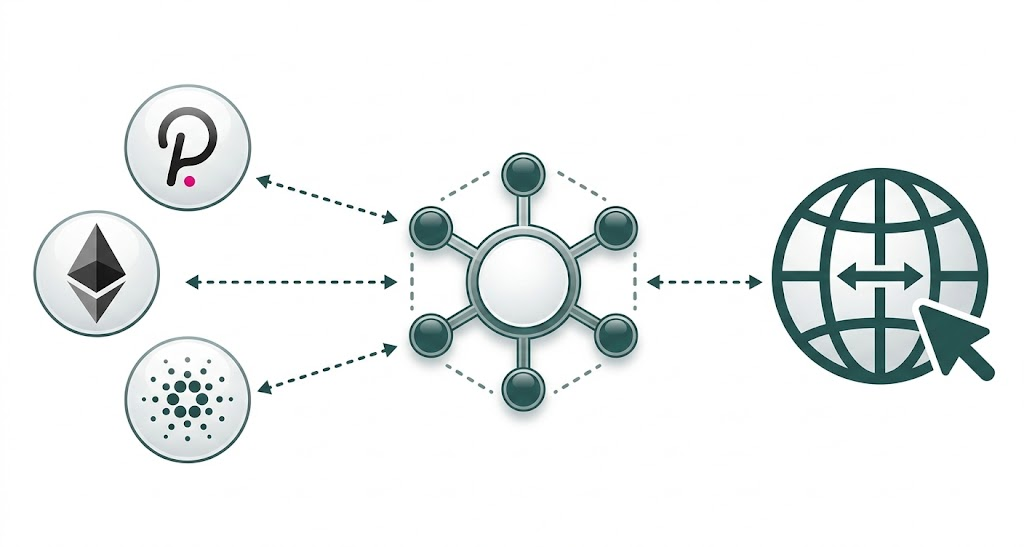
In the world of cryptocurrency, we often hear about “decentralized finance” or “smart contracts.” But have you ever considered this question: since blockchain is a closed and secure system, how does it know the real-time BTC/USDT price on exchanges? If the blockchain does not know external prices, how can a lending protocol know when to liquidate your collateral? This requires a crucial “bridge” the Oracle.
Blockchain was originally designed as a closed-loop system in order to ensure absolute security and decentralization. This means blockchain nodes can only process on-chain data and cannot open a webpage to check prices the way we do.
1. Introduction to Oracles
1.1 Early Beginnings (2014 - 2016)
The need for oracles first appeared in prediction market projects. For example, Augur, which was launched in 2014, allowed users to bet on real-world events, so the system had to know the actual outcome of those events. Later, Ethereum co-founder Vitalik Buterin formally proposed the concept of oracles, emphasizing their key role in allowing smart contracts to obtain external data.
1.2 Infrastructure Takes Shape (2017 - 2019)
In 2017, Chainlink was founded and introduced the concept of a “decentralized oracle network,” aimed at solving the “single point of failure” problem. If data comes from only one source, then once that data is manipulated, the entire contract can collapse.
1.3 The DeFi Summer Boom (2020 to Present)
As the DeFi wave swept across the world in 2020, oracles evolved from an “optional plugin” into “essential infrastructure.” Soon after, Pyth Network, which focuses on financial data and pursues low latency, also rose within the Solana ecosystem, marking a new stage of specialization and segmentation for oracles.
2. Why Do DeFi Protocols Need Oracles?
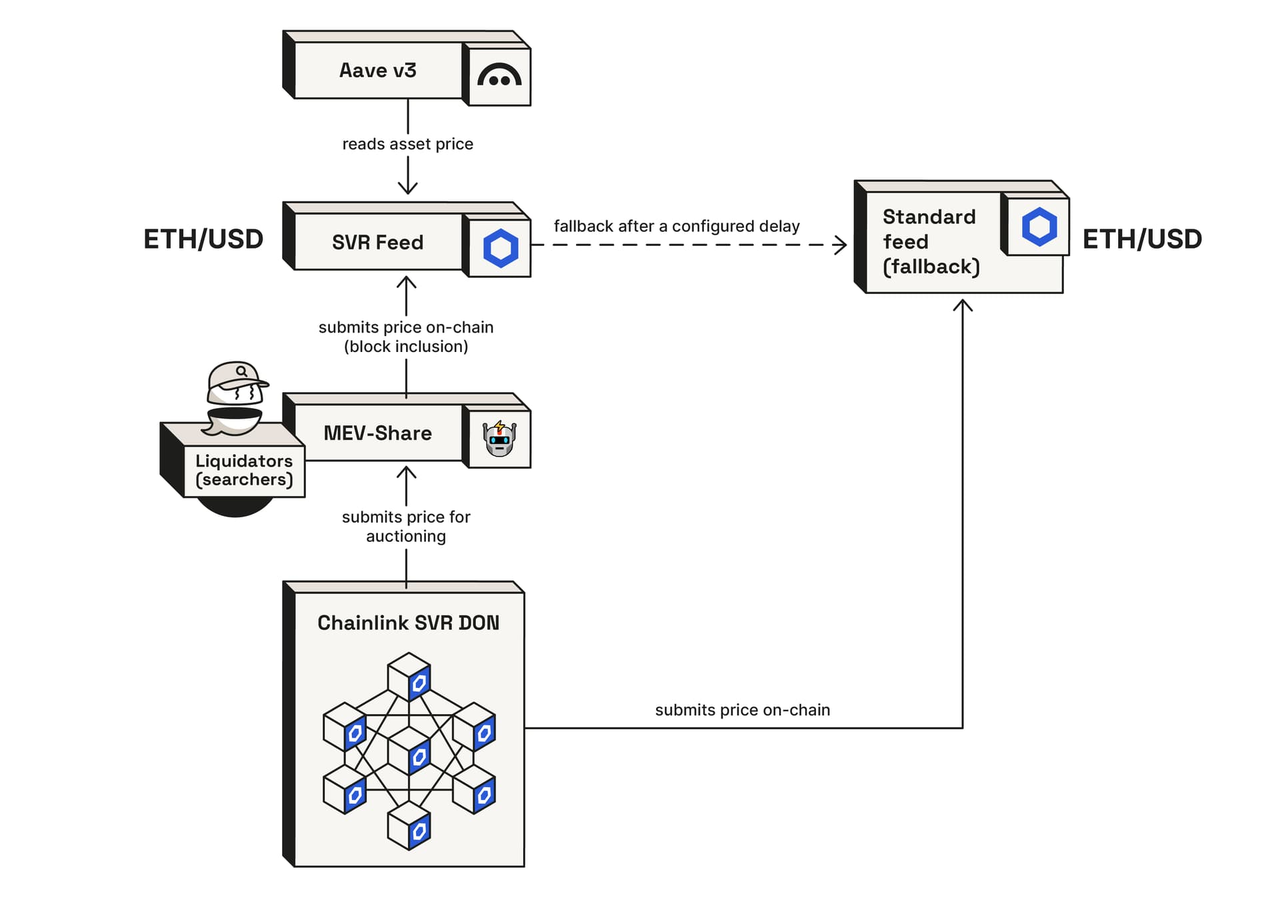
Blockchain is designed as a closed system, which means a decentralized lending protocol like Aave cannot actively perceive external market price movements on its own. Imagine that you deposit 1 ETH into Aave as collateral and borrow 2,000 USDT. The protocol must monitor the market value of ETH at all times to ensure that the collateral ratio remains sufficient. However, when the market experiences sharp volatility and the price of ETH crashes from a high level to $1,500, approaching the liquidation threshold, the smart contract cannot open a market-tracking app and check the price like a human can. At this point, the oracle acts as the “eyes” of the protocol, pulling real-time market data from major exchanges such as Bitunix, Binance, and Bybit, then transmitting the data on-chain after multiple rounds of verification and weighted aggregation, allowing the protocol to make decisions in real time based on real-world price changes.
Without highly accurate data provided by oracles, the DeFi lending ecosystem would fall into significant disorder and risk. On one hand, if data transmission is not timely enough, a protocol may fail to trigger liquidations quickly during a market crash, causing the value of collateral to fall below the value of borrowed assets and resulting in unrecoverable bad debt that threatens the safety of all platform users’ funds. On the other hand, if the data source is too limited or becomes subject to malicious external manipulation, users could even be “wrongfully liquidated” when market prices are actually normal, leading to unnecessary asset losses. Therefore, the comprehensiveness and reliability of oracle data, as well as the robustness of the network, are not merely technical indicators. They directly determine whether a DeFi protocol can survive under extreme market conditions.
3. Push Oracles: Represented by Chainlink
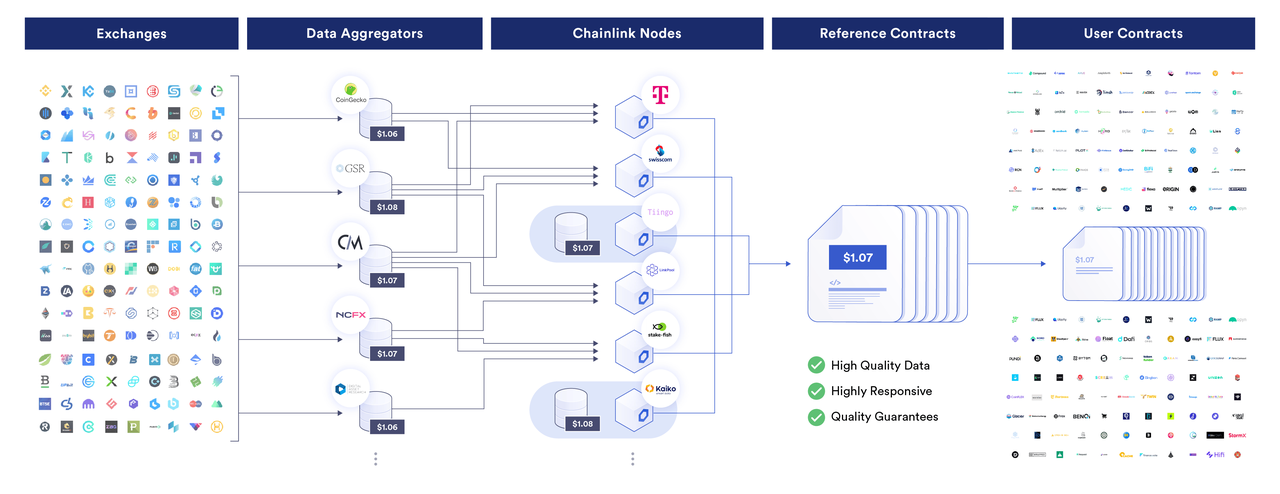
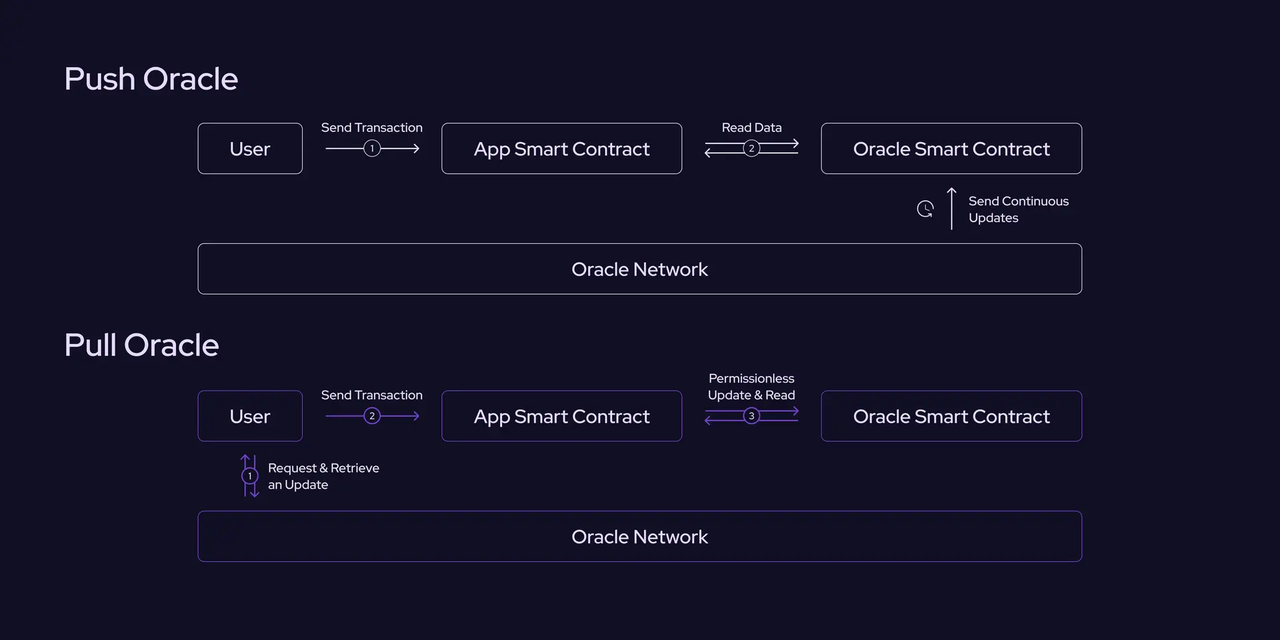
The clear market leader in the oracle sector today is Chainlink, founded in 2017. Its “push model” architecture has become the industry’s most mainstream technical standard. Under this model, Chainlink has built a decentralized network composed of a large number of independent nodes, also known as node operators. These nodes function like globally distributed data collectors, continuously gathering information from multiple high-quality data sources. When a DeFi protocol needs an asset price, these nodes first clean the data locally and then submit the results to an on-chain aggregation contract. The contract then filters the submissions and calculates a median price, actively “pushing” the latest data to the smart contracts that need it according to preset time intervals or price movement thresholds. This multi-node aggregation mechanism greatly reduces the risk of a single point of failure and ensures the objectivity and fairness of on-chain data.
Within the operation of the entire Chainlink ecosystem, the native token LINK plays the role of a core driving force, forming a rigorous system of economic incentives and constraints. On one hand, DeFi protocols such as Aave must pay LINK to node operators as compensation for accurate price feed services. On the other hand, in order to prevent nodes from providing false data and damaging the network’s reputation, node operators must stake a certain amount of LINK tokens. If the system detects that a node has acted maliciously or submitted inaccurate data, its staked tokens may be slashed as a penalty. This design cleverly binds the economic interests of node operators to the secure operation of the network, ensuring at the foundational level that Chainlink can serve as one of the most solid data cornerstones in the DeFi world.
4. Pull Oracles: Represented by Pyth Network
As decentralized trading frequency has increased dramatically, especially on high-performance public blockchains such as Solana that pursue millisecond-level responsiveness, traditional push oracles can sometimes face latency bottlenecks due to their fixed update frequency. Pyth innovatively designed a “pull model” that greatly improves data transmission speed. Unlike Chainlink, which recruits third-party nodes, Pyth works directly with top global market makers and financial institutions such as Jump and Wintermute, allowing these first-hand market data providers to upload trading data directly. The core advantage of this architecture is that it allows DeFi applications to actively “pull” the latest price quote from the oracle at the exact moment a user initiates a transaction. This on-demand model dramatically reduces latency during data transmission and provides a smoother experience for on-chain contract trading, high-frequency lending, and other scenarios that require extremely high timeliness.
Within the governance and incentive system of the Pyth ecosystem, the native token PYTH plays a key role in maintaining network quality and coordinating the interests of all parties. PYTH holders can not only vote through governance to decide which qualified data providers may join the network, but also participate in allocating treasury resources to support ecosystem expansion. This governance model is designed to incentivize financial institutions to continuously provide highly accurate, high-frequency raw data, ensuring that Pyth maintains its competitive edge in financial data delivery. By combining the data production capabilities of professional financial institutions with decentralized governance, Pyth has successfully carved out a specialized path in the oracle sector centered on ultra-low latency, becoming a core engine for high-performance DeFi applications.
5. Oracle Market Landscape: One Dominant Leader and Several Strong Competitors
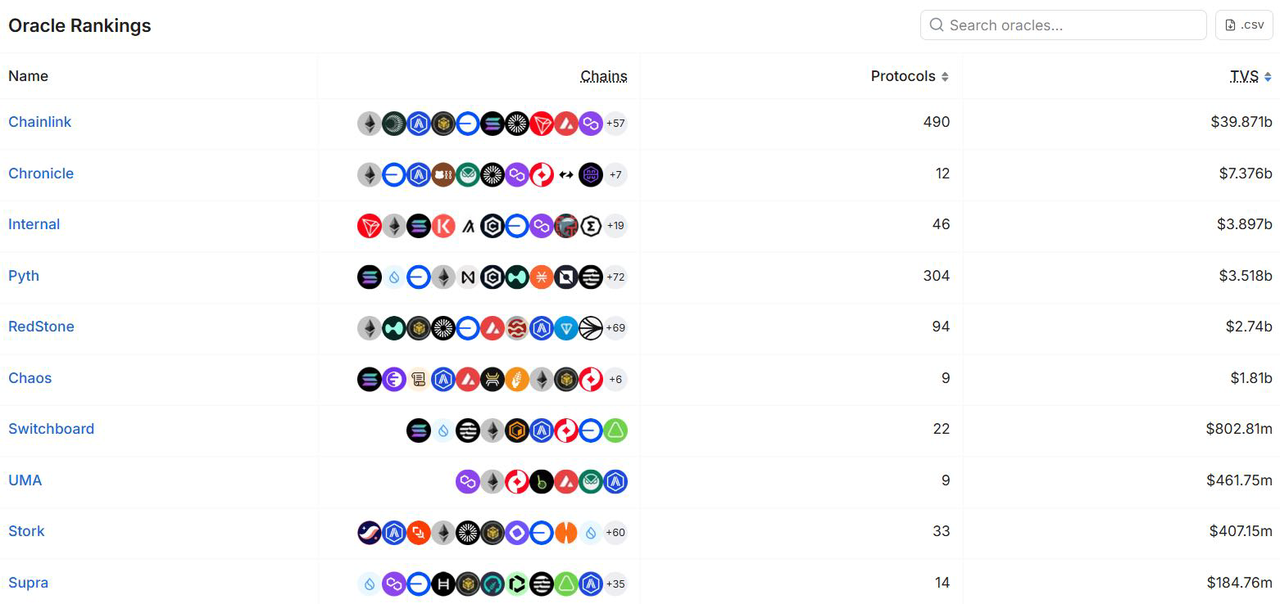
The current oracle market presents a competitive landscape best described as “one dominant leader with many strong contenders.” As the absolute leader in the sector, Chainlink has built an unshakable position in the Ethereum ecosystem through its first-mover advantage. It has the highest total value secured (TVS), extremely rich data sources, and a partner network spanning thousands of projects, forming a very strong ecosystem moat. Closely behind it, Pyth Network has achieved explosive growth across Solana and multiple emerging high-performance public blockchains by leveraging its innovative low-latency mechanism and professional financial data, making it the most powerful competitor in the market today.
Beyond the competition between major players, the market also includes technically distinctive innovators attempting to improve the data delivery experience from different angles. RedStone is one of the most notable examples. It is currently the only provider that supports both push and pull models at the same time, and it has already integrated with more than 70 public blockchains, demonstrating a very high degree of architectural flexibility. API3, meanwhile, has taken a different path by emphasizing the concept of a “first-party oracle,” aiming to allow data providers to connect directly to blockchains in an effort to improve transparency and efficiency by reducing intermediary nodes. These diversified solutions have collectively expanded the use cases of oracles and provided developers with more options suited to different needs.
6. Conclusion
Oracles play an indispensable bridging role in the crypto ecosystem. Their core function is to transform fragmented off-chain data into usable on-chain digital information, enabling the integration, verification, and transmission of data. For exchange users, understanding oracles is not only about learning a technical concept, but also about gaining an important indicator for judging the security and maturity of a DeFi project. A project that lacks stable oracle support is like a giant ship that has lost radar navigation in the dark. It cannot respond effectively to rapidly changing market volatility. Therefore, when investing in related tokens or using DeFi protocols, paying attention to the oracle solution behind them and the security record of its data can help you identify risks more rationally and more accurately capture the opportunities created by the development of Web3 infrastructure.
Disclaimer
This article is not intended to provide:
(i) investment advice or investment recommendations;
(ii) an offer or solicitation to buy, sell, or hold digital assets; or
(iii) financial, accounting, legal, or tax advice.
Digital assets (including stablecoins and NFTs) involve high risk and may be highly volatile. You should carefully consider whether trading or holding digital assets is suitable for you based on your financial situation. For your specific circumstances, consult your legal, tax, or investment professionals. You are responsible for understanding and complying with all applicable local laws and regulations.
About Bitunix
Bitunix is a global cryptocurrency derivatives exchange trusted by over 3 million users across more than 100 countries. At Bitunix, we are committed to providing a transparent, compliant, and secure trading environment for every user. Our platform features a fast registration process and a user-friendly verification system supported by mandatory KYC to ensure safety and compliance. With global standards of protection through Proof of Reserves (POR) and the Bitunix Care Fund, we prioritize user trust and fund security. The K-Line Ultra chart system delivers a seamless trading experience for both beginners and advanced traders, while leverage of up to 200x and deep liquidity make Bitunix one of the most dynamic platforms in the market.
Bitunix Global Accounts
X | Telegram Announcements | Telegram Global | CoinMarketCap | Instagram | Facebook | LinkedIn | Reddit | Medium