1. Render Overview: Breaking the Compute Bottleneck in Visual Creation
RENDER is the native token of Render Network, the world’s first decentralized GPU rendering network. It is not just a blockchain project. It is also becoming a critical piece of infrastructure for digital content production, spatial computing, and artificial intelligence.
Render Network was born from the vision of Jules Urbach, the CEO of cloud rendering company OTOY and a well-known figure in the visual effects industry. As early as 2009, Jules recognized that demand for high-quality graphics in film, gaming, and virtual reality would grow exponentially. However, traditional rendering came with major limitations. High-performance GPU hardware was extremely expensive, and compute resources were concentrated in the hands of a few large cloud providers. That made production costs difficult to bear for small and mid-sized artists and developers.
The core vision of Render Network is to build a global compute pool. Using blockchain technology, it efficiently connects idle GPU resources from around the world, such as gaming graphics cards and professional rendering farms, and makes them available to creators who need to process complex 3D workloads. This model fundamentally changes how compute power is accessed, making large-scale visual creation more efficient, affordable, and widely available.
2. The Shared Economy Model of GPU Rendering
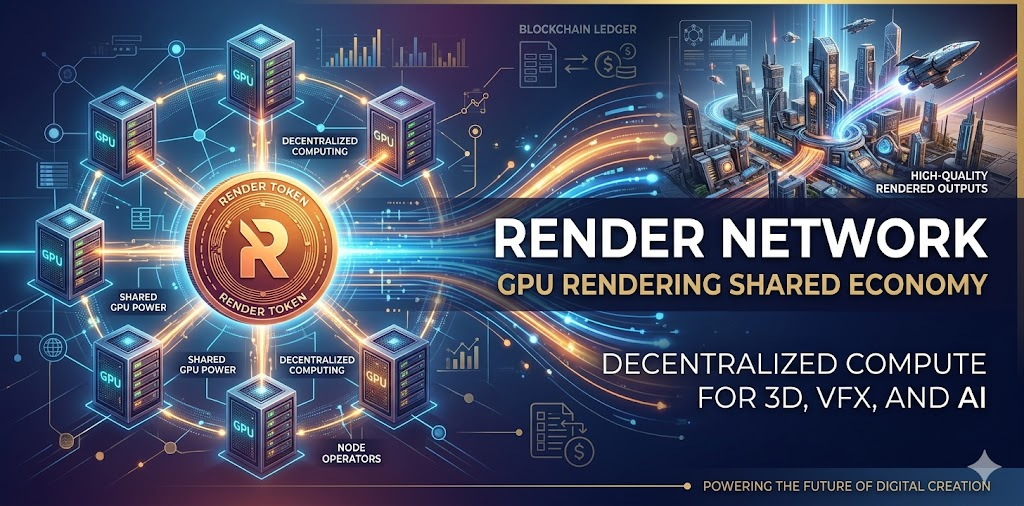
Render Network operates as an efficient two-sided marketplace and is a strong example of the shared economy in decentralized computing. At the center of this ecosystem is the precise matching of creators and node operators. Creators include professional users who need powerful GPU compute for 3D animation, architectural modeling, virtual environment design, or AI model training. They publish jobs on the platform and pay with RENDER tokens. Node operators are individuals or institutions with idle GPU resources who connect their hardware to the network, process rendering tasks, and earn rewards. This model activates fragmented compute capacity around the world and turns previously unused hardware into productive infrastructure.
To ensure fairness and security in a decentralized environment, Render uses a unique Proof of Render mechanism. During task execution, the network automatically verifies each rendered frame or compute output to confirm that the results are accurate before releasing tokens to node operators. This mechanism builds trust into the shared economy model and significantly improves rendering efficiency compared with traditional single-machine workflows. Through this structure, creators can access high-performance GPU rendering at a lower cost, which meaningfully reduces the financial barrier to digital creation and technical development.
3. Technical Evolution: Moving Toward High Speed and Spatial Computing
Render is not static. It continues to evolve alongside changes in the technology landscape. One of its most important milestones came at the end of 2023, when the protocol completed its cross-chain migration. After community approval, the Render protocol officially moved to the Solana blockchain, and the token name was updated from RNDR to RENDER. This migration allowed Render to benefit from Solana’s high throughput and low transaction costs, significantly improving network responsiveness. It enhanced overall transaction efficiency and enabled Render Network to better support real-time rendering needs, providing smoother infrastructure for advanced digital production and spatial computing.
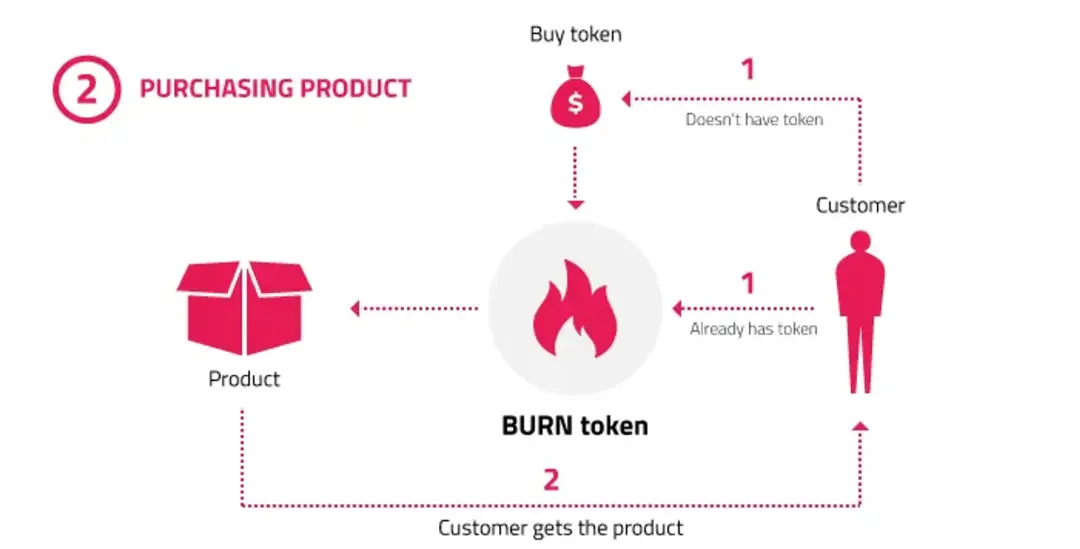
As spatial computing devices such as Apple Vision Pro enter the market, demand for 3D environments and immersive content is accelerating. Render’s large-scale decentralized GPU network is well positioned to fill that compute gap. At the same time, this massive parallel computing capability aligns closely with the needs of AI model training, allowing Render to evolve into an increasingly important infrastructure layer for AI development. To support that expansion, Render introduced a Burn-and-Mint Equilibrium model. When creators pay for services, a corresponding amount of tokens is burned, while the network mints rewards for node operators based on participation. This dynamic mechanism is designed to create a healthy cycle and support long-term stability and growth for the token ecosystem in the era of spatial computing and AI.
4. RENDER Tokenomics
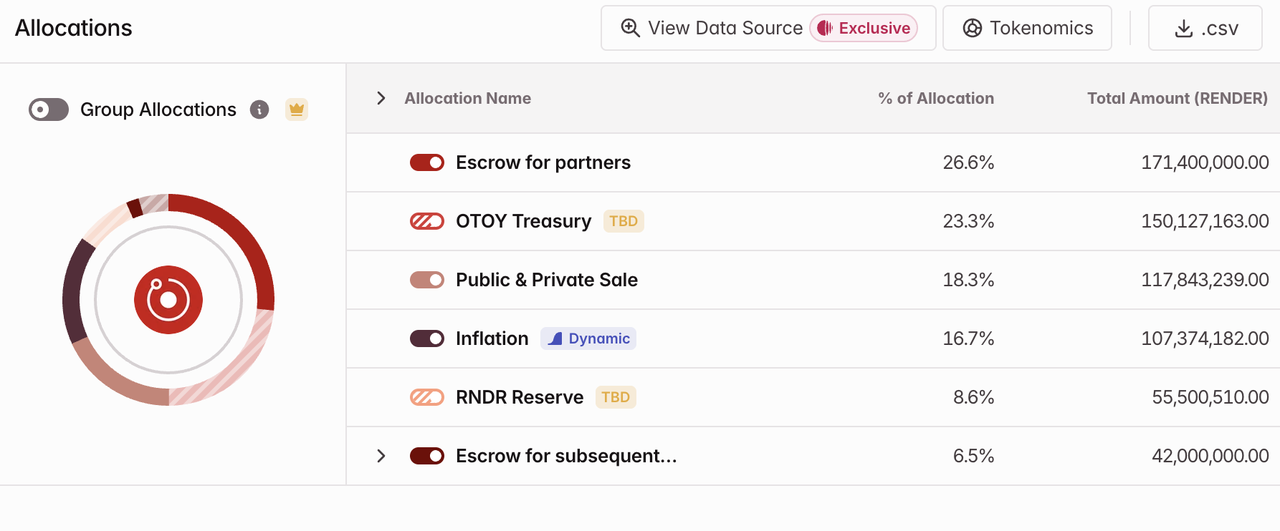
The core of RENDER tokenomics lies in its carefully designed allocation structure. This not only influenced the network’s early stability but also laid the foundation for long-term expansion. As of April 2026, the largest share of total token allocation was held in escrow for strategic partners, accounting for 26.6%, or about 171.4 million tokens. This provides meaningful incentive capacity for the industry partnerships needed to build a global decentralized GPU network. At the same time, OTOY Treasury held 23.3%, or about 150 million tokens, to support continued research and development as well as platform maintenance. Another 18.3%, or roughly 117.8 million tokens, was distributed through public and private sales, giving the token its initial liquidity and a foundation for decentralized ownership.
To support future network growth and increasingly diverse compute demand, Render also designed flexible dynamic mechanisms and reserve allocations. Dynamic inflation accounts for 16.7%, or about 107.4 million tokens, and is primarily used to continuously incentivize node operators to contribute GPU resources and keep network capacity sufficient. In addition, the RNDR reserve and escrow for subsequent distribution account for 8.6% and 6.5%, respectively. These allocations provide flexibility for future upgrades, ecosystem incentives, and market adjustments. This token distribution model strengthens the utility of RENDER and positions it as a core engine for the continued evolution of the decentralized GPU ecosystem.
5. How to Buy RENDER
There are two main ways to obtain RENDER. The first is to become a node operator. This requires a high-performance NVIDIA GPU and connecting that hardware to Render Network. While this can monetize idle hardware, it also comes with a relatively high technical barrier for average users, especially in terms of hardware maintenance and network stability.
For most investors and creators, buying RENDER through a centralized cryptocurrency exchange such as Bitunix is the fastest and safest option. As a trusted trading platform, Bitunix allows users to purchase RENDER directly with stablecoins such as USDT and provides real-time market pricing, which significantly lowers the barrier to entry. Before getting started, users need to register an account and complete identity verification, or KYC, to meet global AML and compliance requirements. Bitunix offers a strong compliance and risk-control framework, using measures such as cold and hot wallet separation, multi-signature protection, and real-time monitoring to provide a high standard of asset security.
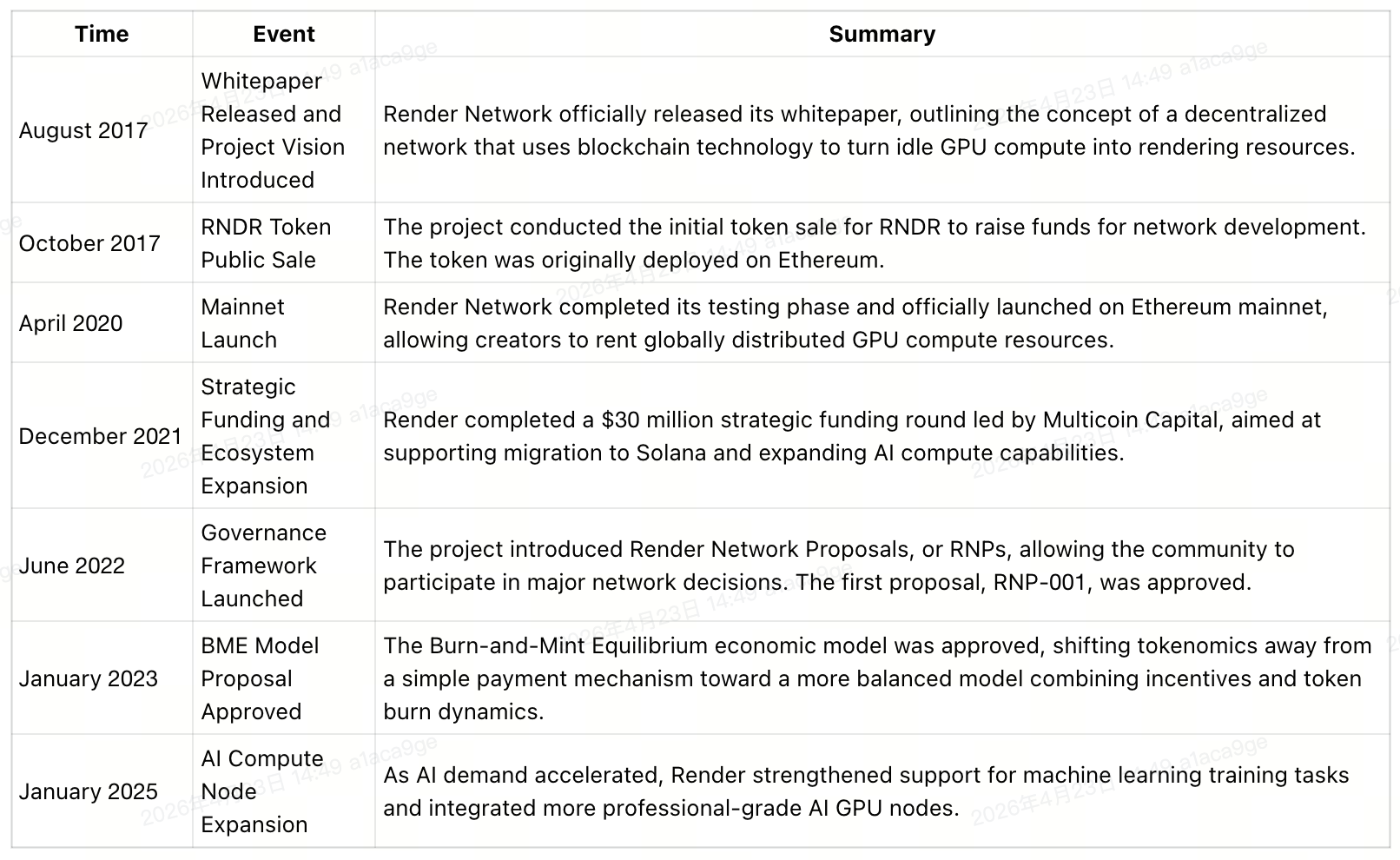
6. Major Milestones in Render History
Disclaimer
This article is not intended to provide: (i) investment advice or investment recommendations; (ii) an offer or solicitation to buy, sell, or hold digital assets; or (iii) financial, accounting, legal, or tax advice. Digital assets (including stablecoins and NFTs) involve high risk and may be highly volatile. You should carefully consider whether trading or holding digital assets is suitable for you based on your financial situation. For your specific circumstances, consult your legal, tax, or investment professionals. You are responsible for understanding and complying with all applicable local laws and regulations.
About Bitunix
Bitunix is a global cryptocurrency derivatives exchange trusted by over 3 million users across more than 100 countries. At Bitunix, we are committed to providing a transparent, compliant, and secure trading environment for every user. Our platform features a fast registration process and a user-friendly verification system supported by mandatory KYC to ensure safety and compliance. With global standards of protection through Proof of Reserves (POR) and the Bitunix Care Fund, we prioritize user trust and fund security. The K-Line Ultra chart system delivers a seamless trading experience for both beginners and advanced traders, while leverage of up to 200x and deep liquidity make Bitunix one of the most dynamic platforms in the market.
Bitunix Global Accounts
X | Telegram Announcements | Telegram Global | CoinMarketCap | Instagram | Facebook | LinkedIn | Reddit | Medium