1.What Is USDT?
In early 2014, crypto assets such as Bitcoin (BTC), Litecoin (LTC) and XRP were starting to gain traction and were gradually becoming mainstream investment options in the cryptocurrency market. However, there was still no efficient way to move traditional fiat currency across borders, and the crypto ecosystem lacked a convenient bridge between users and the real economy. Cross border payments in particular did not have a simple, stable digital asset that could serve as a neutral settlement currency, which limited the use of crypto assets in large scale international payments and remittances.
In October 2014, Tether Limited was founded by Brock Pierce, Reeve Collins and Craig Sellars. One month later, the team launched a dollar pegged cryptocurrency on the Omni Layer blockchain called Realcoin, which was soon renamed USDT. The concept was simple: for every 1 USDT issued, Tether would hold 1 U.S. dollar in reserve in a bank account. This one-on-one reserve model was designed to ensure that USDT could always be redeemed for 1 USD. From that point on, digital assets traded on crypto exchanges entered a new stage, with a stablecoin serving as the base currency for continuous trading and price discovery.
Ten years later, USDT has become one of the most important stablecoins in the global crypto market. It is tightly integrated with on chain trading, liquidity pools, cross chain bridges and other core infrastructure, playing a role similar to a small central bank within the crypto ecosystem. Through its use on exchanges, in DeFi protocols and across payment rails, USDT’s stable value and deep liquidity have made it a preferred safe haven asset for many traders and institutions. It has effectively created a price anchor for the broader cryptocurrency market and has become a key entry point for both traditional institutions and retail users moving into digital assets.
2.USDT as a Fiat Backed Stablecoin
USDT was the first major fiat backed stablecoin. It was created to give the crypto market a price anchor tied to the U.S. dollar at a time when stablecoin designs were still developing. Tether introduced a straightforward 1:1 reserve model, committing to hold one U.S. dollar in reserve for every USDT in circulation. Under this model, USDT works much like a digital bank deposit. Users do not need to move physical dollars and can instead hold and transfer a token that closely tracks the value of USD. Without a liquid, dollar pegged bridge asset like this, large scale adoption of cryptocurrencies would be much harder.
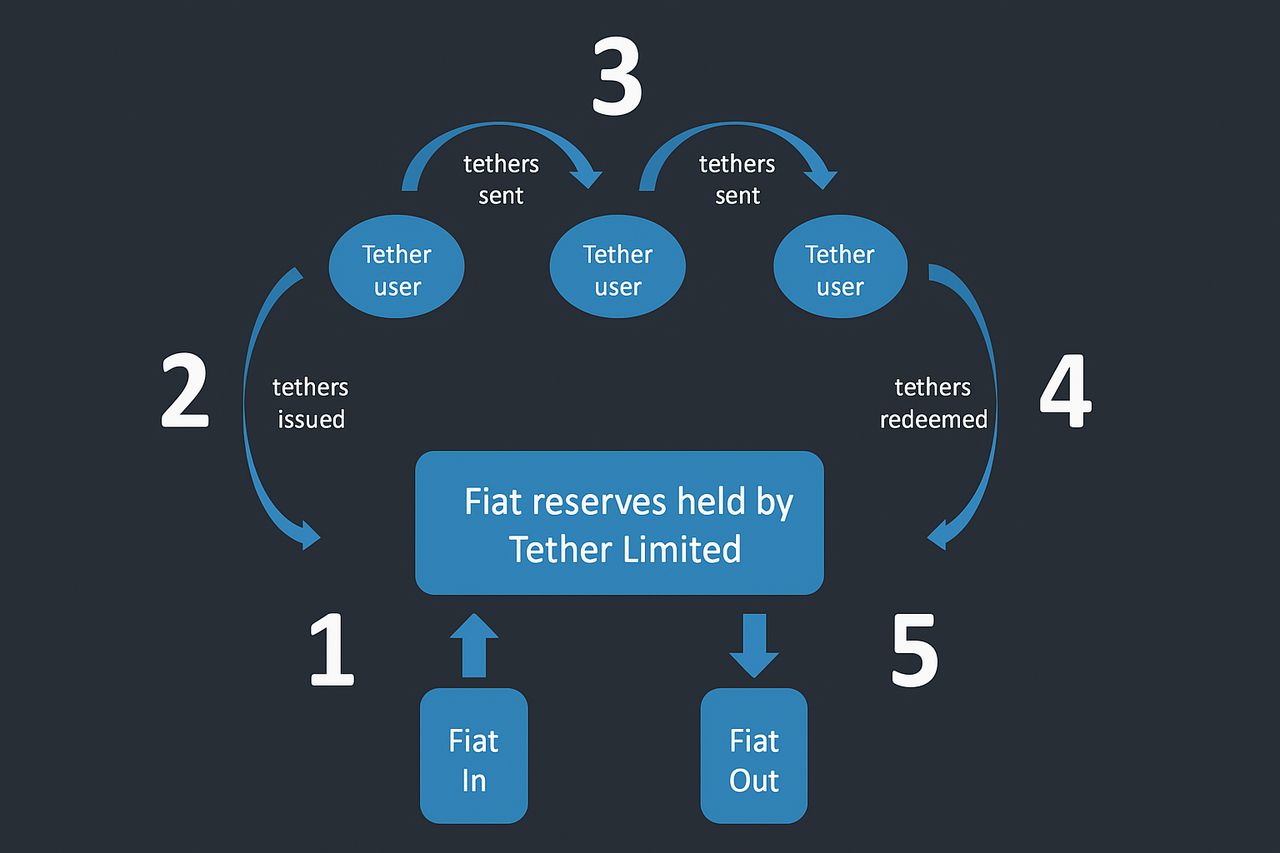
USDT’s issuance and circulation do not depend on legal tender status. They are based on an on-chain mint and redeem mechanism. In practice, Tether operates like a private “central bank” for USDT. When users, usually qualified institutions, want to mint USDT, they deposit USD into Tether’s custodial bank accounts. Tether then issues the corresponding amount of USDT on chain and sends it to the user’s wallet. The underlying dollars stay in Tether’s reserve accounts, backing the USDT in circulation and creating a key gateway for traditional capital to enter the crypto market.
The reverse flow is the redemption process. When users want to redeem, they send USDT back to Tether. Tether burns those tokens and transfers an equivalent amount of USD from its reserves to the user’s bank account or settles in fiat by other approved means. This “mint on deposit, burn on redemption” model is designed to ensure that every USDT in circulation is supported by real world assets. It lowers the friction traders face when moving between volatile crypto prices and fiat currency and helps make USDT and the broader Tether stablecoin system one of the main liquidity hubs connecting traditional finance with the global cryptocurrency market.
3.USDT as a Multi Chain Stablecoin
By December 2025, USDT’s total market capitalization had reached 188.8 billion USD, keeping it firmly in first place among stablecoins and well ahead of USDC. This leading position comes largely from Tether’s strategy of issuing USDT across multiple blockchains, which allows it to serve many different trading scenarios and user needs.
USDC, by contrast, has taken a more conservative approach. It is issued on fewer networks and has long been concentrated on Ethereum as an ERC-20 token. While this made USDC a natural choice in early DeFi, it also meant users had to bear Ethereum’s high gas fees and frequent network congestion, which is not ideal for smaller or high frequency transactions.
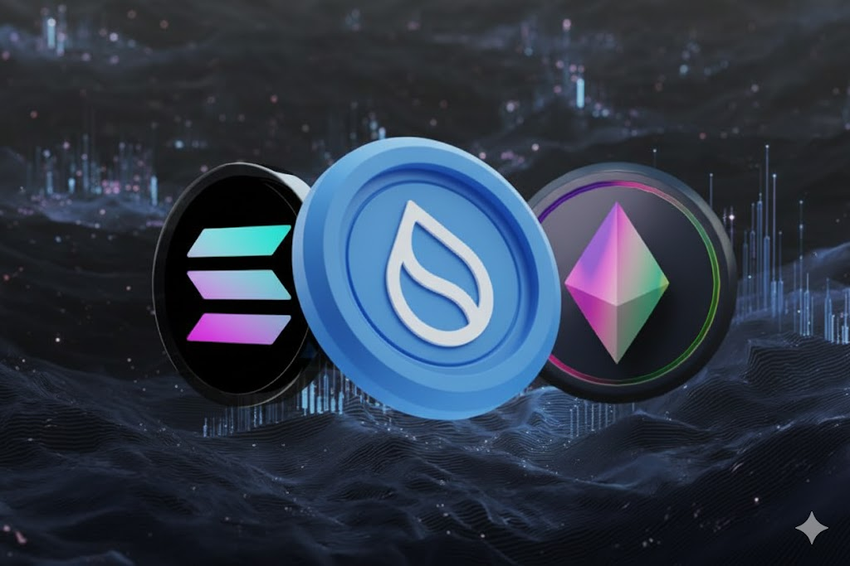
Tether positions USDT as a truly multi-chain stablecoin. In addition to Ethereum ERC-20, USDT is issued on Tron as TRC-20 and on Solana as SPL, along with several other networks. This gives users the flexibility to choose the network that best matches their needs.
- Users focused on security, institutional trading and deep DeFi liquidity often choose ERC-20 USDT on Ethereum.
- Users who care more about low fees and fast confirmation times, such as retail traders and cross border payment users, tend to favor TRC-20 USDT or SPL USDT.
This “one asset, many chains” design greatly improves USDT’s accessibility and liquidity, removes the bottleneck of relying on a single network and helps USDT remain one of the most widely used stablecoins in the global crypto market.
4.About Tether
Tether is not only the issuer of USDT, it also issues several other fiat backed and commodity backed tokens, such as the euro stablecoin EURT, the offshore renminbi stablecoin CNHT and the gold backed token XAUT. Together, these products form a stablecoin suite that covers multiple asset types and gives users more choices for hedging, asset allocation and value storage in different market conditions.
Tether is a privately held, centralized company rather than a listed corporation. Because of that, the market has long paid close attention to how transparent its reserves are and what assets actually back its tokens. For years, one of the main concerns around USDT was whether Tether would have enough high quality reserves to meet redemptions during periods of heavy outflows.
In recent years, Tether has increased the frequency and detail of its public disclosures. It now releases regular attestation reports and other financial information so users can better understand its reserves, liabilities and overall balance sheet. These updates have helped improve transparency and confidence. After years of scrutiny from regulators and the public, Tether has grown into one of the largest stablecoin issuers in the world, managing tens of billions of dollars in assets and playing a key role in the stablecoin market.
5.How to Obtain USDT
USDT is issued by Tether on a 1:1 basis against reserves. In theory, users can obtain USDT by sending U.S. dollars or other eligible assets to Tether or its partners, and Tether will mint and deliver the same amount of USDT. In practice, this direct route is usually used by institutional clients and has higher minimum requirements, so it is not the main channel for everyday users.
For most people, the simplest way to get USDT is to buy it on a centralized exchange such as Bitunix. On Bitunix, you can convert fiat currency, bank transfers, credit or debit cards or other crypto assets into USDT. During account opening, you complete standard KYC checks so the platform can meet anti money laundering (AML) and compliance requirements and keep trading safe.
Once your account is verified, buying USDT on Bitunix is usually a fast and straightforward process. Orders are matched in real time, deposits and withdrawals are handled through secure wallets and the platform runs continuous risk monitoring to protect user funds as much as possible. For new users who want a smooth first experience with stablecoins, purchasing USDT through Bitunix is a practical and efficient starting point.
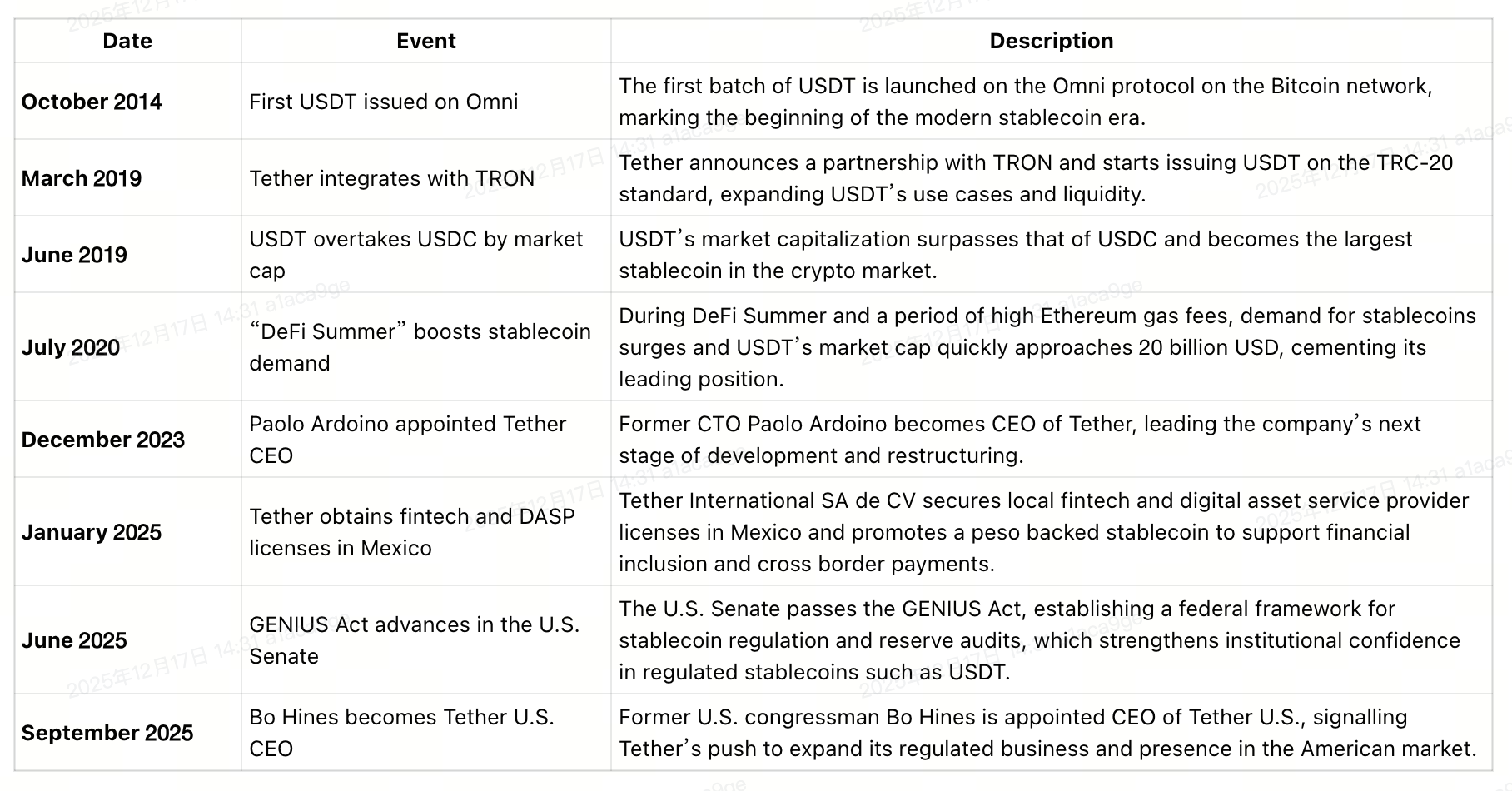
6.USDT Key Events Timeline