
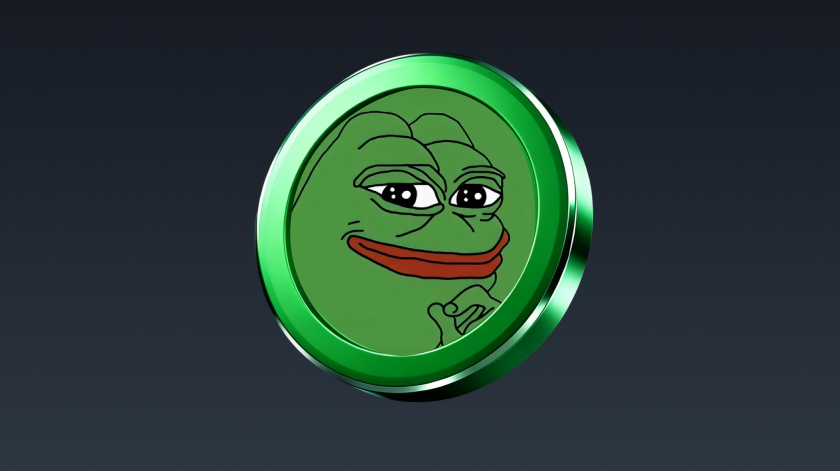
In April 2023, as the cryptocurrency market was searching for fresh excitement, a cryptocurrency centered on the classic internet meme “Pepe the Frog” suddenly emerged: PEPE. Unlike many blockchain projects burdened by complex technical narratives or grand financial visions, PEPE was created with extreme simplicity. On its official website and social media channels, the anonymous team openly stated that this was a project with “no intrinsic value, no formal team, and no clear roadmap.” Its existence was purely intended as a tribute to the globally recognized pop culture symbol created by American cartoonist Matt Furie.
This seemingly absurd yet fearless directness struck a precise chord with the crypto community, which had long grown tired of empty and exaggerated whitepapers. PEPE adopted a truly fair launch model. It did not conduct any initial coin offering (ICO), nor did it involve a lengthy premine. The token’s total supply was deliberately set at 420.69 trillion, paying homage to the internet meme culture numbers 420 and 69. As much as 93% of the token supply was injected directly into decentralized exchange (DEX) liquidity pools at launch, and the liquidity pool certificates, or LP tokens, were burned. This approach, which completely returned control to the market, quickly ignited enthusiasm across the decentralized community.
Meme Culture: From Political Symbol to the Ultimate Monetization of the Attention Economy
As a leading representative of the new generation of meme coins, PEPE’s core value is essentially the ultimate monetization of the “attention economy” and internet subculture. In traditional finance or mainstream Web3 projects, people are used to evaluating an asset’s value through metrics such as price-to-earnings ratio, total value locked (TVL), or active users. However, for memes, the most important assets are “community consensus” and “cultural virality.” PEPE’s astonishing rise proved that when a meme carries a deep cultural imprint and spreads rapidly across the internet, the network effect it gathers can quickly convert into massive market valuation.
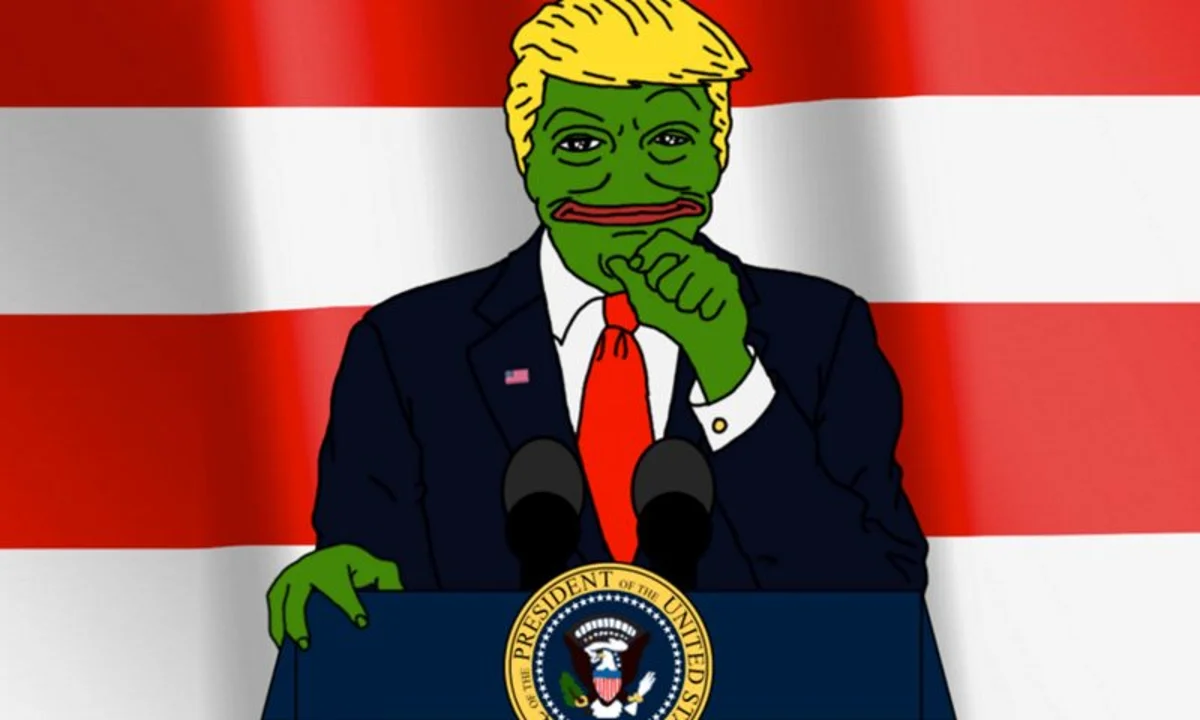
Unlike other meme coins that rely purely on cuteness, the history of “Pepe the Frog” itself is filled with some of the internet’s most radical dark humor and political struggles. This gentle frog, created by Matt Furie in 2005, was “appropriated” around 2015 by fringe users on anonymous forums such as 4chan. During the 2016 United States presidential election, it unexpectedly became an underground symbol used by alt-right and white supremacist communities to express rebellious emotions. At the time, Donald Trump even reposted an edited image of himself as Pepe the Frog on Twitter, pushing the frog further into the center of America’s political storm. This label as an “extreme right-wing symbol,” mixed with political incorrectness, edgy jokes, and mockery of mainstream elite culture, once led civil rights organizations to include it in a controversial database. At the same time, it also gave the frog a unique and wildly growing level of internet visibility.
When this cultural foundation, carrying strong political taboo and rebellious energy, was tokenized into the PEPE coin in 2023, it instantly transformed into a highly aggressive form of community cohesion. The decentralized world naturally favors anti-establishment narratives, and PEPE holders and community fans perfectly inherited the “meme war” genes of earlier online far-right communities. On social platforms such as Twitter and Telegram, they used an endless stream of highly sarcastic green frog memes to dominate public attention. This cultural identity, shaped by the United States election cycle and layered with far-right political fervor and the rebellious spirit of anonymous forums, built a moat that other emerging meme coins could not replicate. This helped PEPE enter the ranks of multi-billion-dollar market capitalization projects within an extremely short period.

PEPE’s Technical Foundation: An Ethereum-Based ERC-20 Smart Contract
From a technical architecture perspective, PEPE is not a Layer 1 public blockchain with its own independent miners or validator network. Instead, it is an ERC-20 smart contract token deployed on the Ethereum blockchain. This means PEPE does not need to spend resources building its own underlying consensus mechanism or maintaining network security. Instead, it directly shares the strong security margin and decentralized computing protection of Ethereum, the world’s largest smart contract platform.
Although PEPE entrusts its underlying security to Ethereum, it incorporates unique mechanisms in its tokenomics and smart contract design:
• No-Tax Policy: Many emerging meme coins charge a certain percentage of “marketing tax” or “reward tax” during on-chain transactions. PEPE takes the opposite approach by maintaining a zero transaction tax design. This significantly reduces trading friction costs for retail traders and market makers, bringing PEPE excellent on-chain liquidity.
• Deflationary Mechanism: PEPE includes a token-burning mechanism. During specific on-chain interactions or community/team-led events, some tokens are permanently sent to a “black hole address,” causing the total circulating supply in the market to decrease over time. This artificial scarcity design is intended to align with holders’ psychological expectations for long-term asset value.
Of course, being built on Ethereum also means that PEPE’s trading experience is limited by the performance of its underlying network. During periods of extreme market hype and high on-chain activity, users often need to pay expensive gas fees, or Ethereum network fees, when transferring or trading PEPE on decentralized exchanges. This raises the barrier to entry for small everyday on-chain interactions to some extent.
PEPE Tokenomics: Extreme Fairness and the Token Game of Subcultural Symbols
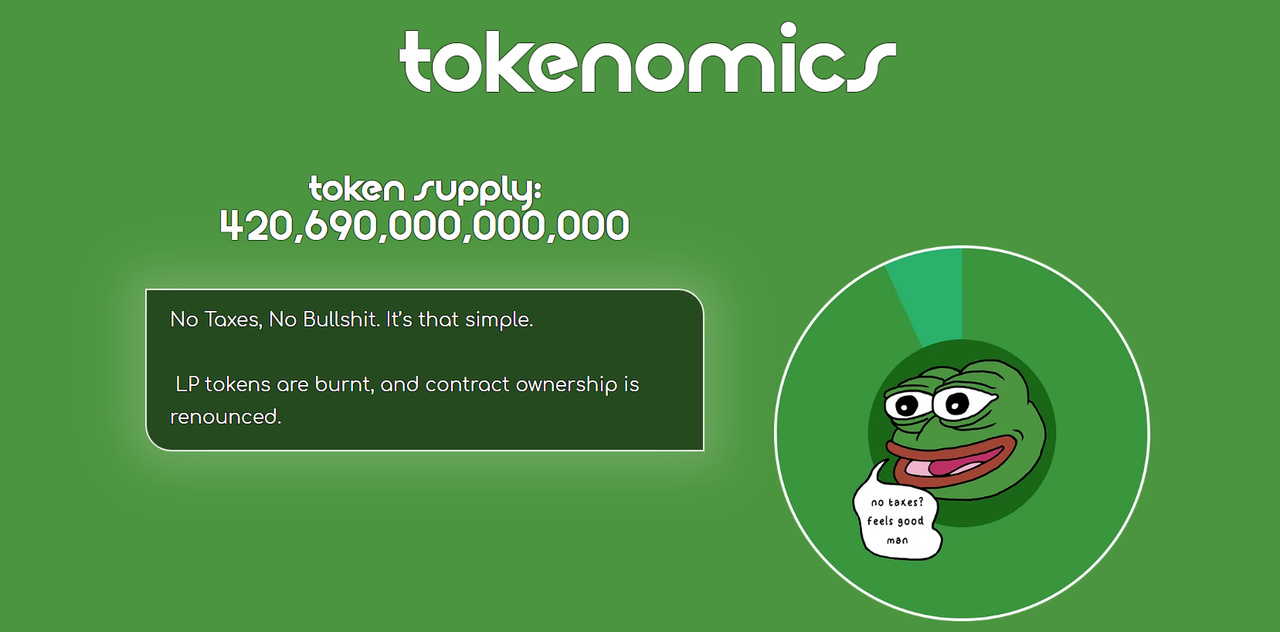
From the professional perspective of a cryptocurrency exchange academy, PEPE’s tokenomics is a classic example of extreme decentralization. It combines “fair launch” with “psychological scarcity” to the fullest extent. The project’s total token supply was deliberately set at 420,690,000,000,000. By writing meme-coded numbers directly into the underlying blockchain ledger, PEPE sent a tacit community signal to internet users worldwide, instantly narrowing the distance between the project and its community.
In terms of its most important token allocation structure, PEPE adopted an extremely aggressive and transparent decentralized strategy. As much as 93.1% of the tokens were injected directly into decentralized exchange (DEX) liquidity pools at launch. The team then permanently burned the control certificates, or LP tokens, and fully renounced contract ownership. This means the issuer removed its own privilege to mint additional tokens or “print and dump,” completely eliminating the black-box risk of malicious rug pulls that is often associated with traditional project teams. For on-chain transactions, PEPE implemented a “zero transaction tax” policy, significantly reducing funding friction costs for retail traders and market makers. This gave PEPE top-tier on-chain liquidity across the market. As for the remaining 6.9% of tokens, they were safely kept in a multi-signature reserve wallet, specifically for centralized exchange listings such as Bitunix and future cross-chain bridge liquidity support.
How to Buy PEPE
For investors who want to join the green frog meme wave, there are mainly two ways to obtain PEPE. The first is to swap it through on-chain decentralized exchanges (DEXs) such as Uniswap. This requires users to manage their own Web3 crypto wallet and prepare enough ETH in the wallet to pay gas fees. Although this method preserves full decentralized on-chain self-custody, it often involves extremely high and unstable network fees during periods of intense market hype and frequent on-chain activity. For everyday small transactions or beginner users, this creates relatively high financial and technical barriers.
Buying PEPE through centralized cryptocurrency exchanges such as Bitunix offers a more accessible alternative. As a trusted intermediary, the platform supports users in directly purchasing crypto assets with fiat currencies or stablecoins such as USDT. Some platforms also support instant credit card purchases, greatly lowering the investment barrier. Before first use, users need to register an account and complete identity verification (KYC) to comply with global anti-money laundering (AML) and counter-terrorist financing regulations. Bitunix has an industry-leading compliance and risk control system, providing users with above-average asset security protection through cold and hot wallet separation, multi-signature protection, and real-time monitoring mechanisms.
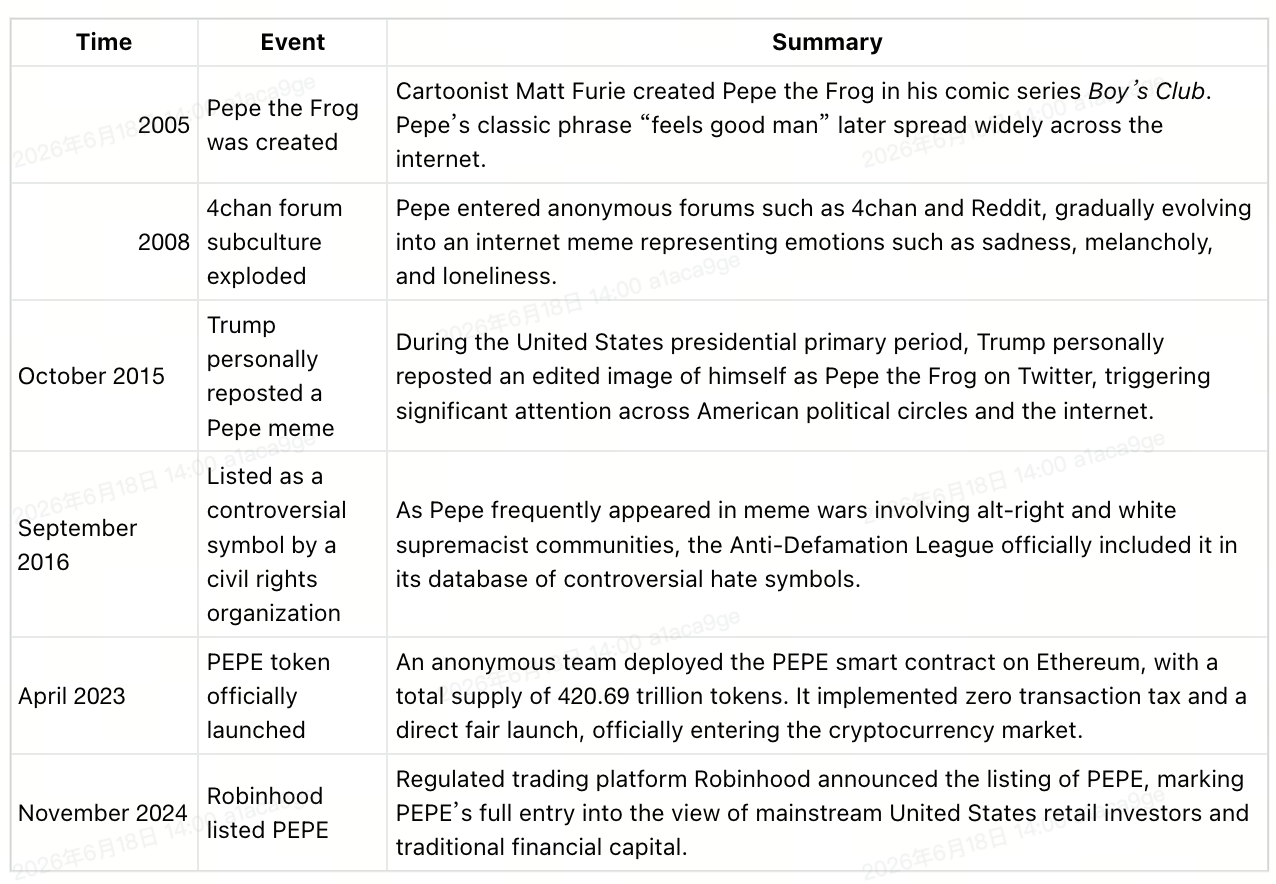
PEPE Major Events Timeline
Disclaimer
This article is not intended to provide:
(i) investment advice or investment recommendations;
(ii) an offer or solicitation to buy, sell, or hold digital assets;
(iii) financial, accounting, legal, or tax advice.
Holding digital assets, including stablecoins and NFTs, involves high risk and may experience significant volatility. You should carefully consider whether trading or holding digital assets is suitable for your financial situation. Please consult your legal, tax, or investment professional regarding your specific circumstances. You are solely responsible for understanding and complying with all applicable local laws and regulations.