

1. Introduction to Sui
In 2022, as the crypto industry looked for higher-performance base-layer networks, Mysten Labs released the Sui whitepaper and introduced a new Layer 1 blockchain design built on the Move programming language and parallel execution concepts. The founding team includes Evan Cheng, Adeniyi Abiodun, and Sam Blackshear, who previously served as key technical contributors to Meta’s Libra (Diem) initiative.
The name “Sui” is inspired by the Japanese word for “water,” reflecting flexibility, smooth interaction, and inclusiveness. Unlike networks that position themselves as a “world computer,” the Sui blockchain focuses on becoming next-generation infrastructure for digital assets, aiming to deliver low latency and high throughput for large-scale adoption. In May 2023, the Sui Network mainnet launched, and its object-centric model quickly made Sui crypto one of the most discussed new public chains.
2. Sui, Object-Centric Innovation
If Ethereum’s core model is built around accounts and balances, Sui’s core model is built around objects. On the Sui blockchain, almost everything, from fungible tokens to NFTs and even smart contract components, can be treated as independent objects. This object-oriented design is one of the most important reasons the Sui Network is considered structurally different from many traditional public chains.
This approach is powered by the Move programming language. Move was originally developed for Diem and is widely recognized for stronger asset safety. Instead of treating assets as simple numbers inside contract storage, Move defines assets as “resources,” which helps prevent common vulnerabilities related to improper asset handling.
Sui also introduces programmable transaction blocks, allowing multiple actions to be bundled into a single transaction. For example, a user can claim rewards, swap assets, and deposit into a lending protocol within one transaction flow. This improves user experience and composability, and it can also reduce friction for users interacting with a Sui wallet and on-chain applications.
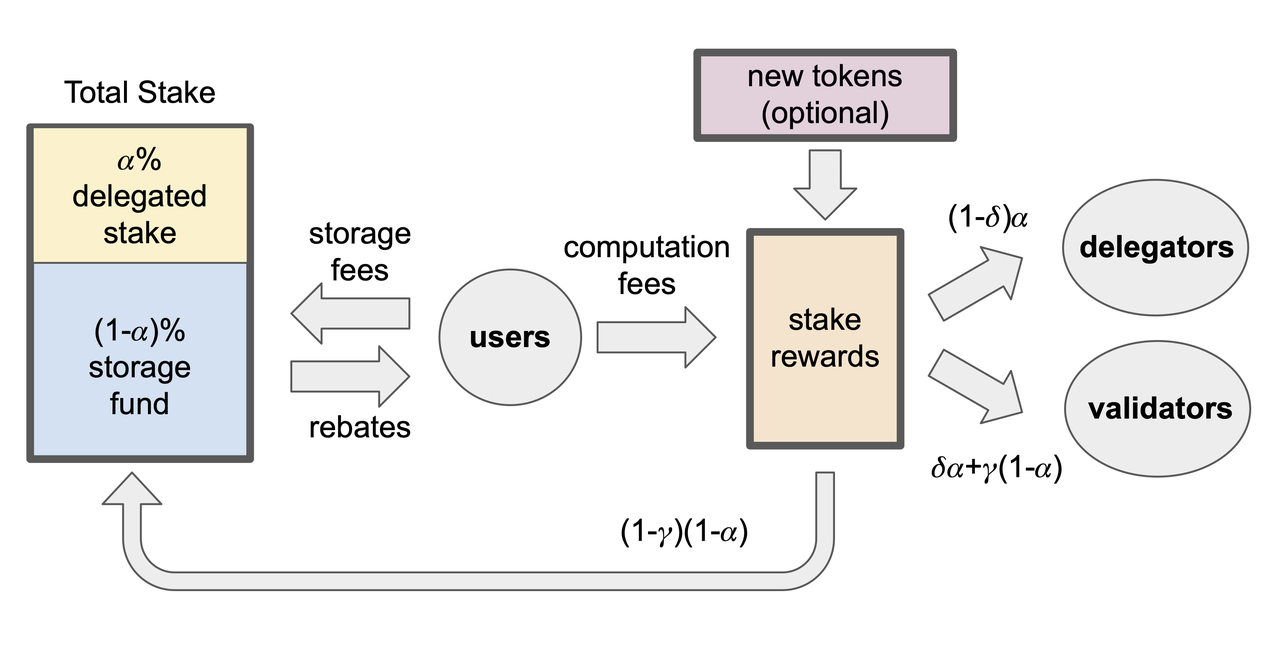
On the consensus side, Sui uses a Proof of Stake validator network. The SUI token, also called SUI coin, is the native asset used to pay network fees, participate in staking, and secure the network. Validators stake SUI to participate in consensus and earn block rewards and transaction fees. Architecturally, Sui uses a modular design known as Narwhal and Bullshark. Narwhal focuses on efficient data propagation and storage, while Bullshark handles ordering and finality. This separation helps the network maintain stable throughput under high load.
3. Sui Compared With Other Public Chains
Sui and Aptos are often grouped as the two major Move-based chains. Both use Move as a smart contract foundation, and both have remained highly visible in the market. Compared with Ethereum and Solana, Move-based chains are commonly viewed as having structural strengths in asset safety and execution certainty because Move is designed around asset-centric security.
At the same time, the Move ecosystem has faced practical limitations, including a smaller developer community, less mature infrastructure, and limited compatibility with EVM tooling and applications. These factors can slow adoption even when performance and security design are strong.
Even within the Move ecosystem, Sui and Aptos differ in design direction and ecosystem positioning. Aptos follows a more traditional account-based model and is typically positioned around general financial applications and stable execution. Sui uses an object-oriented execution model that supports parallel processing of non-conflicting transactions, which can be better suited to high-interaction, high-frequency applications such as gaming, NFTs, and real-time experiences.
4. Sui Network Ecosystem
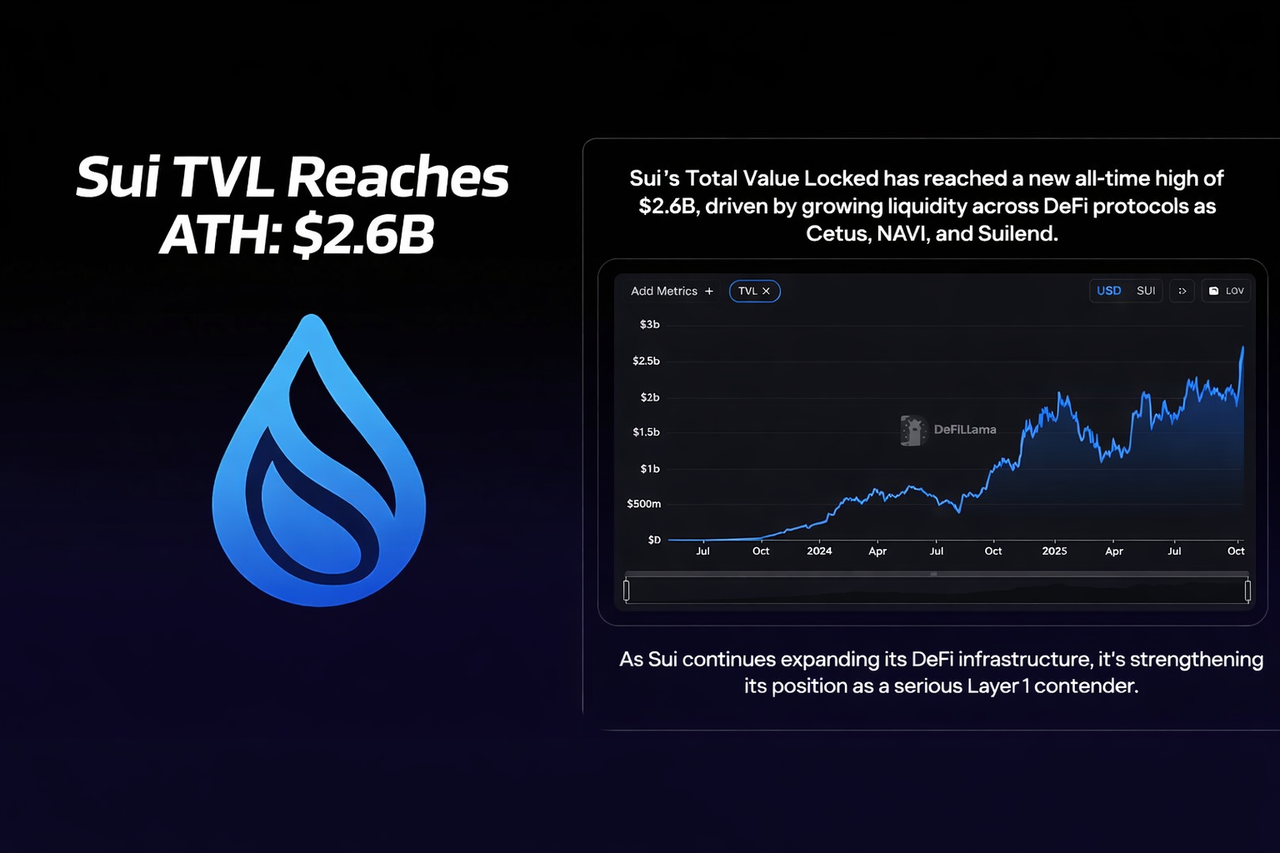
Since mainnet launch, the Sui Network ecosystem has expanded rapidly. In October 2025, Sui TVL reached USD 2.6 billion, marking a historical high.
In DeFi, native protocols such as Cetus, NAVI Protocol, and Scallop have contributed to liquidity and core on-chain activity. In gaming and social applications, Sui’s object model naturally supports dynamic NFTs, which has attracted developers building interactive experiences.
Sui also made progress in stablecoin integration through native USDC and USDT support, improving on-chain capital efficiency. With the expansion of DeepBook, the ecosystem has moved toward a more integrated infrastructure layer that supports both high-speed trading and smoother onboarding for everyday users.
5. How to Get SUI
In the Sui Network economic model, the SUI token is the operational core of the blockchain. Users can stake SUI to validators to earn rewards while supporting network security. For many users, the most direct way to get SUI is to buy SUI through a centralized exchange.
Buying SUI on Bitunix provides a convenient trading experience, including direct stablecoin-to-SUI trading pairs and multiple deposit options. Bitunix also provides a security-focused trading environment, with protections such as encryption and cold storage. For new users who want exposure to Sui crypto and the Sui blockchain ecosystem, Bitunix is positioned as a practical starting point to buy SUI and manage SUI coin holdings.
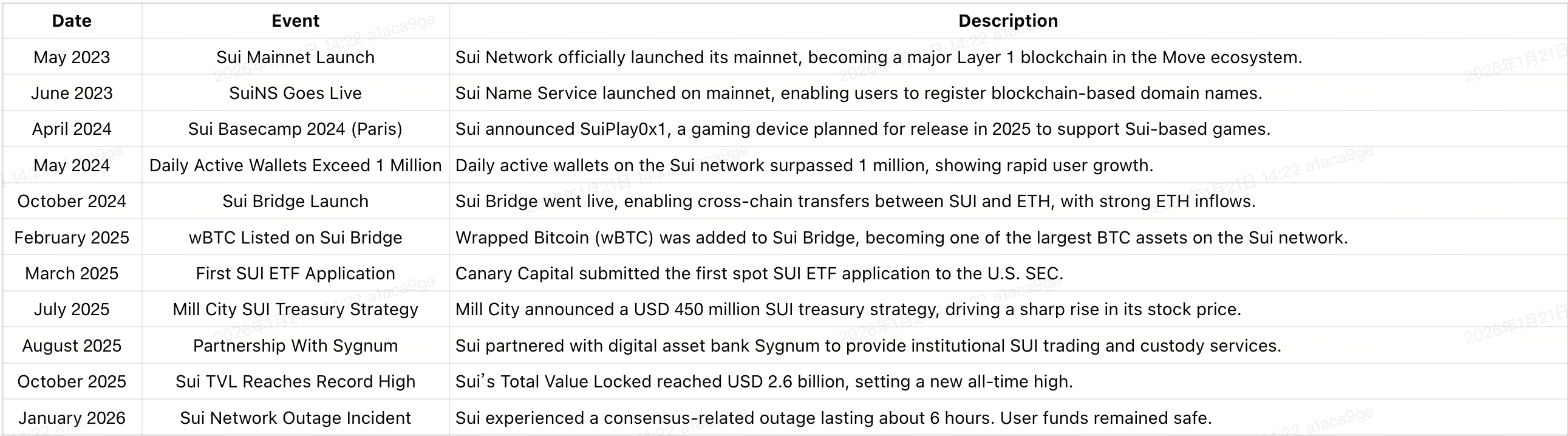
6. Major SUI Milestones Timeline
Glossary
- Aptos: A Move-based Layer 1 blockchain often compared with Sui due to shared language roots and high-performance positioning.
- Bridge: A tool that enables assets to move between blockchains, such as transferring value between Ethereum and the Sui Network.
- DeepBook: A Sui ecosystem infrastructure component associated with liquidity and trading functionality.
- DeFi (Decentralized Finance): Financial services on blockchain networks, including swapping, lending, borrowing, staking, and liquidity provision.
- Finality: The point at which a transaction is considered irreversible on a blockchain.
- Layer 1 (L1): A base blockchain network that processes transactions and secures the ledger without relying on another chain.
- Move: A programming language designed for safer digital asset handling by treating assets as resources with stricter rules.
- Object-centric model: A design where assets and on-chain elements are treated as objects, enabling parallel execution for many non-conflicting transactions.
- Proof of Stake (PoS): A consensus model where validators stake tokens to help secure the network and participate in transaction validation.
- Sui Network: The blockchain network and ecosystem supporting Sui applications, users, validators, and on-chain assets.
- SUI (token): The native token of the Sui blockchain used for fees, staking, and network operations.
- Sui wallet: A wallet that supports holding and interacting with SUI coin and Sui-based assets and applications.
- TVL (Total Value Locked): A commonly used metric showing the total value of assets deposited in DeFi protocols on a blockchain.
Disclaimer
This article is not intended to provide: (i) investment advice or investment recommendations; (ii) an offer or solicitation to buy, sell, or hold digital assets; or (iii) financial, accounting, legal, or tax advice. Digital assets (including stablecoins and NFTs) involve high risk and may be highly volatile. You should carefully consider whether trading or holding digital assets is suitable for you based on your financial situation. For your specific circumstances, consult your legal, tax, or investment professionals. You are responsible for understanding and complying with all applicable local laws and regulations.
About Bitunix
Bitunix is a global cryptocurrency derivatives exchange trusted by over 3 million users across more than 100 countries. At Bitunix, we are committed to providing a transparent, compliant, and secure trading environment for every user. Our platform features a fast registration process and a user-friendly verification system supported by mandatory KYC to ensure safety and compliance. With global standards of protection through Proof of Reserves (POR) and the Bitunix Care Fund, we prioritize user trust and fund security. The K-Line Ultra chart system delivers a seamless trading experience for both beginners and advanced traders, while leverage of up to 200x and deep liquidity make Bitunix one of the most dynamic platforms in the market.
Bitunix Global Accounts
X | Telegram Announcements | Telegram Global | CoinMarketCap | Instagram | Facebook | LinkedIn | Reddit | Medium