

Article Summary
- This article is a technical, step-by-step guide for developers on how to create and launch a meme coin on the Solana blockchain.
- It presents two primary methods: the Easy Mode using a platform like pump.fun, which automates the process, and the Hard Mode, which involves manually using the Solana CLI and SPL token program.
- The guide focuses on the pump.fun method as the most accessible and popular route for meme coin launches, covering token creation, bonding curve mechanics, and the transition to a Raydium liquidity pool.
- The article stresses that launching a coin is easy, but creating value and a community is extremely difficult.
Meme coins can turn a simple idea into a tradable asset fast. You have seen it happen during meme coin season, when new tokens appear every minute, and timelines start to look like a slot machine. The funny part is the meme. The serious part is that most of these tokens go nowhere, and a lot of people lose money.
When learning how to create a meme coin on Solana, you will see two routes. The first uses Pump.Fun, which acts like a Solana meme coin generator and handles the heavy lifting. The second is the manual route with Solana CLI tools, which gives you more control but more ways to mess up. If you later decide to trade tokens, you will usually do it on a crypto exchange or on a DEX, and Bitunix is one example.
This guide will provide a technical walkthrough for creating and launching your own meme coin on the Solana network, covering both the easy automated route and the manual developer process.
The Easy Mode - Using Pump.Fun
Pump.Fun is popular because it reduces token creation to a short form and a wallet signature. It creates the token and sets up a bonding curve market so trading can start right away. It also makes the cost structure simple to understand, since the platform explains how its fixed fee works:
“This 0.015 SOL is taken from the liquidity of the coin and does not require the user to pay this as an additional amount.”
Pump.Fun also frames its launches as open access at the start, which is part of why it’s often used as a quick Solana meme coin generator. It also helps explain why Pump.Fun became such a big part of the ecosystem. Blockworks token stats show more than 16.3 million Pump.Fun tokens launched.
Step 1: Get Your Meme Ready
Before you touch any tooling, decide what you are launching. You need a name, a ticker (usually 3 to 5 letters), a short description, and a square JPG or PNG for the logo.
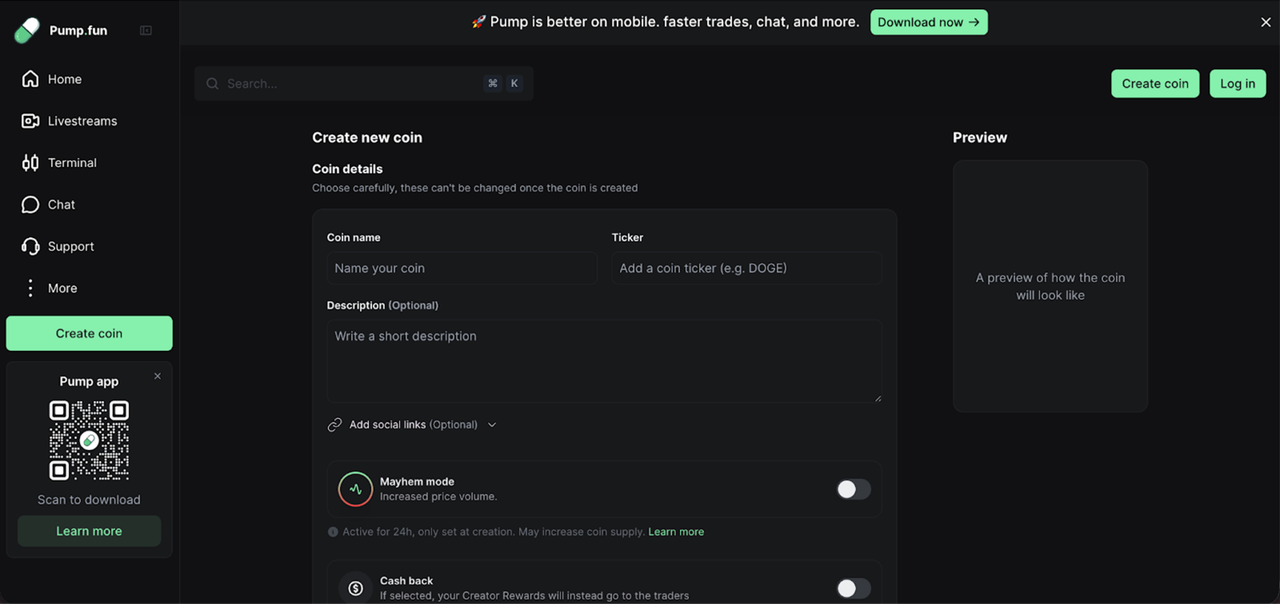
Keep the logo simple and readable at small sizes. Many wallets and trackers display your image as a tiny circle. If the design only works as a big banner, it will look like a blur everywhere else.
Step 2: Go to Pump.Fun
Open Pump.Fun and connect a Solana wallet like Phantom. Keep a bit of SOL in the wallet so you can pay creation and transaction fees. People often keep around 0.02 SOL as a buffer, because it avoids the annoying moment where a transaction fails for being slightly short.
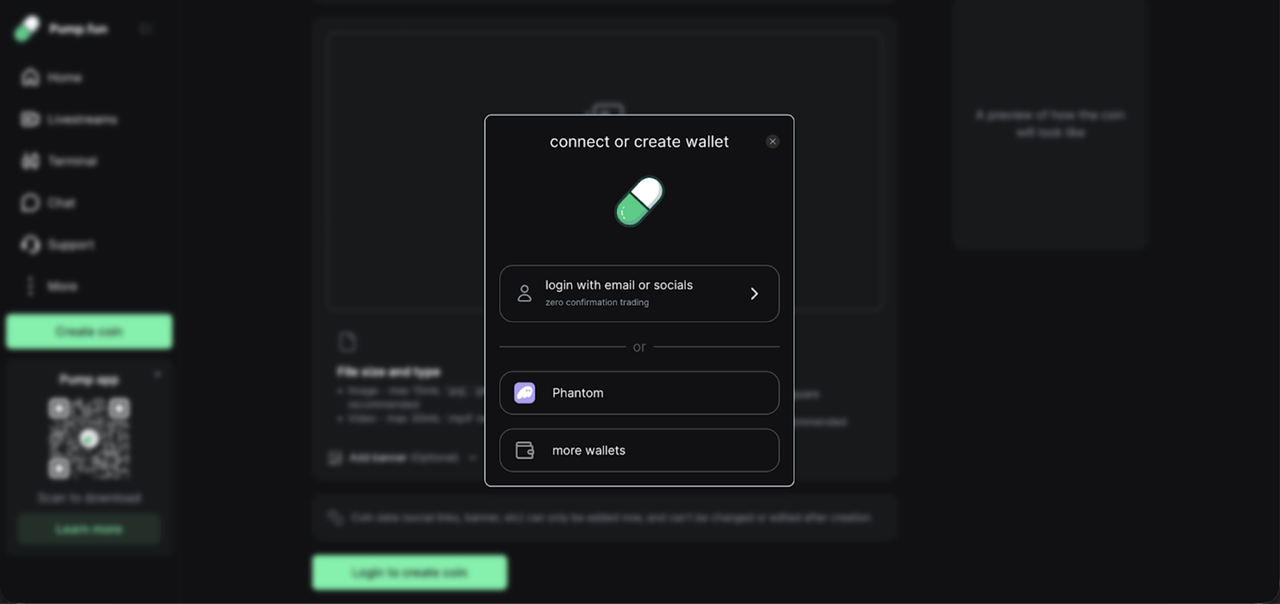
Pump’s own documentation describes a fixed platform fee of 0.015 SOL that includes network fees, and it notes that this fee is taken from the token’s initial sale.
Step 3: Create Your Coin
Fill in the form with the name, ticker, description, and upload the image. Then you click "Create coin" and approve the wallet transaction. Once it confirms, your token exists on-chain and on the Pump.Fun market for it is live.
At this point, you have done the easy part of how to launch a crypto coin. You created a mint, metadata, and a trading venue without writing code. Now you need to understand what the venue actually does.
Step 4: The Bonding Curve
On Pump.Fun, early trading happens against a bonding curve. The simple mental model is that the price increases as more buyers come in, because the curve adjusts the price based on demand and progress. That attracts momentum traders, and it also punishes late entries if the hype cools off.
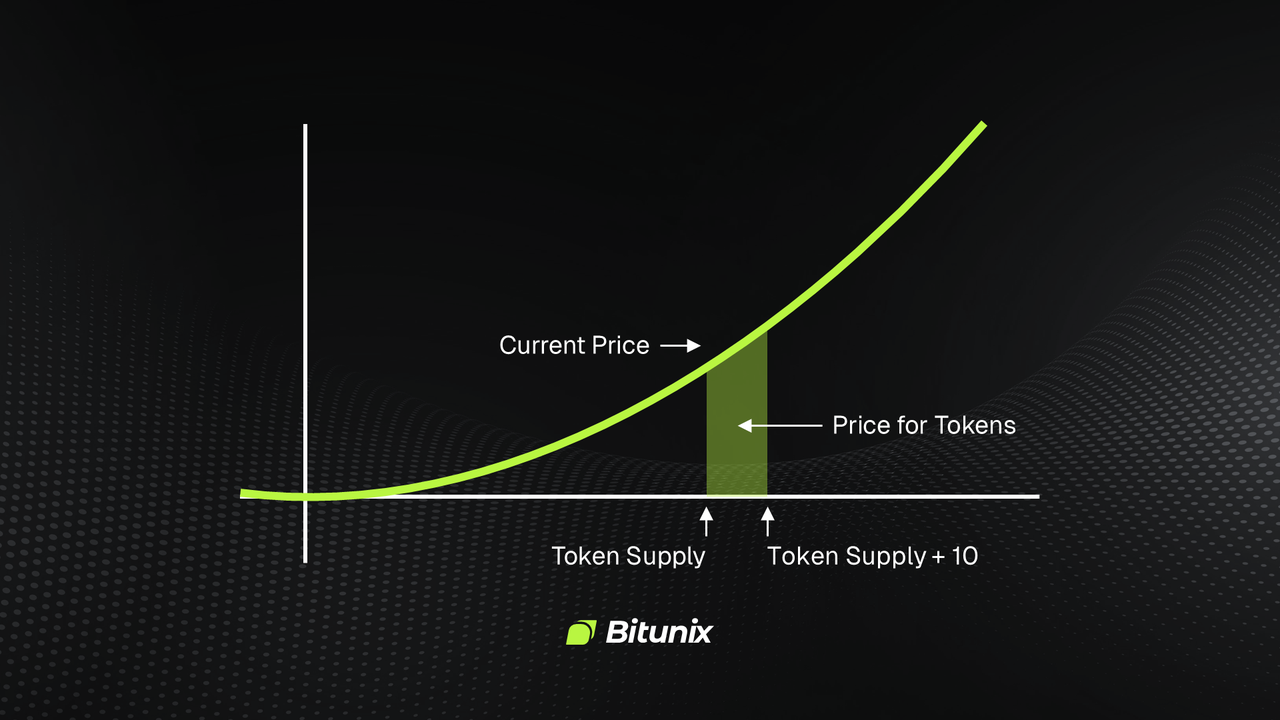
Many Pump.Fun-style launches use a standard supply pattern. One common description is a total supply of1 billion tokens, with about 800 million available for bonding-curve distribution. The exact mechanics can vary by implementation, but the takeaway stays the same: early price discovery is automated, not negotiated by an order book.
Also note the incentives. Protocols that automate launches at this scale can generate serious fee revenue. DefiLlama’s protocol page for Pump.Fun shows annualized revenue in the hundreds of millions (one snapshot shows roughly $374.8m annualized revenue, and cumulative revenue near $953.8m).
Step 5: Reaching Raydium
Pump.Fun tokens can graduate from the bonding curve to an external DEX market. Pump.Fun's own bonding curve pages describe a market cap milestone where liquidity from the bonding curve gets deposited into Raydium and burned. Blockworks has also described the same general mechanic, noting Pump tokens that reach about $69,000 market cap get liquidity deposited into a Raydium pool and burned.
In practice, this graduation changes the game. You move from a platform-controlled bonding curve market to a broader DEX environment where liquidity, routing, and trader access look more like any other token. That sounds like a win, but it also means your token now competes with everything else for attention and liquidity.
The Hard Mode - Manual Creation with Solana CLI
This method gives you control over supply, authorities, metadata choices, and how you seed liquidity. It also assumes you are comfortable with a terminal and the idea that one wrong command can permanently change what you can do with the token.
Here is the official framing from Solana’s docs about the token standard you are interacting with: "Tokens on Solana are referred to as SPL (Solana Program Library) Tokens. This section covers the basic concepts of how tokens are represented on Solana."
And yes, that includes meme coins. Under the hood, your meme coin is an SPL token with a mint, token accounts, and authorities.
Step 1: Set Up Your Environment
Install the Solana tool suite and the SPL-Token CLI, then point your configuration at mainnet and your keypair. You also need SOL to pay rent and transaction fees for creating accounts.
A typical setup sequence looks like this:
solana --version
solana config get
solana config set --url https://api.mainnet-beta.solana.com
solana-keygen new --outfile ~/.config/solana/id.json
solana airdrop 1 # use devnet when practicing, not mainnet
When you practice, use devnet so you can make mistakes cheaply. When you go to mainnet, every action costs real SOL and is visible forever.
Step 2: Create the Token
Use the SPL token CLI to create a mint. This command returns a mint address, which is the identifier for your token on-chain:
spl-token create-token
This step is what most people mean when they say create a Solana token. You are creating the mint account and setting initial authorities. From here on, your later safety choices depend on how you manage those authorities.
Step 3: Create an Account for the Token
You need a token account to hold your token balance. The canonical choice is an associated token account, but the CLI can create a token account directly. For example:
spl-token create-account <MINT_ADDRESS>
If you are building an app, you will typically use the associated token account standard so users do not have to manage multiple addresses manually.
Step 4: Mint the Tokens
Mint the total supply (or mint in phases if that fits your plan). Once tokens exist, people will treat the supply as real, even if your roadmap is not.
spl-token mint <MINT_ADDRESS> 1000000000 <TOKEN_ACCOUNT_ADDRESS>
If you plan to burn mint authority later, decide your total supply first. If you keep mint authority forever, sophisticated traders will treat your token as high risk, because you can inflate supply at any time.
Step 5: Add Metadata (Name and Image)
Solana token metadata typically lives off-chain and gets referenced on-chain. A common route is using Metaplex tooling to upload metadata JSON and an image to Arweave, then link that metadata to the mint.
This is where many DIY launches break. People upload an image that later disappears, or they ship metadata that does not match explorers, or they forget that token trackers want consistent social links and a clean symbol.
Step 6: Create a Liquidity Pool
This is the hardest part for most first-timers. You need to create a market and a pool on a DEX like Raydium, then deposit a starting amount of your token and SOL (or USDC) to seed liquidity.
The initial price is just the ratio you provide. If you deposit 10 SOL and 1,000,000 tokens, you are implicitly setting the starting price at 0.00001 SOL per token, before slippage and fees.
Step 7: Lock Liquidity and Burn Mint Authority
If you do not do these steps, traders will assume the worst. Locking liquidity makes it harder for you to pull funds from the pool. Burning mint authority removes your ability to mint more tokens later.
People use the term rug pull for a reason. It is usually not clever hacking. It is a creator keeping control, then using that control to drain value. If you want to build trust, you remove the controls that let you harm holders.
I’ve Launched My Coin... Now What?
The technical launch is the easy part, but during altcoin season the real challenge is staying visible and credible for more than a weekend. Your token competes with thousands of others, and many of them launched the same day you did.
If you want a real community, you show up where traders are. X and Telegram are the usual starting points. You post memes, but you also answer basic questions about supply, liquidity, and what you did with authorities. If you dodge those questions, people assume you are hiding something.
Getting listed on CoinGecko and CoinMarketCap usually requires consistent metadata, a verified contract address, a logo, and active links. It also helps if the token has sustained volume and a real market on a DEX or exchange. CoinMarketCap has even covered Pump.Fun's activity and fee milestones, which shows how closely trackers watch these launch ecosystems.
Conclusion: You’ve Made a Token, Not a Treasure
You now have two paths. Pump.Fun helps you launch quickly with a bonding curve market and potential Raydium migration. The CLI route gives you control, but it demands more competence and more responsibility.
By now, you have a clear picture of how to create a meme coin on Solana without guessing what each step does. You also know why the same token can look safe one day and sketchy the next, based on liquidity, authorities, and transparency. If you later watch your token trade against pairs like SOL/USDT, remember that price is only one signal, and it is often the loudest liar.
If you want to explore how tokens trade after launch, you can look at markets on Bitunix as a neutral example of where liquidity and global access can exist beyond the launchpad stage. Just download the app, register your account, and start using Bitunix for trading and much more.
FAQ Section
How much does it cost to create a meme coin on Solana?
On Pump.Fun, the docs describe a fixed 0.015 SOL platform fee that includes network fees. Many creators keep around 0.02 SOL to avoid failures. Manual launches cost more because you pay for accounts, metadata, and liquidity.
Is creating a meme coin legal?
It depends on where you live and how you market it. Creating a token is usually legal, but misleading claims, market manipulation, or selling something that qualifies as a security can create legal trouble. Talk to a qualified lawyer in your jurisdiction.
What is a rug pull?
A rug pull usually means the creator uses control to drain liquidity or dump supply on buyers. It often involves unlocked liquidity, retained mint authority, or hidden allocations.
What is a bonding curve?
A bonding curve is a pricing mechanism where the token price changes based on buying and selling activity. On Pump.Fun, early trading uses a bonding curve before a token migrates to a DEX pool.
How do I get my coin’s logo to show up in my wallet?
You need correct token metadata and a reliable image URL, often hosted on Arweave via Metaplex tooling. Wallets also rely on token lists and indexers, so it can take time. Make sure your symbol, name, and image are consistent.
What is burning liquidity?
In many contexts, it means permanently removing access to the LP tokens that represent your share of the pool. If you burn or lock LP tokens, you make it harder to withdraw the pooled assets later. Traders treat this as a trust signal.
Can I create a meme coin with no coding experience?
Yes, with Pump.Fun you can launch using a wallet and a form, since it automates token creation and the bonding curve market. The manual CLI route requires command-line comfort and careful key management.
How do meme coin developers make money?
Common methods include holding an allocation, earning creator rewards where available, or benefiting from token appreciation if the community grows.
What is the difference between a token and a coin?
On Solana, most new assets are tokens created under the SPL token standard. A coin often refers to a chain’s native asset, like SOL.
Why are so many meme coins launched on Solana?
Fast confirmations and low transaction costs make rapid trading and experimentation easier. Launchpads like Pump.Fun lower the barrier further, which helps explain the huge number of tokens created there.
Glossary
- SPL Token: Solana Program Library token standard used for most fungible tokens on Solana.
- Mint: On-chain account that defines a token, including supply rules and authorities.
- Mint Authority: Key that can create new tokens for a mint, unless revoked or burned.
- Freeze Authority: Key that can freeze token accounts if enabled, often removed for trust.
- Token Account: On-chain account that holds balances for a specific SPL token.
- Associated Token Account: Standard token account derived from a wallet and mint for consistent UX.
- Solana CLI: Command-line tools to manage wallets, configs, and on-chain actions.
- SPL-Token CLI: Command-line tool for creating mints, accounts, and minting SPL tokens.
- Bonding Curve: Automated pricing model where price changes based on demand and token progress.
- Liquidity Pool: Pair of assets locked in a DEX to enable swaps and price discovery.
- LP Tokens: Tokens representing your share of a liquidity pool and claim on pooled assets.
- Lock Liquidity: Restricting access to LP tokens so liquidity cannot be withdrawn easily.
- Burn: Sending tokens or authority to an unusable address to permanently remove control.
- Metaplex: Tooling and standard for attaching metadata to Solana assets via off-chain storage.
- Arweave: Permanent storage network often used to host token images and metadata files.
About Bitunix
Bitunix is a global cryptocurrency derivatives exchange trusted by over 3 million users across more than 100 countries. The platform is committed to providing a transparent, compliant, and secure trading environment for every user. Bitunix offers a fast registration process and a user-friendly verification system supported by mandatory KYC to ensure safety and compliance. With global standards of protection through Proof of Reserves (POR) and the Bitunix Care Fund, Bitunix prioritizes user trust and fund security. The K-Line Ultra chart system delivers a seamless trading experience for both beginners and advanced traders, while leverage of up to 200x and deep liquidity make Bitunix one of the most dynamic platforms in the market.
Bitunix Global Accounts
X | Telegram Announcements | Telegram Global | CoinMarketCap | Instagram | Facebook | LinkedIn | Reddit | Medium
Disclaimer: Trading digital assets involves risk and may result in the loss of capital. Always do your own research. Terms, conditions, and regional restrictions may apply.