
What Is QNT?
Quant (QNT) is a blockchain infrastructure project focused on cross-chain interoperability. Its primary goal is not to create another standalone blockchain, but to solve the challenge of inefficient communication and asset transfer between different blockchain networks.
Quant was founded and developed by Gilbert Verdian around 2018. With a background in fintech and cybersecurity, Verdian had previously held key security and architecture roles within the UK government and various financial institutions. From his perspective, while blockchain technology was advancing rapidly, individual networks remained highly fragmented. Assets, data, and applications could not move freely across different blockchains — a problem similar to the system silos that existed during the early development of the internet.
To address this structural challenge, Quant introduced the Overledger architecture. Rather than modifying the underlying protocols of existing blockchains, Overledger aims to create an "operating system above blockchains" that enables standardized communication and collaboration between different networks.
QNT serves as the native utility token of the Quant ecosystem, supporting functions such as service fee payments, access to network resources, and enterprise application integration.
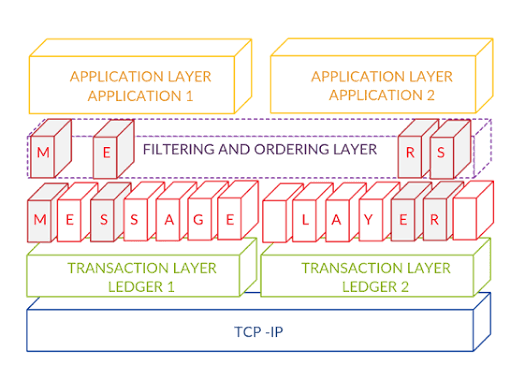
Overledger Architecture: The "Operating System Layer" for Blockchain
Quant's most representative technical design is the Overledger Network, which is not intended to replace existing blockchains but to serve as an interoperability layer that connects different networks. Under this architecture, various blockchains (such as Ethereum, Bitcoin, and enterprise private blockchains) are treated as underlying ledger systems, while Overledger operates above them to handle standardized cross-chain messaging and application interactions.
Through the Overledger API, developers can interact with multiple blockchains simultaneously without redeploying smart contracts, enabling applications to operate across different networks more efficiently.
The key innovation behind this design is abstraction layer decoupling. Applications no longer need to rely on the technical characteristics of a single blockchain. Instead, Overledger enables cross-chain logic orchestration, transforming blockchains from isolated systems into a composable network.
At the enterprise level, Quant places particular emphasis on enabling financial institutions and government-grade systems to connect with blockchain technology. This allows existing IT infrastructures to gradually adopt blockchain solutions without requiring a complete architectural overhaul.
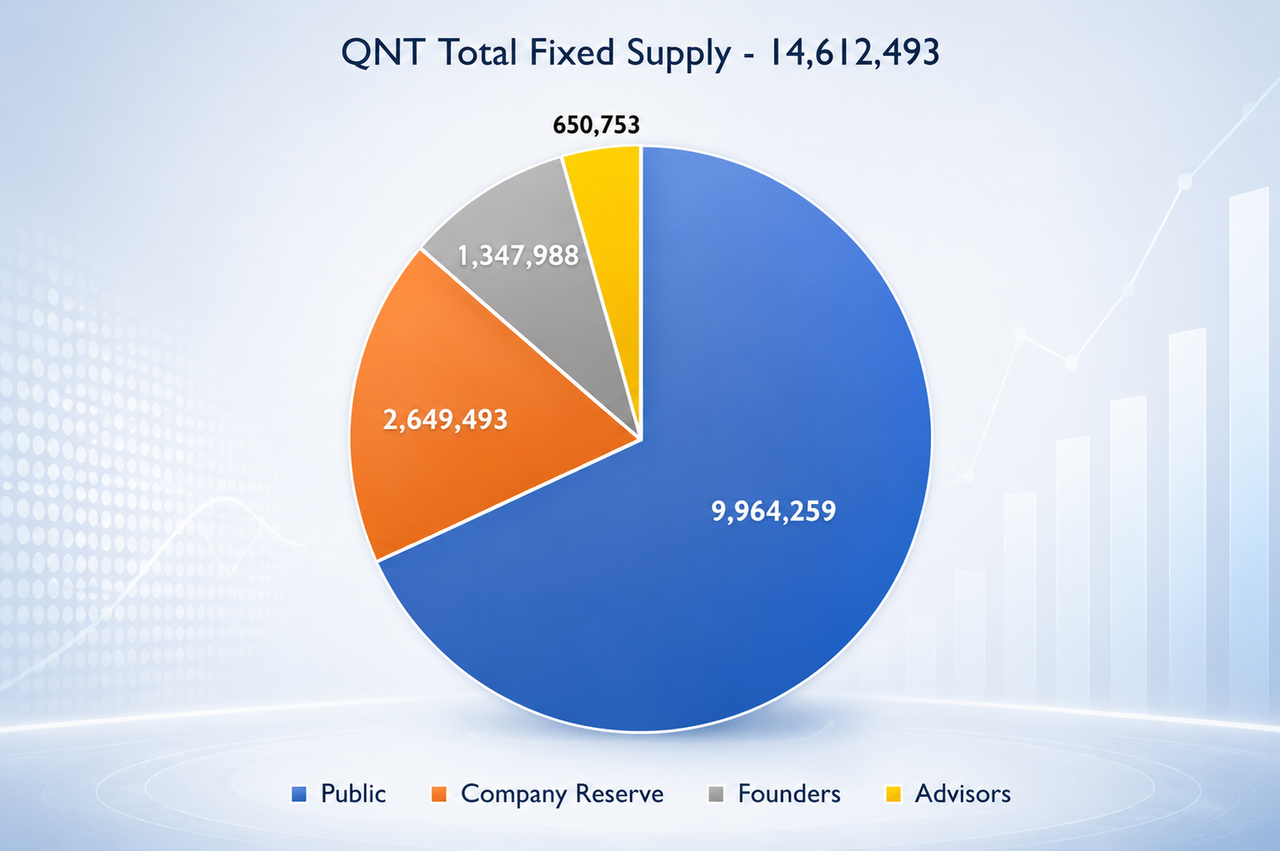
QNT Token Model: Enterprise Licensing and Network Access
QNT's token model differs significantly from that of most blockchain assets. Its design is closer to a network access credential rather than a purely transaction-driven asset. Within the Quant ecosystem, developers and enterprises need to hold and lock a certain amount of QNT to access Overledger APIs, cross-chain services, and data access capabilities. Under this model, QNT serves three core functions:
- A payment tool for network access fees, used to pay for Overledger cross-chain services;
- An enterprise licensing resource, used to unlock API access permissions;
- A component of ecosystem security and resource allocation, helping maintain stable network usage and prevent abuse.
Unlike traditional models that rely on mining or staking mechanisms, QNT demand is more directly driven by enterprise usage requirements. Its value is closely tied to the actual level of system integration and adoption.
This positions Quant closer to an infrastructure-focused software network rather than a purely financial protocol.
Ecosystem Applications: Connecting TradFi and Blockchain Systems
Quant's primary use cases focus on enterprise blockchain integration and the modernization of financial infrastructure. In the banking and financial sectors, Quant is designed to address challenges such as cross-system settlement and data synchronization, enabling traditional financial systems (such as core banking systems) to interact with multiple blockchains simultaneously without requiring separate integrations for each blockchain's technical standards.
At the government and regulatory technology level, Overledger's architecture can also be used to build cross-system data-sharing frameworks, allowing different institutions to exchange information while maintaining data isolation and security.
As the multi-chain ecosystem continues to expand, Quant's positioning is gradually evolving from a "blockchain interoperability tool" into a "Web3 infrastructure communication layer." Its core value lies in reducing the complexity and cost of cross-chain integration while providing a standardized entry point for enterprise-level Web3 applications.
How to Buy QNT
For most users, the primary way to acquire QNT is through cryptocurrency trading markets. Purchasing QNT through centralized crypto exchanges such as Bitunix provides users with a convenient way to access the asset. These platforms support buying crypto assets directly with fiat currencies or stablecoins such as USDT, and some also offer instant purchases via credit cards, significantly lowering the entry barrier for new users.
Before using an exchange, users typically need to register an account and complete Know Your Customer (KYC) verification to comply with global Anti-Money Laundering (AML) and Counter-Terrorist Financing (CTF) regulations. With its comprehensive risk management system and asset security technologies, Bitunix provides users with a reliable channel to participate in the QNT ecosystem and explore opportunities within blockchain interoperability.
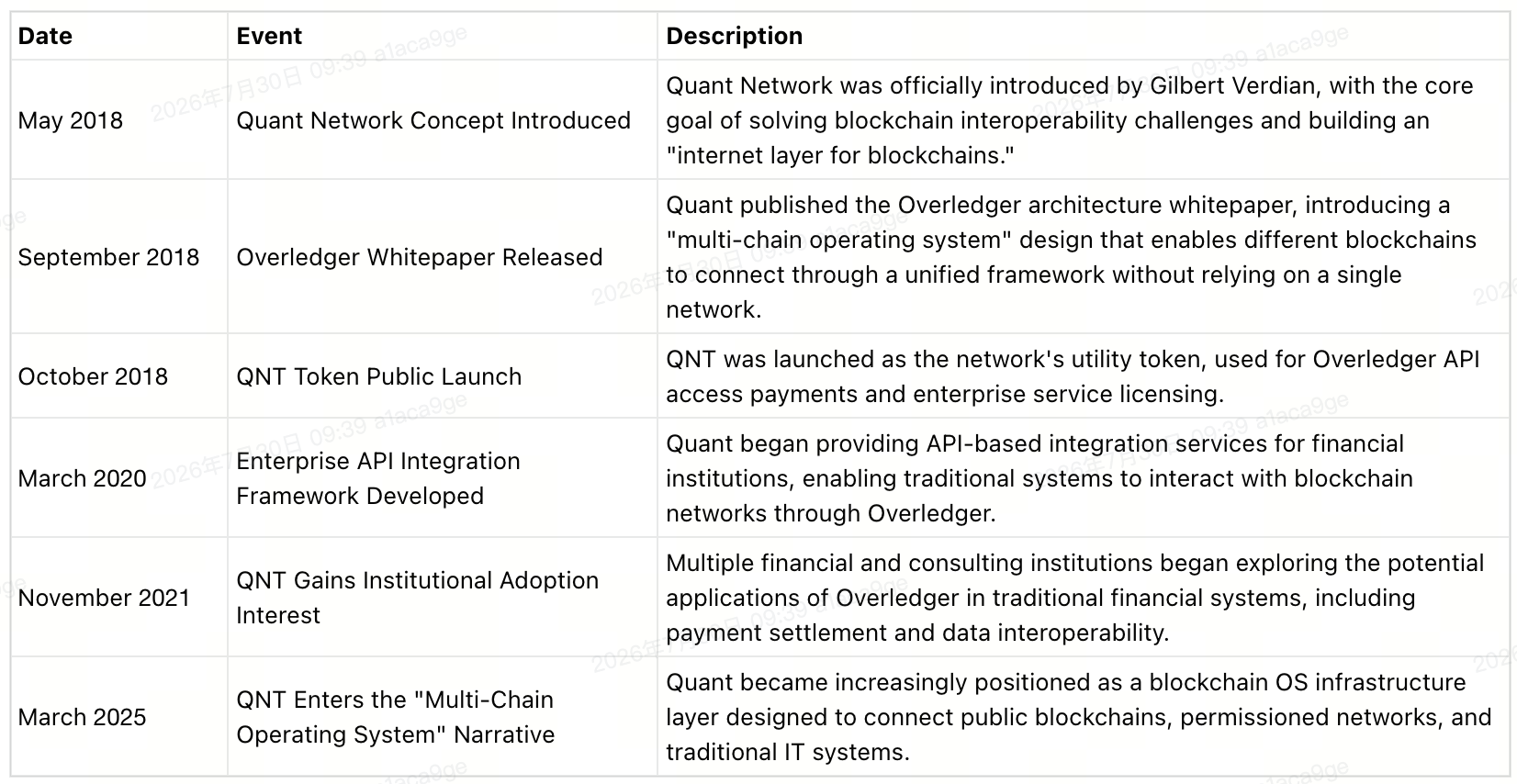
QNT Timeline: Key Milestones
Disclaimer
This article is not intended to provide:
(i) investment advice or investment recommendations;
(ii) an offer or solicitation to buy, sell, or hold digital assets; or
(iii) financial, accounting, legal, or tax advice.
Digital assets you hold, including stablecoins and NFTs, involve significant risks and may experience substantial price volatility. You should carefully consider whether trading or holding digital assets is suitable for you based on your financial circumstances.
For advice specific to your situation, please consult your legal, tax, or investment professionals. You are solely responsible for understanding and complying with all applicable local laws and regulations.
About Bitunix
Bitunix is a global cryptocurrency derivatives exchange trusted by over 5 million users across more than 150 countries/districts. The platform is committed to providing a transparent, compliant, and secure trading environment for every user. Bitunix offers a fast registration process and a user-friendly verification system supported by mandatory KYC to ensure safety and compliance.
With global standards of protection through Proof of Reserves (POR) and the Bitunix Care Fund, Bitunix prioritizes user trust and fund security. The K-Line Ultra chart system delivers a seamless trading experience for both beginners and advanced traders, while leverage of up to 200x and deep liquidity make Bitunix one of the most dynamic platforms in the market.
Bitunix Global Accounts
X | Telegram Announcements | Telegram Global | CoinMarketCap | Instagram | Facebook | LinkedIn | Reddit | Medium