

Three-Step SOP Checklist For Trade Decision-Making
Step 1: Trading Preparation Is The Pre-Trade Work
Trading preparation is not passive waiting. It is an active process of selection and setup. You can break it down into these core actions:
- Trend Confirmation: Trade with market direction, filter out choppy noise, and reduce losses from counter-trend entries.
- Key Level Anchoring: Define clear support and resistance thresholds to improve decision accuracy and identify your safe zone and risk zone before entry.
- Precise Entry Planning: Enter where the trend and key levels align, using minimal cost to capture maximum price movement potential.
- Risk Plan First: Pre-calculate invalidation and stop-loss levels, position sizing, and contingency plans for extreme volatility to avoid emotional decisions.
- Opportunity Pool Pre-Screening: Focus only on the most familiar and repeatable setups. Reject unclear trades that require constant second-guessing to improve execution efficiency.
The essence of trading is patience: take only the most familiar, high-confidence setups, and decisively skip anything that requires excessive hesitation. The real progression is increasing the number of high-probability opportunities, then executing with consistency.
Trading Entry Conditions Filtering Checklist: Trend, Key Levels, And Entry Signals Are All Required
| Preparation Dimension | Judgment Criteria | Action To Take | Exclusion Criteria |
|---|---|---|---|
| Trend Confirmation | Clear trend structure (clean uptrend or downtrend channels) with bullish or bearish moving average alignment | Confirm the trend on higher timeframes (for example, 4H and 1D) | Sideways chop, no direction, frequent false breakouts |
| Key Level Validation | Support or resistance has been tested and respected at least twice (multiple tests without a break) | Mark key support/resistance zones and Fibonacci retracement levels | Levels are unclear or lack historical validation |
| Entry Signal Triggered | Reversal candlestick pattern appears (bullish engulfing or bearish engulfing) with rising volume | Wait for a pullback into the key level plus trend confirmation, then look for a strong 4H reaction with volume expansion and a clear reversal candle | Single-factor signal only, weak or fading volume |
Use Price Alerts If You Cannot Watch The Market
If you cannot monitor the chart in real time, set the entry trigger price conditions using Bitunix Price Alert. This helps you catch the entry window promptly even when you are away from the screen.
Bitunix Price Alert Setup Guide
App
- Open the Bitunix App and log in.
- Go to the Futures trading page, tap More (three dots) in the top-right corner, then select Price Alert.
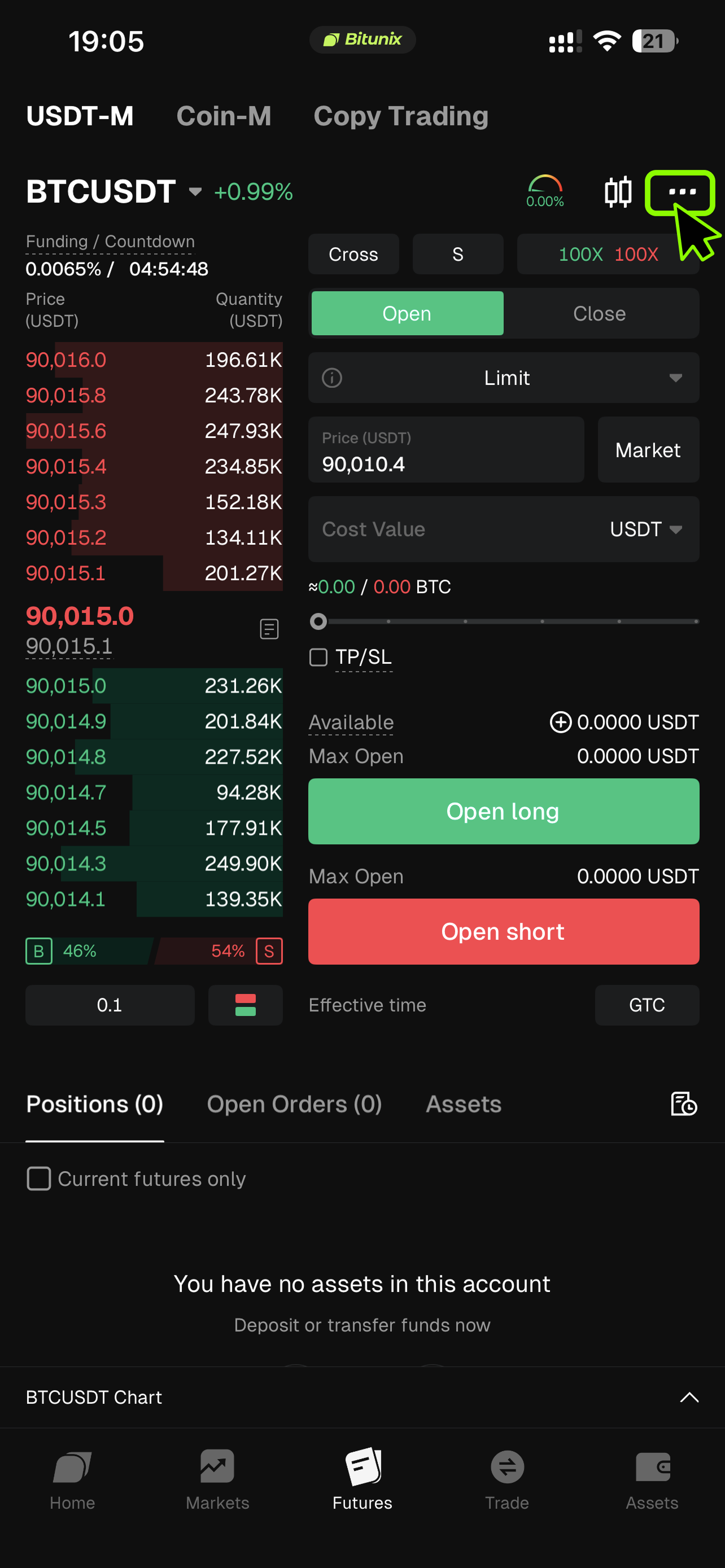
- Select the trading pair (for example, BTCUSDT), then choose the alert type:
Price Up/Down
Up/Down Percentage
- Enter the target price or percentage, set the notification frequency and method, then tap Create.
Web
- Open the Bitunix website, log in, and go to the Futures trading page.
- Click the Price Alert icon in the top-right corner, then click Create Alert.
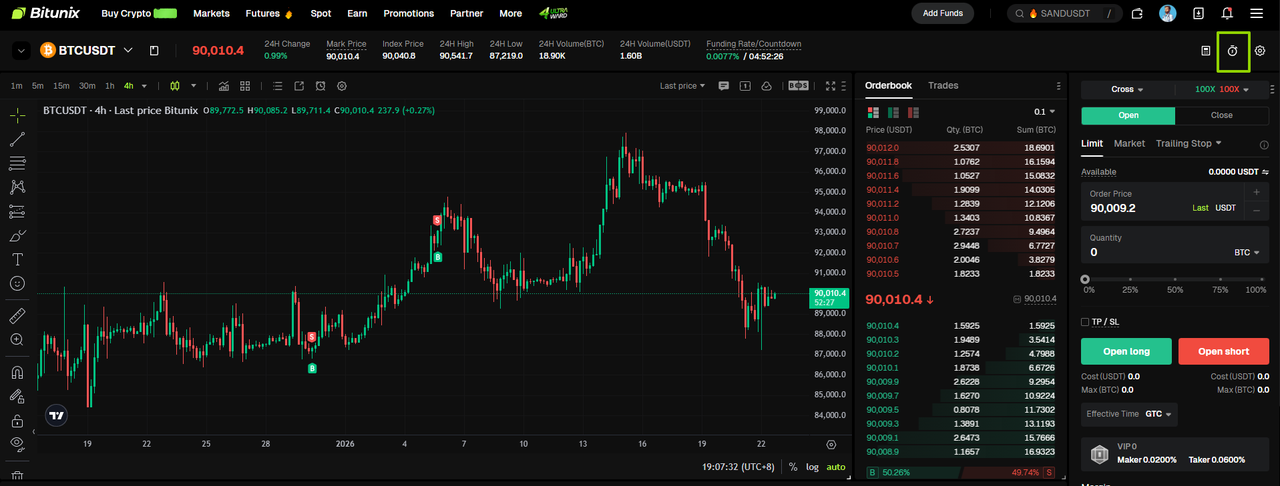
- Select the trading pair (for example, BTCUSDT), then choose the alert type:
Price Up/Down
Up/Down Percentage
- Enter the target price or percentage, set the notification frequency and method, then click Create.
Step 2: Confirmation:Only Execute Low-Difficulty Trades With High Certainty
In trading, consistent profitability comes from doing a few key things well:
- Identify effective patterns and repeat them.
- Recognize invalid setups and avoid them.
- Long-term profitable traders focus on low-difficulty, high-probability trades.
- Traders who struggle often chase complex, low-confidence setups.
- What Is a Low-Difficulty Trade?
- A low-difficulty trade is one that follows a simple, familiar rule set:
- Only trade setups you fully understand.
- Never enter without a standardized structure.
- Every trade must be rule-based, not emotional.
- Confidence comes from clarity, not complexity.
Case Study A
Trend Direction ✅ + Key Level ❌ + Entry Signal ❌
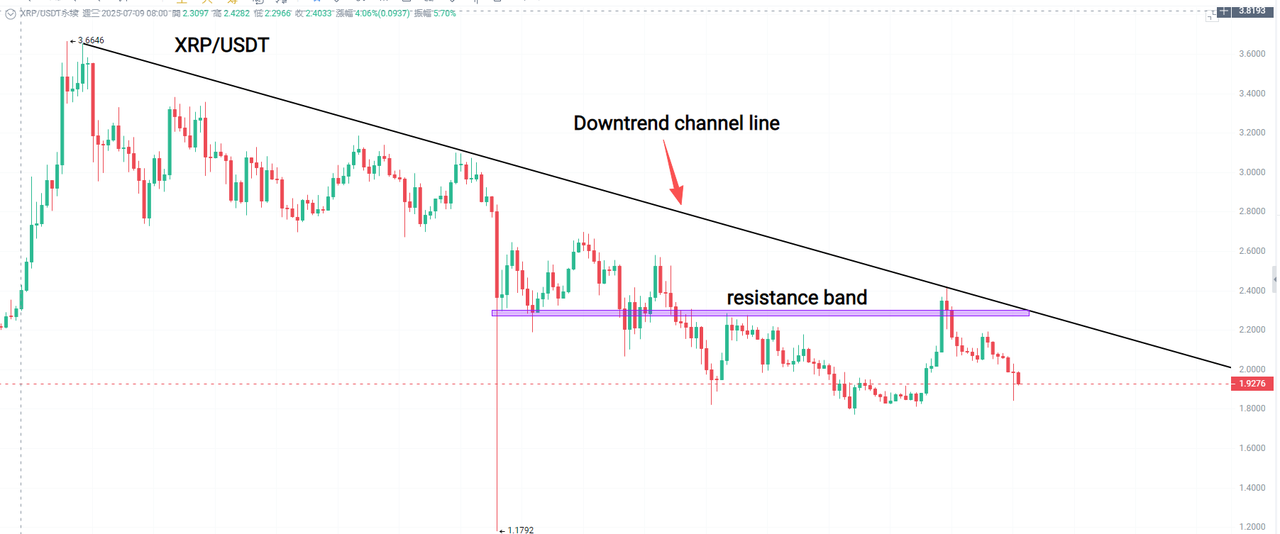
📊XRP/USDT Short Strategy Example
Trend Direction
The market is in a clear bearish trend. ✅
Key Level
Price has not yet touched the downtrend channel resistance or confirmed a strong resistance zone. Patience is required. ❌
Entry Signal
There is no bearish candlestick confirmation at resistance, and volume does not support a reversal. ❌
Conclusion
Continue waiting. Short entry conditions are not met.
Case Study B
Key Level ✅ + Trend Direction ❌ + Entry Signal ❌
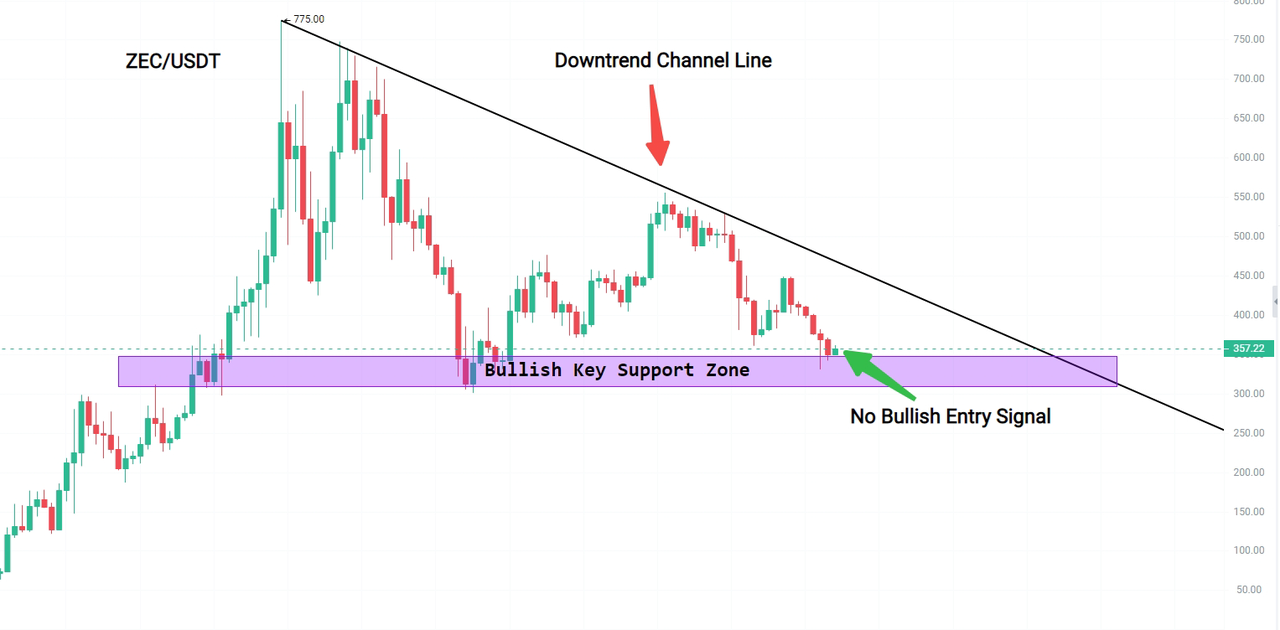
📊ZEC/USDT Long Strategy Example
Trend Direction
The market is currently in a clear bearish trend. ❌
Key Level
Price has retraced into a bullish key support zone, showing a potential temporary stabilization area. ✅
Entry Signal
There is no strong bullish rebound from support. No confirmed bullish candlestick patterns such as a bullish engulfing or pin bar are present on the 4H timeframe, and volume confirmation is missing. ❌
Conclusion
Continue waiting. The conditions for entering a long position are not met.
Case Study C
Key Level ✅ + Entry Signal ✅ + Trend Direction ❌
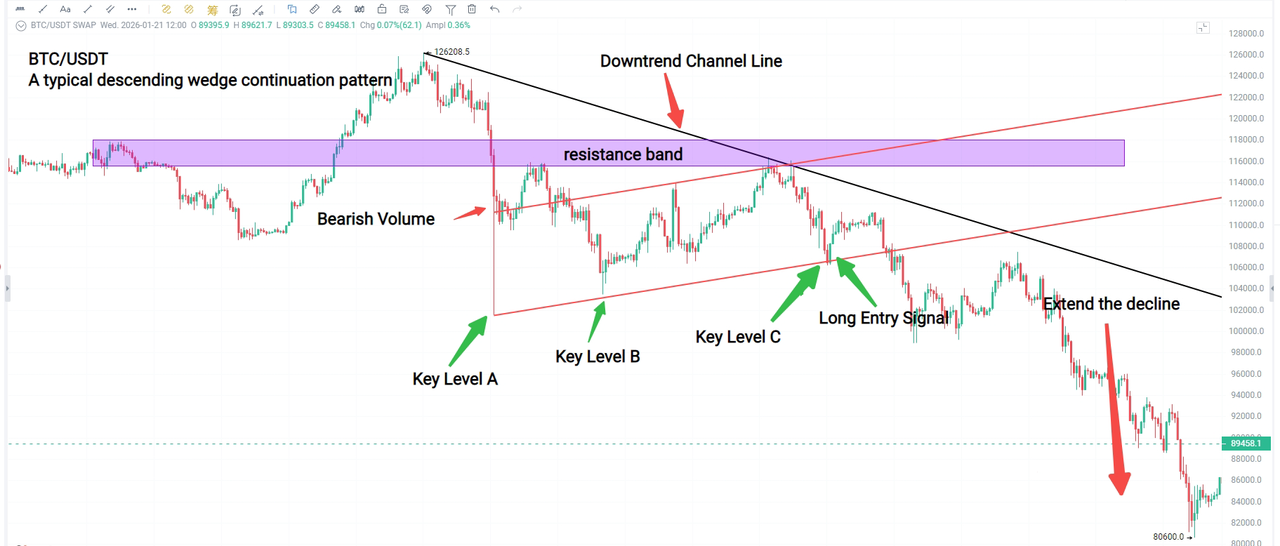
📊BTC/USDT Long Strategy Example
Trend Direction
The broader market remains in a clear bearish trend. ❌
Key Level
Price has tested wedge support through three consecutive pullbacks, confirming the key support zone as a valid reaction area. ✅
Entry Signal
After the third support test, price reacted quickly and the 4H chart printed a bullish engulfing candle, confirming a bullish entry trigger at the key level. ✅
Conclusion
Even with a confirmed key level and entry trigger, a long is still lower probability because it is against the dominant downtrend. The correct action is to stand aside and wait unless your strategy explicitly allows counter-trend longs with strict risk controls.
Trading Insight: Trend Inertia (Livermore Principle)
Livermore’s concept that “once a trend is formed, it does not change easily” reflects the strong inertia of market trends. Trends are driven by sustained capital flow, trader sentiment, and market consensus.
Until a clear reversal structure appears, trading in the direction of the dominant trend generally offers a higher win rate. This is why trend-following remains the top priority in professional trading systems.
Case Study D
Trend Direction ✅ + Key Level ✅ + Entry Signal ❌
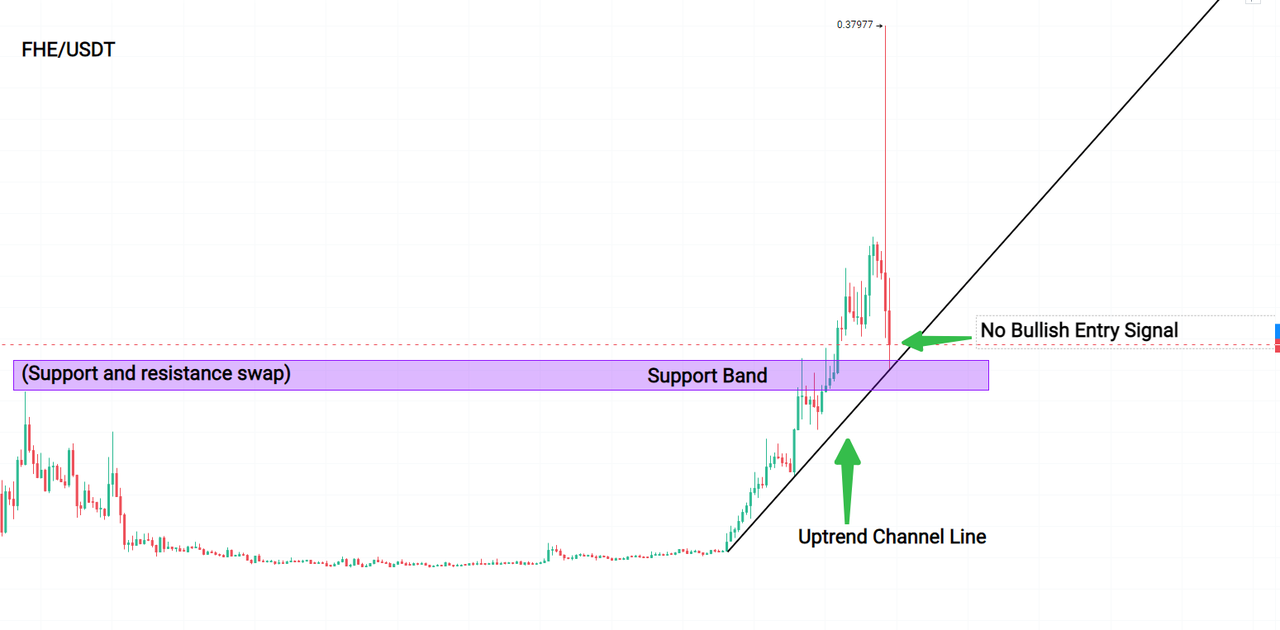
📊FHE/USDT Long Strategy Example
Trend Direction
Although the recent high triggered a sharp pullback, the uptrend channel structure remains intact. The overall market bias is still bullish. ✅
Key Level
Price has retraced to the previous resistance zone, which has now flipped into a support band. This confirms a valid support–resistance swap and a strong key level reaction area. ✅
Entry Signal
Price did not show a fast bullish rebound from the support band. On the 4H timeframe, there were no bullish reversal patterns such as a bullish engulfing candle or strong volume confirmation. ❌
Conclusion
Remain on standby. The long entry criteria have not been met.
Case Study E
Trend Direction ✅ + Key Level ✅ + Entry Signal ✅
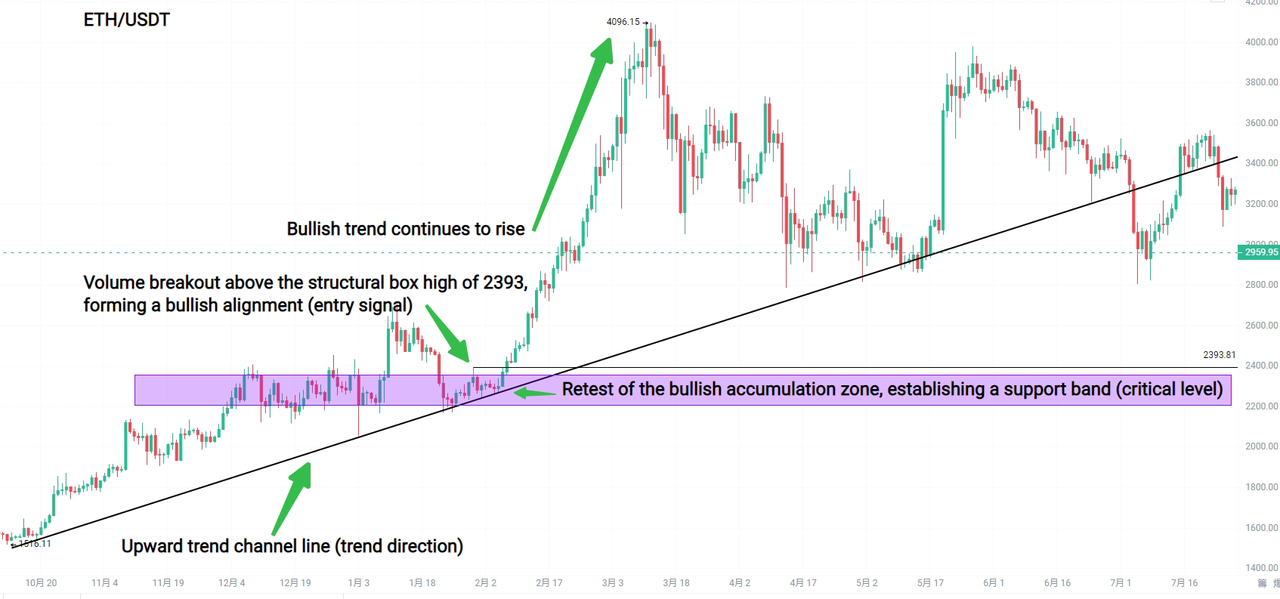
📊ETH/USDT Long Strategy Example
Trend Direction
The market is in a clear and well-structured bullish trend, supported by a rising trend channel and higher highs. ✅
Key Level
Price retraced into the previous bullish accumulation zone, which successfully flipped into a support band. This confirms a valid support–resistance swap and a strong key reaction level. ✅
Entry Signal
Price broke above the structural high at 2393 with strong volume, forming a bullish breakout. After the breakout, price pulled back to the support band and continued higher, confirming a bullish continuation entry signal. ✅
Conclusion
The trend direction, key level, and entry signal are fully aligned. This setup meets all the conditions for a high-probability long position.
Trading Insight: Trend Inertia (Livermore Principle)
Livermore’s concept that “once a trend is formed, it does not change easily” reflects the strong inertia of market trends. Trends are driven by sustained capital flow, trader sentiment, and market consensus.
Until a clear reversal structure appears, trading in the direction of the dominant trend generally offers a higher win rate. This is why trend-following remains the top priority in professional trading systems.
Summary
1) Triple Confirmation Check
A trade is valid only when all three conditions are met:
Trend Direction ✅ + Key Level ✅ + Entry Signal ✅ = Tradable Opportunity
If any one of these elements is missing, stand aside.
Do not force a trade.
2) Difficulty Level Screening
Classify every setup by certainty level:
- High Certainty (Low Difficulty) Trend, key level, and entry signal are aligned. Market sentiment supports the direction. These are your core execution setups.
- Medium Certainty Only two conditions align. Either take a very small probe position or skip the trade.
- Low Certainty Only one condition aligns. No trade. Automatically excluded.
Step 3: Risk Control
Applied Throughout the Entire Trading Process
1、Before Entry
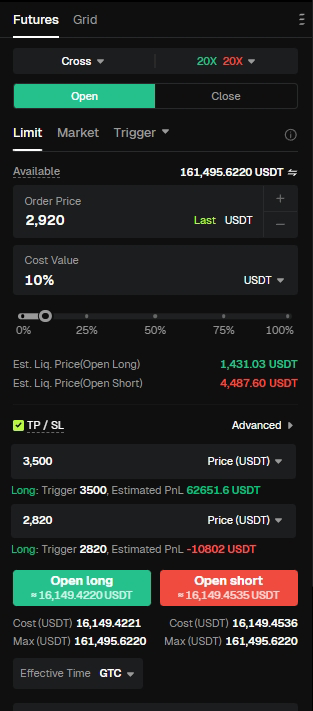
- Stop-Loss Rule Maximum risk per trade should not exceed 10% of total account equity.
- Leverage Control For high-certainty setups, leverage should be no more than 20×.
- Position Sizing For high-certainty trades, position size should be ≤ 30% of account equity. If certainty is not high, do not open a position.
Pending Order Positioning Demo
2、While In Position
- Dynamic Trend Tracking
Hold the position as long as the trend structure remains intact.
Exit immediately when the trend breaks or reverses.
Position Scenario Demo (ETH/USDT)
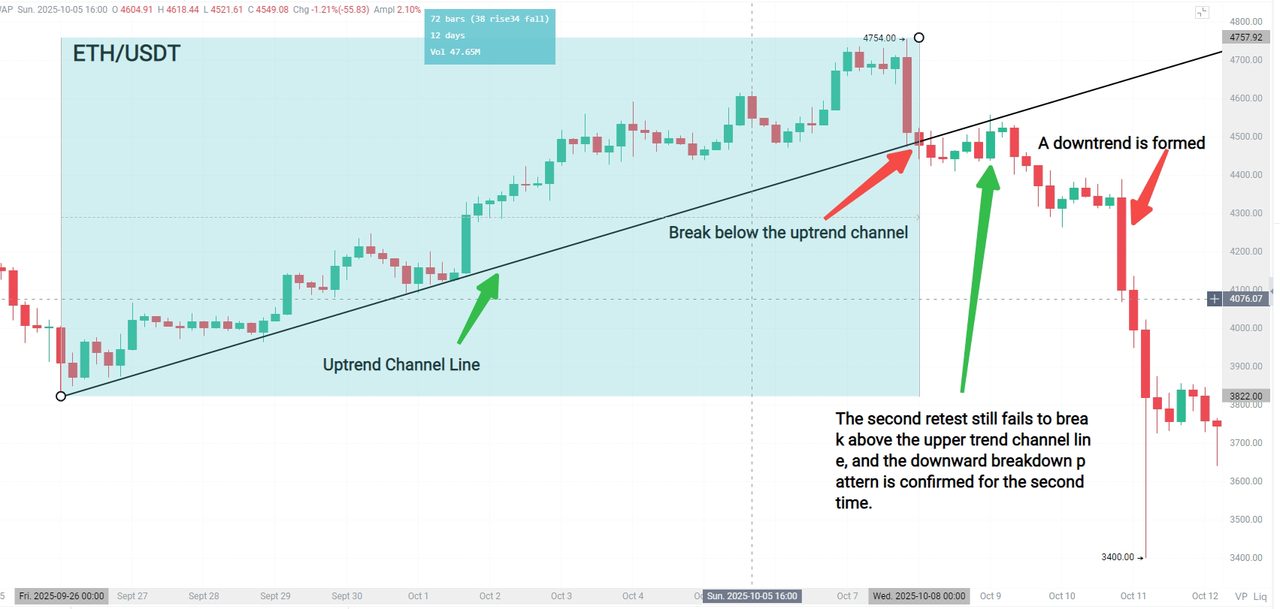
From 00:00 on September 26, 2025 to 00:00 on October 8, 2025, the market maintained a bullish structure with strong upward momentum. Traders who entered long positions during this phase could hold with confidence, as the uptrend channel remained intact.
On October 8, 2025, the price broke below the uptrend channel, confirming a structural trend failure. The following price action failed to reclaim the trend line, and the market shifted into a downtrend.
At this point, long positions should be closed, and short opportunities could be considered. The second failed retest of the broken trend line confirmed bearish continuation, providing a strong short-entry confirmation.
From a technical perspective, this second breakdown validated the trend reversal signal. If a left-side trading strategy is applied, traders could also structure short entries based on this confirmation.
3、Exit
- Take Profit: Scale out in batches once your target is reached. Example: take profit on 60% of the position, and let the remaining 40% run with the trend.
- Stop Loss: If your preset stop loss is triggered, close the entire position immediately. Do not delay or rely on hope.
- Review: Record the candlestick structure, indicator behavior, signal validity, and risk management execution. Use the review to improve the next decision.
The Essence Of Trading
Trading is about waiting for certainty, protecting capital through risk control, and only executing low-difficulty setups. These three are interconnected: waiting creates certainty, certainty strengthens risk decisions, and risk control is the foundation of long-term compounding.
Disclaimer
This article is not intended to provide:
(i) investment advice or investment recommendations;
(ii) an offer or solicitation to buy, sell, or hold digital assets; or
(iii) financial, accounting, legal, or tax advice.
Digital assets (including stablecoins and NFTs) involve high risk and may be highly volatile. You should carefully consider whether trading or holding digital assets is suitable for you based on your financial situation. For your specific circumstances, consult your legal, tax, or investment professionals. You are responsible for understanding and complying with all applicable local laws and regulations.
About Bitunix
Bitunix is a global cryptocurrency derivatives exchange trusted by over 3 million users across more than 100 countries. At Bitunix, we are committed to providing a transparent, compliant, and secure trading environment for every user. Our platform features a fast registration process and a user-friendly verification system supported by mandatory KYC to ensure safety and compliance. With global standards of protection through Proof of Reserves (POR) and the Bitunix Care Fund, we prioritize user trust and fund security. The K-Line Ultra chart system delivers a seamless trading experience for both beginners and advanced traders, while leverage of up to 200x and deep liquidity make Bitunix one of the most dynamic platforms in the market.
Bitunix Global Accounts
X | Telegram Announcements | Telegram Global | CoinMarketCap | Instagram | Facebook | LinkedIn | Reddit | Medium