
Article Summary
- This guide provides a strategic framework for building a diversified crypto passive income portfolio, moving beyond simply chasing the highest APY.
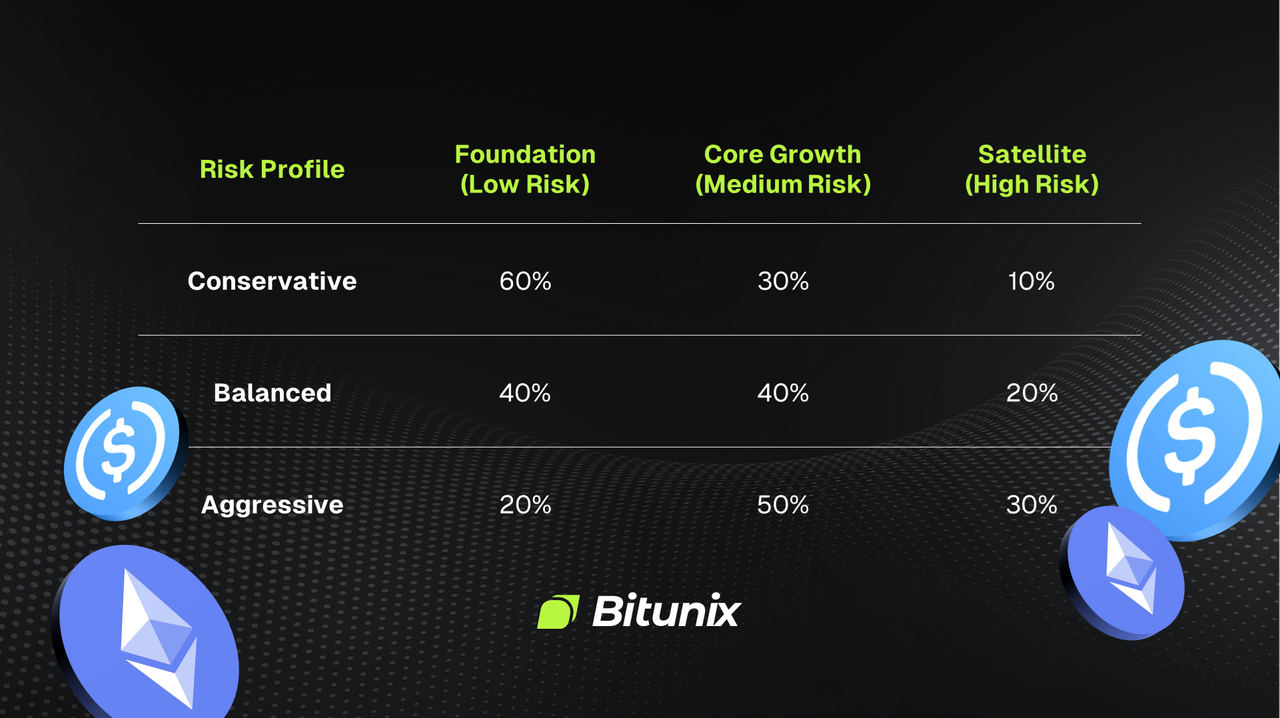
- We introduce a three-tiered portfolio structure: The Foundation (Low-Risk), The Core Growth (Medium-Risk), and The Satellite (High-Risk).
- The Foundation: Focuses on capital preservation and stable yields through blue-chip staking (e.g., ETH) and lending stablecoins like USDT on secure platforms like Bitunix.
- The Core Growth: Aims for higher returns by providing liquidity on established pairs (e.g., BTC/USDT) and utilizing Bitunix’s curated Copy Trading platform.
- The Satellite: Allocates a small portion of capital to high-risk, high-reward strategies like experimental yield farming and staking new, volatile altcoins.
- The article provides sample allocation percentages for different risk profiles (Conservative, Balanced, Aggressive) to help readers construct a portfolio that suits their goals.
Building passive income is the goal of many investors, and cryptocurrencies make it more accessible than ever. A wide range of tools now allows individuals to earn passive crypto income by building a structured yield portfolio in 2026. Naturally, the type of portfolio and income stream someone chooses will depend on their risk appetite and, to some extent, their technical knowledge of crypto. However, the technical barrier has been significantly reduced by platforms such as the Bitunix crypto exchange, which simplify access to staking, lending, and other yield-generating tools.
This guide provides a detailed path to building a sustainable crypto passive income portfolio. It is structured around a three-layer approach that balances risk and reward, starting with a low-risk foundation, expanding into core growth strategies, and selectively adding higher-risk opportunities for upside potential.
Part 1: The Foundation – Your Portfolio’s Bedrock (Low Risk)
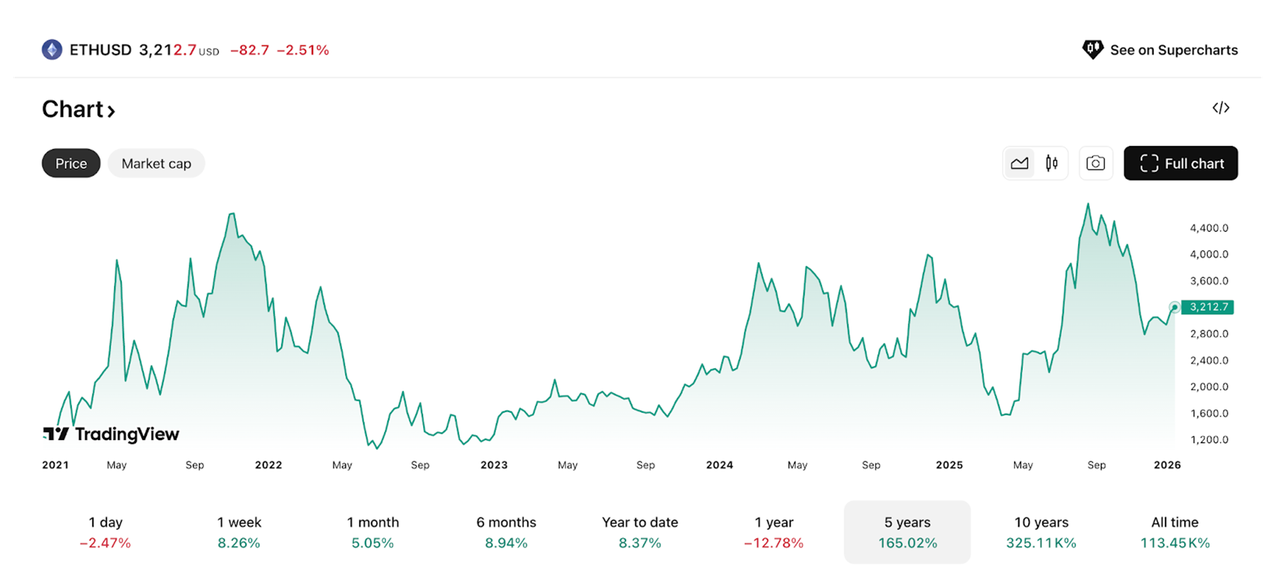
The foundation of a strong crypto passive income 2026 portfolio is a predictable and stable yield supported by a clear capital preservation strategy. This means avoiding overexposure to risk and building a stable base that helps maintain portfolio value during market swings, reducing the likelihood of liquidation or forced asset sales.
A core part of this strategy is holding a portfolio of blue-chip cryptocurrencies with large market capitalizations and proven track records, such as Bitcoin, Ethereum, and BNB. Ethereum is particularly useful in this layer because it offers relatively stable staking returns with lower risk. Long-term price data shows ETH has remained comparatively resilient over time, and through the Bitunix Earn feature, users can generate up to 9.3% APY by staking ETH.
Stablecoin lending is another key component of the foundation layer. Lending USDT on a secure and regulated platform such as Bitunix allows users to earn a predictable yield. Bitunix offers flexible lending plans with returns of up to 11.6%. Stablecoins like USDT have maintained their peg to the US dollar for years, even during market downturns, making them well-suited for low-risk income generation.
This foundation layer should make up the largest portion of the overall passive crypto income portfolio, providing stability, consistency, and a reliable yield base upon which higher-risk strategies can be built.
Part 2: The Core Growth – Your Profit Engine (Medium Risk)
The core growth pillar of a crypto yield portfolio is the primary driver of income. It involves accepting more risk than the foundational layer, but it is essential for building a reliable growth engine. This layer sits between capital preservation and aggressive strategies. There are two primary ways to structure core growth, both of which can be accessed directly through Bitunix.
Strategy 1: Liquidity Providing on Blue-Chip Pairs Providing liquidity for established pairs such as BTC/USDT or ETH/BTC on major decentralized exchanges can generate consistent fee-based returns. While impermanent loss is a risk, it is generally more manageable when using lower-volatility, blue-chip assets.
Strategy 2: Curated Copy Trading Bitunix copy trading can serve as a strong core growth component. By copying vetted professional traders with consistent track records, users effectively outsource part of their active strategy. Bitunix offers dozens of highly successful copy trading options, with some traders regularly posting returns above 100%.
This core layer forms the heart of a balanced portfolio, but it does entail more risk than the foundational layer.
Part 3: The Satellite – Your High-Risk, High-Reward Plays
The third part of a passive crypto income 2026 portfolio is the high-risk, high-reward layer. The strategies used in this portion of the portfolio have the potential to generate market-beating APYs, but they also involve significantly higher risk. For this reason, the satellite layer should occupy the smallest percentage of the overall strategy.
Strategy 1: Experimental Yield Farming Yield farming refers to deploying crypto assets across DeFi protocols to earn rewards through liquidity provision, staking incentives, or governance tokens. In the experimental phase, this often involves new and unproven protocols offering extremely high initial yields to attract liquidity. Platforms such as Uniswap, PancakeSwap, and Curve regularly host new pools where early participants can earn outsized returns. However, smart contract vulnerabilities, protocol failures, and rapid token devaluation make this one of the riskiest income strategies in crypto.
Strategy 2: New Altcoin Staking Another high-risk approach is staking the native token of newly launched, low-market-cap altcoins. Tokens such as Nillion (NIL), which can offer staking rewards of up to 20% APY, Zilliqa (ZIL) with yields up to 15%, and Akash Network (AKT) offering up to 17%, highlight the upside potential. While these returns can be attractive, the underlying tokens are highly volatile, and price declines or liquidity issues can quickly outweigh staking rewards, resulting in significant losses.
This is a high-risk strategy. It involves holding assets that are highly volatile, exposing holdings with small market capitalizations, and providing liquidity for trading pairs that are liable to suffer impermanent loss.
Range Of Allocation Options for A Crypto Yield Portfolio
Final Thoughts
Building a crypto passive income portfolio that reliably generates returns without taking on too much risk is the ultimate goal for passive income investors. While portfolio distribution will vary based on individual risk appetite, this guide demonstrates how to structure a strategy in three clear layers and adjust capital allocation to achieve an acceptable balance between risk and income. Start building your passive income portfolio with Bitunix by signing up or downloading the app and exploring the futures, spot, and earn crypto tools.
FAQs
What is a good percentage to allocate to high-risk strategies?
Most investors limit high-risk strategies to 5–15% of their total portfolio to protect capital while still allowing for upside.
How often should I rebalance my passive income portfolio?
Rebalancing every three to six months is common. This allows you to adjust allocations as yields change, strategies outperform or underperform, and market conditions evolve without overtrading.
Is copy trading considered a medium or high-risk strategy?
Copy trading is generally considered medium risk when following vetted traders with consistent track records, but it can move into high-risk territory if aggressive or highly leveraged traders are selected.
What is the safest way to build a passive income portfolio?
The safest approach focuses on capital preservation first. This usually includes blue-chip assets, staking established networks, and lending stablecoins before allocating any capital to higher-risk strategies.
How do I find new yield farming opportunities for my “Satellite” allocation?
New opportunities are typically found on decentralized exchanges, DeFi dashboards, protocol announcements, and community channels. These opportunities require constant monitoring and carry a high risk of failure.
Can I build this entire portfolio just using the Bitunix platform?
Yes. A platform like Bitunix allows users to access staking, stablecoin lending, and copy trading from a single interface, covering the foundation and core growth layers.
What is the risk of impermanent loss in the “Core Growth” layer?
Impermanent loss occurs when asset prices diverge within a liquidity pool. Using lower-volatility pairs such as BTC/USDT reduces the risk, but it cannot be eliminated entirely.
How do taxes work for a multi-layered income portfolio?
Tax treatment varies by jurisdiction, but staking rewards, lending interest, trading profits, and farming incentives are often taxed differently. Keeping detailed records across all layers is essential.
Which strategy provides the most consistent daily income?
Stablecoin lending and blue-chip staking generally provide the most predictable and consistent income compared to more volatile strategies like yield farming or altcoin staking.
How do I measure the overall performance of my income portfolio?
Performance should be measured using total return, including yield earned and asset price changes, rather than price alone. Tracking income by layer also helps identify which strategies are contributing most effectively.
Glossary
Passive Income: Earnings generated without active trading.
Yield Portfolio: Structured allocation designed to generate returns.
Blue-Chip Crypto: Established assets with strong market presence.
Liquidity Providing: Supplying assets to enable decentralized trading.
Impermanent Loss: Temporary loss from liquidity pool price changes.
Yield Farming: High-risk strategy for maximizing crypto rewards.
Copy Trading: Automatically following professional trader strategies.
About Bitunix
Bitunix is a global cryptocurrency derivatives exchange trusted by over 3 million users across more than 100 countries. At Bitunix, we are committed to providing a transparent, compliant, and secure trading environment for every user. Our platform features a fast registration process and a user-friendly verification system supported by mandatory KYC to ensure safety and compliance. With global standards of protection through Proof of Reserves (POR) and the Bitunix Care Fund, we prioritize user trust and fund security. The K-Line Ultra chart system delivers a seamless trading experience for both beginners and advanced traders. At the same time, leverage of up to 200x and deep liquidity make Bitunix one of the most dynamic platforms in the market.
Bitunix Global Accounts
X |Telegram Announcements |Telegram Global |CoinMarketCap |Instagram |Facebook |LinkedIn |Reddit |Medium