
What is the Jito Protocol?
JTO is the native governance token of Jito, a premier liquid staking protocol built on the Solana blockchain. As one of the most influential staking infrastructures in the Web3 ecosystem, Jito revolutionized the network by pioneering the integration of Maximal Extractable Value (MEV) directly into liquid staking rewards.
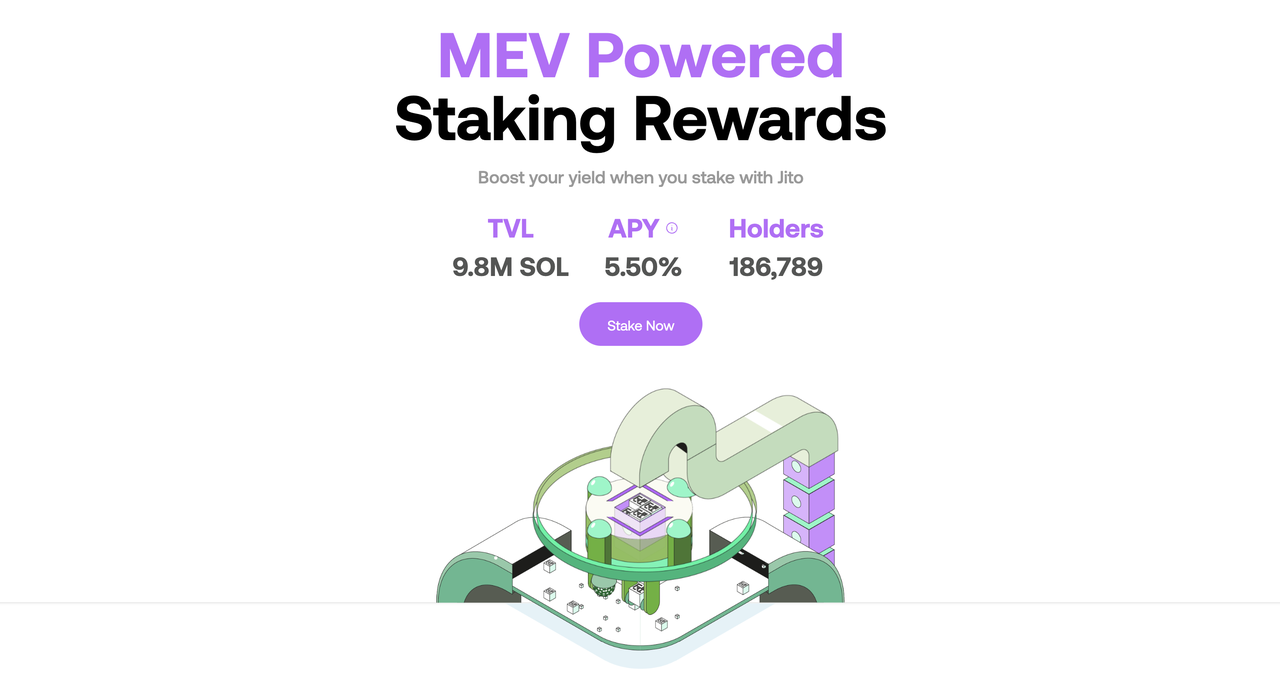
Through this innovative setup, crypto investors who secure the network do not just receive standard proof-of-stake (PoS) rewards; they also earn a programmatic share of the network's MEV revenue.
Launched in 2022 by founders Lucas Bruder, Brian Smith, and a core team of veteran Solana developers, Jito addressed a major flaw in the early network design. As Solana transaction volumes exploded, validator nodes captured massive MEV profits through transaction ordering and block packing. However, these profits remained entirely concentrated in the hands of the node operators, leaving everyday retail and institutional stakers with no piece of the pie.
To democratize this revenue stream, Jito developed a high-performance open-source validator client (the Jito-Solana client) alongside a decentralized staking infrastructure. This setup successfully channels off-chain trading profits directly back into the pockets of the community, maximizing capital efficiency across the board.
Liquid Staking Mechanics: How JitoSOL Keeps Capital Liquid
Under traditional native Solana staking models, locking up SOL tokens to secure the network means freezing your capital. Staked assets are trapped in a multi-day unbonding period, preventing users from capital allocation or taking advantage of fast-moving market opportunities.
Jito completely dismantles this liquidity bottleneck through its Liquid Staking Token (LST) mechanism:
- The Staking Process: When a user deposits SOL into the Jito stake pool, the smart contract mints an equivalent proportional amount of JitoSOL.
- Value Accrual: JitoSOL functions as a yield-bearing receipt. Instead of issuing separate token distributions, the value of JitoSOL continuously appreciates against native SOL as staking yields and MEV tips compound directly into the pool.
- DeFi Composability: When you unstake, your JitoSOL token converts back into more SOL than you initially deposited.
The primary advantage of JitoSOL is its complete integration with Web3 applications. While passively earning premium yields, holders can deploy JitoSOL across decentralized lending markets, liquidity pools, yield aggregators, and leveraged trading platforms, unlocking secondary layers of income.
MEV Yield Sharing: Jito's Unfair Competitive Advantage
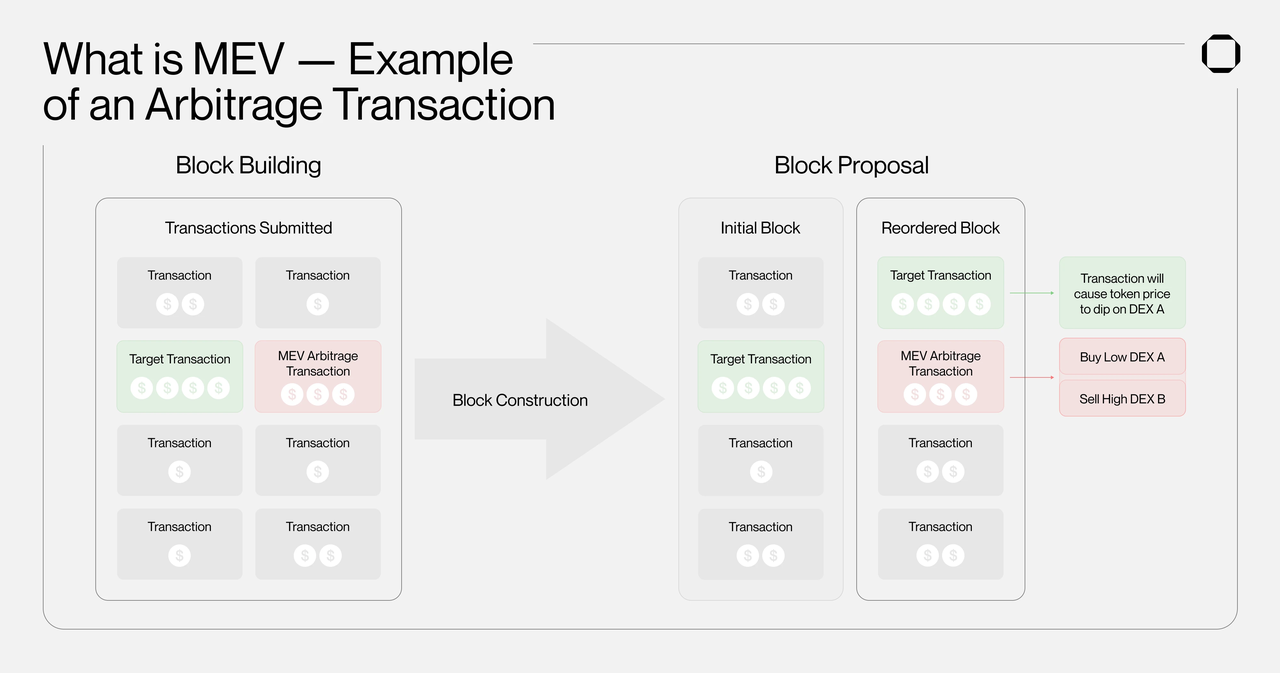
Maximal Extractable Value (MEV) refers to the profit blockchain validators extract by selectively previewing, reordering, or inserting transactions within a block. On Solana—where sub-second block times and intense decentralized exchange (DEX) activity trigger frequent arbitrage, flash liquidations, and price imbalances—MEV opportunities are exceptionally lucrative.
Historically, these profits were captured exclusively by sophisticated algorithmic trading bots (known as "Searchers") and the individual leader validators running the blocks.
Jito disrupted this ecosystem by engineering a transparent, off-chain MEV Block Engine and Auction Market:
- The Auction: Searchers submit transaction "bundles" paired with cash bids (tips) to win priority execution sequence rights.
- The Simulation: The Jito Block Engine simulates every transaction permutation in real-time, matching the highest-paying bids.
- The Distribution: Instead of hoarding these tips, validators use the Jito-Solana client channel a massive portion of this MEV auction revenue back into the Jito stake pool.
This dual-yield framework (Native Staking + MEV Kickbacks) is the primary reason Jito outpaces alternative staking providers, securing its spot as the dominant liquid staking protocol by Total Value Locked (TVL) on Solana.
The Distributed Validator Network: Ensuring Security and Decentralization
As a major custodial protocol for billions in user assets, Jito's network security depends on structural decentralization. Jito protects its pool by utilizing an automated, multi-node delegation strategy called Jito StakeNet.
Rather than channeling deposited SOL into a few massive institutional validators, Jito’s algorithmic manager intelligently spreads assets across hundreds of independent, high-performance node operators.
Validators running the Jito infrastructure must maintain flawless uptime, robust technical reliability, and low commission profiles. StakeNet constantly scores validators using transparent historical metrics. Operators who fall offline or fail to accurately distribute MEV rewards are automatically penalized and stripped of their delegated stake. This algorithmic stewardship balances high yield generation with top-tier network security, heavily contributing to the overall censorship resistance of the Solana mainnet.
JTO Tokenomics: Driving Decentralized Governance
JTO is the native utility and governance asset of the Jito DAO, placing the long-term strategic direction of the network entirely in the hands of its community holders.
The JTO token economy balances immediate market depth with multi-year development reserves:
- Governance Voting Rights: JTO holders actively steer the network by voting on crucial Jito Improvement Proposals (JIPs). This includes adjusting protocol fee structures, managing validator delegation parameters, tuning risk controls, and electing multi-sig guardians.
- Ecosystem Growth Treasury: A dedicated portion of the token supply funds developer grants, protocol partnerships, and liquidity mining campaigns to accelerate Jito's market expansion.
- Value Capture Realignment: Following advanced updates, protocol fees from Jito's Block Engine and marketplace auctions flow to the DAO treasury, aligning the expansion of Solana's MEV infrastructure directly with the governance body.
How to Buy and Secure JTO Tokens
For crypto-native users, earning JTO involves interacting with on-chain liquid staking mechanics or active participation within the Jito ecosystem. However, for everyday investors looking to add JTO to their portfolios without dealing with Web3 wallet setups and self-custody complexities, centralized cryptocurrency venues offer a streamlined path.
Secure exchanges like Bitunix make investing in JTO highly accessible. Traders can purchase JTO using global fiat gateways, credit cards, or direct stablecoin pairings like JTO/USDT.
To start trading safely:
- Account Registration: Sign up on a compliant digital asset platform and fulfill the mandatory Identity Verification (KYC) procedures to comply with international Anti-Money Laundering (AML) standards.
- Account Funding: Deposit funds via wire transfer, credit card payment, or an external blockchain wallet transfer.
- Spot Trading Execution: Navigate to the exchange interface, locate the JTO market, and execute a spot purchase.
Institutional-grade platforms protect user capital by employing strict asset security frameworks, including cold storage isolation, multi-signature wallet access, and round-the-clock automated risk management systems. Once purchased, users looking to participate in governance can safely withdraw JTO to an on-chain Solana wallet to vote on the official portal.
Jito (JTO) Major Historical Timeline

Frequently Asked Questions (FAQs)
What is the difference between native Solana staking and Jito liquid staking?
Native Solana staking locks your SOL inside a validator node, forcing you to wait out an unbonding period before you can access your funds. Jito liquid staking converts your SOL into an equivalent value of JitoSOL. JitoSOL automatically gains value from staking rewards and MEV tips while remaining fully liquid, allowing you to use it freely across alternative DeFi protocols.
What are MEV rewards in the Jito network?
Maximal Extractable Value (MEV) rewards are additional profits captured by transaction sorting and arbitrage bots. Jito runs an open block auction where these bots pay tips to execute transactions in a specific sequence. Jito gathers these tips and passes them back into the staking pool, giving JitoSOL holders a significantly higher yield than regular staking options.
What is the primary utility of the JTO token?
JTO serves as the governance token for the Jito DAO. Holding and staking JTO grants you direct voting power on protocol updates, fee changes, treasury fund management, and updates to the automated validator selection algorithm.
Disclaimer
This article is not intended to provide:
(i) investment advice or investment recommendations;
(ii) an offer or solicitation to buy, sell, or hold digital assets; or
(iii) financial, accounting, legal, or tax advice.
Digital assets (including stablecoins and NFTs) involve high risk and may be highly volatile. You should carefully consider whether trading or holding digital assets is suitable for you based on your financial situation. For your specific circumstances, consult your legal, tax, or investment professionals. You are responsible for understanding and complying with all applicable local laws and regulations.
About Bitunix
Bitunix is a global cryptocurrency derivatives exchange trusted by over 3 million users across more than 100 countries. At Bitunix, we are committed to providing a transparent, compliant, and secure trading environment for every user. Our platform features a fast registration process and a user-friendly verification system supported by mandatory KYC to ensure safety and compliance. With global standards of protection through Proof of Reserves (POR) and the Bitunix Care Fund, we prioritize user trust and fund security. The K-Line Ultra chart system delivers a seamless trading experience for both beginners and advanced traders, while leverage of up to 200x and deep liquidity make Bitunix one of the most dynamic platforms in the market.
Bitunix Global Accounts
X | Telegram Announcements | Telegram Global | CoinMarketCap | Instagram | Facebook | LinkedIn | Reddit | Medium