
What is PancakeSwap (CAKE)?
CAKE is the native utility and governance token of PancakeSwap, one of the most iconic and highly populated decentralized exchanges (DEXs) in the global multi-chain Web3 ecosystem. Originally launched during the early development phase of the BNB Chain (formerly Binance Smart Chain), PancakeSwap rapidly scaled to become the network's deepest liquidity center and its most heavily utilized decentralized finance (DeFi) protocol.
While the Ethereum ecosystem evolved around the capital structures of Uniswap, PancakeSwap took a completely distinct path. By launching within a high-throughput, low-cost network environment, PancakeSwap established an immediate competitive edge in serving everyday retail traders, yield farmers, and high-frequency on-chain market participants.
PancakeSwap's explosive growth was driven largely by the capital spillover effects of the 2020 "DeFi Summer." As Ethereum gas fees surged to prohibitive heights, millions of retail investors were priced out of on-chain trading and sought affordable alternatives. BNB Chain met this demand with low-cost, near-instant transaction confirmations.
Rather than simply cloning existing platforms, PancakeSwap optimized for retail habits by injecting gamified elements, dynamic reward streams, and yield-focused utilities directly into its interface. Today, PancakeSwap is a cross-chain gateway supporting over ten networks, including BNB Chain, Ethereum, Base, Arbitrum, Aptos, and Solana.
The AMM Engine: High-Frequency DeFi for Retail Markets
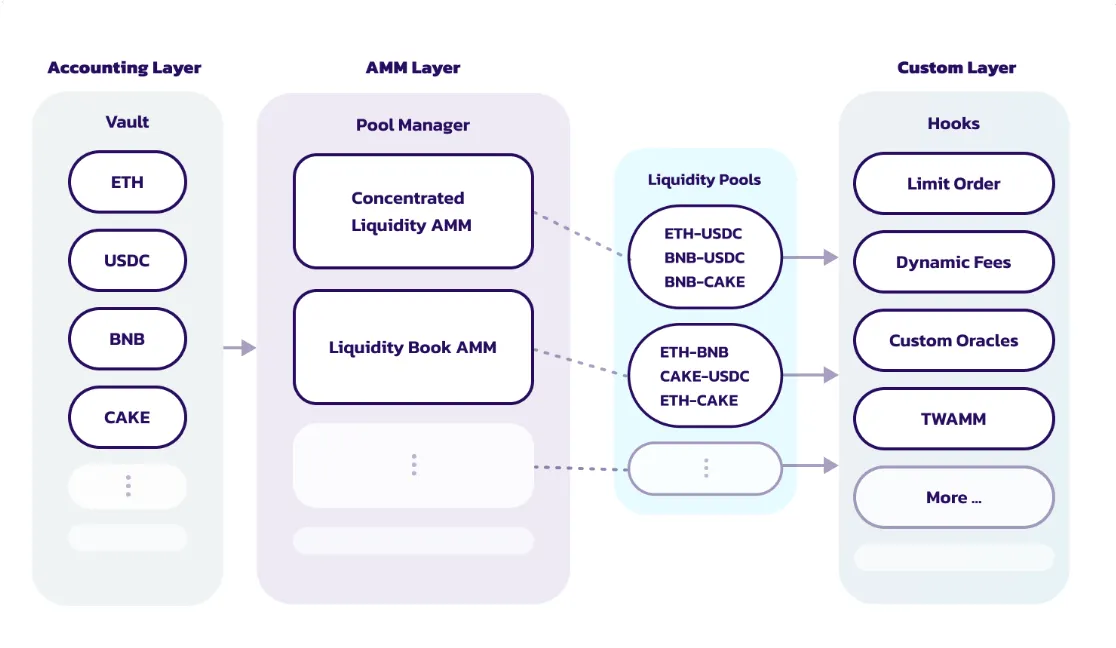
PancakeSwap runs on an Automated Market Maker (AMM) model. Instead of relying on a traditional centralized order book to match buyers and sellers, asset pricing and swaps are handled mathematically using decentralized liquidity pools. Web3 users deposit token pairs into these shared pools to act as Liquidity Providers (LPs), earning a percentage of platform trading fees while traders execute instant swaps against the pool.
By leveraging BNB Chain's sub-cent transaction costs, PancakeSwap eliminated the economic barriers that traditionally restricted automated market maker interactions. Small retail swaps and automated algorithmic trading became highly practical, driving continuous volume to the platform.
Furthermore, PancakeSwap expanded beyond spot token swapping into a comprehensive financial application stack. The platform integrates native yield farming, dedicated staking pools (Syrup Pools), decentralized lottery frameworks, predictive forecasting markets, and self-custodial perpetual futures trading, transforming it into a definitive Web3 financial hub.
The Strategic Synergy Between PancakeSwap and BNB Chain
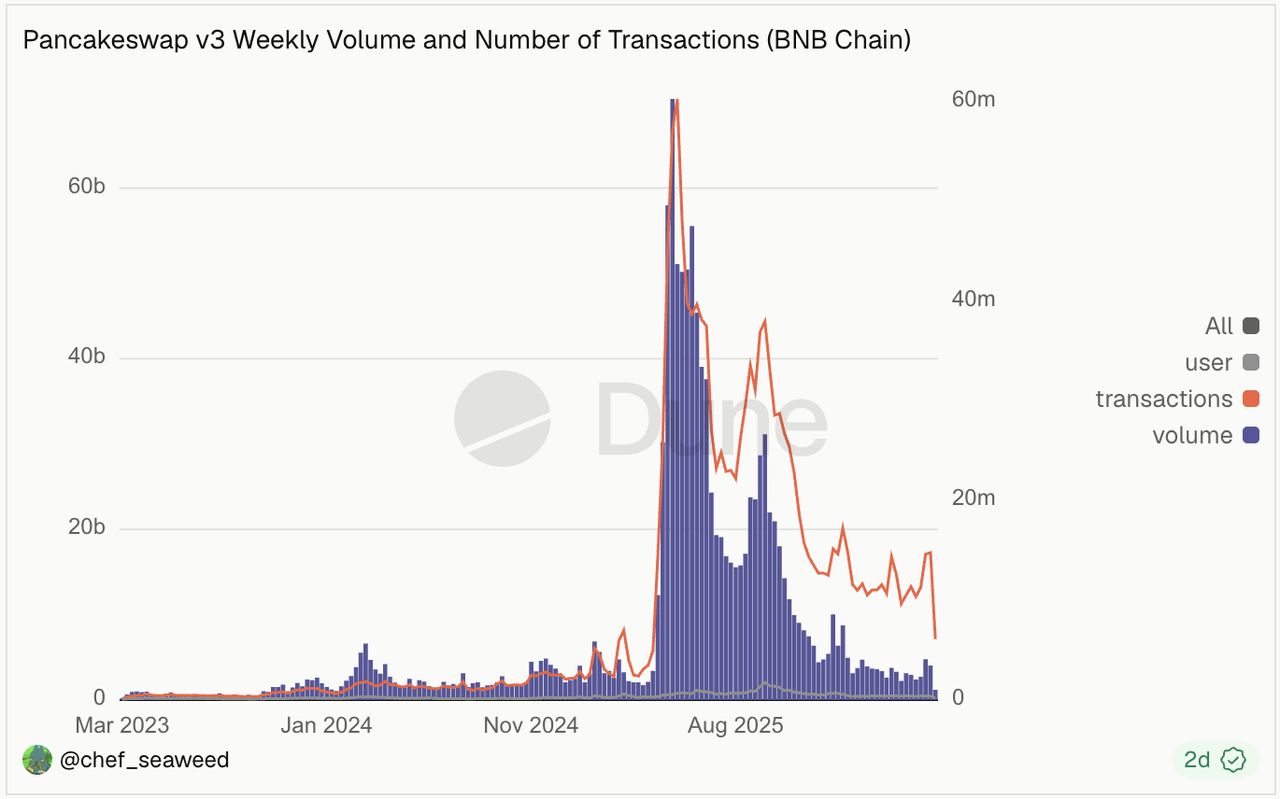
The structural evolution of PancakeSwap is linked directly with the expansion of the BNB Chain ecosystem, operating as a mutual financial engine.
From an ecosystem architecture standpoint, PancakeSwap serves as the primary liquidity clearinghouse for the network. It plays a dual critical role:
- The Launching Pad: Emerging crypto projects and developers choose PancakeSwap as their initial venue to build token liquidity pools due to the platform's massive active user base and minimal deployment friction.
- Price Discovery Hub: The majority of on-chain capital distribution and routing across the BNB Chain relies on PancakeSwap’s foundational market-making pools, effectively serving as the decentralized spot market counterpart to centralized exchanges.
This structural alliance benefits both sides. The combination of minimal gas fees and deep decentralized liquidity allows BNB Chain to remain highly attractive to retail audiences during shifting multi-chain market trends. As the underlying network expands further into GameFi, SocialFi, and institutional infrastructure, PancakeSwap remains the primary gateway tracking real-time price discovery and capital flow.
CAKE Tokenomics 3.0: Transitioning to Systemic Supply Deflation
In its early architectural phases, CAKE functioned primarily as an aggressive emissions-driven growth asset. High-yield farming rewards were distributed to rapidly bootstrap liquidity and attract massive capital. As the network matured, governance shifted its focus from short-term inflation to long-term sustainability, culminating in the deployment of Tokenomics 3.0.
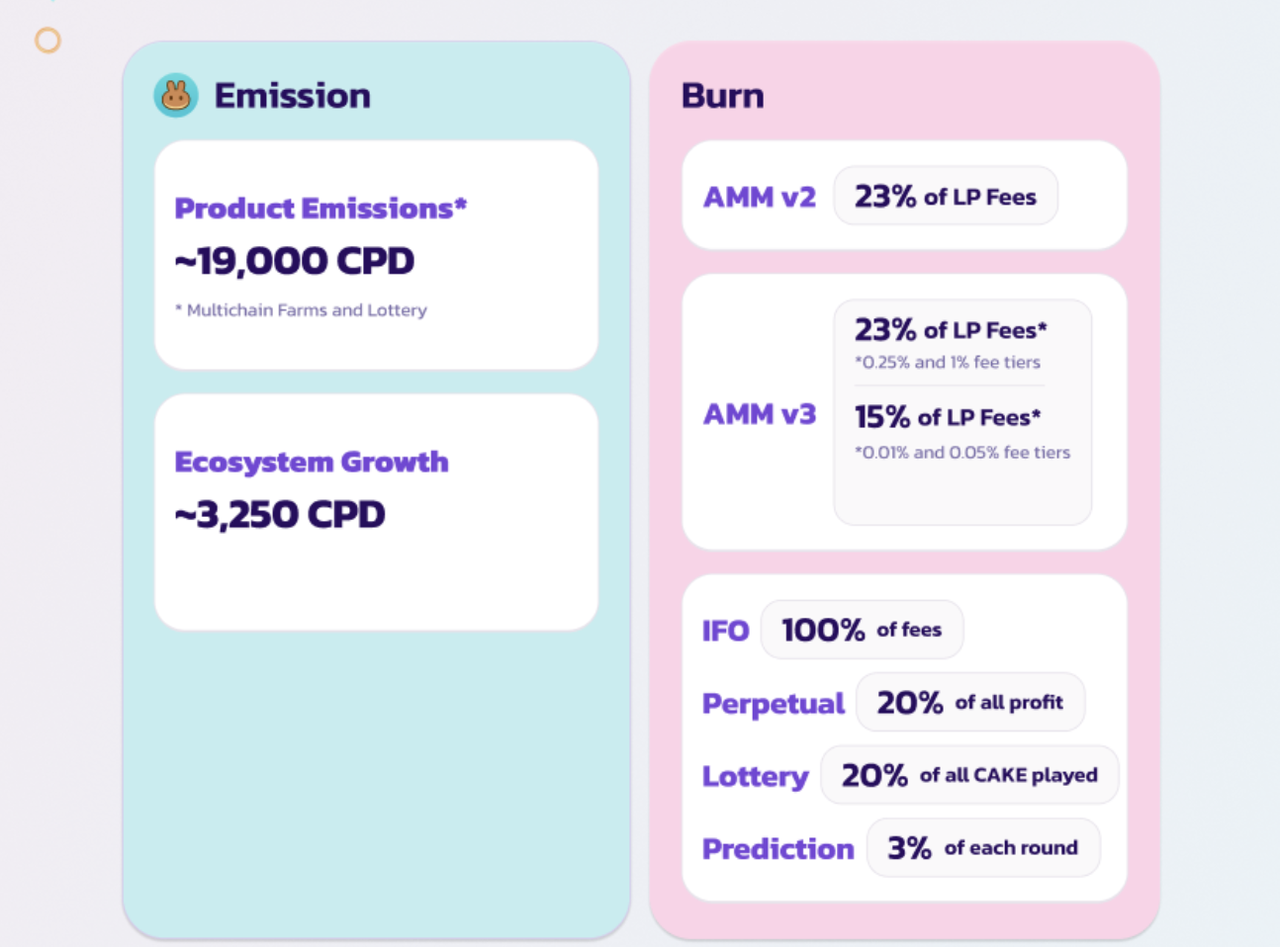
Under the Tokenomics 3.0 model, the network retired hyper-inflationary reward structures and dramatically reduced the absolute token hard cap to 400 million CAKE. The core economic objective shifted toward building a permanent deflationary system. The protocol aims for a 4% annual deflation rate, targeting a systematic 20% contraction of the total CAKE supply by 2030.
This deflationary model is achieved through an automated, multi-product buy-back-and-burn mechanism. Platform fees generated across various lines of business are gathered, used to purchase CAKE on the open market, and sent permanently to a verifiable burn address:
| Product Line | Fee Allocation to Burn | Operational Impact |
| Spot DEX Swaps | 15% – 23% of all trading fees | Converts daily retail spot volume into structural token scarcity. |
| Perpetual Futures | 20% of total platform profits | Directs institutional derivatives revenue toward programmatic buybacks. |
| CAKE.PAD | 100% of launchpad-related fees | Removes tokens from circulation upon every successful partner launch. |
| Prediction & Lottery | 3% per round / 20% of total tickets | Monetizes gamified ecosystem engagement to shrink token supply. |
How to Buy, Stake, and Earn CAKE Tokens
Crypto investors can interact with CAKE through either decentralized on-chain mechanisms or regulated centralized platforms. On-chain users can provide liquidity to active pairs or lock their tokens into Syrup Pools to accumulate automated yield. However, managing on-chain LP positions introduces exposure to impermanent loss and shifting fee tiers, which requires a firm grasp of decentralized finance mechanics.
For investors prioritizing convenience and security, centralized exchanges like Bitunix offer a highly accessible alternative. These platforms enable users to buy CAKE instantly using global fiat payment rails, credit cards, or high-liquidity stablecoin pairs like CAKE/USDT.
To add CAKE to your portfolio safely:
- Account Creation & Verification: Sign up on a compliant digital asset platform and complete the mandatory Identity Verification (KYC) process to align with international Anti-Money Laundering (AML) frameworks.
- Deposit Capital: Fund your exchange account using fiat deposits, bank wires, or external cryptocurrency transfers.
- Market Execution: Open the spot trading marketplace, choose the CAKE trading pair, and complete your purchase order.
Top-tier centralized trading platforms secure user capital through rigorous custody standards, including hot/cold wallet isolation, multi-signature authentication layers, and continuous real-time risk monitoring. Once purchased, users can hold their tokens securely on the platform or withdraw them to personal Web3 wallets to participate in direct on-chain governance voting.
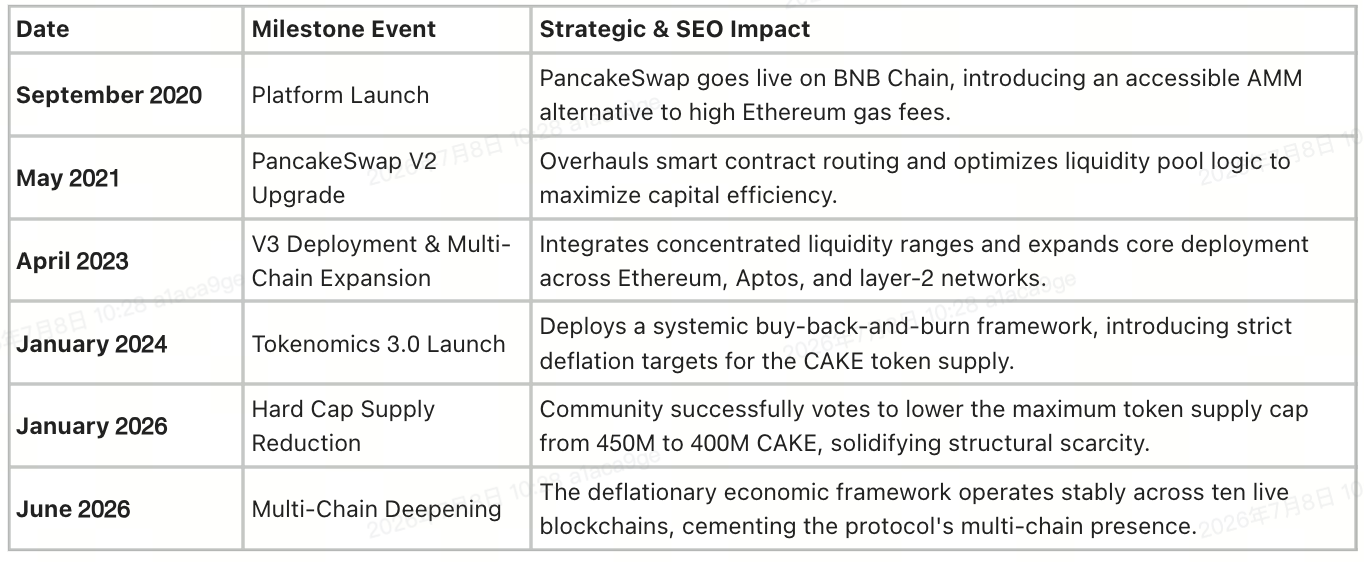
PancakeSwap (CAKE) Historical Development Timeline
Frequently Asked Questions (FAQs)
What makes PancakeSwap different from Uniswap?
While Uniswap was built natively for the Ethereum ecosystem, PancakeSwap launched on the BNB Chain to focus on ultra-low transaction fees and rapid confirmation speeds. Additionally, PancakeSwap features a broader array of integrated ecosystem products, including decentralized perpetuals, prediction games, and a native lottery system.
How does the CAKE buy-back-and-burn mechanism work?
PancakeSwap diverts a specific percentage of fees generated across all its products — such as spot swaps, perpetual trading, and lottery ticket sales — to buy CAKE tokens directly from the market. These collected tokens are then sent to a dead burn address, removing them from the circulating supply forever.
Is PancakeSwap safe to use?
PancakeSwap's underlying smart contracts are open-source, publicly verifiable, and thoroughly audited by top blockchain security firms like CertiK. However, like all DeFi protocols, interacting with liquidity pools exposes users to standard market risks, including token price volatility and impermanent loss.
Disclaimer
This article is not intended to provide:
(i) investment advice or investment recommendations;
(ii) an offer or solicitation to buy, sell, or hold digital assets; or
(iii) financial, accounting, legal, or tax advice.
Digital assets (including stablecoins and NFTs) involve high risk and may be highly volatile. You should carefully consider whether trading or holding digital assets is suitable for you based on your financial situation. For your specific circumstances, consult your legal, tax, or investment professionals. You are responsible for understanding and complying with all applicable local laws and regulations.
About Bitunix
Bitunix is a global cryptocurrency derivatives exchange trusted by over 3 million users across more than 100 countries. At Bitunix, we are committed to providing a transparent, compliant, and secure trading environment for every user. Our platform features a fast registration process and a user-friendly verification system supported by mandatory KYC to ensure safety and compliance. With global standards of protection through Proof of Reserves (POR) and the Bitunix Care Fund, we prioritize user trust and fund security. The K-Line Ultra chart system delivers a seamless trading experience for both beginners and advanced traders, while leverage of up to 200x and deep liquidity make Bitunix one of the most dynamic platforms in the market.
Bitunix Global Accounts
X | Telegram Announcements | Telegram Global | CoinMarketCap | Instagram | Facebook | LinkedIn | Reddit | Medium