

Ethereum is the second-largest crypto asset by market value and one of the most actively traded markets in derivatives. That is why ETH futures are a common next step for traders who have learned the basics of futures on BTC and want exposure to a market that can move differently across intraday and multi-day trends.
If you are new and still asking what futures trading is, ETH futures are a good example of how futures contracts work in real conditions. You can go long or short, you can adjust exposure with leverage, and you need to manage margin and liquidation risk with discipline.
This article explains how Ethereum futures trading works on Bitunix futures, what makes ETH futures unique relative to BTC futures, and how beginners can trade ETH futures with a checklist that prioritizes clarity and risk control.
What Is Futures Trading and What Are ETH Futures?
Futures trading is trading a contract that tracks the price of an underlying asset without requiring you to own the asset itself. In crypto, futures markets are commonly perpetual futures, which do not have a fixed expiration date and are designed to follow the spot market closely.
So, what is trading futures in practical terms? You open a long or short position on a contract, you post margin as collateral, and your PnL changes as the contract price moves.
ETH futures are futures contracts that track Ethereum’s price. They allow traders to:
- go long if they expect ETH to rise
- go short if they expect ETH to fall
- hedge spot exposure
- express a view with smaller capital outlay through leverage
This is a big reason ETH futures are popular in crypto futures trading.
ETH Futures vs Spot ETH
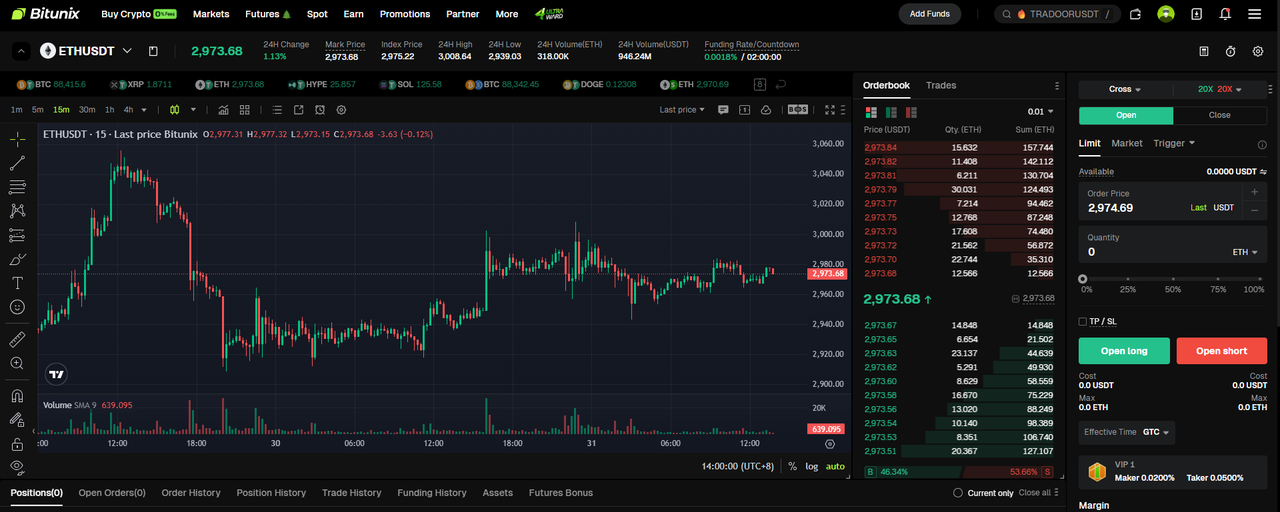
To trade ETH futures responsibly, it helps to understand what changes versus spot.
In Spot, You Own ETH
Spot trading means you buy or sell ETH and you own the asset after purchase. There is no liquidation, and leverage is not part of the trade by default.
In Futures, You Trade a Contract
Futures trading is trading the ETH contract, not the coin itself. You can use leverage, and liquidation is possible if your margin becomes insufficient.
For futures trading for beginners, this is the most important difference. Futures trading is not only about picking direction. It is also about controlling exposure.
How ETH Perpetual Futures Work
Most ETH futures products in crypto are perpetual futures. A perpetual contract does not expire. Instead, it uses funding to keep the futures price aligned with spot over time.
On Bitunix exchange, ETH futures trading typically follows the same workflow you use for BTC futures:
- select the ETH futures contract
- choose margin mode
- set leverage
- choose position size
- place orders, stops, and targets
The difference is how ETH tends to behave in the market. ETH can have sharper intraday impulses, faster reversals, and different volatility patterns compared with BTC. That does not mean it is “riskier” by default, but it does mean your leverage and position sizing should respect the way ETH moves.
Long vs Short in ETH Futures
One advantage of bitunix futures trading is the ability to trade both sides of the market.
Going Long ETH Futures
A long position benefits when ETH price rises.
Typical reasons traders go long:
- ETH holds support during a broader uptrend
- ETH breaks above a key resistance level and confirms
- ETH rebounds after a volatility sweep with clear invalidation
Going Short ETH Futures
A short position benefits when ETH price falls.
Typical reasons traders go short:
- ETH rejects resistance and fails to reclaim
- ETH breaks down below support with continuation
- hedging a spot ETH position during a risk-off move
Direction is not the difficult part. Risk structure is. Most beginner losses come from using too much leverage or too large a position size for ETH’s volatility.
Margin, Leverage, and Why ETH Moves Can Feel Fast
Margin
Margin is your collateral that supports the position. It absorbs losses as price moves against you.
Leverage
Leverage increases exposure relative to margin. Bitunix leverage gives you the ability to adjust how much notional exposure you control with the same collateral.
Higher leverage usually means:
- bigger PnL swings from the same ETH move
- liquidation closer to entry
- less room for intraday volatility
Bitunix 200x Leverage and ETH Futures
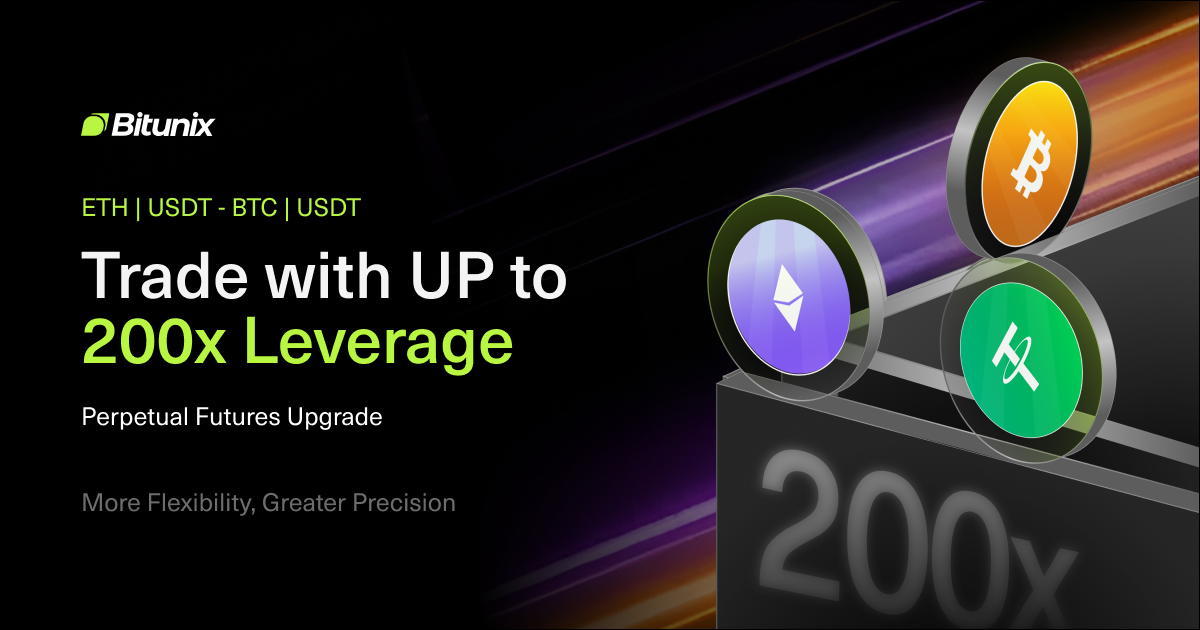
Bitunix 200x leverage is available on selected contracts like BTC/USDT & ETH/USDT. Even when a high leverage setting is available, it is not automatically suitable for beginners. ETH can move quickly, and high leverage compresses liquidation distance dramatically.
For trading futures for beginners, a safer approach is:
- start with conservative leverage
- keep position size small
- use isolated margin
- set stop-loss orders at invalidation levels
Isolated vs Cross Margin for ETH Futures
Isolated Margin
Isolated margin assigns margin to a single position. Risk is largely contained to that position’s allocated margin.
Why it is often better for beginners:
- you can cap risk per trade
- you can avoid one trade affecting other positions
- it supports more disciplined learning
Cross Margin
Cross margin shares margin across positions in your futures account. This can reduce liquidation risk for one position, but it can also expose more of your futures balance if multiple positions move against you.
If you are early in your learning curve, isolated margin usually provides clearer control.
Liquidation: What It Means for ETH Futures Traders
Liquidation is the forced closure of a position when your margin is insufficient to meet maintenance requirements. Liquidation can happen faster than beginners expect if leverage is high or if the position size is too large.
The goal is not to “avoid liquidation by luck.” The goal is to build trades where:
- your stop-loss triggers before liquidation
- liquidation is far away from normal volatility
- the trade’s risk is acceptable even if the stop hits
In crypto futures trading, this is the difference between structured trading and emotional trading.
Funding and ETH Perpetual Futures
ETH perpetual futures use funding payments to help keep the futures price close to spot.
- If funding is positive, longs pay shorts.
- If funding is negative, shorts pay longs.
Funding can matter more for longer holds than for short-term trades, but it is still part of the cost of holding a futures position. If you intend to hold an ETH futures position for an extended period, check funding so you understand carry costs.
Mark Price vs Last Price in ETH Futures
Last Price
The last price is the most recent traded price.
Mark Price
The mark price is a reference price used by many futures systems to reduce unfair liquidations during short-term spikes. Liquidation calculations are often tied to mark price.
This is why liquidation risk can change even if last price seems stable. Understanding this difference helps beginners avoid confusion during fast ETH moves.
How to Trade ETH Futures on Bitunix: A Beginner Checklist
This checklist is designed to be used before every trade. It helps beginners keep risk controlled and avoids common mistakes.
Step 1: Define the Trade Thesis
Ask "Why am I long or short?" & "Which level proves me wrong?" If you cannot answer those two questions, do not trade.
Step 2: Confirm the Contract
Make sure you selected the correct ETH futures contract, not a similar-looking symbol.
Step 3: Choose Isolated Margin
For futures trading for beginners, isolated margin typically offers clearer risk containment.
Step 4: Choose Conservative Leverage
Set leverage to match volatility. If your liquidation price is near your invalidation level, leverage is too high or size is too large.
Step 5: Size the Position Based on Risk
Decide your maximum loss first. Then size the position so that if the stop triggers, the loss stays within your limit.
Step 6: Place a Stop-Loss at Invalidation
Your stop belongs where your trade idea is wrong, not where your emotions react.
Step 7: Plan Exits
Decide in advance whether you will take partial profits, use a fixed target, or trail stops. Beginners often lose discipline on exits, especially after a fast ETH move.
Step 8: Do a 10-Second Confirmation Scan
Before you confirm:
- long or short direction correct
- isolated or cross margin correct
- leverage intentional
- size matches your risk limit
- stop-loss set
- liquidation comfortably away
Common Beginner Mistakes With ETH Futures
Oversizing Because ETH “Moves More”
ETH can move fast. That is not a reason to increase size. It is a reason to reduce leverage and size until your plan is consistent.
Trading Without a Stop
Stops are not optional in leveraged markets. A stop-loss is your risk boundary.
Using High Leverage to Compensate for Small Account Size
High leverage is not a solution. It is a risk multiplier. If the trade feels too small, scale slowly, not aggressively.
Watching PnL Instead of Risk Metrics
Focus on margin, liquidation price, and whether your thesis still holds. PnL alone can push beginners into emotional decisions.
Best Futures Trading Platform for Beginners: What to Look for With ETH Futures
Many people search best crypto futures trading platform because they want a place to learn futures with clarity. For ETH futures, beginners benefit from platforms that provide:
- clear margin, liquidation, and PnL visibility
- reliable order execution
- stop and trigger order tools
- an interface that reduces mistakes
- education that explains fundamentals
Those factors matter more than maximum leverage headlines when you are learning.
Conclusion
ETH futures are a major part of crypto futures trading. They allow you to go long or short Ethereum price movements using margin and leverage without owning ETH directly. The opportunity is real, but the risk increases quickly when leverage is high and stops are missing.
If you are trading ETH futures on Bitunix futures, focus on conservative leverage, isolated margin, disciplined position sizing, and stop-loss placement at clear invalidation levels. Once those habits are consistent, you can scale responsibly and use futures as a tool for structured trading rather than reactive trading.
FAQ
What is futures trading in crypto?
Futures trading is trading contracts that track crypto prices, allowing long and short positions using margin and leverage without owning the asset directly.
What is trading futures compared to spot ETH?
Spot ETH involves owning Ethereum. ETH futures involve trading a contract that tracks ETH price, which allows leverage and introduces liquidation risk.
Are ETH futures good for beginners?
They can be if beginners use conservative leverage, isolated margin, small position sizes, and stop-loss orders.
How does leverage affect ETH futures trading?
Leverage increases exposure relative to margin and typically moves liquidation closer to entry, making risk management more important.
Is Bitunix 200x leverage recommended for beginners?
It is an advanced feature available on selected contracts. Beginners generally benefit more from conservative leverage and strict risk controls.
Glossary
- ETH futures: Futures contracts that track Ethereum price.
- Futures trading: Trading price-tracking contracts rather than owning the asset.
- Perpetual futures: Futures contracts with no expiration date.
- Margin: Collateral used to open and maintain a position.
- Leverage: A multiplier that increases exposure relative to margin.
- Isolated margin: Margin assigned to one position only.
- Cross margin: Shared margin across positions.
- Mark price: Reference price often used for liquidation calculations.
- Funding: Periodic payment between longs and shorts in perpetual futures.
- Liquidation: Forced closure when margin is insufficient.
- Stop-loss: Order to close a position at a predefined level to limit loss.
- Invalidation: The level where a trade idea is proven wrong.
About Bitunix
Bitunix is a global cryptocurrency derivatives exchange trusted by over 3 million users across more than 100 countries. At Bitunix, we are committed to providing a transparent, compliant, and secure trading environment for every user. Our platform features a fast registration process and a user-friendly verification system supported by mandatory KYC to ensure safety and compliance. With global standards of protection through Proof of Reserves (POR) and the Bitunix Care Fund, we prioritize user trust and fund security. The K-Line Ultra chart system delivers a seamless trading experience for both beginners and advanced traders, while leverage of up to 200x and deep liquidity make Bitunix one of the most dynamic platforms in the market.
Bitunix Global Accounts
X | Telegram Announcements | Telegram Global | CoinMarketCap | Instagram | Facebook | LinkedIn | Reddit | Medium