
Introduction
In futures trading, most losses are not caused by a single wrong decision, but by liquidation that traders cannot recover from.
Liquidation occurs when a position is forcibly closed by the system, often during periods of high market volatility when traders have little time to react.
This course explains the core mechanics behind liquidation, with a focus on isolated margin trading, and helps you build a calculable, monitorable, and actionable risk-control framework to avoid liquidation.
Why You Need to Know How to Prevent Liquidation
- Liquidation is forced and irreversible, unlike stop-losses
- High leverage and thin margin amplify liquidation risk
- Funding fees and volatility can push margin ratio to 100%
- Preventing liquidation preserves capital and trading flexibility
- Survival matters more than winning every trade
How to Avoid Liquidation in Future Trading
1. The Essence of Liquidation: Margin Ratio Reaching 100%
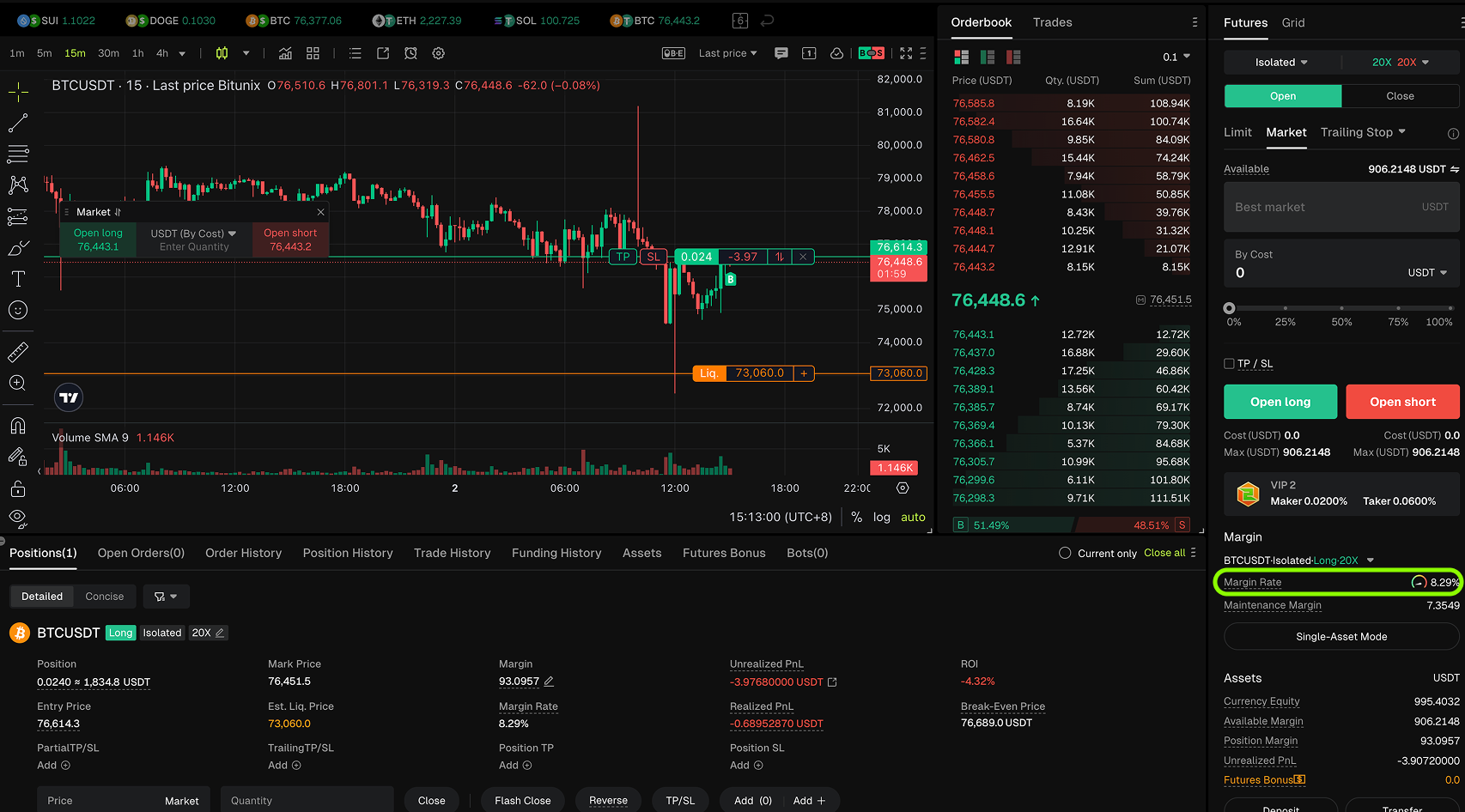
Regardless of leverage level or trade direction, liquidation is determined by one key metric: the Margin Ratio. When the margin ratio reaches or exceeds 100%, the system triggers forced liquidation. Many traders focus only on unrealized P&L, but the margin ratio is the true indicator of liquidation risk.
2. Understanding Margin Ratio: The Core Calculation Logic
The margin ratio measures whether your position risk has exceeded what your margin can support.
Margin Ratio (Simplified Formula)
Margin Ratio = Maintenance Margin ÷ (Margin + Unrealized P&L)
- Maintenance Margin: The minimum margin required to keep the position open
- Margin + Unrealized P&L: The actual risk buffer of the position
When the market moves against your position:
- Unrealized losses increase
- Risk buffer shrinks
- Margin ratio rises
- Liquidation occurs once it reaches 100%
3. Isolated Margin: The Core Tool for Liquidation Prevention
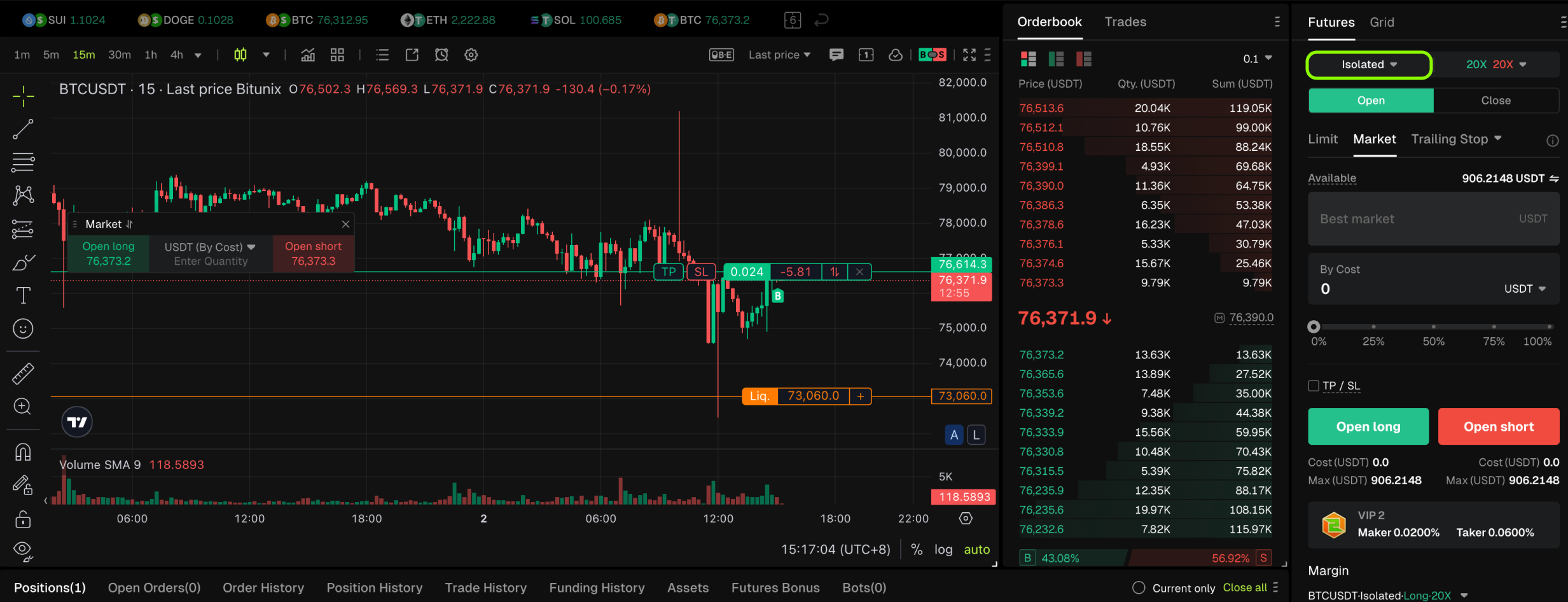
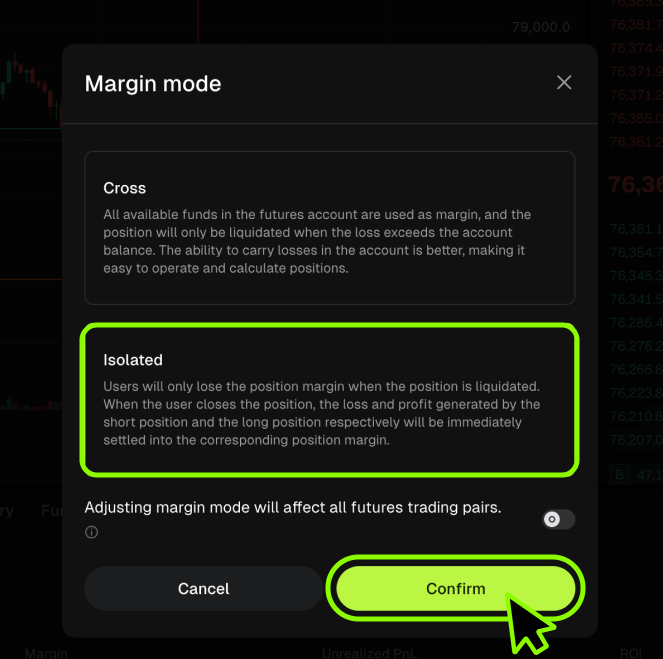
From a risk-control perspective, isolated margin is more transparent and controllable than cross margin, especially in volatile markets.
3.1 Key Characteristics of Isolated Margin
- Each position has its own independent margin
- Liquidation only affects that specific position
- Clear risk boundaries, easier to manage
3.2 Margin Ratio Formula in Isolated Margin Mode
Isolated Margin Ratio = Maintenance Margin ÷ (Position Margin + Unrealized P&L)
Liquidation Condition
When the isolated margin ratio reaches 100%, the position will be liquidated.
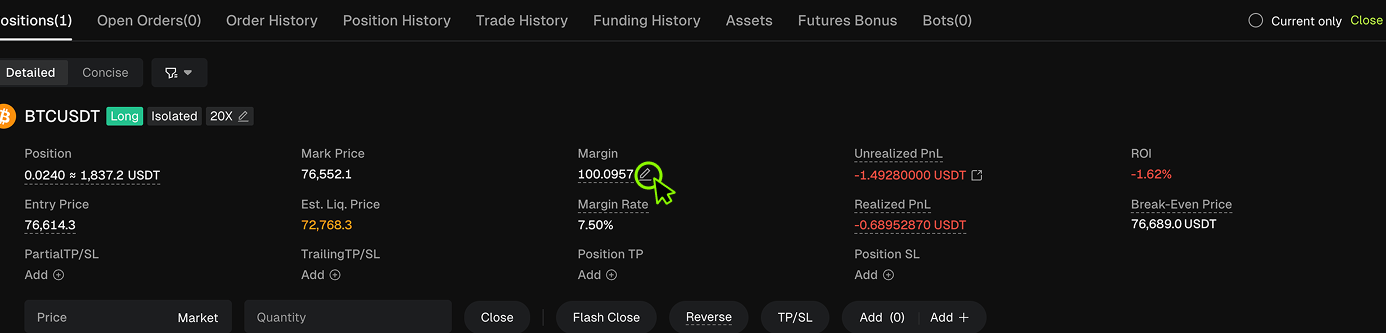
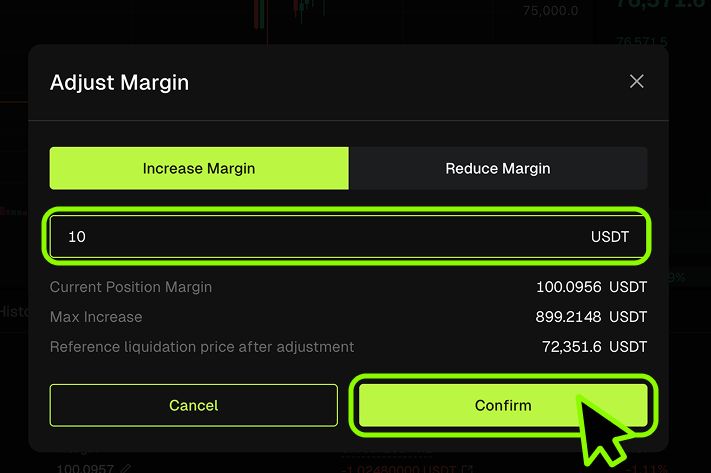
3.3 Key Action to Avoid Liquidation: Add Margin
If you believe the price movement is temporary volatility rather than a trend reversal, you can Add Margin
What Adding Margin Does
- Expands your risk buffer
- Lowers the margin ratio
- Pushes the liquidation price further away
- Buys time for potential price recovery
- This is the most direct and effective way to prevent liquidation in isolated margin mode.
4. Maintain Sufficient Margin at All Times
Many liquidations are not caused by extreme market moves, but by:
- Excessive leverage
- Insufficient initial margin
- No buffer for volatility
Maintaining sufficient margin is the first line of defense against liquidation.
Practical Tips
- Avoid full-margin, high-leverage positions
- Always leave room for market fluctuations
- Don’t risk all available funds on a single trade
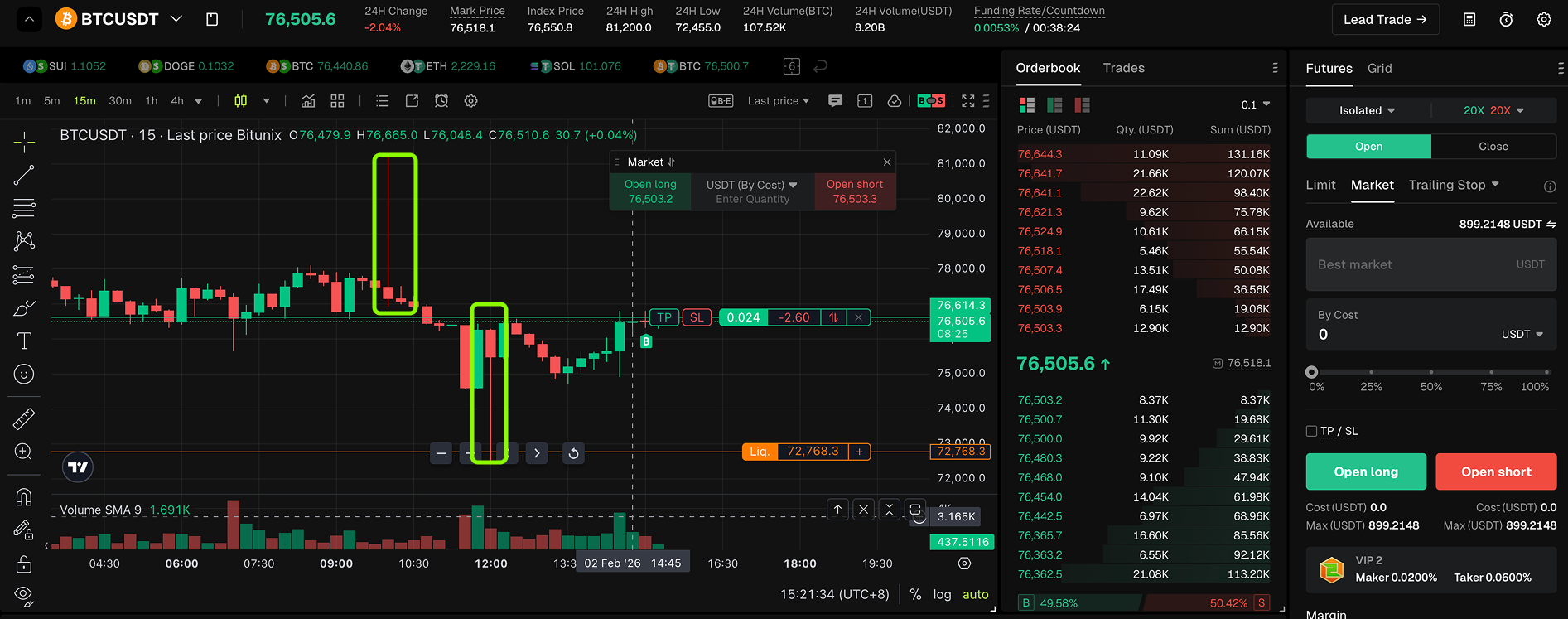
5. High Volatility Markets: Lower Leverage, Use Isolated Margin
During periods of heightened volatility (e.g., major data releases or extreme market conditions):
- Price swings become larger
- Liquidation prices are easier to reach
- High-leverage positions lose tolerance rapidly
Risk Control Recommendations
- Reduce leverage
- Prioritize isolated margin mode
- Decrease single-position size
- Higher leverage demands higher precision — something the market rarely provides.
6. Watch Funding Fees: A Hidden Liquidation Risk
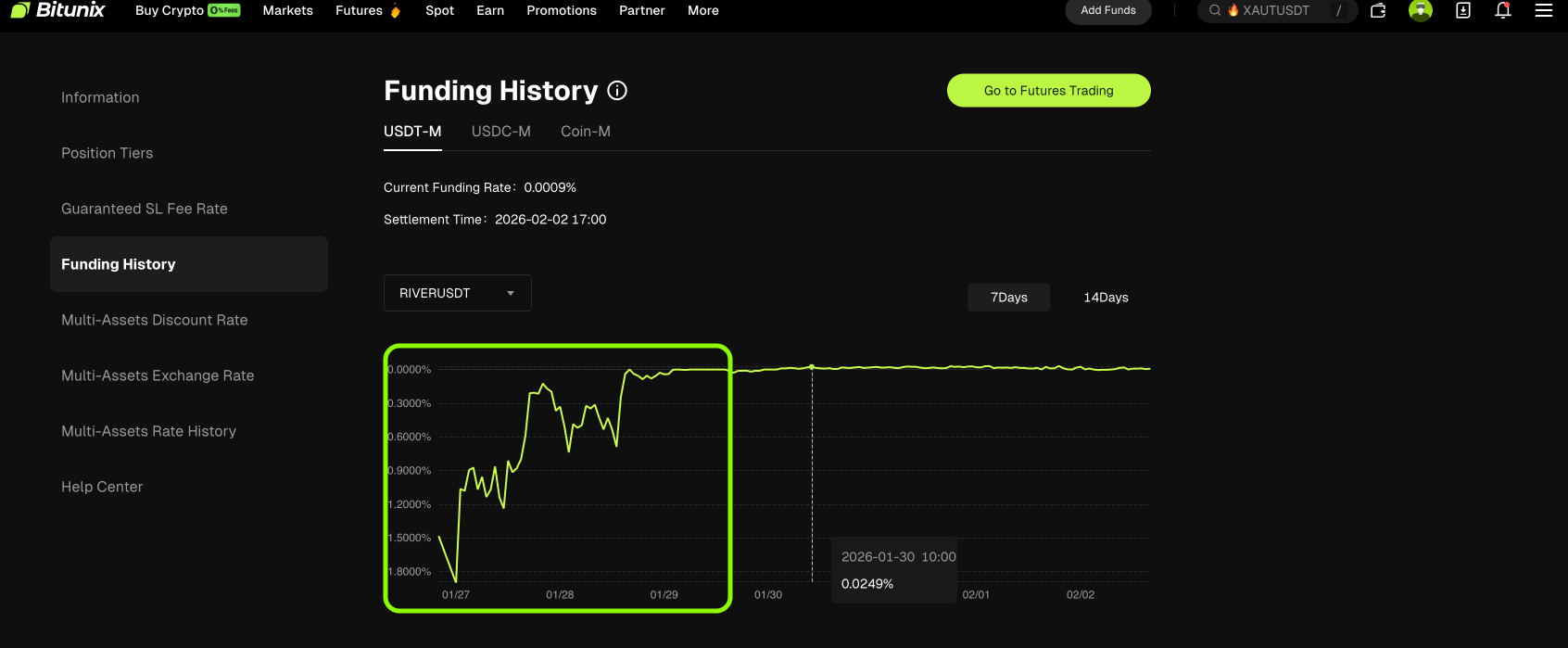
Beyond price movement, funding fees can significantly impact your margin ratio.
Why Funding Fees Increase Liquidation Risk
- Funding fees are settled periodically (some contracts settle hourly)
- High funding rates continuously reduce margin
- During adverse price movements, funding fees accelerate margin depletion
Pay special attention to:
- High leverage combined with frequent funding settlements
- Long holding periods during elevated funding rates
7. Always Set Stop-Loss Orders
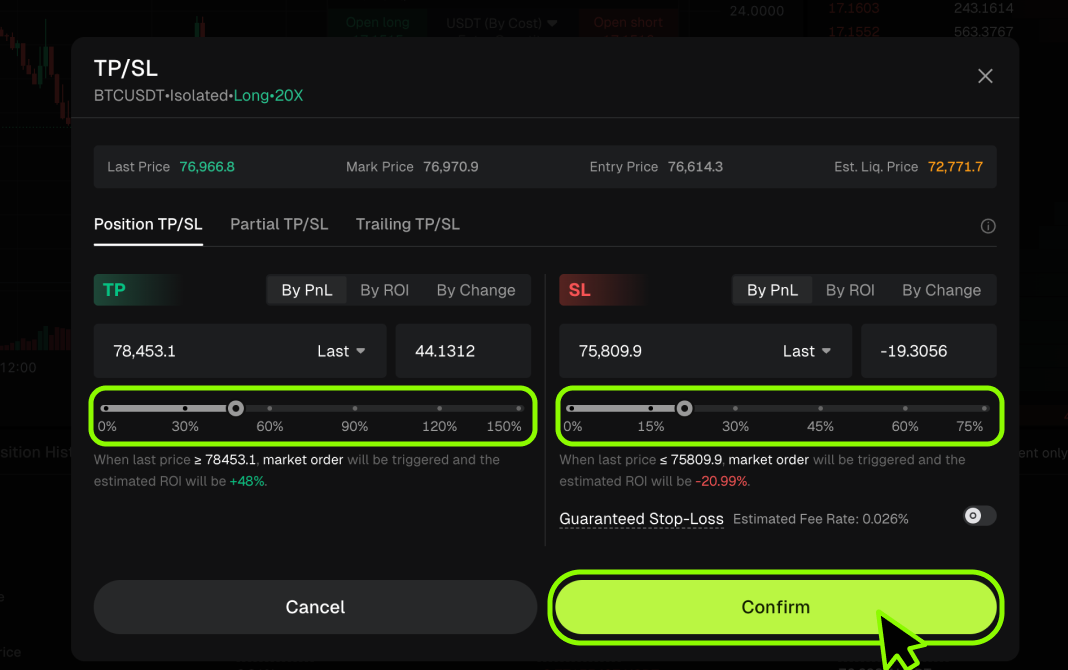
Not setting a stop-loss is effectively handing liquidation control over to the system.
Why Stop-Losses Matter
- Liquidations usually occur at the worst possible price
- Forced liquidation is uncontrollable and may involve slippage
- Stop-losses are proactive risk management, not surrender
Best Practices
- Define your maximum acceptable loss before opening a position
- Set stop-loss orders instead of “watching the market”
- Stop-losses are especially critical in volatile markets
Conclusion:
Liquidation is not caused by a single price movement, but by poor risk control over margin, leverage, and volatility. By understanding how margin ratio works, using isolated margin effectively, maintaining sufficient margin, monitoring funding fees, and setting stop-loss orders, traders can turn liquidation from an unpredictable threat into a controllable variable. Successful futures trading is not about avoiding losses entirely, but about staying in the market long enough to let your strategy play out. Control your risk first — profits come second.
Disclaimer
This article is not intended to provide:
(i) investment advice or investment recommendations;
(ii) an offer, invitation, or solicitation to buy, sell, or hold digital assets;
(iii) financial, accounting, legal, or tax advice.
Digital assets, including stablecoins and NFTs, carry significant risk and price volatility. Evaluate whether trading or holding digital assets is appropriate for your financial situation. Seek guidance from your legal, tax, or investment adviser regarding your specific circumstances.
Bitunix assumes no responsibility for any investment outcomes. You are solely responsible for understanding and complying with all applicable local laws and regulations.
About Bitunix
Bitunix is a global cryptocurrency derivatives exchange trusted by over 3 million users across more than 100 countries. At Bitunix, we are committed to providing a transparent, compliant, and secure trading environment for every user. Our platform features a fast registration process and a user-friendly verification system supported by mandatory KYC to ensure safety and compliance. With global standards of protection through Proof of Reserves (POR) and the Bitunix Care Fund, we prioritize user trust and fund security. The K-Line Ultra chart system delivers a seamless trading experience for both beginners and advanced traders, while leverage of up to 200x and deep liquidity make Bitunix one of the most dynamic platforms in the market.
Bitunix Global Accounts
X | Telegram Announcements | Telegram Global | CoinMarketCap | Instagram | Facebook | LinkedIn | Reddit | Medium