1. What is Filecoin?
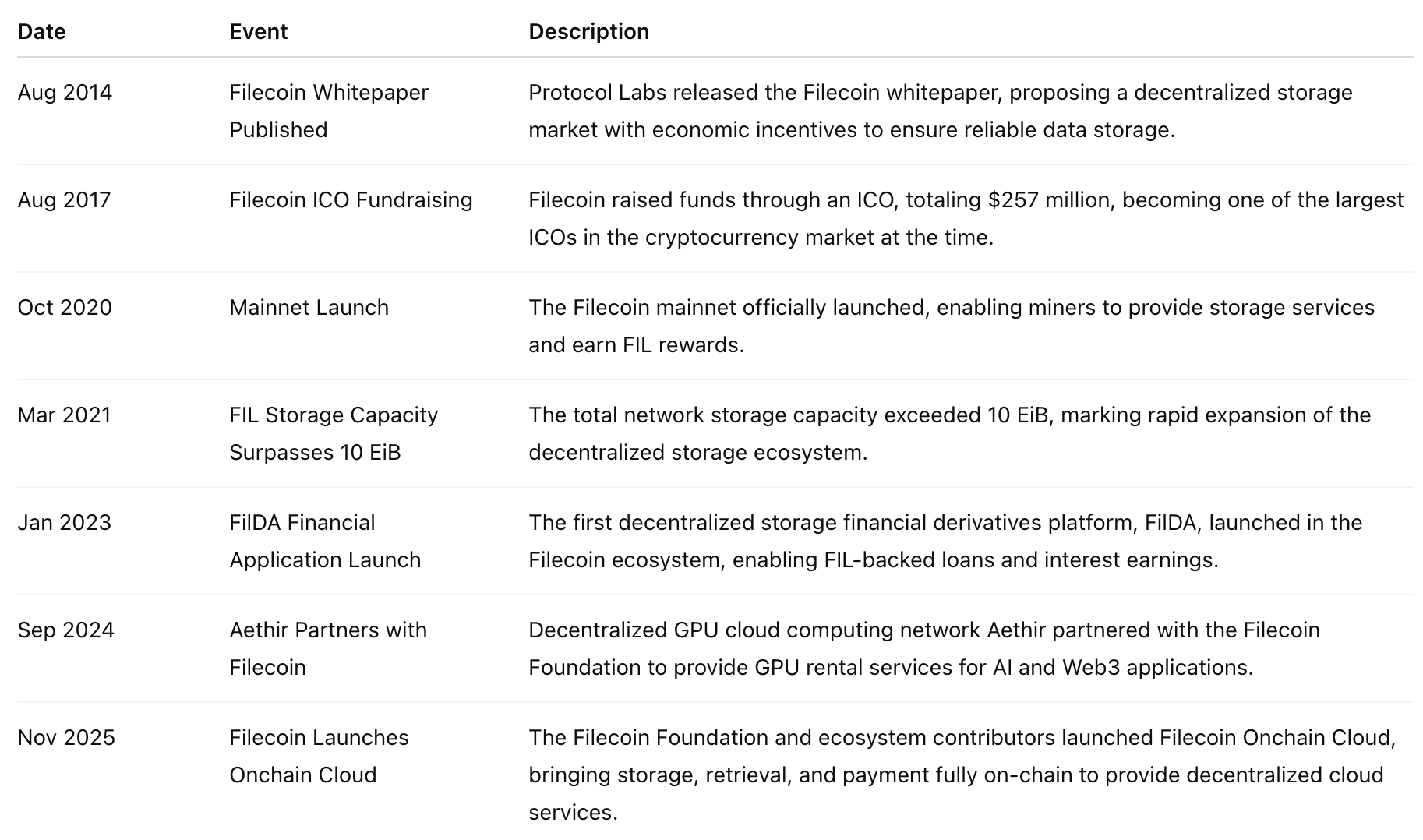
In 2014, Juan Benet, the founder of Protocol Labs, proposed the concept of IPFS (InterPlanetary File System), aiming to replace the traditional HTTP protocol and build a more decentralized content delivery network. However, for global users to voluntarily contribute storage space, vision alone was insufficient—a proper incentive mechanism was required. Filecoin, as the incentive layer for IPFS, leverages blockchain technology to transform global hard drive resources into a decentralized storage market.
In 2017, Filecoin completed one of the largest ICOs at the time, raising over $250 million. Subsequently, in October 2020, the Filecoin mainnet officially launched, marking humanity’s first attempts to reclaim data sovereignty from a few tech giants. Filecoin is not merely a cryptocurrency project—it is an ambitious infrastructure project designed to provide a permanent, secure, and low-cost storage solution for humanity’s most important information.
Today, Filecoin has grown into the world’s largest decentralized storage network. With the introduction of the FVM (Filecoin Virtual Machine), it now supports smart contract capabilities, enabling complex applications such as data leasing and automated management. Filecoin is deeply integrating with the Web3 ecosystem, becoming a critical pillar supporting the metaverse, NFTs, and decentralized scientific data infrastructure.
2. What is Filecoin’s Proof of Storage?
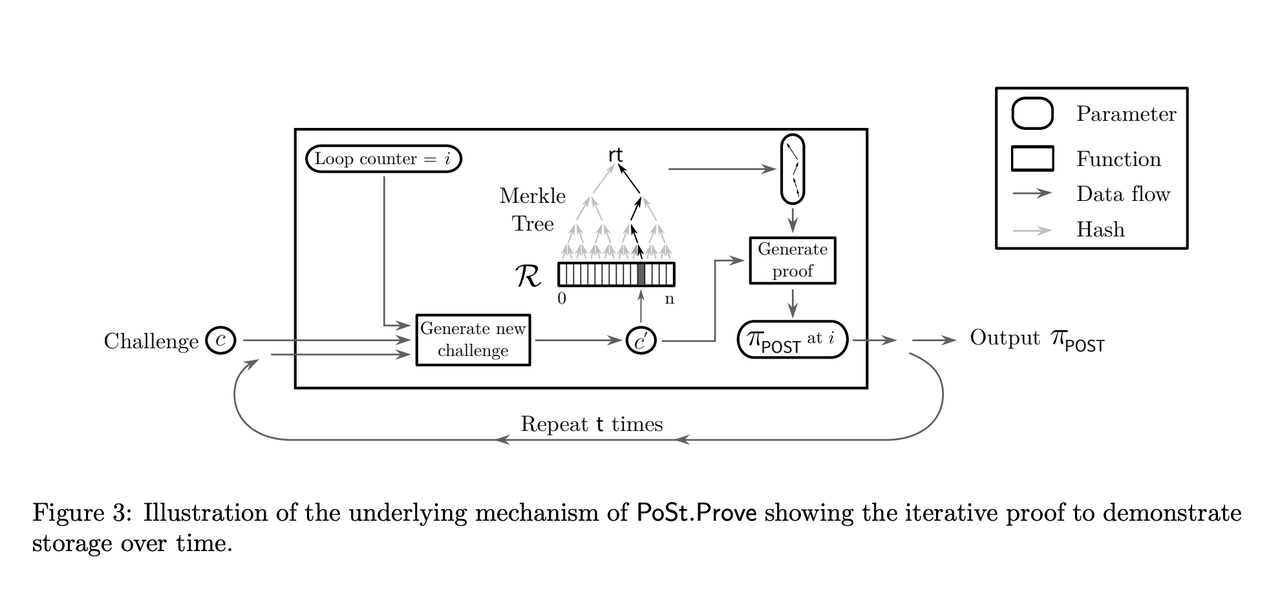
Filecoin’s core competitiveness lies in its unique consensus mechanism: Proof of Storage. Unlike Bitcoin’s PoW (Proof of Work), which consumes electricity for meaningless calculations, the computational power in Filecoin’s network represents “useful storage capacity.” This consensus consists of two parts: Proof-of-Replication (PoRep) and Proof-of-Spacetime (PoSt), which together ensure data exists on the network securely, continuously, and verifiably.
Proof-of-Replication occurs at the initial storage stage. When a miner receives user data, they must encode it and prove to the network that they have allocated unique physical storage for it. This prevents miners from fraudulently claiming rewards. Proof-of-Spacetime is an ongoing process, where the network randomly issues challenges requiring miners to prove that they still store the user’s data at specific times.
This design perfectly combines “useful work” with blockchain security. Miners must prove they provide high-quality storage services to earn block rewards. This ensures data immutability while maintaining extremely high reliability and availability without centralized oversight.
3. Filecoin Storage vs. Traditional Cloud Storage Costs
Traditional cloud storage services operate in a highly centralized model. Providers invest heavily in data centers, pay high electricity and cooling costs, and maintain large teams, with these costs ultimately passed on to users. Users often face “opaque pricing” and “vendor lock-in,” making data migration extremely expensive if providers change their policies.
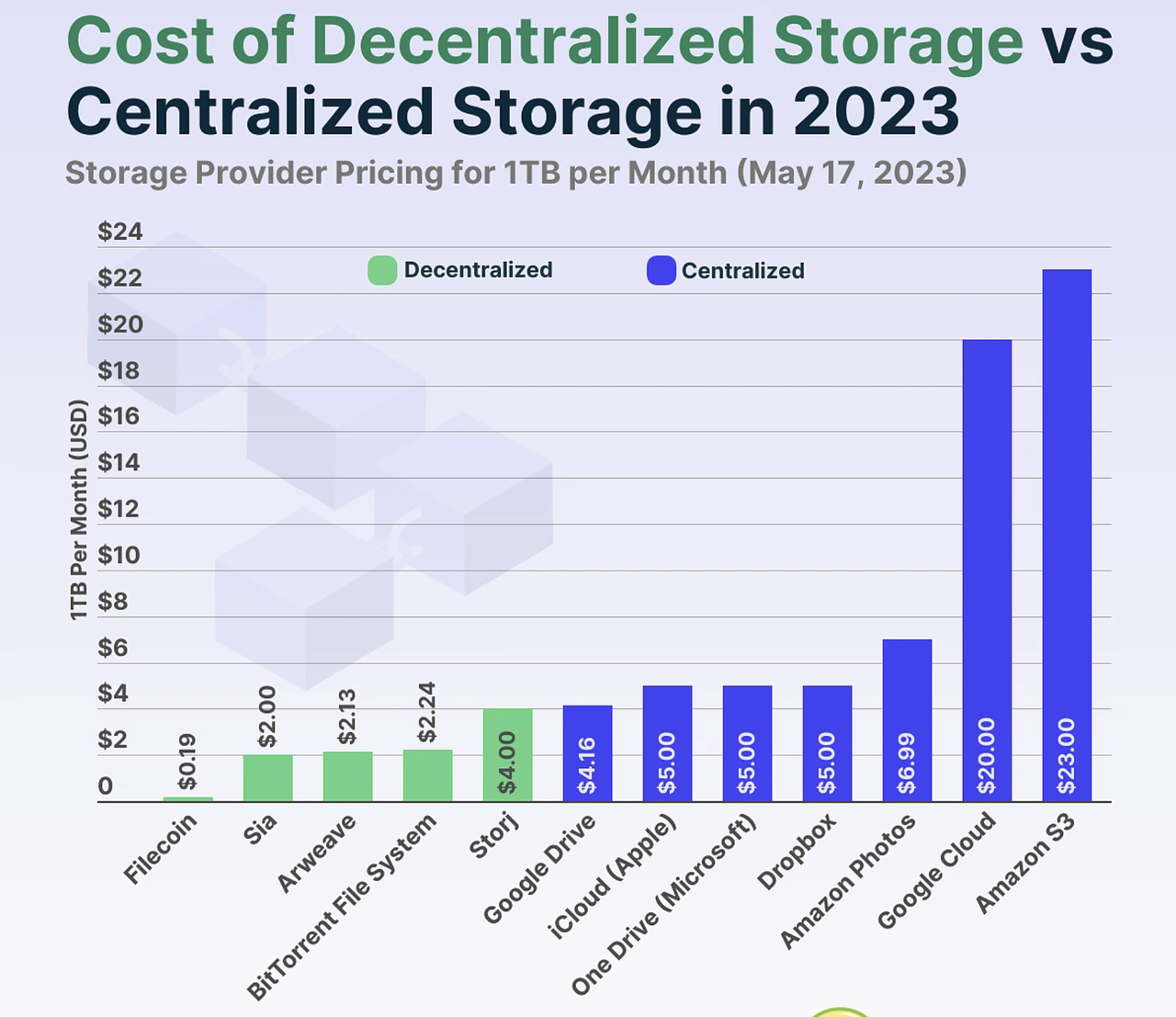
In contrast, Filecoin establishes a global free-market system. Storage prices are determined spontaneously by thousands of providers based on supply and demand. Since anyone can join the network using idle hard drives, competition drives storage prices down to a fraction of traditional cloud services. For storing massive unstructured datasets—like scientific experiments, media assets, or historical archives—Filecoin offers unparalleled cost efficiency. According to Coingecko, in May 2023, renting 1TB of storage on Filecoin for one month cost $0.19, compared to over $20 using major public clouds like Google Cloud or Amazon S3.
4. Institutional Use Cases for Filecoin Storage
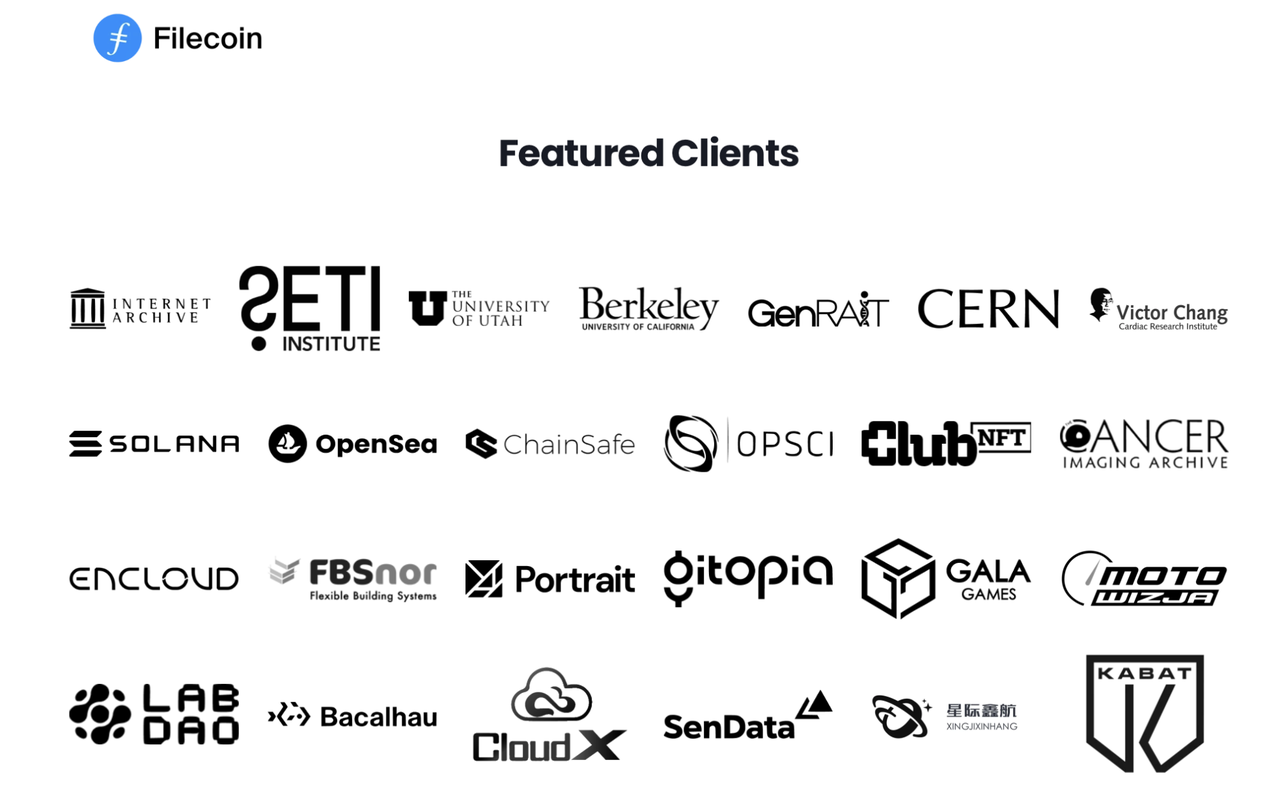
Filecoin’s vision extends beyond cryptocurrency enthusiasts; it has earned the trust of world-class academic and commercial institutions. CERN, for example, uses Filecoin to store vast amounts of data from the Large Hadron Collider. For preserving decades-long scientific heritage, Filecoin’s decentralized architecture provides a more reliable lifecycle than any single commercial company.
The Internet Archive also uses Filecoin as a key backup channel, ensuring the preservation of humanity’s web civilization even in extreme political or physical conditions. Open Data projects by New York City and the University of California, Berkeley, also store public datasets on Filecoin. These endorsements demonstrate that Filecoin has achieved industrial-grade standards for data security and regulatory compliance.
Beyond research and public interest, many blockchain-native projects use Filecoin as an “archival layer.” High-performance blockchains like Solana store historical transaction data on Filecoin to reduce node storage pressure. With the promotion of the DataCap program, more enterprise users are entering the Filecoin ecosystem through compliant channels, making it the preferred solution for big data backup and long-term archiving.
5. How Filecoin Miners Earn FIL
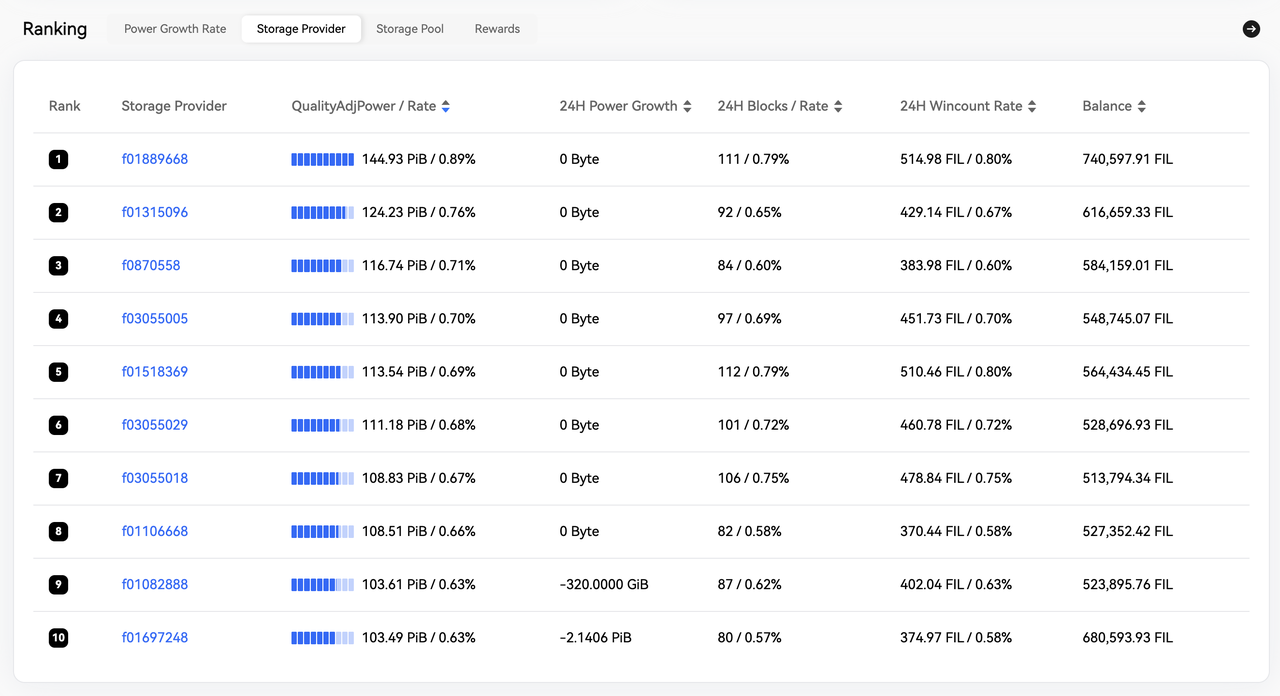
Becoming a Filecoin network storage provider (miner) is the most direct way to earn FIL, but it is not just about plugging in a hard drive. Miner rewards come from two main sources: block rewards and storage fees. When miners contribute storage space and successfully seal data, they gain “effective storage power,” increasing their probability of earning FIL rewards. Miners can also accept user storage orders to earn storage fees directly.
This design aligns miner incentives with network interests. Miners are not only storage providers but also guardians of network trust. In addition to storage miners, retrieval miners provide fast data downloads for users, earning small retrieval fees. As the network matures, storing real, valuable data (e.g., Verified Datasets) will earn higher reward weight than storing low-value data, encouraging miners to become professional data service providers.
6. How Investors Can Acquire FIL
Investors can acquire FIL mainly in two ways: purchasing through cryptocurrency exchanges or P2P trading. Exchanges are generally recommended for beginners due to simplicity and safety.
Centralized exchanges like Bitunix act as trusted intermediaries, supporting purchases using fiat or stablecoins (e.g., USDT). Some platforms also support instant credit card purchases, lowering entry barriers. First-time users must register and complete KYC verification, submitting identity and address documents to comply with global AML and counter-terrorism financing regulations. Bitunix provides industry-leading compliance and risk-control systems, with cold/hot wallet separation, multi-signature, and real-time monitoring, offering above-average security—making it a reliable choice for newcomers.
7. Major Filecoin Milestones (Timeline)
Disclaimer
This article is not intended to provide: (i) investment advice or investment recommendations; (ii) an offer or solicitation to buy, sell, or hold digital assets; or (iii) financial, accounting, legal, or tax advice. Digital assets (including stablecoins and NFTs) involve high risk and may be highly volatile. You should carefully consider whether trading or holding digital assets is suitable for you based on your financial situation. For your specific circumstances, consult your legal, tax, or investment professionals. You are responsible for understanding and complying with all applicable local laws and regulations.
About Bitunix
Bitunix is a global cryptocurrency derivatives exchange trusted by over 3 million users across more than 100 countries. At Bitunix, we are committed to providing a transparent, compliant, and secure trading environment for every user. Our platform features a fast registration process and a user-friendly verification system supported by mandatory KYC to ensure safety and compliance. With global standards of protection through Proof of Reserves (POR) and the Bitunix Care Fund, we prioritize user trust and fund security. The K-Line Ultra chart system delivers a seamless trading experience for both beginners and advanced traders, while leverage of up to 200x and deep liquidity make Bitunix one of the most dynamic platforms in the market.
Bitunix Global Accounts
X | Telegram Announcements | Telegram Global | CoinMarketCap | Instagram | Facebook | LinkedIn | Reddit | Medium