1. Introduction to Cardano
In 2015, after leaving the Ethereum team, Charles Hoskinson, one of Ethereum’s co-founders, led the technology company Input Output Global (formerly IOHK) to launch the development of the Cardano project. Hoskinson was committed to building a third-generation blockchain developed on the basis of a “scientific philosophy” and a “peer review” mechanism, with the goal of solving Bitcoin’s scalability limitations and Ethereum’s high-cost issues. Cardano was named after the 16th-century Italian polymath Gerolamo Cardano, while its native token, ADA, was named after the 19th-century mathematician Ada Lovelace, who is widely regarded as the world’s first computer programmer.
Within the Cardano ecosystem, ADA is not only the core asset used to pay transaction fees and participate in staking, but also the network’s governance token. Holders can participate in on-chain governance and treasury funding decisions through staking and voting mechanisms. Hoskinson believes that blockchain should not be merely a technical experiment, but a rigorous engineering system. Therefore, before any technical proposal is implemented on Cardano, it must undergo strict academic review and formal verification. This development logic, which pursues the highest possible level of security and stability, has established Cardano’s unique position in the crypto industry as an academically driven blockchain project.
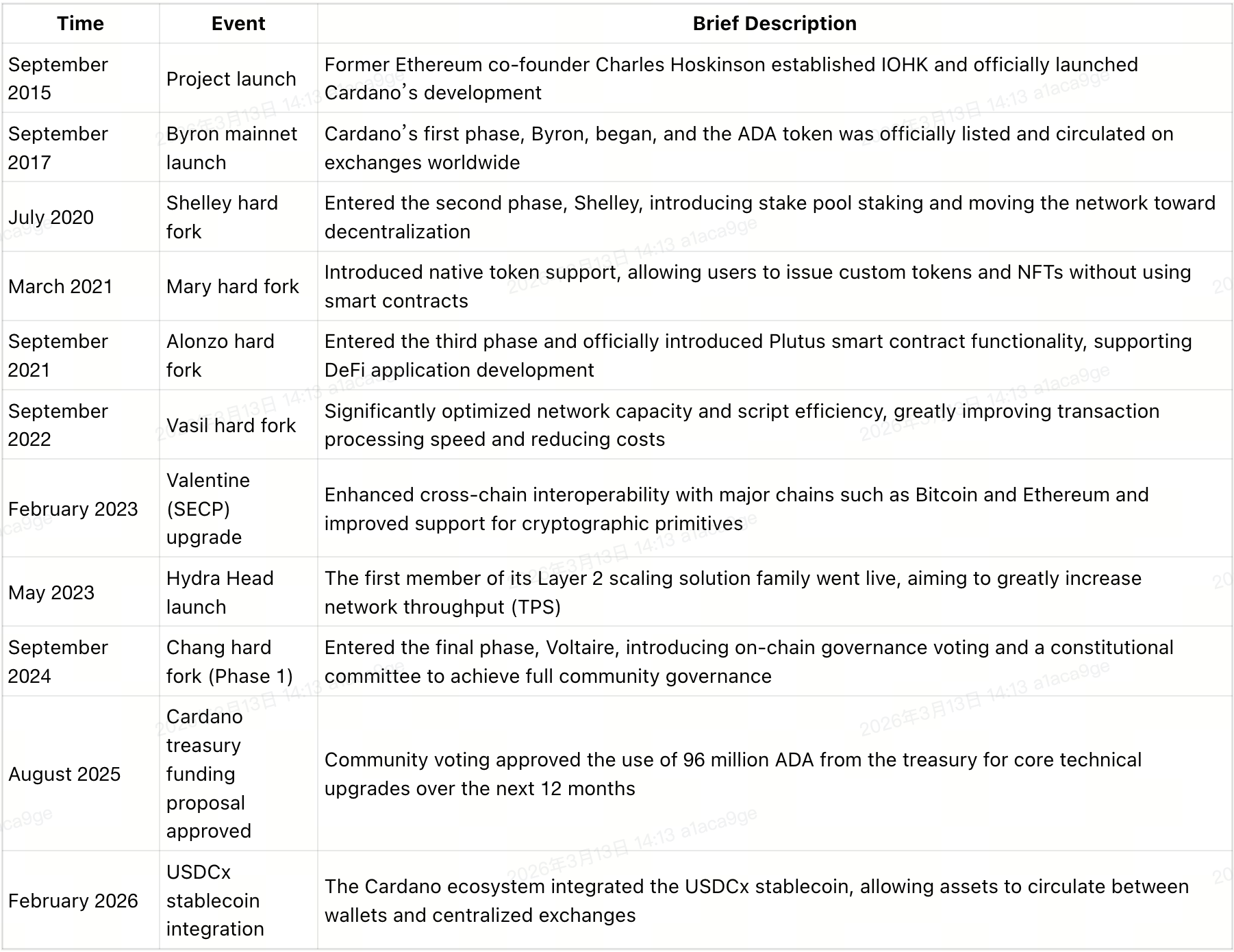
In September 2017, the Cardano mainnet officially launched and began advancing its ambitious development roadmap in stages. Unlike Ethereum, Cardano’s evolution path is divided into five eras: Byron (foundation), Shelley (decentralization), Goguen (smart contracts), Basho (scalability), and Voltaire (governance). Each era represents a major leap in network functionality. After nearly a decade of development, Cardano has grown into one of the most representative public blockchains.
2. Cardano: Ouroboros and the eUTXO Architecture
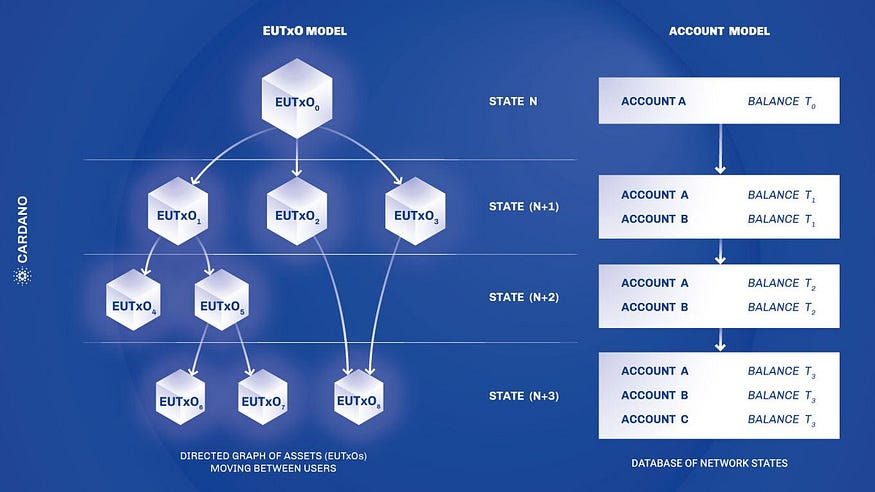
Cardano’s core competitive advantage lies in its original consensus algorithm, Ouroboros, the world’s first proof-of-stake (PoS) protocol to be proven secure through academic research. Ouroboros divides time into “epochs” and “slots,” and produces blocks by randomly selecting nodes as slot leaders, greatly improving energy efficiency and network throughput. Unlike Ethereum, which later transitioned to PoS, Cardano completely abandoned computational power competition from the very beginning of its underlying design, achieving extremely low energy consumption. At the same time, Cardano adopted the unique eUTXO (extended unspent transaction output) model. This model inherits Bitcoin’s security characteristics while adding support for smart contracts. Unlike Ethereum’s “account model,” eUTXO allows transactions to be partially validated off-chain and processed in parallel on-chain, effectively reducing the risk of network congestion and providing greater determinism for complex financial interactions.
At the smart contract layer, Cardano introduced the Plutus language, a smart contract platform developed on the basis of the Haskell functional programming language. The strength of functional programming lies in the fact that its code is highly suitable for mathematical proof, which can effectively reduce vulnerabilities and logical errors. This is especially important for DeFi protocols that handle large-scale capital. Although this creates a higher learning curve for developers, it also delivers an extremely high level of system security. In addition, Cardano has a “native assets” feature, which means that issuing tokens on the chain does not require writing complex contract code as on Ethereum. Tokens and ADA enjoy the same status in the ledger. This not only reduces fees but also eliminates token security issues caused by contract vulnerabilities, laying a solid foundation for interoperability within its ecosystem.
3. Cardano: Economic Model and the Five Major Eras of Evolution
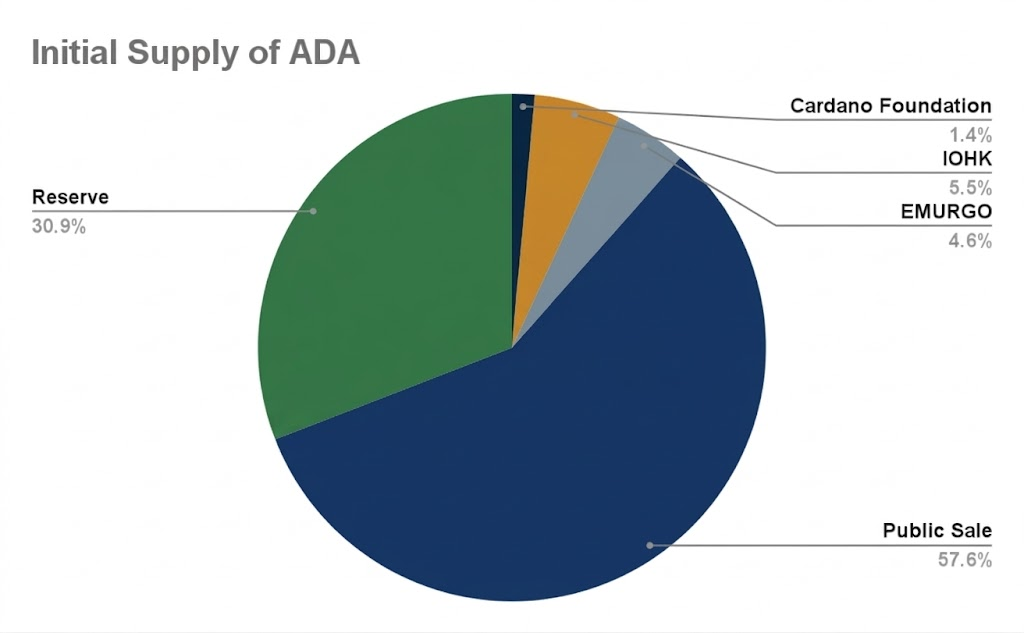
In terms of its economic model, ADA uses a fixed supply cap, with the total supply locked at 45 billion tokens. This deflationary expectation is very similar to Bitcoin. ADA plays multiple roles within the ecosystem. It is both the “fuel” used to pay transaction fees and the “certificate of stake” used to participate in network governance and secure the network. Cardano’s staking mechanism is designed to be highly user-friendly. Users can participate in staking without transferring assets out of their wallets, and there is no slashing risk. This has allowed ADA’s circulation rate and staking participation rate to remain at relatively high levels. In addition, Cardano has a treasury system in which a portion of each transaction fee flows into the treasury, and the community votes on how those funds are used, ensuring the ecosystem’s long-term capacity for self-sustaining development.
Cardano’s development history is a story of careful and precise evolution. It began with token transfers in the Byron era, then achieved full staking decentralization in the Shelley era. In 2021, the Alonzo upgrade in the Goguen era officially introduced smart contract functionality. Every step Cardano has taken has been extremely steady. The current Basho era is focused on improving scalability, using Layer 2 solutions such as Hydra to enable the network to process transactions at massive scale. The final Voltaire era will complete the governance framework and fully return control of the network to the global community. This step-by-step development path has allowed Cardano to respond to technical challenges with greater composure.
4. Cardano Ecosystem and Governance System
The development of the Cardano ecosystem has always revolved around “practical utility.” Since gaining smart contract capabilities, native DEXs such as Minswap and SundaeSwap, along with lending protocols and stablecoin projects, have emerged one after another, gradually building a closed-loop financial ecosystem. Particularly noteworthy is Cardano’s presence in public-sector applications, such as its collaboration with the Ethiopian government to build a blockchain-based student academic credential management system, demonstrating blockchain’s potential in social governance. Unlike other public blockchains that pursue short-term explosive growth, Cardano’s ecosystem participants are more inclined toward long-term holding and building, which has allowed it to show remarkable community resilience during market volatility.
In terms of governance structure, Cardano is driven jointly by three major entities: IOG, led by Hoskinson, which is responsible for technical development and research; the Cardano Foundation, which is responsible for brand promotion and ecosystem standardization; and Emurgo, which is responsible for commercial investment and application development. This separation-of-powers structure ensures balanced development across technology, regulation, and commercialization. Although some people criticize its slow development pace, Hoskinson has repeatedly stated that “being correct is more important than being fast.” This persistence in careful craftsmanship is precisely the core reason Cardano has remained strong among thousands of blockchain projects worldwide.
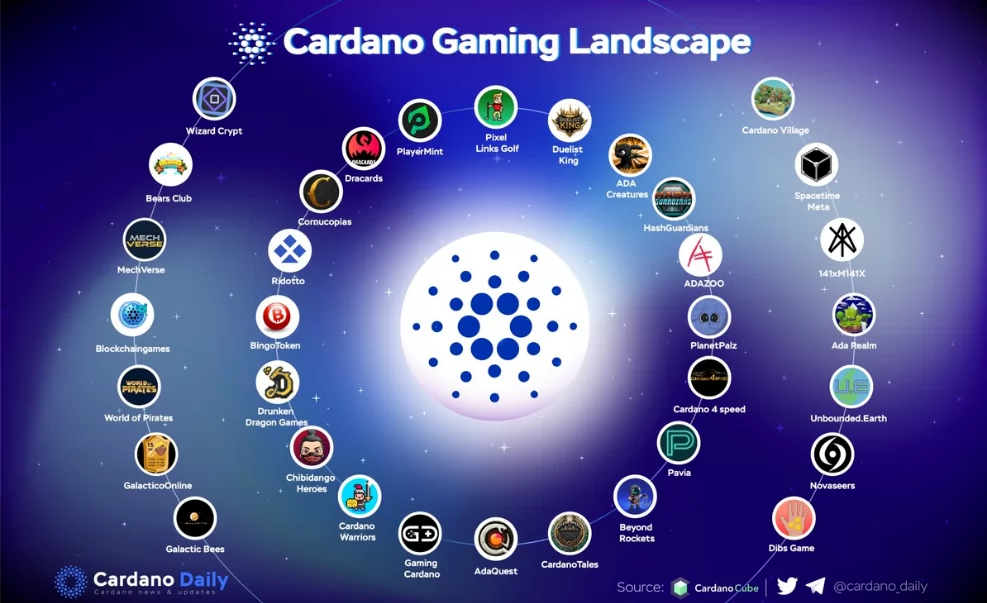
5. How to Buy Cardano (ADA) on Bitunix Exchange
For ordinary investors, ADA is the basic gateway to participating in Cardano ecosystem governance. You can earn newly issued network rewards by staking ADA, which is also an energy-efficient profit model that differs from PoW mining. Although technology enthusiasts may choose to run nodes, for most users, purchasing ADA through a reliable centralized exchange is the most direct path.
By purchasing ADA through centralized cryptocurrency exchanges such as Bitunix, the platform acts as a trusted trading intermediary and supports users in directly purchasing crypto assets with fiat currency or stablecoins, significantly lowering the investment barrier. The Bitunix platform provides a convenient “One-Click Buy Crypto” feature and supports multiple payment channels such as credit cards, debit cards, SEPA transfers, and MoonPay, allowing users to complete the asset purchase process quickly. At the same time, Bitunix offers a relatively user-friendly fee structure, providing certain cost advantages for long-term investors and active traders. In terms of asset security, the platform protects user funds through the separation of hot and cold wallets, multi-signature mechanisms, and real-time risk control systems, and regularly publishes Proof of Reserves to ensure transparent and verifiable platform assets. Before first use, users are still required to complete account registration and identity verification procedures in order to comply with global anti-money laundering and counter-terrorist financing regulatory requirements.
6. Timeline of Major Cardano Events
Disclaimer
This article is not intended to provide: (i) investment advice or investment recommendations; (ii) an offer or solicitation to buy, sell, or hold digital assets; or (iii) financial, accounting, legal, or tax advice. Digital assets (including stablecoins and NFTs) involve high risk and may be highly volatile. You should carefully consider whether trading or holding digital assets is suitable for you based on your financial situation. For your specific circumstances, consult your legal, tax, or investment professionals. You are responsible for understanding and complying with all applicable local laws and regulations.
About Bitunix
Bitunix is a global cryptocurrency derivatives exchange trusted by over 3 million users across more than 100 countries. At Bitunix, we are committed to providing a transparent, compliant, and secure trading environment for every user. Our platform features a fast registration process and a user-friendly verification system supported by mandatory KYC to ensure safety and compliance. With global standards of protection through Proof of Reserves (POR) and the Bitunix Care Fund, we prioritize user trust and fund security. The K-Line Ultra chart system delivers a seamless trading experience for both beginners and advanced traders, while leverage of up to 200x and deep liquidity make Bitunix one of the most dynamic platforms in the market.
Bitunix Global Accounts
X | Telegram Announcements | Telegram Global | CoinMarketCap | Instagram | Facebook | LinkedIn | Reddit | Medium