
One of the biggest reasons traders explore crypto futures trading is simple: futures allow you to trade in both directions. In spot, most people profit only when price rises. In futures, you can go long in an uptrend or go short in a downtrend, using the same contract.
If you are searching what futures trading is, understanding long vs short is a core milestone. It determines how you express your market view, how you set stops and targets, and how you avoid liquidation.
This guide explains long vs short in plain American English, shows when each approach makes sense, and provides a practical execution checklist for Bitunix futures so beginners can trade with structure instead of emotion.
What Futures Trading Is and Why Long vs Short Matters
Futures trading means trading a contract that tracks the price of an asset without owning the asset itself. In crypto, futures often refer to perpetual futures, which typically do not expire. That contract structure makes it easy to open positions in either direction.
So, what is trading futures in practice? It means you choose a contract, allocate margin, set leverage, and then your PnL changes as price moves. If you go long, you benefit from price rising. If you go short, you benefit from price falling.
Long vs short is not just a directional choice. It also changes:
- where your invalidation level should be
- how you place stop-loss orders
- how you think about liquidation distance
- how you manage risk during volatility
That is why futures trading for beginners should start here before getting into advanced strategy.
Long vs Short Basics
What Does It Mean to Go Long?
A long position means you expect price to rise. If you go long on BTC and BTC goes up, your position gains.
Long positions are commonly used when:
- price is trending upward
- the market breaks above resistance and holds
- You expect a rebound from support with clear invalidation
What Does It Mean to Go Short?
A short position means you expect price to fall. If you short ETH and ETH drops, your position gains.
Short positions are commonly used when:
- price is trending downward
- the market rejects a resistance level
- you expect a breakdown below support with continuation
Being able to short is one of the major advantages of futures over spot, and it is a key reason traders move from spot into bitunix futures trading.
How Profit and Loss Works for Long and Short
The math behind long and short is straightforward:
- If you are long, you profit when price rises and lose when price falls.
- If you are short, you profit when price falls and lose when price rises.
What changes the intensity of those gains and losses is leverage and position size. Higher leverage means your PnL swings faster relative to your margin.
This is where beginners often struggle. They correctly understand long vs short directionally, but they underestimate how leverage compresses the distance to liquidation.
Choosing a Contract: BTC Futures vs ETH Futures
If you are new, you will often start with BTC futures or ETH futures because these markets are widely traded. Both can work for learning long and short mechanics.
A practical difference:
- BTC can trend steadily but still has sharp liquidations around key levels.
- ETH can have faster intraday swings, which can make high leverage harder to manage.
For trading futures for beginners, start with whichever contract you can manage calmly. Consistent execution matters more than picking the “best” chart.
Leverage and Liquidation: Why It Matters More Than Direction
On Bitunix futures, you select a leverage setting. Bitunix leverage affects how much exposure you control relative to margin.
As leverage increases:
- liquidation moves closer to entry
- normal volatility becomes more dangerous
- a small move against you can end the trade early
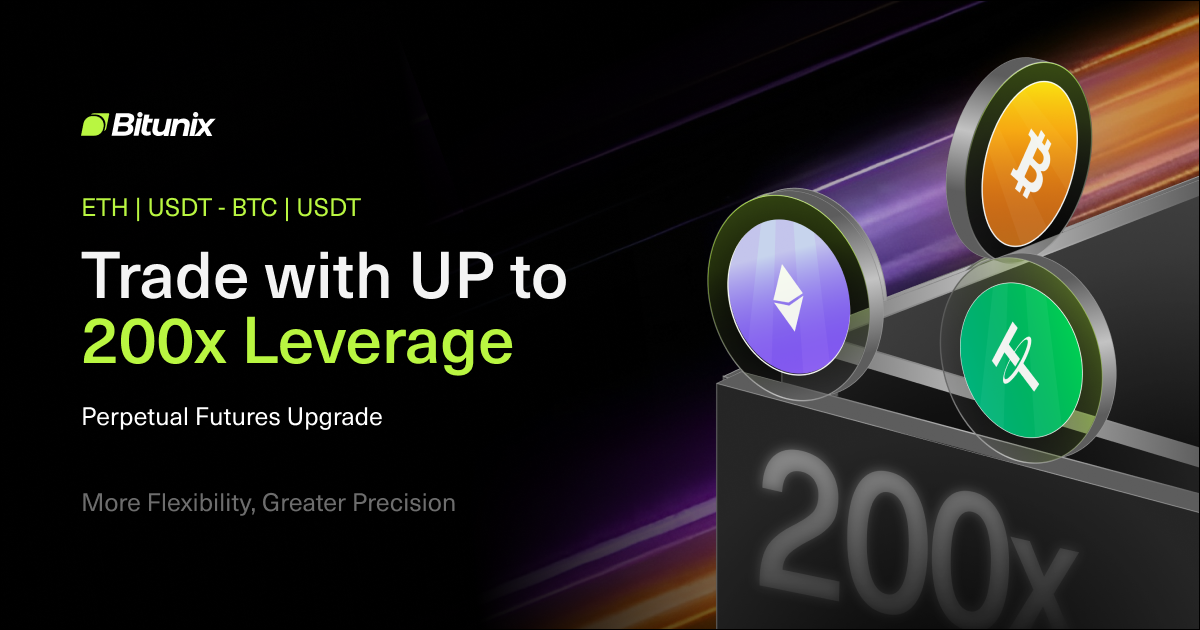
Bitunix 200x leverage is available on selected contracts like BTC/USDT & ETH/USDT. That is an advanced setting. Beginners should not treat it as a default. For beginners, the goal is to keep liquidation far enough away that normal market noise does not force you out.
A useful mindset:
- Direction determines whether you can win.
- Risk structure determines whether you can stay in the game long enough to learn.
When Going Long Makes Sense
Long setups are not “always bullish.” They should have a reason and a clear invalidation.
Trend Continuation Long
A continuation long is when price is already trending up and you enter on a pullback or after confirmation of strength.
What to look for:
- higher highs and higher lows
- pullback to support with a reaction
- a defined stop below the level that should hold
Breakout Long
A breakout long is when price breaks above a key resistance and holds.
What to look for:
- clean breakout with follow-through
- retest of the breakout level
- invalidation if price falls back below the level and holds
Breakouts can be volatile. Beginners should reduce leverage and size so the trade can survive normal retests.
When Going Short Makes Sense
Short setups are not “anti-market.” They are part of trading both directions responsibly.
Trend Continuation Short
A continuation short is when price is trending down and you enter after a bounce fails.
What to look for:
- lower highs and lower lows
- bounce into resistance that rejects
- clear stop above the level that should not break
Breakdown Short
A breakdown short is when price breaks below support and continues lower.
What to look for:
- support level breaks with volume or momentum
- failed reclaim of the level
- stop above the breakdown point
Just like breakouts, breakdowns can be volatile. If you are using leverage, keep liquidation far away.
A Beginner Execution Checklist for Long and Short Trades on Bitunix
This section is meant to be used every time you place a trade on bitunix futures.
Step 1: Decide Long or Short Based on Structure
Ask one question: does the market structure support a long or a short?
- long: higher highs, higher lows, holding support
- short: lower highs, lower lows, failing at resistance
If you cannot explain the reason, do not trade.
Step 2: Set Your Invalidation Level
Your invalidation is where your trade idea is wrong.
- For longs, invalidation is usually below support.
- For shorts, invalidation is usually above resistance.
This is not optional. Invalidation is what turns an opinion into a trade plan.
Step 3: Choose Margin Mode Intentionally
For futures trading for beginners, isolated margin is usually easier to control because risk is contained per position.
Step 4: Choose Conservative Leverage
Bitunix leverage should match your stop distance and volatility. If your liquidation price is close to your invalidation, you are likely overleveraged.
Step 5: Size the Position Based on Risk
Decide your maximum loss first, then size the position so that if your stop triggers, the loss is within your limit.
This matters more than picking the perfect entry.
Step 6: Place the Order and Use Stops
Use order types that reduce mistakes:
- limit entries when possible
- stop-loss orders at invalidation
- reduce-only take-profit orders to avoid accidental adds
Step 7: Run a 10-Second Confirmation Scan
Before you confirm:
- correct contract selected
- long or short direction correct
- margin mode correct
- leverage intentional
- position size matches risk
- stop-loss set
- liquidation comfortably away
This single habit prevents most beginner errors.
Common Mistakes Beginners Make With Long and Short
Confusing a Short With “Betting Against Crypto”
A short is a tool. Traders short to hedge, manage risk, or trade downtrends. It is not a statement about the long-term value of crypto.
Using High Leverage to “Make the Trade Worth It”
This is one of the fastest ways to get liquidated. If the trade feels too small, increase learning time, not leverage.
Setting Stops Too Close
Stops placed inside normal volatility get hit even when the trade idea is correct. If your stop must be tight, your position size should be smaller.
Not Accounting for Market Volatility
BTC futures and ETH futures can move sharply. If you trade during news or high volatility sessions, reduce leverage and size.
Best Futures Trading Platform for Beginners: What Matters for Long vs Short
Many people search best crypto futures trading platform because they want to trade long and short with confidence. For beginners, the best platform is not simply the one with the highest leverage. It is the one that makes risk clear.
When choosing the best futures trading platform for beginners, look for:
- clear visibility of margin, PnL, and liquidation
- reliable order execution and confirmations
- stop and trigger tools
- an interface that reduces mistakes
- strong education for beginners
That is the standard that supports long and short trading in a responsible way, regardless of market conditions.
Conclusion
Long vs short is the foundation of crypto futures trading. A long position benefits from price rising, and a short position benefits from price falling. The more important part is not the direction itself. It is the risk structure behind it.
If you are trading on Bitunix exchange using Bitunix futures trading, focus on clear invalidation, conservative leverage, controlled position size, and disciplined stops. That approach helps beginners survive volatility and build repeatable habits in BTC futures and ETH futures, which is what matters most in the long run.
FAQ
What is futures trading in crypto?
Futures trading is trading contracts that track crypto prices, allowing you to go long or short using margin and leverage without owning the asset directly.
What is trading futures, and why can you short?
Trading futures means trading a price-tracking contract. Because it is a contract, you can take either side of the market, which allows short positions.
Is going short riskier than going long?
Shorting is not automatically riskier, but it requires the same disciplined risk control. The main risk driver is leverage and position size, not direction.
Can beginners trade BTC futures and ETH futures safely?
Beginners can trade safely by using conservative leverage, isolated margin, small position sizes, and stop-loss orders placed at invalidation levels.
Is Bitunix 200x leverage recommended for beginners?
It is an advanced feature available on selected contracts. Beginners typically benefit more from conservative leverage and strong risk controls.
Glossary
- Long: A position that profits if price rises.
- Short: A position that profits if price falls.
- Futures Trading: Trading contracts that track an asset’s price.
- Crypto Futures Trading: Futures trading in cryptocurrency markets.
- Margin: Collateral used to open and maintain a position.
- Leverage: A multiplier that increases exposure relative to margin.
- Isolated Margin: Margin assigned to a single position.
- Cross Margin: Shared margin across positions.
- Liquidation: Forced position closure when margin is insufficient.
- Stop-Loss: An order to close a position at a set price to limit losses.
- Invalidation: The level where a trade idea is considered wrong.
About Bitunix
Bitunix is a global cryptocurrency derivatives exchange trusted by over 3 million users across more than 100 countries. At Bitunix, we are committed to providing a transparent, compliant, and secure trading environment for every user. Our platform features a fast registration process and a user-friendly verification system supported by mandatory KYC to ensure safety and compliance. With global standards of protection through Proof of Reserves (POR) and the Bitunix Care Fund, we prioritize user trust and fund security. The K-Line Ultra chart system delivers a seamless trading experience for both beginners and advanced traders, while leverage of up to 200x and deep liquidity make Bitunix one of the most dynamic platforms in the market.
Bitunix Global Accounts
X | Telegram Announcements | Telegram Global | CoinMarketCap | Instagram | Facebook | LinkedIn | Reddit | Medium