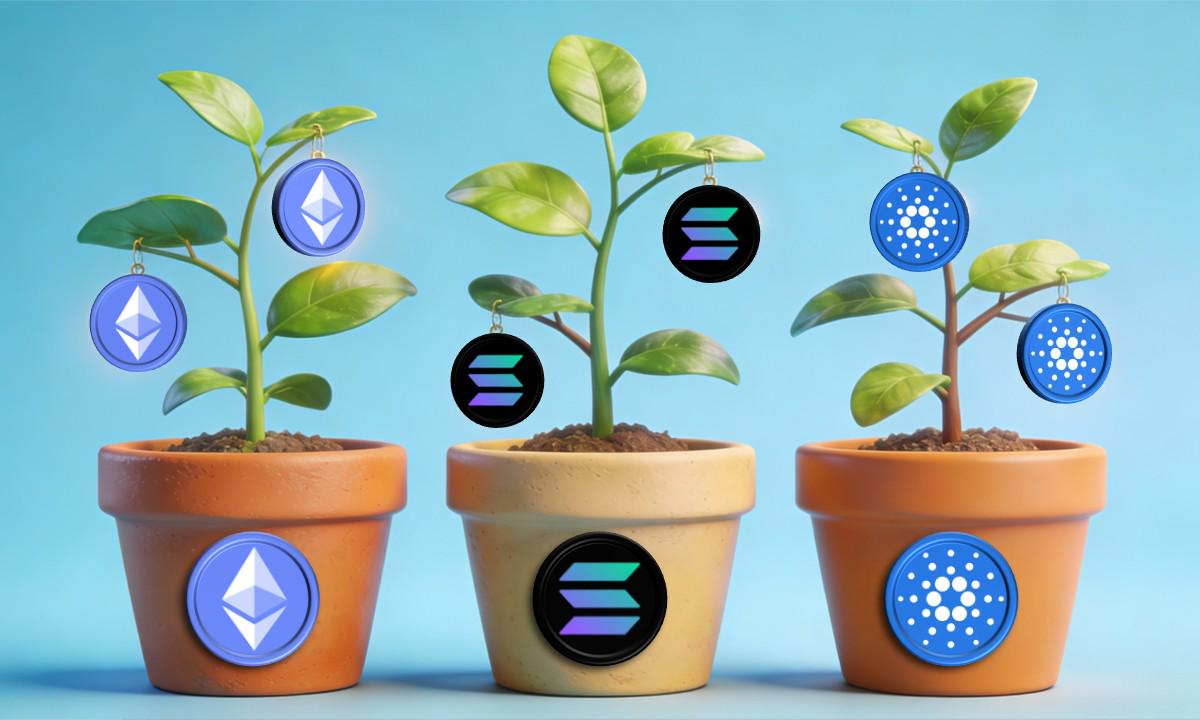
What is Crypto Staking?
Crypto staking is the practice of locking up your cryptocurrency to support and secure a blockchain network that uses the Proof-of-Stake consensus mechanism. Stakers receive rewards varying by the length of the staking period, and generally in the same coin expressed as an APY (Annual Percentage Yield).
The Proof-of-Stake (PoS) consensus mechanism allows validators to lock native tokens to secure the network and earn rewards. Several blockchain networks have staking programs, including Ethereum (ETH), Cardano (ADA), and Solana (SOL).
Staking is a way for many crypto users to earn passive income. For example, you can put your holdings to work and earn USDT daily without selling them. Additionally, you help the network grow, secure its operations, and restake the rewards so they compound over time.
According to CoinLaw, crypto staking has become a mainstream investment strategy in 2025, with global staked value across various cryptocurrencies exceeding $360 billion.
Top Staking Coins for 2025
The best staking coins 2025 has to offer include:
Ethereum (ETH)
Ethereum is the world’s largest platform for decentralized applications (dApps), smart contracts, and decentralized autonomous organizations (DAOs). Despite launching over a decade ago, Ethereum has only been a PoS network since 2022, when it transitioned from Proof-of-Work.
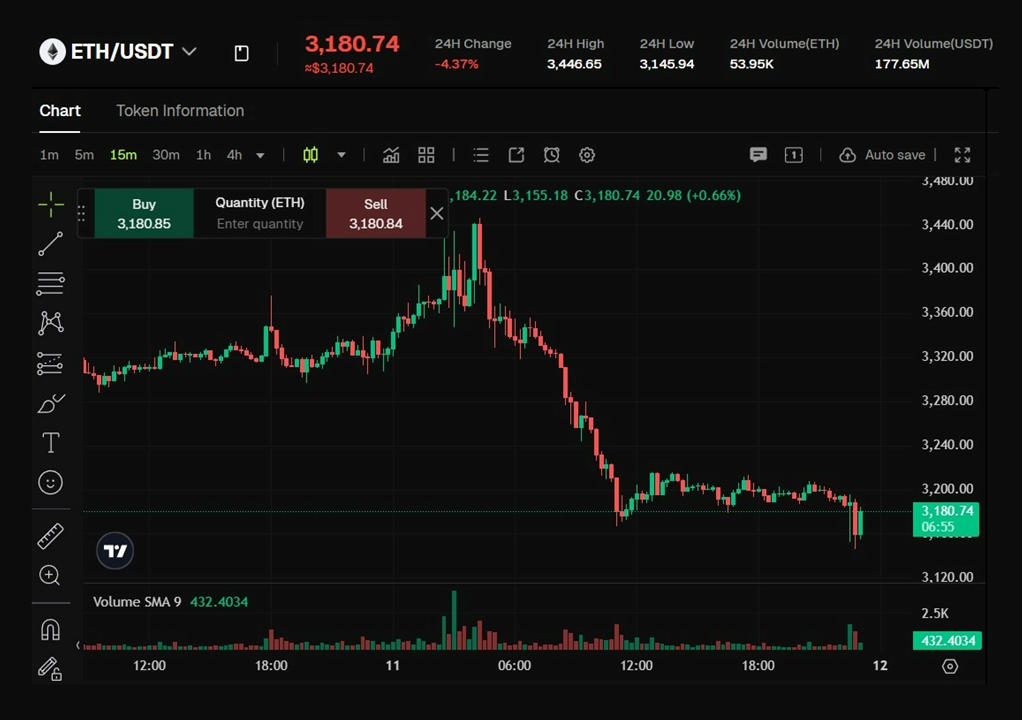
ETH/USDT chart. Source: Bitunix.
ETH holders can stake their assets to confirm transactions on the network. Their APY ranges from 3% to 4%, depending on the total staked ETH and network activity.
Staking Ethereum is ideal for beginners due to the network’s high security, longevity, and potential for high returns.
Cardano (ADA)
Cardano is a science-based blockchain launched in 2017 by a team led by Charles Hoskinson, one of Ethereum’s co-founders. The network has grown consistently since then, incorporating staking programs with its 2020 Shelley upgrade.
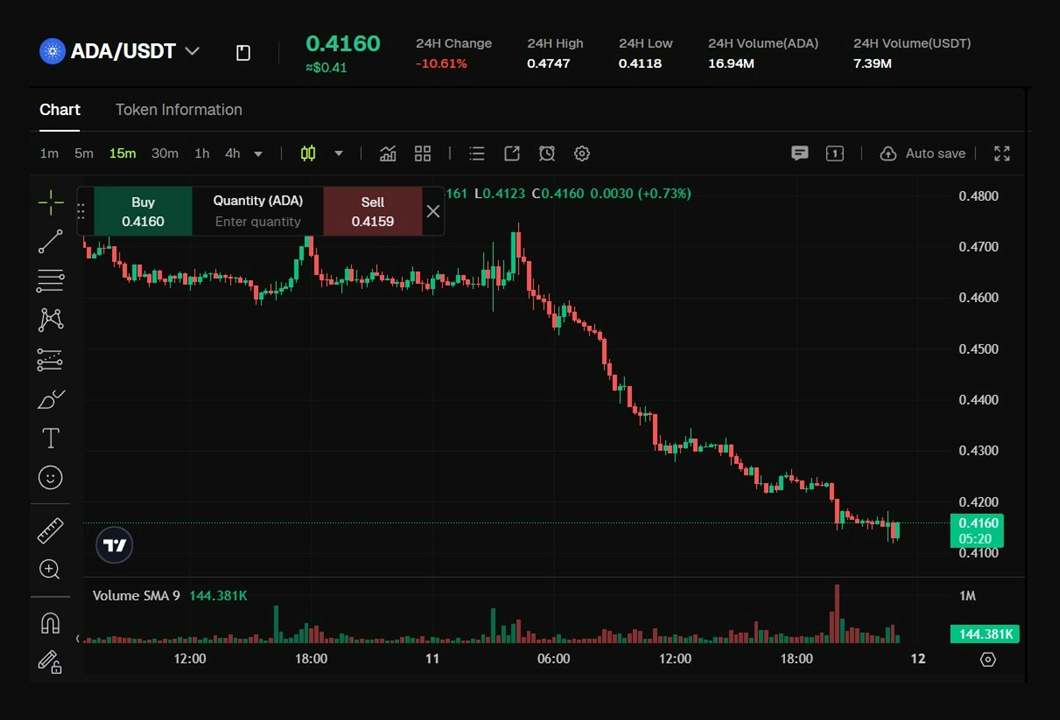
ADA/USDT chart. Source: Bitunix.
Cardano is renowned for its sustainability-first approach, validating decentralized applications only after they obtain peer-reviewed approval. The network is also popular for its high speed, low fees, cross-chain interoperability, and high security.
ADA staking offers a dynamic APY that ranges from around 1.5% to over 5%, depending on the platform and pool you use.
Solana (SOL)
Solana is a notable entry on this list because the network uses two consensus mechanisms: its own proof-of-history mechanism and PoS. The blockchain launched in 2020 and quickly became one of the most popular networks for developers and dApps, launching a rivalry with Ethereum.
Solana is renowned for its wide range of applications, including NFTs, meme coins, trading platforms, crypto wallets, and more. The network prioritizes speed and can clear up to 65,000 transactions per second.
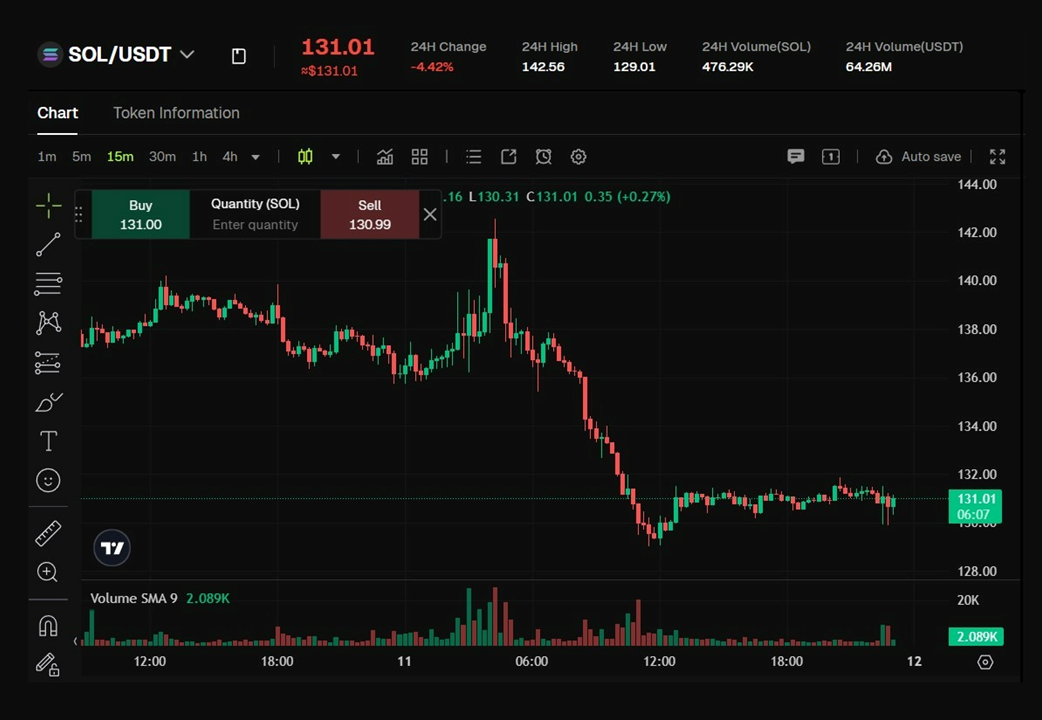
SOL/USDT chart. Source: Bitunix.
Solana (SOL) staking APYs generally range from 5% to 9%, depending on platform, validator selection, and network conditions. In fact, the consistently high staking rewards are one of the main reasons for the network’s quick rise to global popularity.
Alternatively, you can look for smaller networks with staking programs offering substantial earning potential, such as Avalanche (AVAX), Polygon (POL), and Cosmos (ATOM).
How to Choose the Best Staking Coins
You should consider various factors before choosing the next staking program. For starters, you should pick a reliable platform that supports staking for different coins and has deep liquidity. Tokenomics and inflation are equally important determinants of a successful staking program. Other crucial factors include:
Annual Percentage Yield (APY)
Understanding APY helps you compare staking programs across different coins. It allows you to calculate potential returns and determine how fast your holdings can grow over a specific period. You can do so by comparing these indicators for several staking programs:
- Projected APY
- Platform fees
- Validator performance
- Total staked amount
- The token's volatility and potential for long-term growth
Lock-up Periods
The length of lock-up periods can impact your staking rewards. Some assets require you to lock up your coins for a fixed period, ranging from days to weeks. Generally, these programs offer high rewards. Others let you unlock your assets at any time but offer lower yields.
Network Security and Stability
The coin’s stability is crucial to your APY earnings, and it also depends on the security of its underlying network. If a coin’s value drops significantly, staking rewards will be irrelevant. Your best option is to stake your coins on reputable, secure blockchain networks.
How to Stake on Bitunix
Here’s a short guide on how to stake crypto on Bitunix.
- Go to the Bitunix Sign up page and register using your email or mobile number.
- Deposit crypto or link a fiat method.
- Find and click on the Earn section.
- Choose between "Flexible" or "Fixed" terms for USDT.
- Specify the amount of USDT you wish to stake.
- Complete the process to start earning interest.
- Alternatively, you can opt for Spot crypto trading or open a perpetual Futures position to trade with leverage and capitalize on market swings.
Why Trade on Bitunix?
Bitunix is a user-focused crypto trading platform that caters to both beginner and expert traders. New users can complete a fast registration process and a user-friendly verification system, with optional KYC, to start trading right away. A one-chart interface provides them with all the necessary market analysis and metrics to make informed investment decisions.
Bitunix prioritizes security and compliance above all, ensuring that the Protection Fund safeguards users’ assets. The platform also has one of the deepest liquidity pools in the market. It gives users access to over 1,000 trading pairs across 500+ cryptocurrencies.
Bitunix is available for both desktop and mobile users. You can download the application for iOS or Android on the app download page.
Conclusion: How to Earn USDT Daily
The best staking coins 2025 brought us are also some of the most popular altcoins powering the market’s strongest PoS networks. Ethereum, Cardano, and Solana are ideal choices for beginners thanks to their high security, predictable APYs, low fees, and flexible lock-up periods.
Crypto staking is one of the most popular practices for crypto enthusiasts globally. It is a reliable process to access passive income opportunities without having to sell your assets. This advantage, coupled with innovative practices like liquid staking and restaking, makes staking a fundamental element of the broader crypto ecosystem.
Start staking today! You can earn USDT daily on Bitunix through its Easy Earn program, which offers up to a 2% Annual Percentage Rate (APR) on stablecoins like USDT with flexible and fixed-term options.
FAQ Section
What is the difference between staking and lending?
Staking locks crypto to secure a Proof-of-Stake network for rewards. Lending involves loaning your crypto to borrowers via a platform for interest.
Is staking crypto safe?
Staking crypto is generally a safe way for users to earn rewards by locking their crypto to support a blockchain. However, it involves risks such as price volatility, potential slashing, and extensive lock-up periods.
Can I unstake my crypto at any time?
Most programs allow you to unstake your crypto at any time. However, your funds aren't immediately available. Instead, they enter a lockup or period ranging from hours to weeks.
What is liquid staking?
Liquid staking allows you to earn rewards on staked crypto while getting a tradable token that represents your stake. This way, you can use your assets for extra yield without waiting for the originally staked assets to unlock.
Why should I stake my crypto on Bitunix?
Bitunix Earn allows users to make their idle crypto work generate passive income through various yield-earning products, rather than traditional staking, which directly secures a blockchain network.
Glossary
Proof of Stake (PoS): Consensus where validators lock native tokens to secure the network and earn rewards.
Slashing: The loss of stake due to validator errors.
Layer 1: Base blockchain that verifies and records transactions.
Layer 2: A scaling solution that processes transactions off the main chain and posts proofs to L1.
Gas: Network fee for processing a transaction.
Meme Coin: A cryptocurrency inspired by internet jokes, pop culture, or viral trends.
Privacy Coin: A cryptocurrency that obscures transaction details like sender, receiver, and amount, offering a high degree of anonymity.
Spot Trading: The immediate purchase and sale of financial assets at their current market price, also known as the "spot price."
Trading Pair: A combination of two different digital or fiat currencies that can be exchanged for one another on a cryptocurrency exchange.
Stable Pair: A pool of assets that track similar values, such as two stablecoins.
Altcoin: Any crypto asset that is not Bitcoin.
DeFi: Decentralized finance applications on public blockchains.
Volatility: Degree of price fluctuation for an asset over time.
TVL: Total value locked in a protocol, a rough usage proxy.
About Bitunix
Bitunix is a global cryptocurrency derivatives exchange trusted by over 3 million users across more than 100 countries. At Bitunix, we are committed to providing a transparent, compliant, and secure trading environment for every user. Our platform features a fast registration process and a user-friendly verification system supported by mandatory KYC to ensure safety and compliance. With global standards of protection through Proof of Reserves (POR) and the Bitunix Care Fund, we prioritize user trust and fund security. The K-Line Ultra chart system delivers a seamless trading experience for both beginners and advanced traders. At the same time, leverage of up to 125x and deep liquidity make Bitunix one of the most dynamic platforms in the market.
Bitunix Global Accounts
X |Telegram Announcements |Telegram Global |CoinMarketCap |Instagram |Facebook |LinkedIn |Reddit |Medium