1. What Is a Wrapped Token?
In the blockchain world, different public chains use independent asset standards and ledger systems, and typically cannot directly recognize other chains’ native assets. Wrapped tokens are an asset mapping mechanism created to solve this problem. A wrapped token refers to a process where an original asset on one chain is first locked or held in custody, then a transferable token representation is minted on another chain at the corresponding ratio, typically maintaining a 1:1 peg, so the asset can be used in application scenarios on the new chain. You can think of it as a “receipt version” of the original asset on another chain.
The most classic example is WBTC. Bitcoin cannot be used directly on the Ethereum network, but by having a custodian lock BTC and issuing an equivalent amount of WBTC on Ethereum, users can bring “Bitcoin value” into Ethereum’s DeFi ecosystem for lending, market making, and staking.
Similarly, while ETH is a native asset on Ethereum, it does not conform to the ERC-20 standard and therefore cannot interact directly with most DeFi protocols, so it must first be converted to WETH before it can be traded on protocols like Uniswap. This scenario is standard wrapping within the same chain, not cross chain wrapping.
In addition to WBTC and WETH, many public chains also have wrapped versions of other major assets, such as wrapped SOL, wrapped BTC, and wrapped BNB circulating on Ethereum or other EVM chains. It is important to understand that most wrapped tokens use a 1:1 collateralized mapping model, but implementation details and security mechanisms vary across protocols, so you should not treat all wrapped assets as having the same risk level.
2. Why Wrapped Tokens Matter: Breaking Ecosystem Barriers
The greatest significance of wrapped tokens is that they allow assets to break beyond the boundaries of a single chain, improving overall market liquidity and composability. Before wrapping mechanisms existed, Bitcoin holders who wanted to participate in Ethereum DeFi protocols typically had to sell BTC and swap into ETH, but with WBTC, users can map BTC into an Ethereum asset and participate in lending and liquidity mining on protocols like Aave, Compound, or Curve, while still keeping their exposure in Bitcoin, with their use cases greatly expanded.
The same situation also occurs across multi chain ecosystems. For example, some bridges map ETH into the Solana ecosystem to form a corresponding wrapped asset version, enabling users to trade these assets directly on Solana DeFi protocols or DEX aggregators, and conversely, assets on Solana or other chains can be bridged and wrapped to enter the EVM ecosystem and participate in applications. For users, this means they can access multi chain asset opportunities within a single ecosystem without repeatedly swapping and withdrawing across multiple chains manually.
However, while wrapped tokens can break ecosystem barriers, they also introduce new dependencies. For instance, WBTC relies on a centralized custodian to hold BTC reserves, while some bridge wrapped assets rely on multisig signers or a validator network to confirm whether lock events are authentic. If a bridge protocol or custody system has a security vulnerability, the wrapped asset may lose full backing. In the past, bridges such as Wormhole, Ronin, and Harmony have experienced major security incidents, so while recognizing the convenience wrapped tokens provide, you must also understand their trust assumptions and sources of risk.
3. How Is Wrapping Implemented?
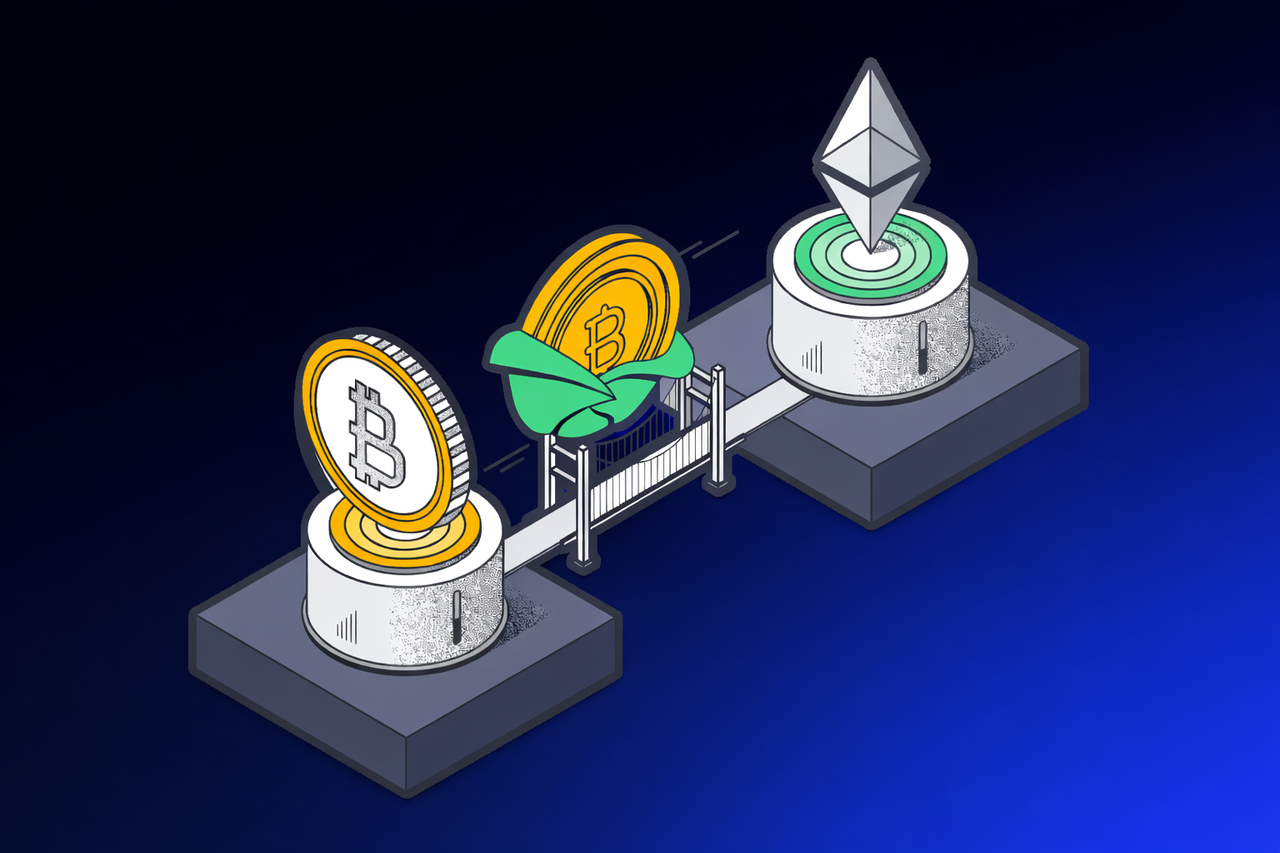
Most wrapped tokens operate using a corresponding “lock and mint” mechanism. Using BTC to WBTC as an example, the user first sends BTC to a designated custody address, the custodian or its verification system confirms the asset has arrived and is locked, and then a corresponding smart contract on Ethereum mints an equal amount of WBTC and sends it to the user’s address. In theory, the amount of WBTC circulating on chain should match the BTC reserves that are locked, and this can be verified through public addresses and audit reports. This model is a typical wrapped token structure of “centralized custody plus on chain issuance.”
In a bridge scenario, the concept is the same, but the verification method differs. Suppose a user bridges ETH from Ethereum to another EVM chain, the asset is first locked in the bridge contract on Ethereum, the bridge’s validator nodes or oracle system relays the lock message to the target chain, and then the target chain contract mints a corresponding amount of wrapped ETH for the user to use. When the user wants to bridge the asset back to the original chain, they burn the wrapped token on the target chain, and after verification, the original chain contract releases the locked ETH, which is the reverse “burn and unlock” flow.
Security models vary significantly across bridge protocols, with some relying on a small number of multisig signers, some using a more distributed validator network, and some newer approaches attempting light client verification or zero knowledge proofs to reduce trust requirements. This also means that even if many wrapped tokens look similar in user experience, their underlying risk structures are not the same. Understanding specific cases and real execution flows matters more than simply memorizing the slogan “1:1 mapping,” and this is a key foundation for evaluating whether a wrapped asset is reliable.
4. How Do You Unwrap?
When a user wants to exchange a wrapped token back into the original asset, they initiate the reverse of “lock and mint,” which is “burn and unlock.” The core principle of the process is to burn the mapped asset first, then release the underlying asset, to ensure the total supply always maintains the corresponding relationship. Using WBTC as an example, when a holder wants to redeem WBTC back into Bitcoin, they must submit a redemption request through a designated institution or protocol interface and send WBTC to a burn address. After the burn is confirmed on chain, the custodian transfers an equivalent amount of BTC from its Bitcoin reserve address back to the Bitcoin address provided by the user, completing the unwrapping process.
In a bridge scenario, the process is usually completed automatically by smart contracts. For example, when a user bridges wrapped ETH on Arbitrum back to Ethereum, they must first submit the wrapped ETH to the bridge contract on Arbitrum and execute a burn operation, the bridge’s validator nodes relay the burn message back to Ethereum mainnet, and the mainnet bridge contract releases the ETH that was previously locked after successful verification. For another example, when bridging an asset from BNB Chain to Polygon, the return trip similarly requires burning on Polygon first, then unlocking on BNB Chain. Wait times and verification mechanisms differ across bridges, with some taking only a few minutes and others requiring a longer challenge period or confirmation period, so actual settlement time can vary.
It is worth noting that not all wrapped assets can always be unwrapped smoothly. If a bridge protocol suspends service, liquidity pools are insufficient, or the custodian imposes risk controls, users may face delays or even a temporary halt in redemptions. Historically, there have been cases where after a bridge stopped operating, its wrapped assets continued circulating on the target chain, but could no longer be redeemed for the underlying asset at the original ratio. Therefore, before using wrapped assets, understanding whether their redemption path and the parties they depend on are operating normally is a very important practical step.
5. Scale and Current Landscape of Wrapped Tokens
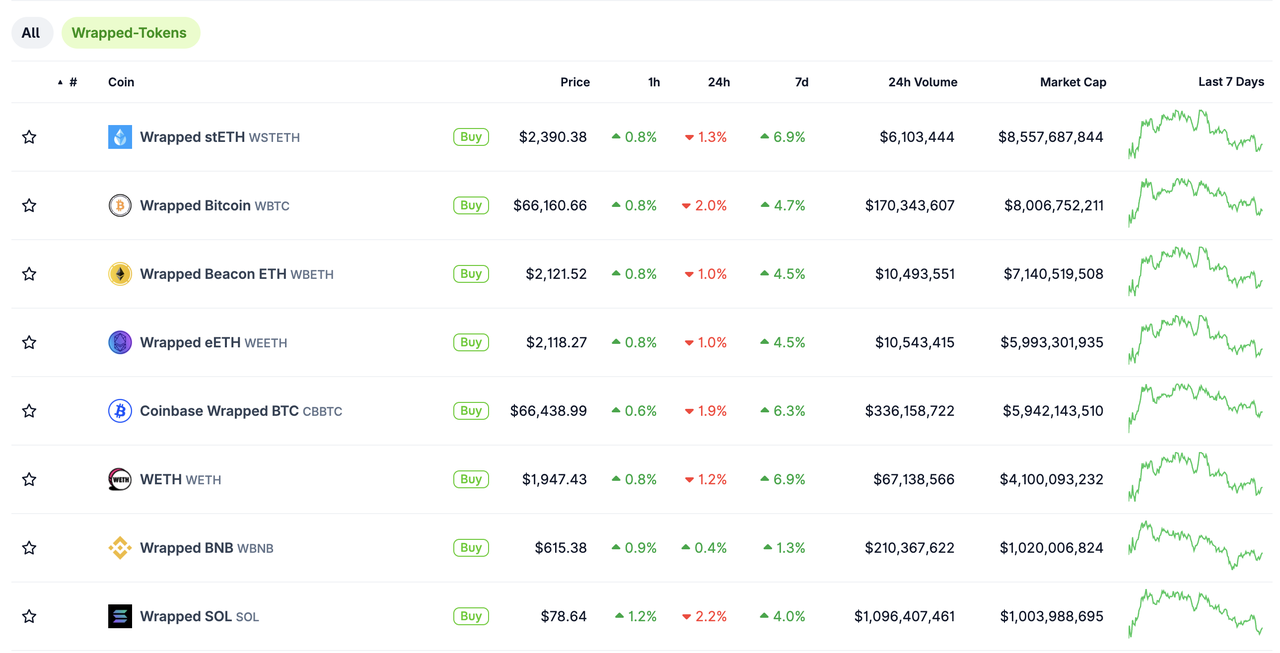
With the growth of multi chain ecosystems and the maturation of DeFi applications, the overall scale of wrapped tokens has long remained at tens of billions of dollars, becoming one of the most important pieces of on chain market infrastructure. WBTC is one of the earliest wrapped assets adopted at scale and, during bull market phases, attracted large inflows of Bitcoin into the Ethereum ecosystem for use in lending protocols and liquidity pools. WETH has effectively become the de facto base trading unit of Ethereum DeFi, and most DEX pairs and liquidity pools use WETH as a core quote asset.
From a market structure perspective, wrapped tokens are no longer just a “technical workaround,” but an important channel for multi chain liquidity movement. However, a trend in recent years is that some chains and stablecoin issuers have started issuing assets natively across multiple chains, such as native multi chain versions of USDC and USDT, thereby reducing dependence on third party bridge wrapped versions. This indicates that wrapping remains important, but is increasingly developing in parallel with a “native multi chain issuance” model.
6. The Future of Wrapped Tokens
Looking ahead, wrapping technology will continue to play a key role in cross chain interoperability, but its form will keep evolving. On one hand, bridge security models are being upgraded, and some next generation bridge protocols are beginning to adopt more distributed validator mechanisms, light client verification, and even zero knowledge proofs to reduce reliance on a small set of nodes or centralized custody. If these improvements mature and are deployed successfully, future wrapped assets will see clear gains in both security and transparency.
On the other hand, wrapping and mapping mechanisms are also being extended into the on chainization of real world assets. For example, some gold tokens are based on custodianship of physical gold and issue a corresponding number of token certificates on chain, and some government bonds and money market funds are also starting to circulate on chain in tokenized form, which is structurally very similar to the “custody plus mapped issuance” logic of wrapped assets. In the future, as RWA, stablecoins, and multi chain DeFi integrate more deeply, the wrapped model will likely become one of the standard tools for enabling multiple asset types to circulate across systems.