1. What is Aptos?
The story of Aptos begins with the grand internal narrative of tech giant Meta—the stablecoin project Libra (later renamed Diem). Although Diem ultimately failed to launch globally due to regulatory pressures, its technical legacy, especially the Move programming language designed for financial security, became the foundation for the next-generation blockchain. In 2021, Mo Shaikh and Avery Ching, core developers of Diem, co-founded Aptos Labs with the goal of continuing Diem’s mission: building a blockchain with industrial-grade scalability, security, and upgradability.
The name “Aptos” comes from the Ohlone language, meaning “people,” symbolizing the team’s vision to build Web3 infrastructure capable of supporting billions of users. In October 2022, the Aptos mainnet, dubbed “Aptos Autumn,” officially launched. Leveraging its strong Silicon Valley technical background and innovative parallel execution architecture, it quickly attracted investments from Andreessen Horowitz, Jump Crypto, and leading exchange VC arms.
In just a few years, Aptos grew from a technical concept into a blockchain with strong ecosystem traction, combining Meta’s technical DNA with continuous protocol upgrades to seek the perfect balance between decentralization and high performance.
2. Aptos — Dual Breakthrough in Security and Speed
As a strong competitor in the blockchain space, Aptos was designed with a “security-first” principle from the outset. Unlike traditional blockchains that improve performance first and patch security later, Aptos achieves a leap in performance through two core technologies: the Move language and the Block-STM parallel execution engine.
First, the Move language is a resource-oriented language specifically designed for digital assets. Tokens are treated as “resources,” ensuring they cannot be arbitrarily created, deleted, or double-spent. This significantly reduces the risk of logical vulnerabilities (e.g., reentrancy attacks) in smart contracts during development.
Second, the Block-STM mechanism enables Aptos to process multiple non-conflicting transactions in parallel, unlike early blockchains like Ethereum, which process transactions sequentially—like a store with only one checkout counter. Block-STM executes all transactions optimistically; if conflicts are detected, only the affected parts are rerun. This “optimistic parallelism” allows Aptos to achieve theoretical TPS (transactions per second) of over 160,000, far exceeding most existing L1 blockchains.
3. Move Twins: Aptos and Sui
Aptos is often associated with Sui, another blockchain inheriting Diem’s legacy. The community calls them the “Move Twins.” While both use the Move language, their technical implementation and philosophy differ significantly.
- Move Language: Aptos uses Core Move, which closely follows the original design and emphasizes strict asset logic; Sui developed “Sui Move,” treating all entities as “objects,” offering more flexibility for complex assets like game items and NFTs.
- Consensus Mechanism & Architecture: Aptos uses an improved BFT (Byzantine Fault Tolerance) consensus, focusing on extremely low and stable latency. Sui uses a DAG-based consensus, allowing “straight-through” confirmation for unrelated transactions in seconds.
- Market Positioning: Aptos emphasizes seamless integration with traditional Web2 services, e.g., “Keyless Accounts,” allowing login via Gmail or social accounts. Sui focuses on games and creative media, showing strong ecosystem growth in those areas.

4. Aptos Foundation & Ecosystem Development
The Aptos Foundation promotes community decentralization and ecosystem diversity. Unlike many blockchain foundations, Aptos prioritizes “user experience” innovation. To lower the barrier to Web3, the foundation supports infrastructure including analytics, identity verification, and high-performance DEXs, such as Aries Markets and Thala.
In the Asian market, the foundation has shown strong influence, partnering with SK Telecom, Nexon, and Netmarble to bring blockchain technology to real consumer scenarios. Additionally, Aptos is active in RWA (Real-World Asset tokenization), leveraging its secure and stable contract environment to attract financial institutions exploring on-chain asset possibilities.
5. Uses of APT
APT is the native governance and utility token of the Aptos network, powering the entire ecosystem:
- Network Gas Fees: Similar to tolls on a highway, users pay APT when initiating transactions or calling smart contracts. Thanks to the Block-STM engine, gas fees are extremely low, usually just fractions of a cent.
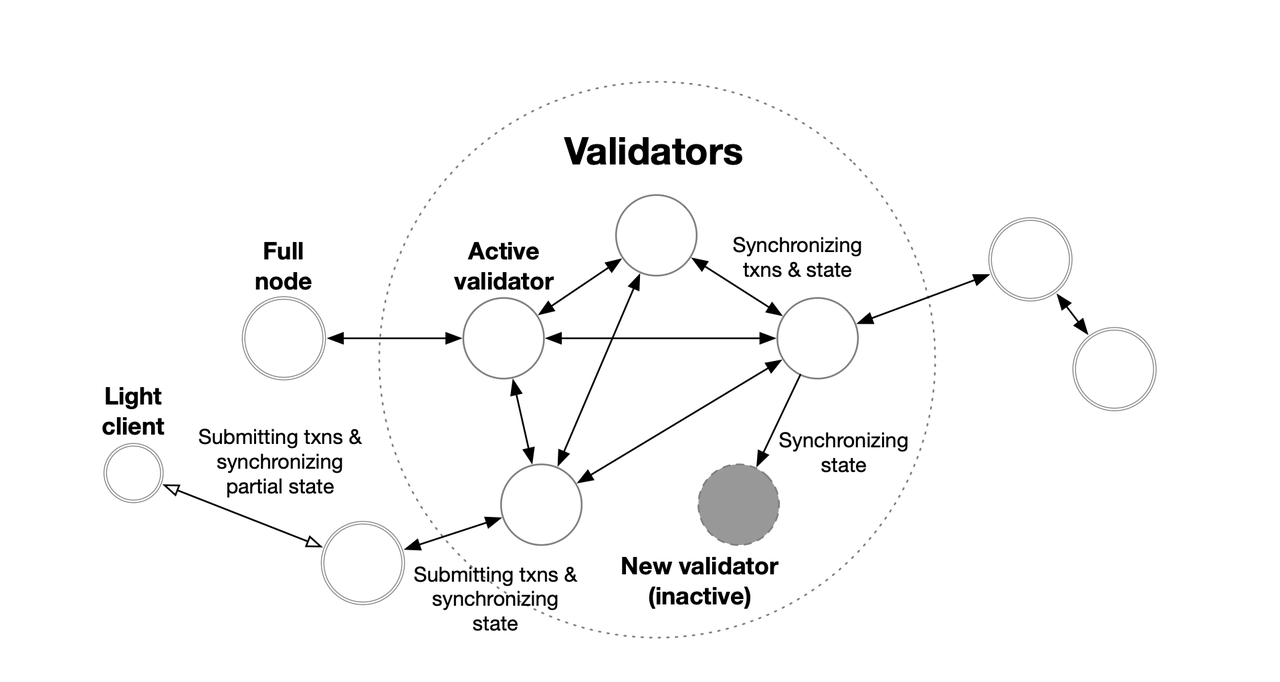
- Staking: APT holders can stake tokens to validator nodes to support network security and consensus, earning staking rewards. This not only provides asset appreciation but also ensures network resilience.
- On-Chain Governance: APT holders have proposal and voting rights. Whether for protocol upgrades, parameter adjustments, or ecosystem fund allocation, holders participate directly in decentralized governance.
- Liquidity & Ecosystem Incentives: In DeFi protocols on Aptos, APT is often used for liquidity mining or as collateral, further increasing token demand.
6. How to Acquire APT
New APT is mainly earned by participating in the network consensus through validator nodes. Individual investors can gain governance participation and staking rewards by delegating APT to validators or running nodes with high-performance hardware, which is suited for technically equipped, long-term users. For most ordinary users, purchasing APT on crypto exchanges is a more convenient and efficient option.
Centralized exchanges like Bitunix act as trusted intermediaries, allowing users to purchase APT with fiat or stablecoins (e.g., USDT), and some support instant credit card purchases, lowering investment barriers. First-time users must register and complete identity verification (KYC) to comply with global AML and counter-terrorism financing regulations. Bitunix offers industry-leading compliance and risk management, including cold/hot wallet separation, multi-signature, and real-time monitoring, providing above-average asset security.
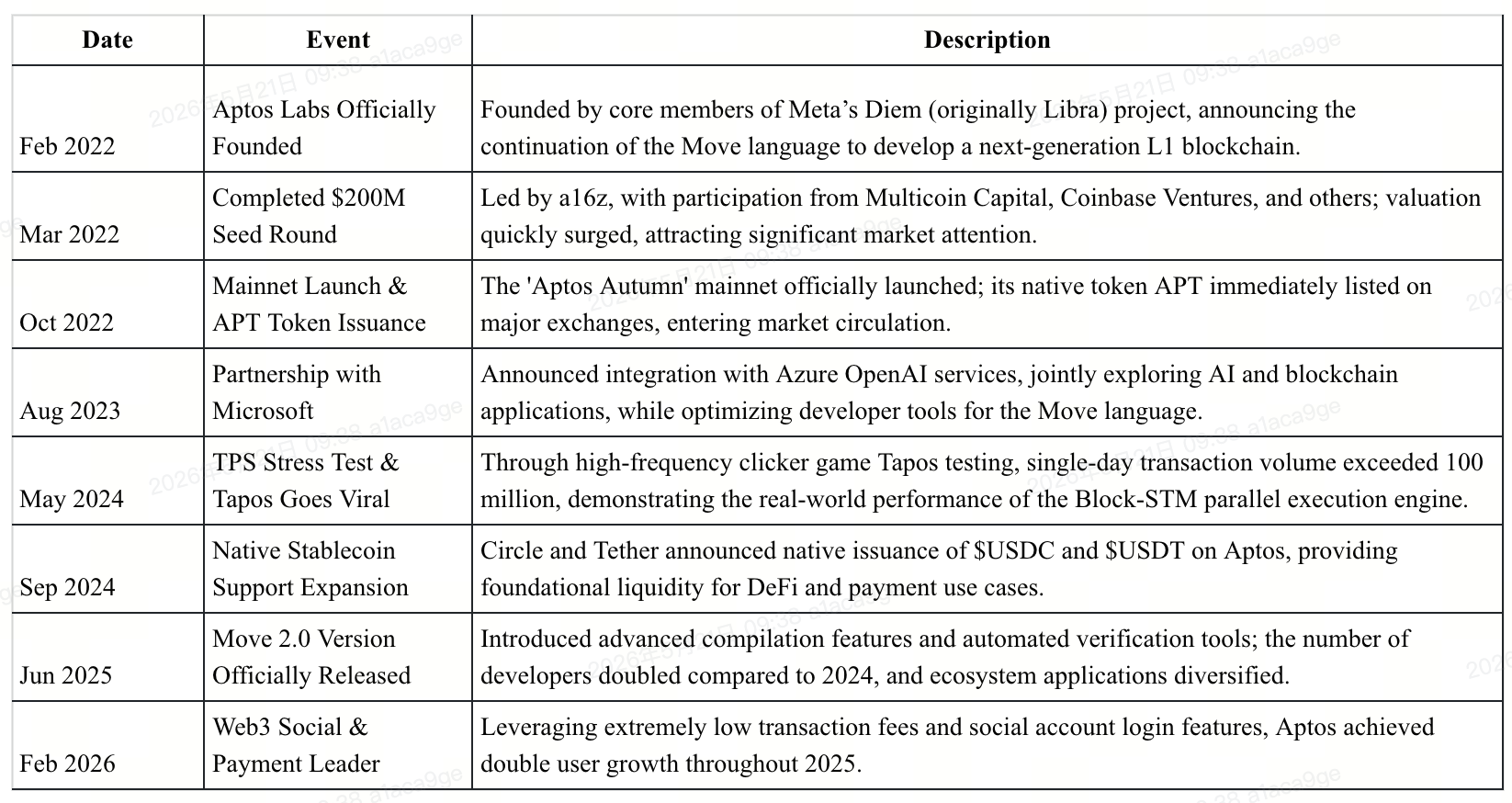
7. Major Aptos Milestones (Timeline)