
BTC futures are often the first contract beginners choose when they move from spot into crypto futures trading. Bitcoin is widely followed, highly liquid compared with many altcoins, and tends to have clearer market structure around major levels. That does not mean BTC futures are “easy,” but it does mean they are a practical starting point for learning how futures mechanics work.
This article explains what is futures trading through the lens of BTC futures, then walks through how Bitcoin futures trading works on Bitunix futures. You will learn how a BTC futures position is priced, how margin and leverage affect risk, what liquidation means, how funding works in perpetual markets, and how to approach your first BTC futures trade with a disciplined checklist.
What Is Futures Trading and What Makes BTC Futures Different?
If you are searching what is futures trading, the simplest definition is this: futures trading is trading a contract that tracks the price of an asset without owning the asset itself.
So, what is trading futures in practice? You are trading a contract, not a coin. You can go long or short, you use margin as collateral, and your profit and loss is calculated as the contract price moves.
BTC futures are simply futures contracts that track the price of Bitcoin. They matter because BTC often leads the broader market. When Bitcoin moves sharply, it can change liquidity and volatility across the entire crypto complex. For traders, BTC futures are both a speculative tool and a risk management tool.
BTC Futures vs Spot BTC
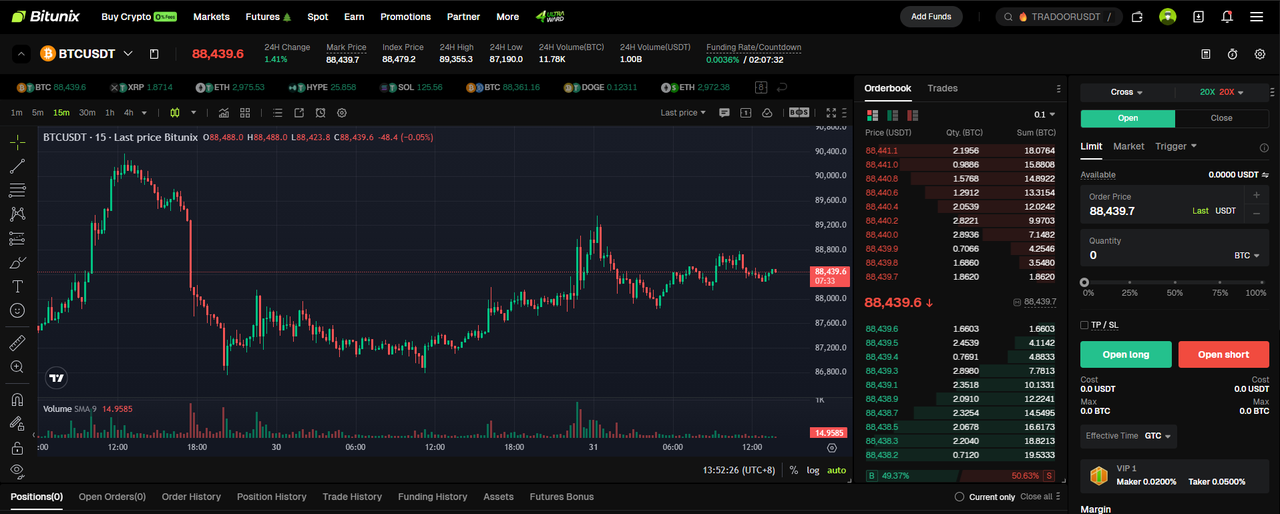
Before placing your first BTC futures trade, it helps to understand the difference versus spot.
In Spot, You Own BTC
If you buy BTC in spot, you own the asset. There is no leverage by default, and there is no liquidation. Your position value changes as BTC price changes.
In Futures, You Trade a Contract
In futures trading, you do not need to buy or hold BTC to trade BTC price movement. You trade the contract. That contract can be long or short, and it uses margin and leverage, which introduces liquidation risk.
This is why futures trading for beginners must start with risk structure. Futures are not only about direction. They are about controlling exposure.
How BTC Perpetual Futures Work
Most BTC futures products in crypto are perpetual futures. A perpetual futures contract does not expire. Instead, it uses funding to keep the contract price aligned with the spot market over time.
When you open BTC futures on Bitunix exchange, the core mechanics remain the same:
- you pick the BTC contract
- you choose margin mode
- you set leverage
- you choose position size
- you manage risk with stops and exits
Long vs Short in BTC Futures
One advantage of crypto futures trading is the ability to trade both sides of the market.
Going Long BTC Futures
A long position benefits when BTC rises. If BTC moves up after you enter, your PnL increases.
Common reasons traders go long:
- BTC breaks above resistance and holds
- BTC pulls back to support and shows strength
- a trend continuation setup forms
Going Short BTC Futures
A short position benefits when BTC falls. If BTC drops after you enter, your PnL increases.
Common reasons traders go short:
- BTC rejects resistance
- BTC breaks down below support
- hedging against spot exposure
For beginners, the key is not whether you go long or short. It is whether you can define invalidation and manage leverage so your liquidation price is not dangerously close.
Margin and Leverage: The Core Risk Engine
If you are learning what is trading futures, the most important concepts are margin, leverage, and liquidation.
Margin in BTC Futures
Margin is the collateral used to open and maintain the position. It is your buffer. Losses come out of margin as price moves against you.
Leverage in BTC Futures
Leverage is a multiplier that increases exposure relative to your margin. Bitunix leverage settings determine how much notional exposure you control for a given amount of margin.
Higher leverage means:
- larger PnL swings for the same BTC move
- liquidation closer to entry
- less room for volatility
A Note on Bitunix 200x Leverage
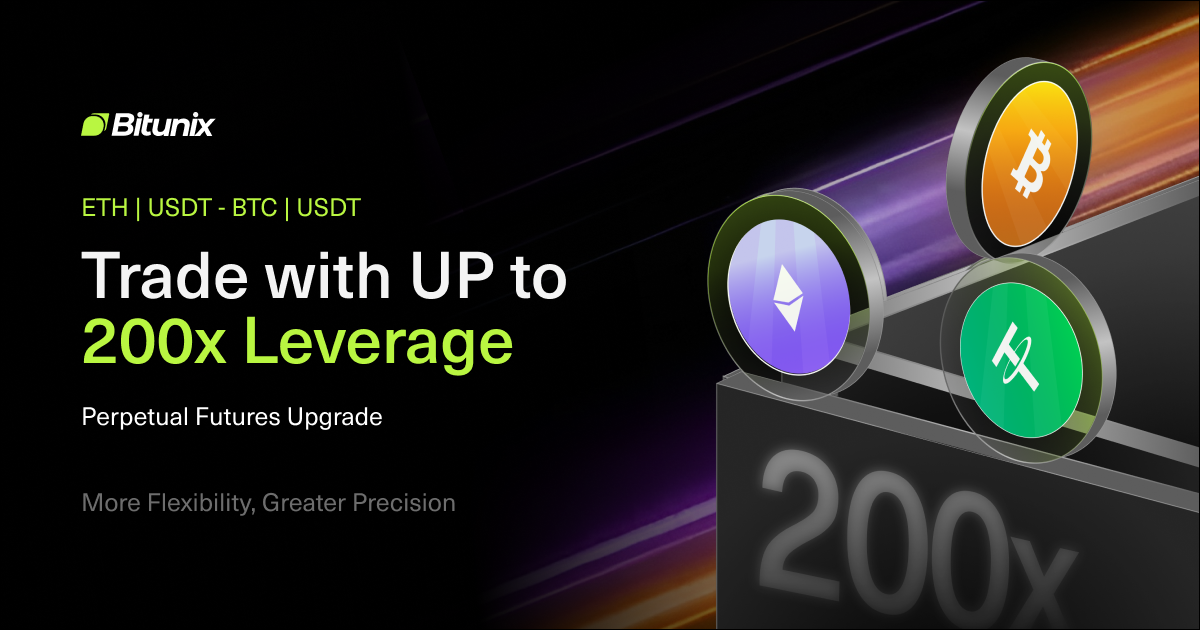
Bitunix 200x leverage is available on selected contracts like BTC/USDT & ETH/USDT. That is an advanced capability. For futures trading for beginners, the practical approach is to start with conservative leverage and small position sizes until you have repeatable execution habits.
BTC can move quickly, including sudden wicks around key levels. Conservative leverage gives you room to survive normal volatility.
Isolated vs Cross Margin for BTC Futures
Isolated Margin
Isolated margin limits risk to the margin allocated to that position. If the trade goes wrong, the loss is largely contained to that position’s assigned margin.
This is often the more beginner-friendly choice because the risk is easier to cap and visualize.
Cross Margin
Cross margin shares margin across your futures balance. This can reduce liquidation risk for a single position in some cases, but it can also spread risk across the account if the market moves sharply.
For trading futures for beginners, isolated margin generally creates clearer guardrails.
Liquidation: What It Means and How It Happens
Liquidation is the forced closure of a position when your margin is no longer sufficient to meet maintenance requirements.
Beginners often think liquidation is rare. In BTC futures, liquidation becomes common when leverage is high and position size is large. BTC’s volatility does not need to be extreme to cause liquidation if your buffer is thin.
A useful mindset:
- Your stop-loss should trigger before liquidation.
- Liquidation is not a plan. That is what happens when the plan is missing.
Funding: Why BTC Perpetual Futures Have Holding Costs
Perpetual futures use a funding mechanism. Funding is a periodic payment between long and short traders to keep the contract price close to spot.
- When funding is positive, longs pay shorts.
- When funding is negative, shorts pay longs.
Funding can matter most when you hold positions for longer periods. For short-term trading, it may be less significant, but it is still part of the cost structure of holding a BTC futures position.
Mark Price vs Last Price: Why Your Liquidation Risk May Move
Last Price
The last price is the most recent traded price.
Mark Price
The mark price is a reference price used by many futures systems to reduce unfair liquidations during short-term spikes or thin liquidity.
Liquidation calculations are often tied to mark price rather than the last traded price. This is why liquidation risk can change even when the visible last price appears stable.
How to Trade BTC Futures on Bitunix: A Beginner Checklist
Below is a practical checklist designed specifically for futures trading for beginners.
Step 1: Decide What You Are Trading
Ask yourself:
- Is this a trend trade or a short-term move?
- What level would prove me wrong?
If you cannot answer, do not enter.
Step 2: Choose the Contract and Confirm You Are in BTC Futures
This sounds obvious, but wrong-symbol mistakes happen. Confirm you are on the correct BTC futures contract before placing the order.
Step 3: Choose Isolated Margin
If you are new, isolated margin usually keeps risk clearer and contained.
Step 4: Choose Conservative Leverage
Use leverage that keeps liquidation far away from normal volatility. If your liquidation price is close to your invalidation level, leverage is too high or size is too large.
Step 5: Set Position Size From Risk
Decide how much you can afford to lose first. Then size the position so that if your stop-loss hits, the loss fits within your limit.
Step 6: Place the Stop-Loss at Invalidation
Your stop-loss should be at the price where your trade idea is wrong, not at the point where you start feeling uncomfortable.
Step 7: Consider a Take-Profit Plan
You can use a fixed target, partial take-profits, or a trailing approach. The key is to avoid holding winners until they turn into losers.
Step 8: Do a 10-Second Confirmation Scan
Before confirming the order, check:
- isolated vs cross margin
- leverage setting
- position size
- stop-loss placement
- liquidation price location
- order direction long or short
This scan is one of the easiest ways to reduce beginner errors in crypto futures trading.
Common Beginner Mistakes With BTC Futures
Using High Leverage Because BTC “Feels Safe”
BTC is liquid, but it still moves fast. Do not let familiarity trick you into overleveraging.
Trading Without a Stop-Loss
No stop-loss means you are relying on hope. In futures, hope is expensive.
Oversizing the Position
Most beginners lose because the position is too large relative to account size, not because they picked the wrong direction.
Watching PnL Instead of Risk Metrics
Pay attention to liquidation price, margin usage, and whether the trade still matches your original thesis.
Best Futures Trading Platform for Beginners: What Matters for BTC Futures
For BTC futures, the most important platform qualities are:
- clear display of margin, PnL, and liquidation information
- reliable execution and confirmations
- stop and trigger order tools
- an interface that reduces mistakes
- educational content that teaches fundamentals
That is what helps beginners develop good habits in BTC futures rather than chasing maximum leverage.
Conclusion
BTC futures are a foundational market in crypto futures trading. They allow you to go long or short Bitcoin price movements using margin and leverage, without holding BTC directly. The opportunity is real, but so is the risk, especially when leverage is high and stops are missing.
If you are learning on Bitunix futures, focus on conservative leverage, isolated margin, clear invalidation, disciplined stop-loss placement, and position sizing based on risk. Once those habits become consistent, your BTC futures trading will become clearer, calmer, and more sustainable.
FAQ
What is futures trading in crypto?
Futures trading is trading contracts that track crypto prices, allowing long and short positions using margin and leverage without owning the asset directly.
What is trading futures compared to spot BTC?
Spot BTC involves owning Bitcoin. BTC futures involve trading a contract that tracks BTC price, which enables leverage and introduces liquidation risk.
Are BTC futures suitable for beginners?
They can be, if beginners use conservative leverage, isolated margin, small position sizes, and stop-loss orders.
How does leverage affect BTC futures?
Leverage increases exposure relative to margin and moves liquidation closer to entry, making risk management more important.
Is Bitunix 200x leverage recommended for beginners?
It is an advanced feature. Beginners typically benefit more from conservative leverage and strict risk controls.
Glossary
- BTC futures: Futures contracts that track Bitcoin price.
- Futures trading: Trading price-tracking contracts rather than owning the asset.
- Perpetual futures: Futures contracts with no expiration date.
- Margin: Collateral used to open and maintain a position.
- Leverage: A multiplier that increases exposure relative to margin.
- Isolated margin: Margin assigned to one position only.
- Cross margin: Shared margin across positions.
- Mark price: Reference price often used for liquidation calculations.
- Funding: Periodic payment between longs and shorts in perpetual futures.
- Liquidation: Forced closure when margin is insufficient.
- Stop-loss: Order to close a position at a predefined level to limit loss.
- Invalidation: The level where a trade idea is proven wrong.
About Bitunix
Bitunix is a global cryptocurrency derivatives exchange trusted by over 3 million users across more than 100 countries. At Bitunix, we are committed to providing a transparent, compliant, and secure trading environment for every user. Our platform features a fast registration process and a user-friendly verification system supported by mandatory KYC to ensure safety and compliance. With global standards of protection through Proof of Reserves (POR) and the Bitunix Care Fund, we prioritize user trust and fund security. The K-Line Ultra chart system delivers a seamless trading experience for both beginners and advanced traders, while leverage of up to 200x and deep liquidity make Bitunix one of the most dynamic platforms in the market.
Bitunix Global Accounts
X | Telegram Announcements | Telegram Global | CoinMarketCap | Instagram | Facebook | LinkedIn | Reddit | Medium