

Searching for the best crypto copy trading platform is often a search for simplicity. Crypto copy trading can help reduce the workload of placing trades manually, but it only becomes useful when two things are true: the platform makes the rules clear, and you set limits that protect your account when markets get volatile.
This article explains what to look for in a copy trading platform, then covers Bitunix copy trading features, costs, and a practical setup process on the Bitunix exchange. This is educational content, not financial advice.
What Makes the Best Crypto Copy Trading Platform?
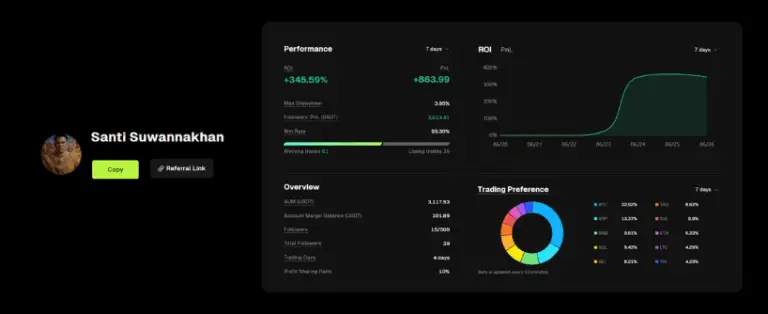
“Best” is not one feature like high ROI or maximum leverage. In copy trading crypto, “best” usually means you can control exposure, understand costs, and monitor risk clearly.
Clear Copy Sizing Options
A platform should make it obvious how a lead trader’s position becomes your position. If the sizing logic is unclear, you cannot manage risk.
On Bitunix copy trading, followers can typically choose between two sizing approaches:
- Fixed amount mode
- Fixed ratio mode
A strong platform should explain these modes in the interface and allow you to set limits around them.
Transparent Execution Rules
Copy trading is live replication. Your fills can differ from the lead trader’s fills due to market movement, liquidity, and timing. The best crypto copy trading platform is upfront about this and explains why a copied order can be skipped or fail.
Common platform-level reasons include:
- Insufficient available margin at the moment of copying
- Slippage beyond a defined tolerance
- Limits or caps reached for a specific market
Monitoring That Shows Real Exposure
You should be able to answer these questions quickly:
- What positions are open right now?
- How much margin is being used?
- What is my realized profit and loss?
- How many traders am I copying?
Bitunix copy trading includes a monitoring area commonly referred to as “My Copy,” where followers can track positions, history, and real-time performance.
Costs You Can Explain Before You Start
Copy trading costs often come from three places:
- Trading fees for the same trade type you are copying
- Any copy trading service fees defined by the platform
- Profit sharing paid to lead traders when you are profitable
A platform does not need to be “cheapest” to be good, but it must be understandable.
A Defined Profit Sharing Schedule
Profit sharing should not feel mysterious. You should know:
- When it is calculated
- When it is settled
- Whether profit sharing applies during loss periods
Bitunix copy trading uses a weekly settlement framework, with settlement commonly scheduled on Monday at 00:00 UTC. In many copy trading programs, profit sharing is only charged when the follower has net profits for the cycle.
Bitunix Copy Trading Features That Matter
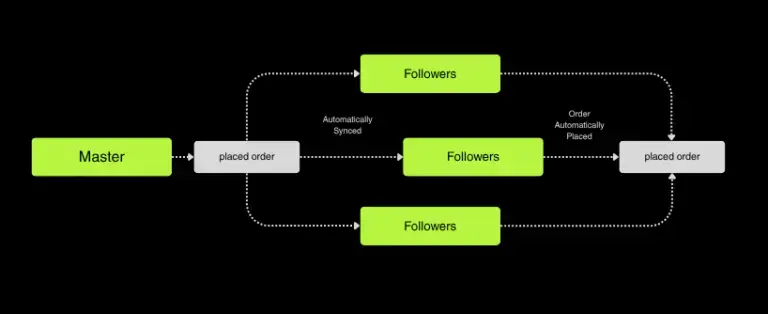
Bitunix copy trading is designed for users who want to follow lead traders with configurable settings and performance visibility.
Trader Selection Through a Copy Marketplace
On the Bitunix exchange, users typically choose traders from a copy marketplace that displays trader performance data. This is where most followers make their first critical decision.
Best practice:
- Choose a trader whose style you can describe clearly, such as trend-following or range trading.
- Do not choose purely based on short-term performance.
Copy Modes: Fixed Amount vs Fixed Ratio
These two modes determine how you size copied positions.
Fixed Amount Mode
You set a fixed margin amount per copied trade. Each time the lead trader opens a new position, your account attempts to open a position using that fixed amount, subject to your limits and available funds.
Why followers use it:
- Predictable exposure per trade
- Easier risk control for beginners
- Less chance of sudden scaling if the trader increases size aggressively
Fixed Ratio Mode
Your copied position size scales based on a ratio relationship between your account and the lead trader’s margin usage.
Why followers use it:
- Closer mirroring of the lead trader’s scaling behavior
- More proportional exposure as the lead trader increases or decreases size
Where it can go wrong:
- If the lead trader scales quickly, your exposure can scale too unless you set strict caps.
Monitoring in My Copy
Copy trading is not passive. Your job as a follower is to monitor whether the trader’s risk behavior still matches your plan.
In My Copy, followers typically review:
- Open positions and exposure
- Realized profit and loss
- Trade frequency
- Changes in position sizing over time
Practical Constraints: Slippage and Order Reliability
Bitunix copy trading includes execution constraints that can affect whether a copied trade is placed successfully. A commonly referenced slippage tolerance for copy execution is 0.1%. During fast markets, this matters because it can lead to missed trades.
A simple takeaway:
- The faster the trader’s style, the more sensitive copying is to slippage and timing.
Costs on Bitunix: Fees, Service Fees, and Profit Sharing
If you want to compare the best crypto copy trading platform options fairly, you need a clean mental model of costs.
Trading Fees
Copied trades are still trades. That means standard trading fees typically apply based on the product type you are trading.
Copy Trading Service Fees
Some platforms charge additional service fees for copy trading functionality. On Bitunix, copy trading terms describe service fees that may be charged and deducted from account assets depending on program rules.
Profit Sharing
Profit sharing is the incentive model for lead traders. The usual structure is:
- If the follower has net profit for the settlement cycle, a portion of that profit is allocated to the lead trader.
- If the follower has net loss for the cycle, profit sharing is not charged for that follower.
On Bitunix copy trading, profit sharing is typically settled weekly, with settlement commonly scheduled for Monday at 00:00 UTC. A standard profit-sharing ratio often referenced in copy trading programs is 10%, although ratios can vary by trader category and program rules.
Follower takeaway:
- Always judge net results after fees and profit sharing, not only gross PnL.
How to Start Copy Trading Crypto on Bitunix
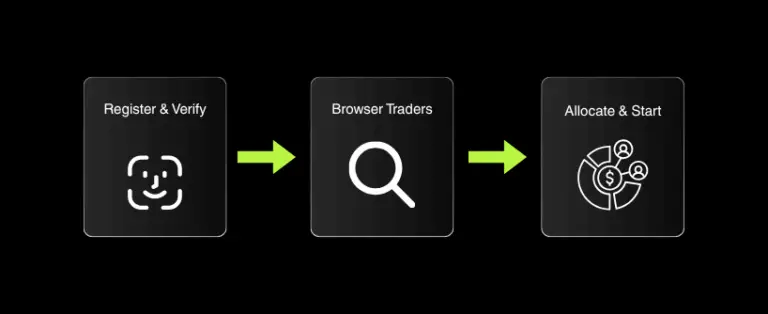
This setup process is designed for beginners who want structure and controlled risk.
Step 1: Decide Your Budget and Loss Limit
Before you copy anyone, define:
- Total allocation to crypto copy trading
- Maximum loss you are willing to accept in a week
- Whether your goal is learning, diversification, or strategy exposure
If you cannot write these down, reduce size until you can.
Step 2: Start With One Trader
Bitunix allows followers to copy multiple traders, up to a stated maximum. That does not mean you should start with many.
Starting with one trader helps you:
- Understand the trader’s behavior
- Identify execution issues
- Learn how your settings affect outcomes
Step 3: Choose a Copy Mode
Pick the mode that matches your experience level:
- Choose fixed amount mode if you want predictable per-trade exposure.
- Choose fixed ratio mode only if you also use strict caps and you are prepared to monitor scaling behavior.
Step 4: Set Limits Before You Confirm
Use limits to prevent two common problems: missed trades and oversized exposure.
Recommended follower limits:
- Maximum allocation per trader
- A margin buffer so you do not run out of available funds at the moment a trade is copied
- A pause rule, such as stopping copying if drawdown exceeds your threshold
- Tighter caps when using fixed ratio mode
Step 5: Monitor in My Copy and Review Weekly
A weekly review rhythm is practical because profit sharing is settled weekly.
Weekly questions that improve results:
- Did trade frequency change sharply?
- Did position sizing become more aggressive?
- Did I miss trades due to insufficient funds?
- Did volatility increase slippage and reduce copy reliability?
Common Problems and How to Avoid Them
Even the best crypto copy trading platform cannot guarantee perfect replication in every market condition. Most issues fall into a few categories.
Problem 1: Insufficient Funds
What it means:
- Your available margin was not enough at the moment copying attempted to execute.
How to reduce it:
- Maintain a margin buffer
- Lower per-trade exposure
- Avoid copying too many traders who open positions at the same time
Problem 2: Slippage During Volatility
What it means:
- Price moved too quickly between the lead trader’s execution and your attempted execution.
How to reduce it:
- Prefer traders who focus on liquid markets
- Be cautious around high-volatility periods
- Avoid strategies that depend on ultra-precise entries
Problem 3: Overexposure From Scaling
What it means:
- Your sizing method and caps allowed exposure to scale beyond your comfort level.
How to reduce it:
- Start with fixed amount mode
- Use strict caps and a defined pause rule
- Reduce the number of traders you copy until you can monitor consistently
How to Compare Platforms Like a Professional
If you are evaluating the best crypto copy trading platform, use a repeatable checklist instead of chasing the top-ranked trader.
Platform Checklist
A strong platform should provide:
- Clear copy sizing methods and limits
- Transparent execution rules and failure reasons
- Monitoring tools that show positions and performance clearly
- Understandable costs, including fees and profit sharing
- Straightforward controls to pause or stop copying
Trader Checklist
A strong lead trader usually shows:
- Consistency across weeks, not only one spike week
- Controlled drawdowns and sensible recovery behavior
- Stable position sizing
- A style that is compatible with followers, not only with the trader’s own execution
Conclusion
The best crypto copy trading platform is not defined by the highest leaderboard returns. It is defined by control and clarity: sizing methods you understand, costs you can explain, and monitoring that shows your real exposure.
On the Bitunix exchange, Bitunix copy trading provides configurable copy modes, follower monitoring through My Copy, and a structured approach to profit sharing with weekly settlement. If you start with conservative sizing, strict limits, and a weekly review routine, copy trading crypto can become a measured process rather than a gamble.
FAQ
What is copy trading in crypto?
It is a feature that allows a follower to automatically mirror a lead trader’s trades using the follower’s allocation and risk settings.
Is Bitunix a good option if I want crypto futures copy trading?
Bitunix copy trading is futures-focused in practice, which means you should treat risk controls, margin, and volatility as core considerations before you copy any trader.
What does it cost to use Bitunix copy trading?
Costs can include standard trading fees for the trade type, potential copy trading service fees, and profit sharing paid to lead traders when you are profitable for the settlement cycle.
Can my results differ from the lead trader’s results?
Yes. Differences can occur due to timing delays, slippage, liquidity conditions, and the fact that your sizing and limits may differ from the lead trader’s account.
When should I stop copying a trader?
Stop when the trader’s risk behavior no longer matches your plan, when drawdowns exceed your threshold, or when execution reliability becomes consistently poor for the markets they trade.
Glossary
- Futures contract: A derivative that tracks an asset’s price without ownership.
- Perpetual futures: A futures contract that typically has no expiry date.
- Margin: Collateral used to open and maintain a leveraged position.
- Leverage: A multiplier that increases exposure relative to margin posted.
- Liquidation: Forced closure when margin is insufficient under requirements.
- Funding rate: Periodic payments between long and short traders in perpetuals.
- PnL: Profit and loss, showing gains or losses on a position.
- ROI: Return on investment, measuring performance relative to capital used.
- Slippage: The difference between expected price and actual execution price.
- Liquidity: How easily an asset can be traded without major price impact.
About Bitunix
Bitunix is a global cryptocurrency derivatives exchange trusted by over 3 million users across more than 100 countries. At Bitunix, we are committed to providing a transparent, compliant, and secure trading environment for every user. Our platform features a fast registration process and a user-friendly verification system supported by mandatory KYC to ensure safety and compliance. With global standards of protection through Proof of Reserves (POR) and the Bitunix Care Fund, we prioritize user trust and fund security. The K-Line Ultra chart system delivers a seamless trading experience for both beginners and advanced traders, while leverage of up to 200x and deep liquidity make Bitunix one of the most dynamic platforms in the market.
Bitunix Global Accounts
X | Telegram Announcements | Telegram Global | CoinMarketCap | Instagram | Facebook | LinkedIn | Reddit | Medium