

Article Summary
- Filecoin is the largest decentralized storage network, creating a global, open market for data storage.
- The long-term value of FIL is tied to the adoption of its network by enterprises, dApps, and individual users who need to store and retrieve data.
- The launch of the Filecoin Virtual Machine (FVM) has transformed the network, enabling smart contracts and a new ecosystem of data-centric dApps.
- This analysis explores the bullish case, driven by the growth of AI and the need for permanent data storage, as well as the bearish case, including competition from centralized providers.
- Price predictions for 2025 and 2030 are based on network adoption milestones and technical analysis.
- Bitunix is a leading platform for trading FIL, offering both spot and futures markets.
Filecoin ($FIL), like much of the altcoin market, suffered a brutal pullback in 2025. Even though Bitcoin reached a new all-time high alongside BNB and several other large-cap assets, many altcoins failed to build momentum and posted double-digit declines. FIL saw its market capitalization fall from around $4 billion to just above $1 billion. As a result, long-term holders are questioning whether this trend will continue, while dip buyers are hoping 2026 finally delivers a sustained altcoin recovery.
There are, however, reasons for cautious optimism heading into 2026. The first few days of the year saw FIL-USDT rally from roughly $1.20 to $1.50. While encouraging, this move only scratches the surface of the damage done during 2025. Even at $1.50, FIL remains around 75 percent below its 2024 highs, and its market capitalization continues to hover uncomfortably close to the $1 billion level.
Despite weak price action, Filecoin remains a relevant player within decentralized infrastructure. Demand for decentralized data storage, long-term archiving, and censorship-resistant infrastructure continues to grow, particularly as Web3, AI, and on-chain data usage expand.
Most Filecoin price prediction outlooks for 2026 and beyond are broadly positive. Many analysts suggest the worst of the downside may now be behind FIL. That said, bullish forecasts are still heavily dependent on a broader macro and altcoin market recovery.
This article breaks down Filecoin’s fundamentals, the bull and bear cases, and realistic FIL price predictions from 2026 through 2030 to help traders better understand potential long-term scenarios.
What Is Filecoin and What Does It Do?
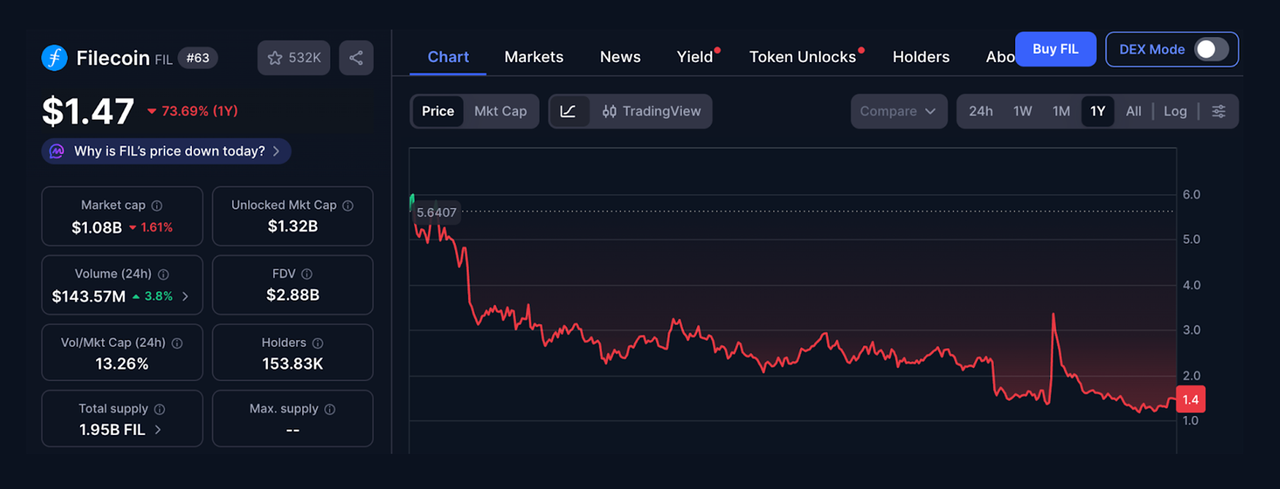
Filecoin is a decentralized storage protocol. Put simply, the network aims to offer an alternative to traditional centralized cloud storage models that support the day-to-day functioning of the web via smart contracts. This philosophy is closely aligned with broader Bitcoin principles, which emphasize bypassing centralized authorities in favor of distributed systems where no single entity can control the network or exploit user data for its own advantage.
At a practical level, Filecoin allows users to pay independent storage providers to store data on their behalf. For example, a Web3 application can store large datasets on Filecoin instead of relying on a centralized cloud provider, with storage agreements enforced by cryptographic proofs rather than trust. This also means Filecoin could play a central role in the DePin sector and RWAs, as both will rely on blockchain technology for storage.
Within the broader Web3 infrastructure stack, Filecoin plays a critical role in decentralized data storage, long-term archiving, and content delivery. It complements blockchains that focus on computation by handling data-heavy workloads off-chain.
Filecoin operates in a competitive environment that includes both decentralized alternatives and major centralized providers. While it cannot yet match the simplicity of traditional cloud services, it differentiates itself through censorship resistance, open participation, and verifiable storage guarantees.
What is $FIL?
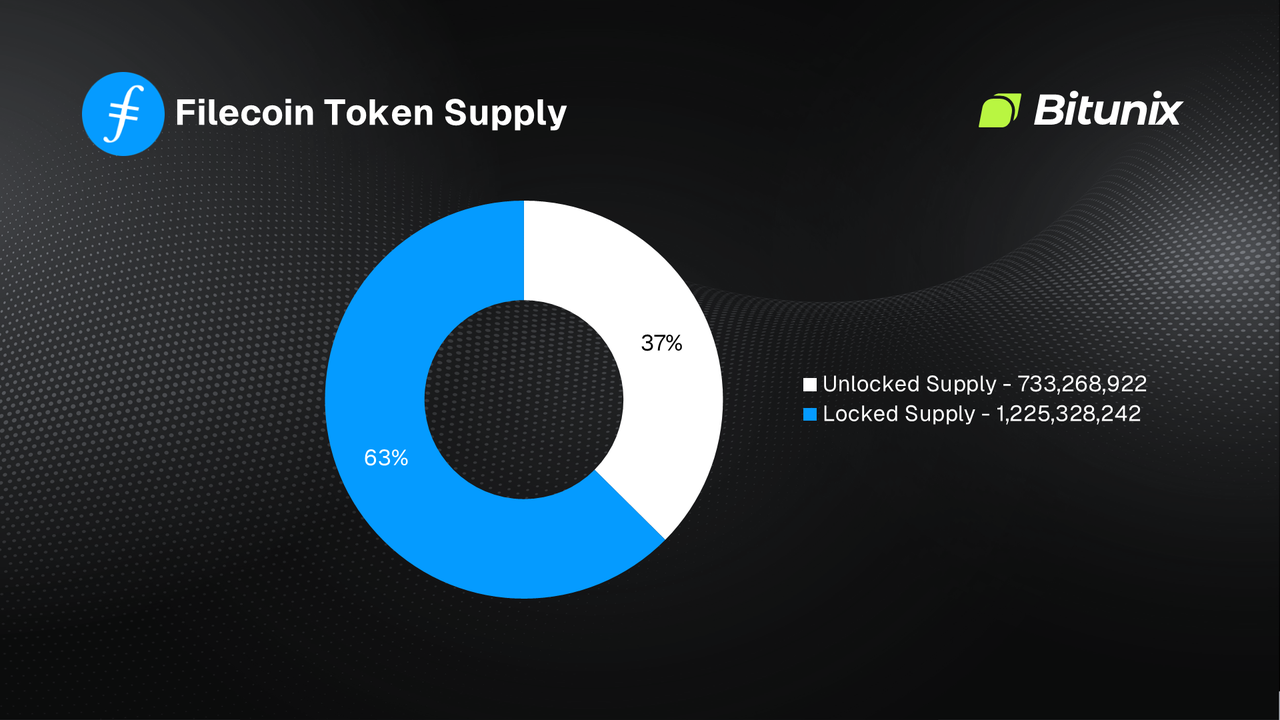
$FIL is the native token on Filecoin. It is used to operate the network and allows holders to gain exposure to the growth and usage of the Filecoin ecosystem. While the token has a fixed maximum supply, additional tokens are still entering circulation and are expected to continue doing so until late 2036, according to Tokenomist.
From a technical perspective, FIL functions as the core economic incentive within the protocol. It is required for storage deals, collateral, and network participation, aligning economic rewards with reliable data storage.
FIL’s primary utility sits at the center of decentralized storage. Users pay FIL to store data, while storage providers earn FIL for offering disk space and providing data availability over time. This two-sided model ensures data integrity without relying on centralized intermediaries.
The Bull Case for FIL
Arguably, even as the FIL price has declined, the narrative behind the token has remained relatively solid. Demand for data storage continues to grow, and the expansion of AI-driven applications may push this demand even higher in the coming years. Filecoin has maintained a strong position in the decentralized storage market despite increasing competition from projects such as Arweave.
Filecoin’s integration with Web3 infrastructure strengthens its long-term outlook. Decentralized applications, NFT platforms, and AI models all require large volumes of reliable data storage, particularly for datasets that must remain accessible over extended periods.
Censorship-resistant storage is also becoming increasingly relevant. As AI systems, digital archives, and public data repositories expand, demand for storage solutions that cannot be altered or removed by centralized authorities may continue to rise, supporting Filecoin’s long-term use case.
The Bear Case and Competitive Hurdles
One of the biggest hurdles potentially facing Filecoin comes from centralized competitors. The only way Filecoin can meaningfully break into the mainstream is if it can compete with the largest names in the cloud storage sector. This is a challenging task given their established market positions, pricing advantages, and continuous investment in improving user experience and reliability.
Competition from centralized giants such as Amazon S3 and Google Cloud remains a significant headwind. These platforms offer simplicity, speed, and deep enterprise integration that decentralized alternatives still struggle to match.
In addition to competitive pressure, Filecoin’s complex tokenomics present another risk. Ongoing vesting and emissions are expected to increase circulating supply for nearly another decade, which could create sustained selling pressure and limit upside during weaker market conditions.
FIL Price Prediction 2026
2025 was not kind to FIL holders. The token consistently added to its losses and moved close to falling below a $1 billion market capitalization, which would represent a major psychological blow for the community. However, some crypto traders view this period as an opportunity to gain exposure to the decentralized storage narrative at historically low prices. Several FIL price predictions suggest this may be the case.
Changelly has issued a relatively bullish FIL price prediction for 2026, setting an average target of $1.79. This would imply potential gains of roughly 40 percent from current price levels.
CoinCodex has published a bearish Filecoin price prediction for 2026, with a target around 20 percent below current levels. This outlook would see FIL trading near $1.15 by the end of the year.
Coinpedia is far more optimistic, issuing a very bullish FIL price prediction with an average target of $5.90. If achieved, this would represent gains of roughly 450 percent from current prices.
Overall, most FIL price predictions for 2026 lean bullish. That said, CoinCodex stands out for its more cautious outlook, likely reflecting concerns about growing competition from centralized cloud providers and other decentralized storage protocols.
FIL Price Prediction 2027
In 2027, Filecoin will be hoping to establish itself as a genuine alternative to centralized storage solutions. This will require onboarding major new clients alongside steady growth from individual users who are dissatisfied with traditional providers. Bullish price predictions are based on a combination of macro conditions and Filecoin’s ability to expand its share of the global storage market.
Changelly has issued a bullish Filecoin price prediction for 2027, with an average target of $2.57. This would represent roughly a 130 percent increase from current levels and could push FIL’s market capitalization comfortably above $2 billion.
CoinCodex has maintained its bearish stance into 2027, forecasting an average FIL price of just $0.90. This outlook suggests continued pressure from competition and limited market adoption.
Coinpedia remains highly optimistic, projecting a Filecoin price target just under $9. Reaching this level would require close to a 900 percent increase from current prices.
Overall, FIL price predictions for 2027 skew bullish. CoinCodex stands out as the exception, sticking to a bearish long-term view with targets remaining below $1.
FIL Price Prediction 2028
Realistically, if Filecoin is going to deliver significant gains in 2028, it will need to make serious progress in the storage market. This also depends on broader acceptance of decentralized storage as a viable alternative to providers such as AWS and Azure. While this is a high-risk assumption, the potential upside has led some analysts to price in a strong bull case for 2028.
Changelly has issued a FIL price prediction for 2028 that points to continued growth, with an average target of $3.67. This forecast reflects steady adoption rather than a rapid breakout.
CoinCodex remains bearish on Filecoin in 2028, setting its price target just below $1. This outlook assumes limited market penetration and ongoing competitive pressure.
Coinpedia is far more optimistic, issuing an average price target of $13. If achieved, this would represent a substantial return for investors entering at current price levels.
FIL Price Prediction 2029
Looking forward to the end of the decade naturally means that price predictions are built on assumptions. Most bullish cases assume the broader crypto market remains positive, adoption continues to grow, and there is no major macroeconomic downturn. These factors, combined with increasing Filecoin adoption, would likely be required for the most optimistic price targets to be achieved.
Changelly has issued a very bullish Filecoin price prediction for 2029, setting an average target of $5.30. This forecast reflects sustained growth in decentralized storage demand.
CoinCodex expects bearish momentum to persist into 2029, with its FIL price target set below $0.60. This view assumes ongoing competitive pressure and limited market traction.
Coinpedia has published one of the most bullish FIL price predictions for 2029, projecting an average price target of $19.91.
Filecoin Price Prediction 2030
FIL could become a widely recognized name by the end of the decade if it successfully disrupts the storage market and plays a central role in the growth of RWAs sector. However, if adoption fails to materialize, it could become another cryptocurrency that struggles to develop a lasting long-term narrative. Current price predictions suggest upside is more likely than downside, but long-range forecasts are inherently uncertain and far from an exact science.
Changelly has maintained its bullish position into 2030, assigning FIL an average price target of $7.60. This outlook assumes continued adoption and gradual market acceptance.
CoinCodex has retained its bearish stance, setting a 2030 price target of around $0.70. This forecast implies limited progress in decentralized storage adoption.
Coinpedia has issued a very bullish Filecoin price prediction 2030, with a price target of $29. This scenario assumes strong execution and favorable market conditions.
Overall, the most bullish Filecoin price prediction 2030 assumes that adoption accelerates and the project executes successfully through the latter half of the decade. More conservative forecasts, such as CoinCodex, appear to be based on the view that the decentralized storage narrative may struggle to gain meaningful traction.
Filecoin (FIL) Price Prediction Table: 2026–2030
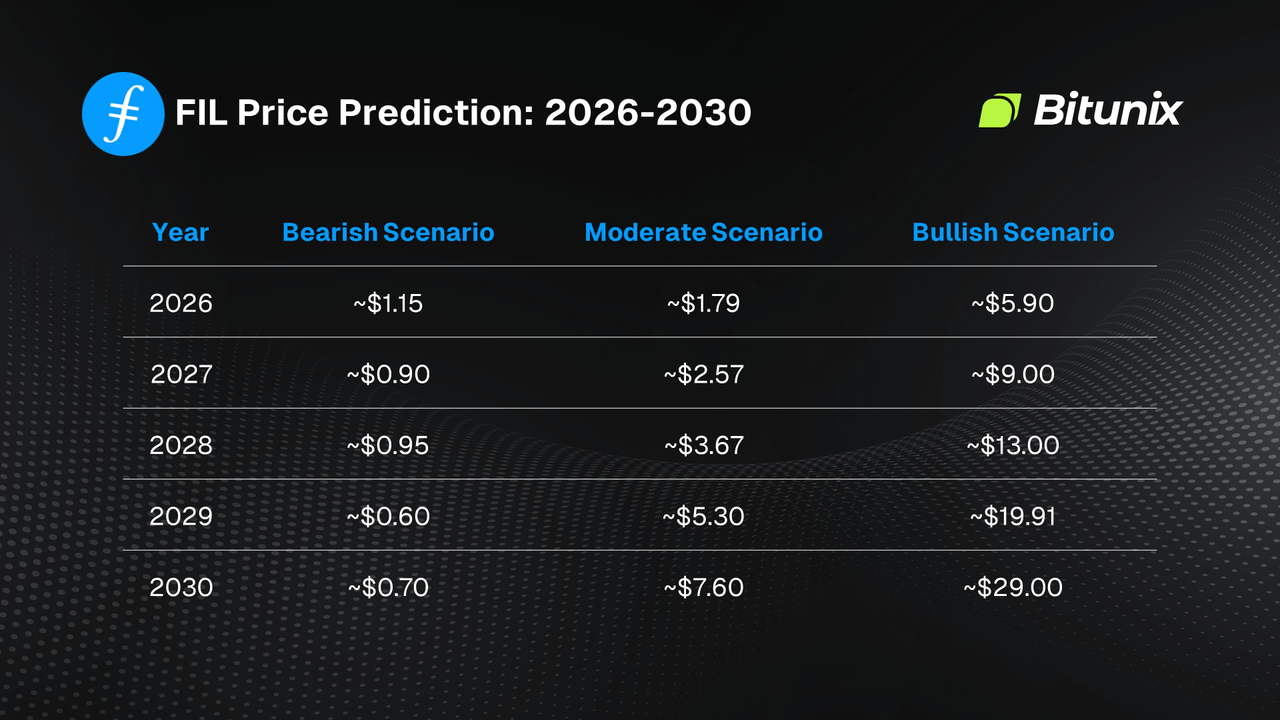
How to interpret this table:
- Bearish scenario assumes weak adoption, strong centralized competition, and continued token supply pressure. Moderate scenario reflects steady growth in decentralized storage usage without a full market breakout.
- Bullish scenario assumes broad acceptance of decentralized storage, DePin use, and a supportive macro crypto environment.
How to Trade FIL on Bitunix
To start trading FIL on the Bitunix crypto exchange, follow these steps:
- Sign up on Bitunix via the website or download the app on your smartphone.
- Create an account using your email or mobile number and log in.
- Deposit crypto or buy USDT using fiat (kyc required for fiat only).
- Navigate to the spot market and select the FIL/USDT trading pair.
- Enter your order details and confirm, then explore trading tools, futures, and the earn features.
The information provided in this article is for educational and informational purposes only and does not constitute financial advice. Cryptocurrency markets are highly volatile. Always conduct your own research, assess your risk tolerance, and consider seeking independent professional advice before making any investment decisions.
FAQs
What is the difference between Filecoin and Bitcoin?
Bitcoin is designed for peer-to-peer value transfer and monetary security, while Filecoin focuses on decentralized data storage. They solve different problems, though both emphasize decentralization and minimizing reliance on centralized intermediaries.
Is Filecoin storage cheaper than Amazon S3?
In some cases, Filecoin storage can be cheaper, particularly for long-term or archival data. However, pricing is variable, and Filecoin may lack the convenience, tooling, and performance guarantees offered by centralized providers.
What is the Filecoin Virtual Machine (FVM)?
The Filecoin Virtual Machine enables smart contracts on the Filecoin network. It allows developers to build programmable storage applications, automate storage deals, and create new on-chain services directly tied to data usage.
What is DePIN?
DePIN stands for Decentralized Physical Infrastructure Networks. It refers to blockchain-based systems that coordinate real-world infrastructure, such as storage, computing, or connectivity, using token incentives instead of centralized ownership.
How does Filecoin ensure data is stored correctly?
Filecoin uses cryptographic proofs to verify that storage providers are storing data as agreed. These proofs are submitted regularly to the network, ensuring data remains available without requiring trust in a single provider.
What was the all-time high for FIL?
FIL reached its all-time high in April 2021, when it traded above $230 during a period of strong speculation and rapid growth across the broader crypto market.
Is Filecoin a good investment in 2025?
Whether Filecoin is a good investment depends on risk tolerance, belief in decentralized storage adoption, and broader market conditions. FIL remains volatile, and its performance is closely tied to long-term infrastructure usage.
Who are Filecoin’s main competitors?
Filecoin competes with centralized providers like Google Cloud as well as decentralized alternatives such as Arweave and other Web3 storage protocols.
How can I earn FIL?
FIL can be earned by providing storage to the network as a storage provider, participating in related services, or through trading and staking-related strategies, depending on platform availability.
Glossary
Filecoin: A decentralized storage network that allows users to store data through independent providers instead of centralized cloud services.
FIL: The native token of the Filecoin network, used for storage payments, collateral, and network incentives.
Decentralized Storage: A data storage model where files are distributed across multiple independent providers rather than controlled by a single company.
Filecoin Virtual Machine (FVM): A smart contract environment that enables programmable storage applications and on-chain logic within the Filecoin ecosystem.
DePIN: Short for Decentralized Physical Infrastructure Networks, referring to blockchain systems that coordinate real-world infrastructure using token incentives.
Total Supply: The maximum number of tokens that will ever exist for a cryptocurrency, including both circulating and locked tokens.
Vesting Schedule: A predefined timeline that controls when locked tokens are released into circulation over time.
About Bitunix
Bitunix is a global cryptocurrency derivatives exchange trusted by over 3 million users across more than 100 countries. At Bitunix, we are committed to providing a transparent, compliant, and secure trading environment for every user. Our platform features a fast registration process and a user-friendly verification system supported by mandatory KYC to ensure safety and compliance. With global standards of protection through Proof of Reserves (POR) and the Bitunix Care Fund, we prioritize user trust and fund security. The K-Line Ultra chart system delivers a seamless trading experience for both beginners and advanced traders. At the same time, leverage of up to 200x and deep liquidity make Bitunix one of the most dynamic platforms in the market.
Bitunix Global Accounts
X |Telegram Announcements |Telegram Global |CoinMarketCap |Instagram |Facebook |LinkedIn |Reddit |Medium