1. USDC Overview
The issuer of USDC, Circle Internet Financial, was founded in 2013 in Boston by serial entrepreneurs Jeremy Allaire and Sean Neville. Before entering crypto, Allaire was already a well-known figure in internet technology. He founded the software company Allaire Corp and took it public on Nasdaq. With a deep understanding of the internet’s foundation, Allaire believed blockchain would drive a major technology shift. In 2018, Circle and Coinbase co-founded the CENTRE consortium and officially launched the U.S. dollar stablecoin USDC.
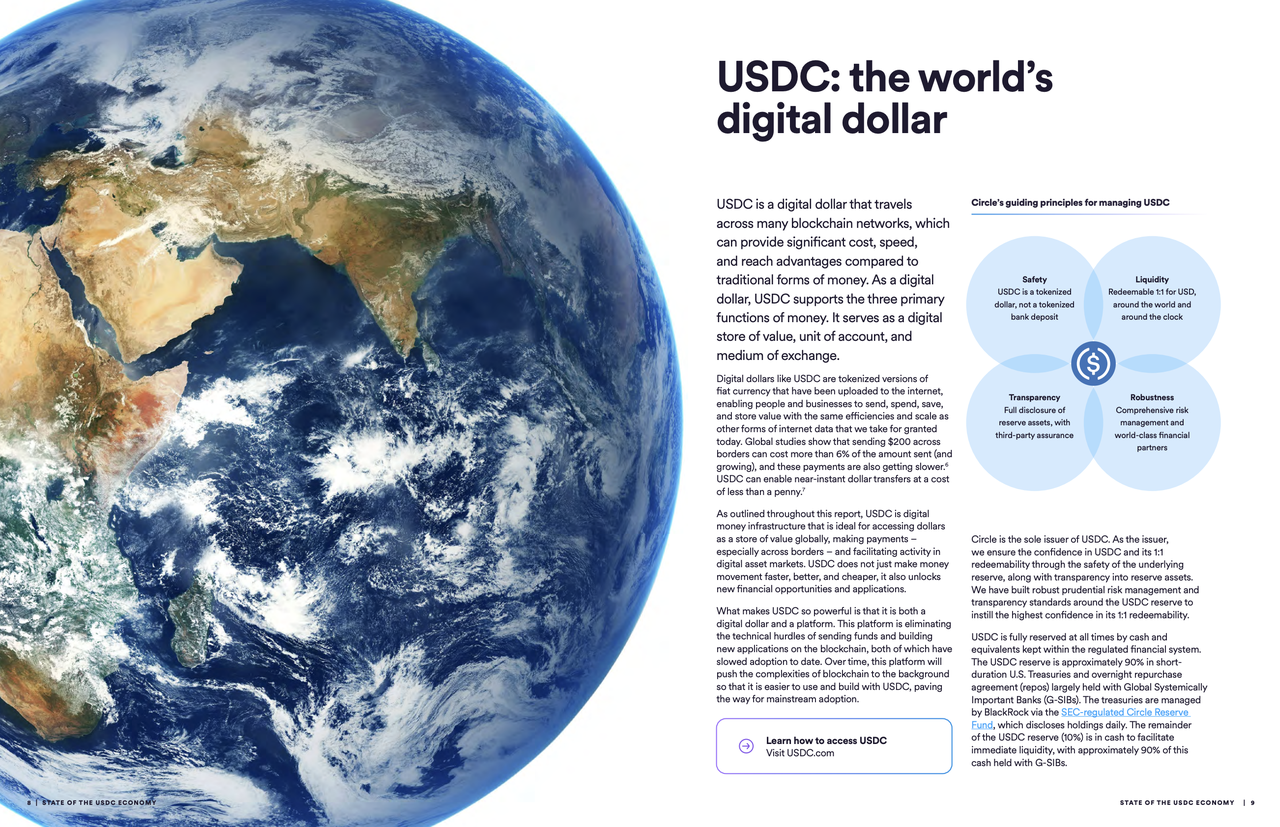
USDC was created to provide the global internet with a programmable dollar, with “compliance first” as its core advantage. Every USDC in circulation is backed 1:1 by an equivalent amount of U.S. dollars (or short-term U.S. Treasuries) held in accounts at regulated financial institutions. With high transparency and strict audit standards, USDC quickly became the world’s second-largest stablecoin by market cap and one of the most trusted stablecoins among institutions.
2. USDC: A Benchmark for Compliant Stablecoins
Compared with traditional stablecoin issuers, Circle operates with a distinctly higher transparency standard and positions itself more like a modern fintech company subject to rigorous audits. Headquartered in the United States, Circle has long embraced regulation and in recent years has worked toward listing in U.S. public markets. That direction implies financial disclosures under public scrutiny comparable to traditional banks and major payments firms. As the United States accelerates stablecoin-related legislation in recent years, including a regulatory framework commonly referred to as the “GENIUS Act,” USDC’s first-mover advantage has become more visible. The core of this kind of legislation is to require 1:1 reserves in highly liquid assets and to restrict unsecured issuance by non-financial institutions. Circle’s compliance-first approach has aligned closely with these expectations, strengthening its position in institutional markets as a preferred “digital dollar” asset.
USDC has long been viewed as an industry benchmark for reserve transparency and legal compliance. Circle publishes monthly reports attested by leading accounting firms, detailing a reserve structure made up of cash and short-term U.S. Treasuries, with some reserves managed by BlackRock. This supports strong risk resilience and redemption capacity. At the same time, Circle has built a legal moat by holding money transmitter licenses across multiple U.S. states. As U.S. stablecoin regulation continues to take shape, this compliance structure, deeply linked to U.S. financial infrastructure, is expected to support an even more important role in cross-border payments, corporate settlement, and on-chain ecosystems, positioning USDC as a highly reliable digital dollar asset under tighter regulation.
3. USDC: Deep Roots in Ethereum DeFi
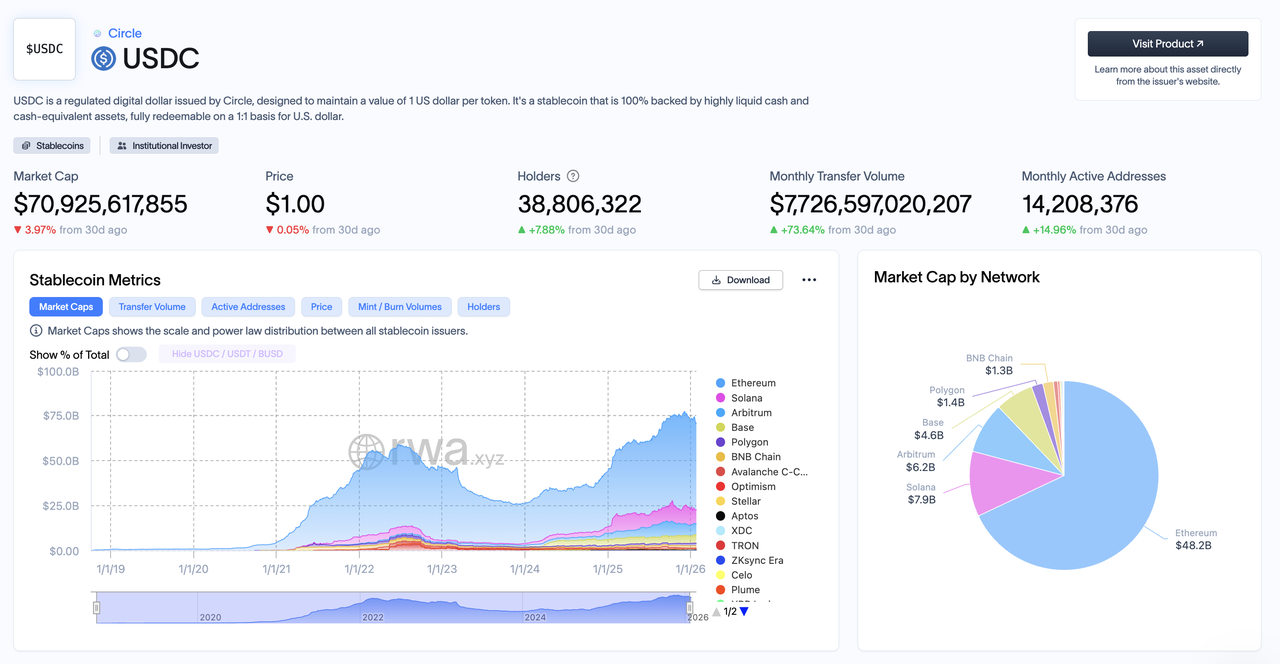
From the beginning, USDC used Ethereum’s ERC-20 token standard, which helped it integrate deeply into the most active DeFi ecosystem globally. While USDC has expanded to multiple chains to increase coverage, its core foundation remains concentrated in networks that support ERC-20. As of January 2026, USDC’s total market cap reached $70.9 billion, and the combined ERC-20 USDC supply on Ethereum mainnet and major Layer 2 networks such as Base and Arbitrum exceeded $60 billion. This concentrated distribution highlights USDC’s role as a core piece of DeFi infrastructure.
That ecosystem depth is reflected in widespread use across major decentralized protocols. In lending protocols such as Aave, USDC is consistently among the top stablecoins for both deposits and borrowing demand, and it is often treated as one of the safest and most credible forms of collateral and settlement on-chain. On decentralized exchanges such as Uniswap, USDC pairs with major tokens provide deep liquidity, making it a preferred routing asset for both retail and institutional users managing on-chain allocations and swaps. This tight integration with the Ethereum ecosystem has made USDC one of the most important liquidity links in DeFi.
4. Circle’s Growth
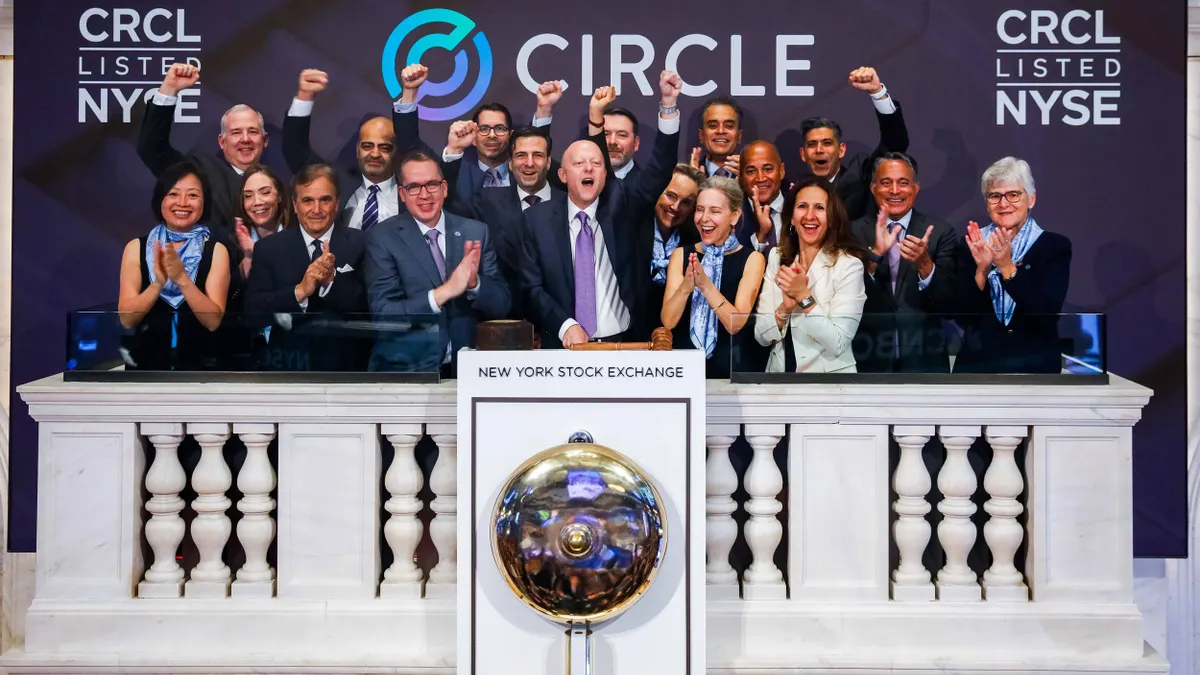
Circle’s history is a long-distance run where technology and compliance advance side by side. In its early days, the company drew attention from top-tier financial institutions and investors such as Goldman Sachs and IDG Capital, and positioned itself to build a global digital currency and payments network. Circle’s trajectory has been closely tied to the development of U.S. regulatory frameworks, and it has consistently worked to bring blockchain technology into mainstream finance. As its compliance progress and capital strategy matured, Circle officially went public in the United States in June 2025. After listing, its market value once surged past $50 billion, reflecting strong investor recognition of a leading compliant stablecoin issuer. As of January 2026, Circle’s market value was around $16.6 billion. This not only reflects resilience through market volatility, but also signals Circle’s growth from a fintech startup into a public company with global influence.
Beyond USDC, Circle is building a broader stablecoin and technology portfolio. To meet on-chain financial demand in Europe, Circle launched EURC, a compliant stablecoin pegged 1:1 to the euro, providing a transparent and secure liquidity option for cross-border payments and euro-denominated DeFi. At the same time, Circle developed and promoted a cross-chain transfer protocol, a permissionless infrastructure that allows users to move USDC between different blockchains through a native burn-and-mint model, reducing friction and addressing security bottlenecks associated with traditional cross-chain bridges. Through EURC expansion and CCTP enablement, Circle aims to improve how assets move across fiat systems and chain environments.
5. How to Get USDC
USDC is issued by Circle on a 1:1 basis based on market demand. After a user or institution pays an equivalent amount of U.S. dollars to Circle or approved channels, Circle mints the corresponding amount of USDC on-chain. However, minting and redeeming directly through Circle Mint is typically institution-led and can involve higher operational and compliance thresholds for everyday users. For most people, the most common and convenient way to obtain USDC is to buy or swap it directly on a crypto exchange.
Buying USDC through Bitunix and other centralized exchanges is one of the most direct ways for individual users to access stablecoins. As a trusted intermediary, the platform supports one-click conversion to USDC using fiat, bank cards, credit cards, or other crypto assets. Before first use, you need to register an account and complete identity verification (KYC) by submitting identification and required information to meet global anti-money laundering (AML) and counter-terrorist financing requirements. Bitunix uses a security framework that includes hot and cold wallet separation, multi-signature controls, and 24/7 risk monitoring to provide strong fund protection. As a result, buying USDC through Bitunix is presented as a convenient, fast, and secure option for beginners.
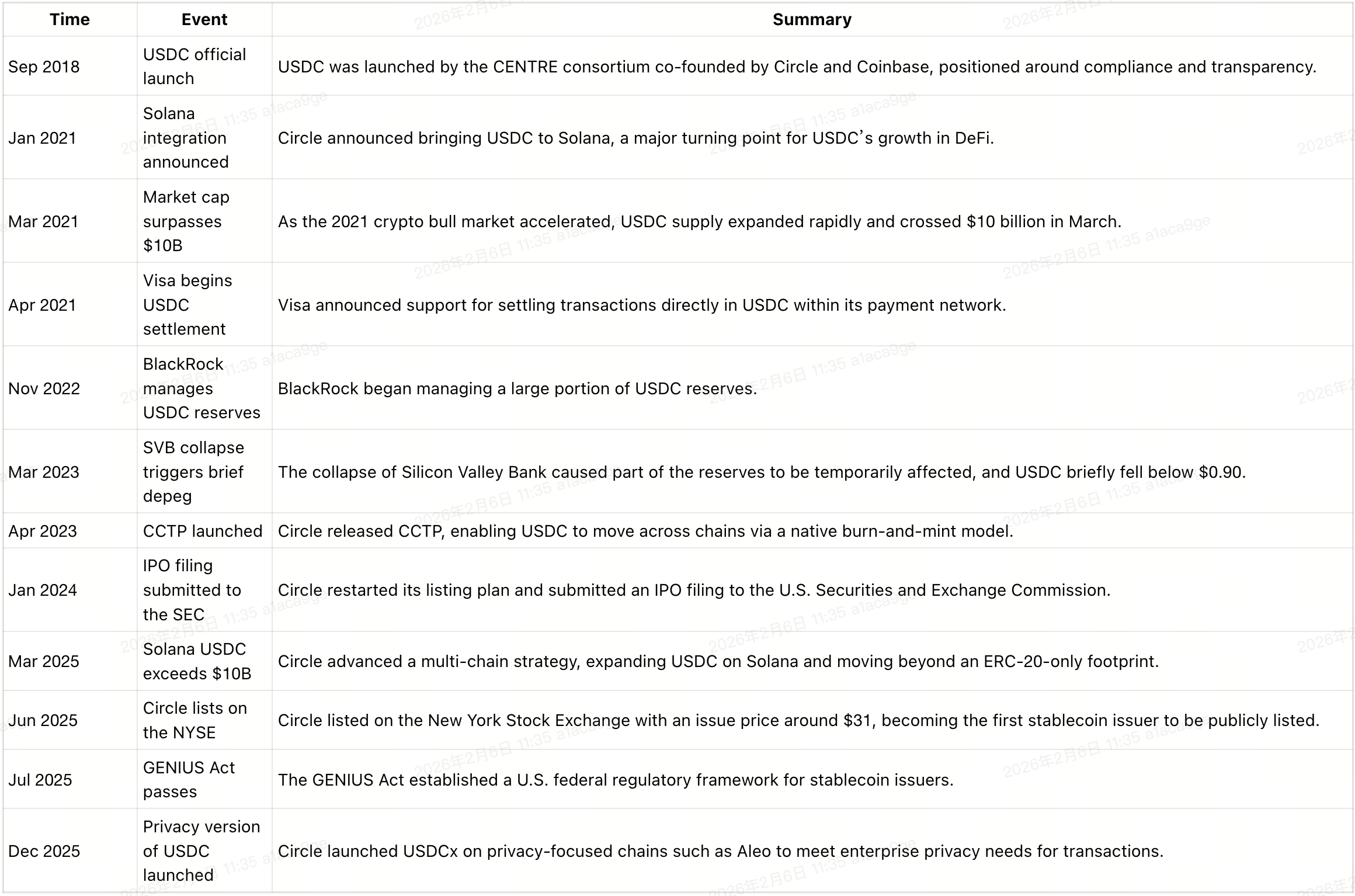
6. USDC Major Milestones Timeline
Disclaimer
This article is not intended to provide: (i) investment advice or investment recommendations; (ii) an offer or solicitation to buy, sell, or hold digital assets; or (iii) financial, accounting, legal, or tax advice. Digital assets (including stablecoins and NFTs) involve high risk and may be highly volatile. You should carefully consider whether trading or holding digital assets is suitable for you based on your financial situation. For your specific circumstances, consult your legal, tax, or investment professionals. You are responsible for understanding and complying with all applicable local laws and regulations.
About Bitunix
Bitunix is a global cryptocurrency derivatives exchange trusted by over 3 million users across more than 100 countries. At Bitunix, we are committed to providing a transparent, compliant, and secure trading environment for every user. Our platform features a fast registration process and a user-friendly verification system supported by mandatory KYC to ensure safety and compliance. With global standards of protection through Proof of Reserves (POR) and the Bitunix Care Fund, we prioritize user trust and fund security. The K-Line Ultra chart system delivers a seamless trading experience for both beginners and advanced traders, while leverage of up to 200x and deep liquidity make Bitunix one of the most dynamic platforms in the market.
Bitunix Global Accounts
X | Telegram Announcements | Telegram Global | CoinMarketCap | Instagram | Facebook | LinkedIn | Reddit | Medium