
1. A Brief History of Virtual Machines
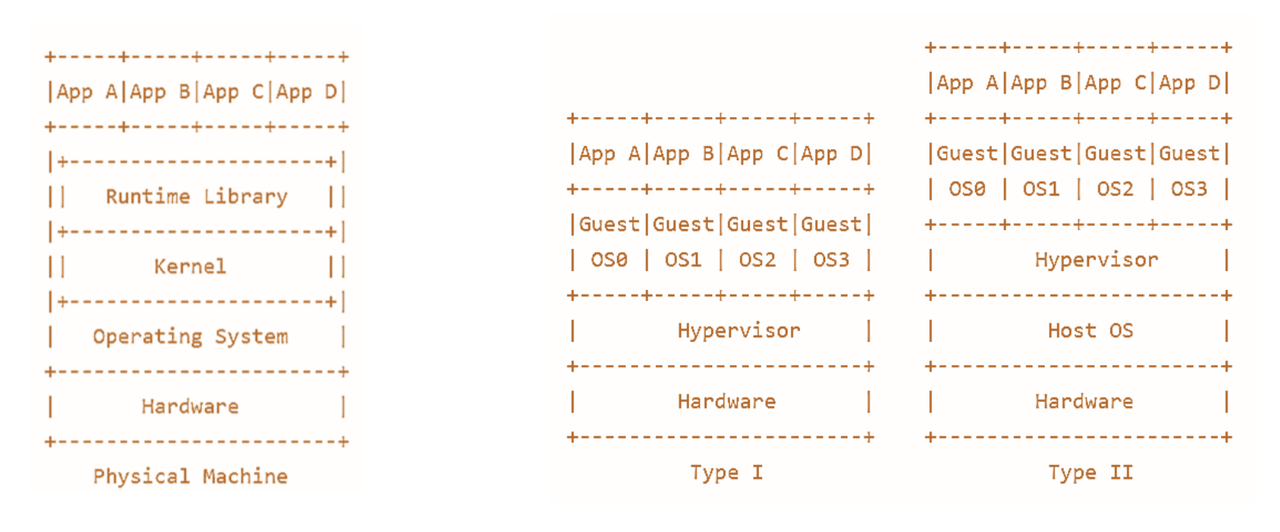
Virtual machines are not unique to blockchain. In crypto, however, investors and users are often overwhelmed by terms like EVM, SVM, and Move VM. In reality, the idea of a “virtual machine” dates back to the 1970s, originally used in mainframe computing. Early on, a virtual machine referred to using software to simulate one or more “virtual computers” on a single physical machine, allowing different users or workloads to run simultaneously on the same hardware.
In this architecture, each virtual machine can install its own operating system, run applications, and route access to CPU, memory, and other resources through the underlying physical hardware. The core goal was to maximize the utilization of expensive mainframe systems. As virtualization matured, the concept expanded beyond “fully emulating a computer” and moved toward lighter-weight designs focused specifically on running programs.
As a result, many programming languages developed “language-level virtual machines” designed to execute their own code. These VMs do not simulate full hardware environments. Instead, they translate code into a standardized bytecode or instruction format and execute it consistently across different operating systems and hardware. Well-known examples include Java’s JVM and the Python Virtual Machine used when Python runs programs. In blockchain, virtual machines took on a new role. They became the core component responsible for executing smart contracts. Typically integrated into node clients, they translate and run contract code as low-level instructions, enabling safe and predictable state changes on-chain. After decades of evolution, virtual machines have become a foundational concept in both modern software engineering and blockchain systems.
2. Understanding “EVM Compatibility”
“EVM-compatible” is one of the most common labels used to describe public blockchains. Networks like BNB Chain, Avalanche, and Fantom often position it as a core technical feature. EVM stands for the Ethereum Virtual Machine. It executes Solidity smart contracts and continuously updates on-chain asset and contract state as code runs. In other words, the EVM is the runtime environment behind Ethereum’s DeFi protocols, NFTs, and application logic. Designed under the leadership of Ethereum founder Vitalik Buterin, the EVM’s real power is not just performance. Its greatest strength is that it became an execution standard that has been extensively tested at scale and widely adopted by developers globally.
It is important to clarify what “EVM-compatible” does and does not mean. It does not mean other chains can directly control or alter assets on Ethereum mainnet. Instead, it means those chains implement a virtual machine environment inside their own networks that behaves very similarly to Ethereum’s EVM. At the protocol level, EVM-compatible chains typically support the same or highly compatible instruction set, execution logic, and state transition rules. As a result, smart contracts originally written for Ethereum can often be deployed and run on another chain with no changes or only minor modifications. In essence, this design “copies” Ethereum’s contract execution rules, not Ethereum itself.
The biggest value of EVM compatibility shows up in three areas: liquidity, developer ecosystems, and scalability. Using BNB Chain as an example, early growth was driven by full EVM compatibility, which allowed many Ethereum DeFi projects to migrate quickly or deploy across multiple chains. That helped BNB Chain attract meaningful on-chain capital and user liquidity in a short time. For developers, familiar tools, frameworks, and the Solidity language can be reused, significantly reducing migration and development costs. For users, wallets, interaction patterns, and contract logic remain similar, so the learning curve stays low. This is why EVM compatibility has become a common path for chains to scale ecosystems early, absorb demand overflow from Ethereum, and build their own application networks.
3. Other Virtual Machines: Beyond the EVM Path
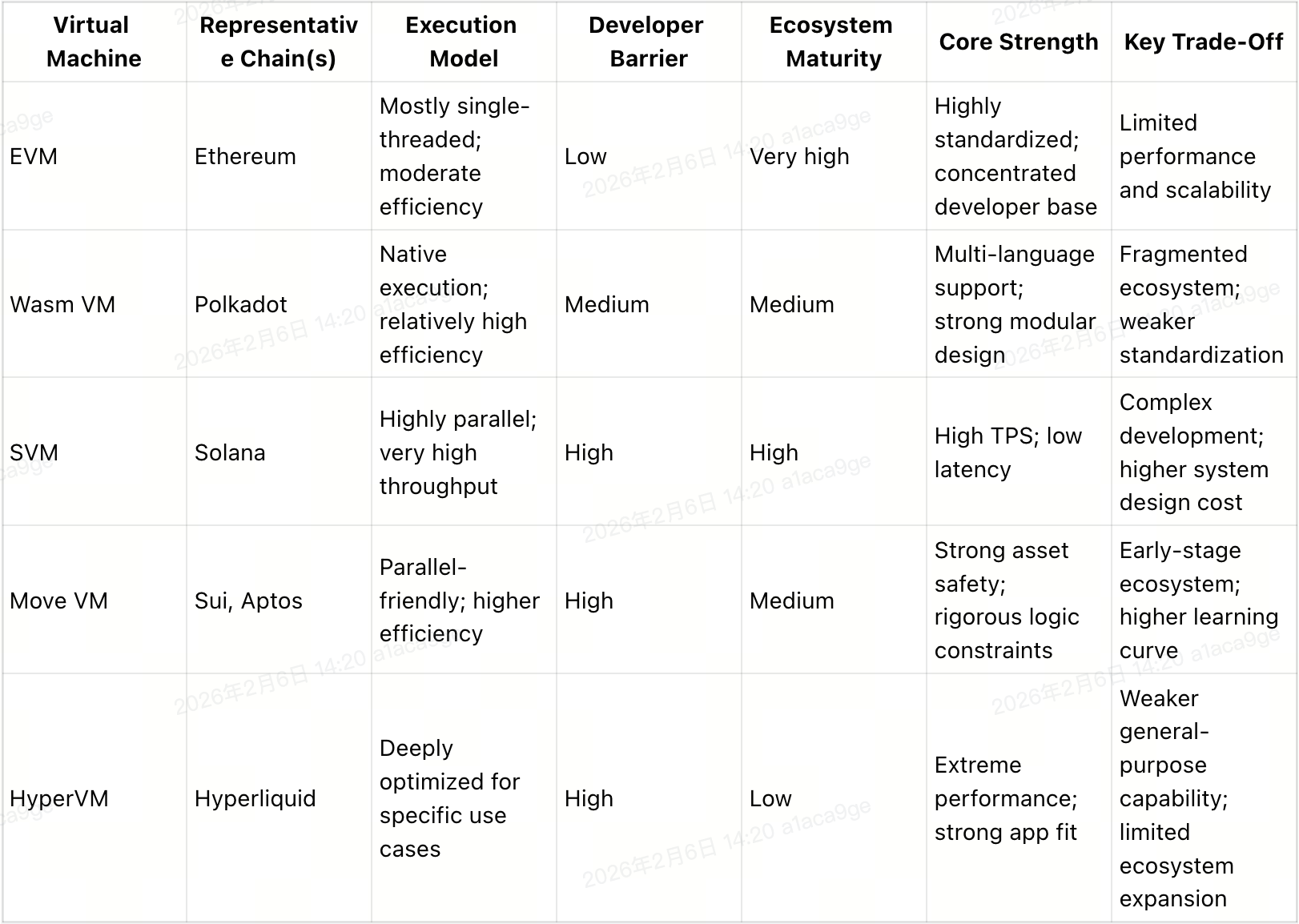
Not every blockchain chooses the EVM as its smart contract runtime. As on-chain use cases expanded, some networks designed independent virtual machines to optimize for performance, security, or specialized applications. For example, Solana uses the SVM, designed for high throughput and parallel execution. Aptos and Sui are built around the Move VM, emphasizing stronger asset safety and strict language-level constraints. Some chains and modular blockchain architectures choose Wasm-based VMs for a more general execution environment and multi-language support. Meanwhile, chains focused on trading use cases, such as Hyperliquid, have developed highly customized VMs like HyperVM, optimized for specific application requirements.
4. Valuation Logic: What Is the Market Pricing?
Compared with EVM-compatible chains, independent-VM chains often receive higher market valuations. This does not simply reflect short-term capital preference. It reflects a pricing framework around differentiated base-layer capabilities. An independent VM gives a chain more autonomy over execution models, security assumptions, and performance trade-offs, enabling deep optimization for a target use case without being constrained by existing standards. From the market’s perspective, this represents a potential “non-consensus path” and “nonlinear growth potential.” If a new VM proves a clear advantage in performance, security, or application design, the entire chain and ecosystem can follow a development curve that looks meaningfully different from the Ethereum stack. That is why independent-VM chains are often treated as a bet on future blockchain architecture. Their valuations frequently include pricing for long-term technical roadmaps, potential network effects, and ecosystem reshaping ability.
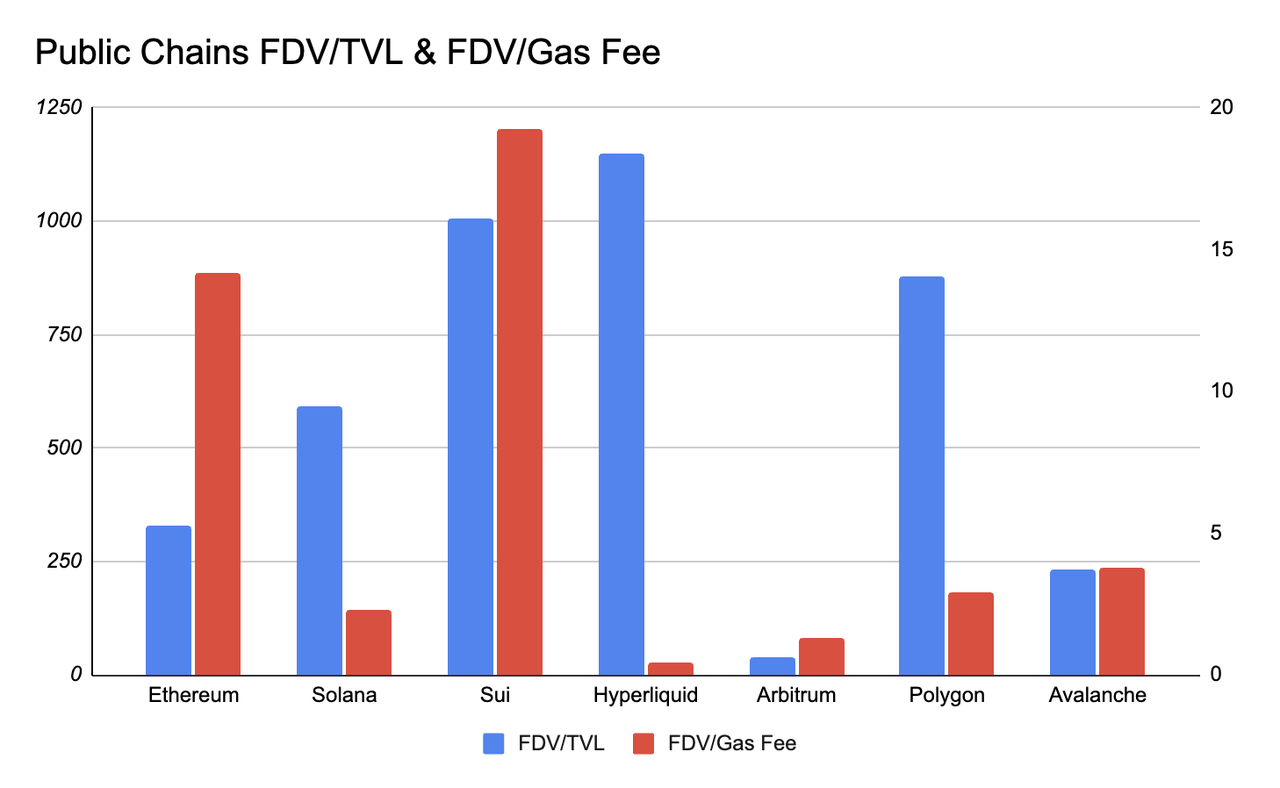
As of January 2026, valuation comparisons across major chains show that independent-VM chains are valued higher overall than EVM-compatible chains and Ethereum Layer 2 networks. Using Sui and Arbitrum as examples, Sui’s ecosystem remains relatively early. Over the past year, its on-chain gas fees were about $12.98 million, and as of January 20, its TVL (Total Value Locked) was about $970 million. Arbitrum, as a more mature Ethereum Layer 2, recorded about $24.16 million in gas fees over the same period, and its TVL was about $3.06 billion on the same date. These metrics are all significantly higher than Sui’s. However, at the token valuation level, the governance tokens SUI and ARB had FDVs (Fully Diluted Valuations) of about $15.6 billion and $1.9 billion, respectively, with SUI roughly eight times higher. This comparison suggests that markets assign stronger growth expectations and narrative upside to independent Layer 1 chains, while Ethereum Layer 2 valuations are more constrained by their established positioning and boundaries.
5. Conclusion
Virtual machines are not just a technical component that “runs code” on-chain. At a deeper level, they shape how a chain is built, how its ecosystem forms, and how the market positions it. From the highly standardized path represented by the EVM to differentiated explorations like the SVM and Move VM, each choice reflects different trade-offs across performance, security, and ecosystem growth strategy. For users and investors, understanding virtual machine differences helps reveal real structural distinctions between chains, rather than relying only on surface-level narratives or short-term metrics. As blockchain applications continue to evolve, virtual machines will remain one of the most fundamental and most important building blocks in public chain competition.
Disclaimer
This article is not intended to provide: (i) investment advice or investment recommendations; (ii) an offer or solicitation to buy, sell, or hold digital assets; or (iii) financial, accounting, legal, or tax advice. Digital assets (including stablecoins and NFTs) involve high risk and may be highly volatile. You should carefully consider whether trading or holding digital assets is suitable for you based on your financial situation. For your specific circumstances, consult your legal, tax, or investment professionals. You are responsible for understanding and complying with all applicable local laws and regulations.
About Bitunix
Bitunix is a global cryptocurrency derivatives exchange trusted by over 3 million users across more than 100 countries. At Bitunix, we are committed to providing a transparent, compliant, and secure trading environment for every user. Our platform features a fast registration process and a user-friendly verification system supported by mandatory KYC to ensure safety and compliance. With global standards of protection through Proof of Reserves (POR) and the Bitunix Care Fund, we prioritize user trust and fund security. The K-Line Ultra chart system delivers a seamless trading experience for both beginners and advanced traders, while leverage of up to 200x and deep liquidity make Bitunix one of the most dynamic platforms in the market.
Bitunix Global Accounts
X | Telegram Announcements | Telegram Global | CoinMarketCap | Instagram | Facebook | LinkedIn | Reddit | Medium