
Article Summary
- This guide introduces traders to Optimism (OP), a key Layer-2 scaling solution for Ethereum, and the OP/USDT spot trading pair.
- It explains in simple terms how Optimism works using "Optimistic Rollups" to make Ethereum transactions faster and cheaper.
- The article breaks down the three primary market drivers for the OP token: Ethereum’s Growth, the Layer-2 Narrative, and the Expansion of the Optimism “Superchain” Ecosystem.
- It outlines three effective strategies for trading OP: Narrative-Based Trading, Ecosystem-Based Investing, and Technical Swing Trading.
- The guide highlights Bitunix as an ideal platform for trading OP, emphasizing its low fees and reliable access to the broader Ethereum ecosystem.
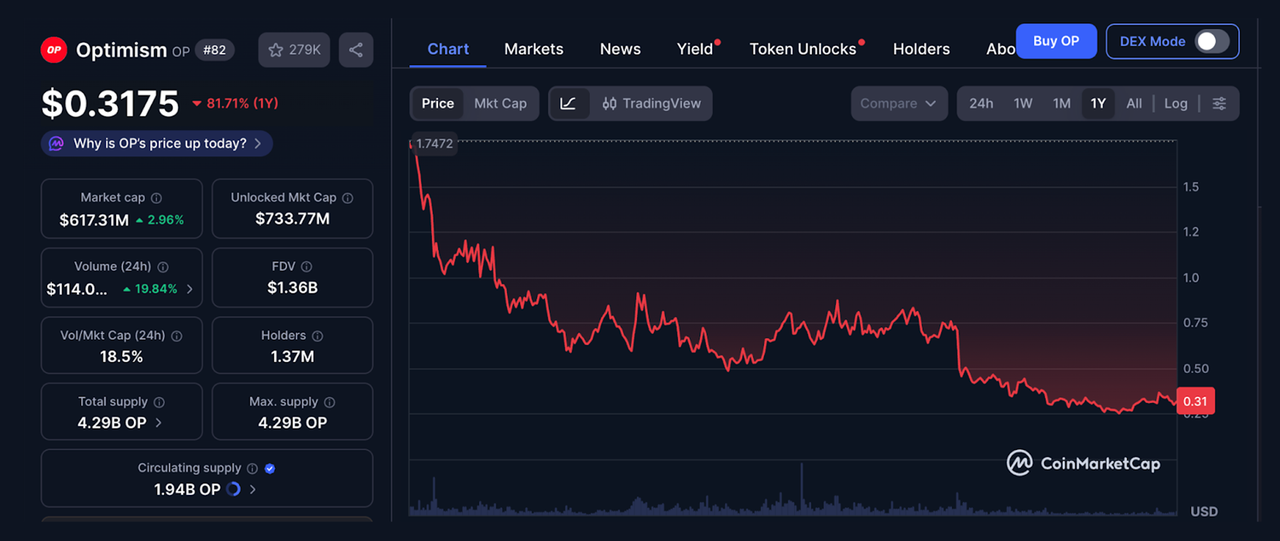
The Optimism price has been tumbling for the best part of 12 months. A chart like this for a memecoin often signals the end, but the OP/USDT pair is very different. Even with the token’s price falling sharply, the ecosystem continues to expand, and the Optimism network is steadily strengthening its presence within the Ethereum ecosystem. Many developers are still planning to leverage Optimism’s architecture to deploy decentralized applications at scale.
That said, while the ecosystem remains robust and the technology arguably places Optimism among the leading Layer-2 solutions, the price action is still a genuine concern. OP represents a high-risk play at current levels. Some traders may view this period as an appealing dip-buying opportunity, while others will remain cautious given the broader downtrend.
This article provides a clear guide to OP crypto and outlines the most practical way to trade OP-USDT on the Bitunix crypto exchange, helping traders understand both the technology and the trading process.
What Is Optimism (OP)? A Simple Guide to Layer-2s
Layer-2 solutions generally share the same goal: making Ethereum’s smart contract transactions more scalable, reducing transaction costs, and maintaining the same bulletproof security provided by the Ethereum mainnet. However, they take different technical approaches to solving this challenge, often referred to as the blockchain trilemma. Optimism has, in many respects, been one of the most successful implementations to date.
Layer-2 networks exist to relieve congestion on Ethereum by handling transactions away from the base layer while still relying on it for security and final settlement. This allows users and applications to operate more efficiently without compromising trust guarantees.
Optimism achieves this through optimistic rollups, where transactions are executed off-chain and then bundled together before being submitted to Ethereum. For example, hundreds of user trades or transfers can be compressed into a single on-chain transaction, dramatically lowering fees.
With over $70 billion in total value locked on Ethereum, Layer-2 solutions like Optimism have the potential to capture a meaningful share of this on-chain value by attracting developers and traders. By most metrics, Optimism has already proven successful, with the official website claiming that roughly 15% of all crypto transactions pass through the network, giving it more than a 50% share of Layer-2 activity.
The OP Token
OP is the native token on Optimism. It is primarily used for governance, allowing holders to participate in decisions related to protocol upgrades, funding allocations, and the long-term direction of the Optimism Collective. This governance-driven design aligns network development with community incentives.
From a tokenomics perspective, OP has a total supply of just over 4 billion tokens, with a circulating supply of approximately 2.3 billion, according to TokenTrack. Token supply is unlocked through a vesting schedule that can be tracked on websites like TokenTrack.
Market Opportunities – Why Trade OP/USDT?
There are several reasons someone might consider adding Optimism to their portfolio or increasing their position, even if the chart currently paints a bearish picture. As a leading Layer-2 solution, Optimism has an advantage over many altcoins by holding a clear long-term position in the market, supported by measurable demand from developers building real applications.
One key factor is the Ethereum bet. As Ethereum continues to dominate the smart contract market, Layer-2 networks stand to benefit directly. Increased Ethereum usage naturally drives demand for scaling solutions that reduce costs and improve transaction efficiency.
The strength of the Layer-2 narrative is another driver. As users and developers seek alternatives to high mainnet fees, Layer-2 adoption continues to grow across DeFi, NFTs, and gaming.
At the center of this strategy is the Superchain ecosystem. Optimism is building a network of interoperable chains known as the Superchain, widely seen as one of the strongest attempts to unify the Ethereum ecosystem with other networks. This includes major platforms such as Base and Mantle.
While exposure to Ethereum and the broader Layer-2 theme are compelling bullish factors, it is the Superchain vision that attracts the most attention from long-term traders and developers alike.
Three Strategies for Trading OP-USDT
These are some of the strategies that traders employ when buying and selling OP/USDT. Each approach suits a different risk profile and time horizon, from longer-term accumulation to active short-term trading.
- Technical Analysis–Based Trading: Technical analysis traders focus on price structure, trends, and momentum indicators. Common tools include the Relative Strength Index (RSI) to identify overbought or oversold conditions, moving averages to assess trend direction, and support and resistance levels to time entries and exits. This strategy is particularly effective in volatile markets where OP-USDT experiences clear price swings.
- Dollar-Cost Averaging (DCA): This strategy involves buying OP at regular intervals regardless of price. By spreading entries over time, traders reduce the impact of short-term volatility and avoid trying to time the market. DCA is often used by participants with a longer-term thesis on Ethereum scaling and Layer-2 adoption.
- Short-Term Swing Trading: Swing traders aim to capture price movements over several days or weeks. They combine technical indicators with market structure, buying during pullbacks and selling into periods of strength.
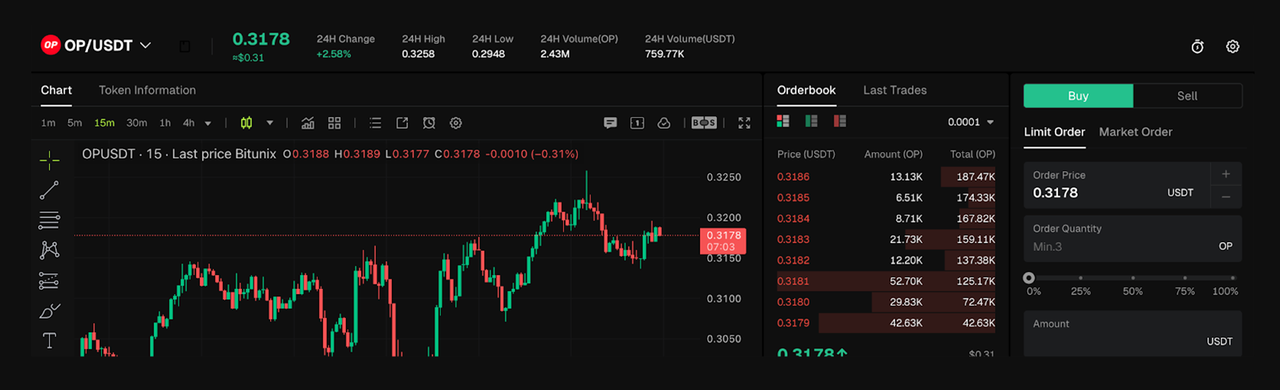
Bitunix is well-suited to technical and swing trading strategies, offering up to 16 multi-window charts for advanced analysis and full mobile TradingView (K-Line) integration, enabling a professional-grade charting experience on desktop and mobile.
How to Trade OP/USDT on Bitunix: Step-by-Step
Trading OP/USDT on Bitunix is simple, secure, and cost effective. Before getting started, sign up for an account or download the Bitunix app, then follow these steps:
- Deposit USDT or EUR into your Bitunix account: Go to Wallet, select Deposit, then choose USDT or EUR (SEPA). Copy the deposit details and fund your account. EUR SEPA deposits incur no fees.
- Navigate to the Spot trading section: Open the Spot trading tab from the main menu to access the spot markets.
- Select the OP/USDT trading pair: Use the search bar to find OP/USDT, then open the trading page for the pair.
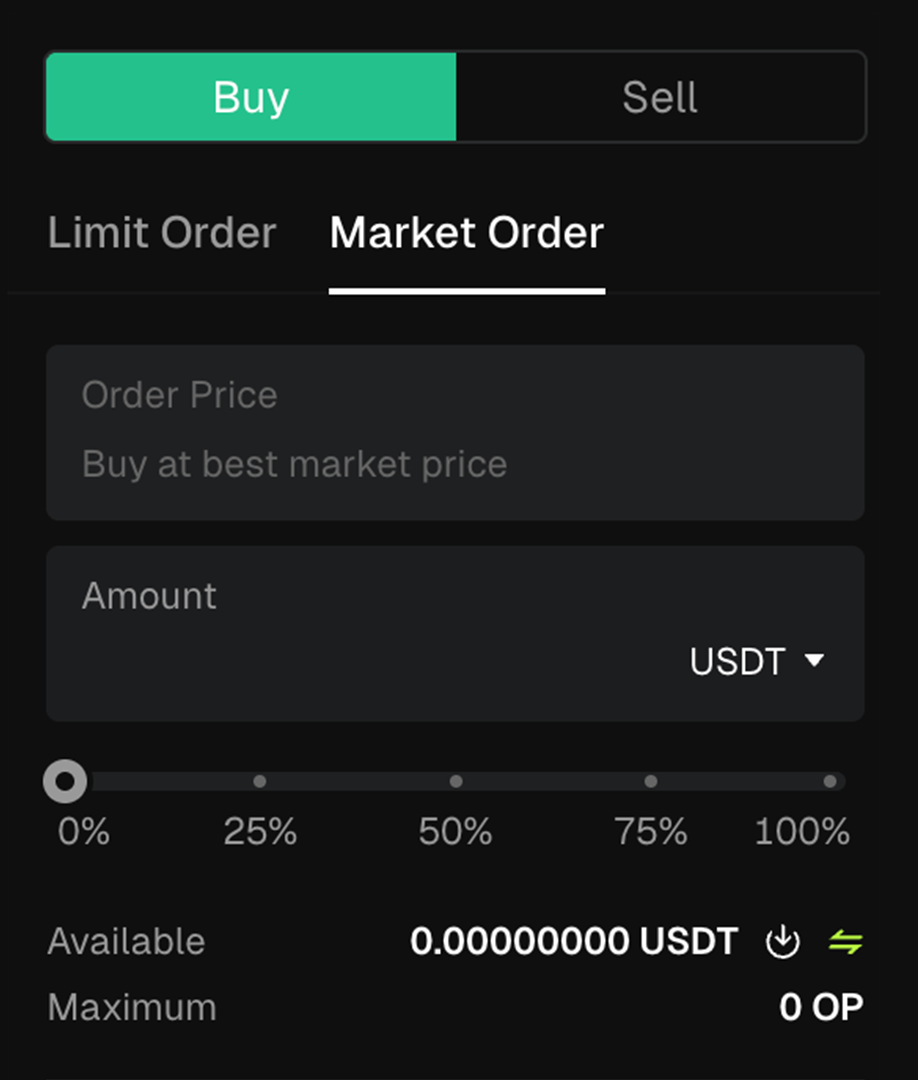
- Switch from Sell to Buy: In the order panel, select Buy to purchase OP using USDT.
- Choose Market order: Select Market to execute the trade instantly at the best available price.
- Enter the amount to trade: Input the amount of USDT you want to spend, or use the percentage buttons to allocate part of your balance.
- Confirm the trade and check your balance: Confirm the order, then return to Wallet to verify your OP balance has updated.
Once the OP has been deposited into your account, it can be deployed through the Bitunix earn section to generate passive returns.
Final Thoughts: Trading Optimism on Bitunix
Bitunix provides a secure platform for trading OP/USDT, with an impeccable track record in terms of security, supported by live proof of reserves and the Bitunix Care Fund. The exchange offers low fees, strong liquidity, and fast onboarding, allowing traders to get started within minutes by signing up or downloading the app, depositing fiat or USDT, and following the steps outlined above.
FAQs
What is the difference between Optimism and Arbitrum?
Optimism and Arbitrum are both Ethereum Layer-2s using optimistic rollups, but they differ in architecture, governance design, and ecosystem strategy, with Optimism emphasizing interoperability through its Superchain vision.
How does the OP token get its value if it’s only for governance?
The OP token derives value from governance rights, treasury influence, and decision-making power over upgrades, funding, and long-term protocol direction.
What is the “Superchain” and how does it work?
The Superchain is Optimism’s framework for multiple interoperable Layer-2 networks that share infrastructure and standards while remaining secured by Ethereum.
What was the impact of EIP-4844 on Optimism’s fees?
EIP-4844 reduced data availability costs for rollups, enabling Optimism to lower transaction fees and improve scalability without altering its security model.
Can I stake the OP token to earn rewards?
OP does not offer traditional staking rewards and is designed primarily for governance participation rather than yield generation.
What are the biggest dApps on the Optimism network?
Leading applications on Optimism include Uniswap, Aave, Synthetix, Velodrome, and projects connected to the Base ecosystem.
Is Optimism as secure as the main Ethereum network?
Optimism inherits security from Ethereum by settling transactions on the mainnet, where disputes and final validation are enforced.
How can I move funds from Ethereum to the Optimism network?
Users can bridge assets using the official Optimism Bridge or supported third-party bridges to transfer ETH and ERC-20 tokens.
What is the total supply of OP tokens?
OP has a total supply of just over 4 billion tokens, with around 2.3 billion currently in circulation.
Where can I vote on Optimism governance proposals?
OP holders can vote through Optimism’s official governance portal, where protocol and ecosystem proposals are published.
Glossary
Layer-2: A scaling network built on top of Ethereum to improve speed and reduce costs
Optimistic Rollups: A method of batching transactions off-chain and settling them on Ethereum
OP Token: The governance token used to vote on Optimism protocol decisions
Superchain: A network of interoperable chains built using Optimism’s shared infrastructure
EIP-4844: An Ethereum upgrade that reduced data costs for Layer-2 rollups
Total Value Locked (TVL): The total amount of crypto assets secured within a blockchain network
Spot Trading: Buying and selling crypto assets at current market prices
About Bitunix
Bitunix is a global cryptocurrency derivatives exchange trusted by over 3 million users across more than 100 countries. The platform is committed to providing a transparent, compliant, and secure trading environment for every user. Bitunix offers a fast registration process and a user-friendly verification system supported by mandatory KYC to ensure safety and compliance. With global standards of protection through Proof of Reserves (POR) and the Bitunix Care Fund, Bitunix prioritizes user trust and fund security. The K-Line Ultra chart system delivers a seamless trading experience for both beginners and advanced traders, while leverage of up to 200x and deep liquidity make Bitunix one of the most dynamic platforms in the market.
Bitunix Global Accounts
X | Telegram Announcements | Telegram Global | CoinMarketCap | Instagram | Facebook | LinkedIn | Reddit | Medium
Disclaimer: Trading digital assets involves risk and may result in the loss of capital. Always do your own research. Terms, conditions, and regional restrictions may apply.