
1. Introduction to Polkadot
Polkadot was born in 2016 and was initiated by Dr. Gavin Wood, Ethereum co-founder and the inventor of the Solidity language. Its native token is DOT. After helping build Ethereum, Gavin Wood believed that a single-chain architecture had inherent limitations when handling high-concurrency transactions and cross-chain collaboration. He therefore proposed the concept of a “heterogeneous multi-chain” system. Polkadot was not originally intended to replace existing public blockchains, but rather to serve as an underlying protocol designed to connect multiple specialized blockchains within a unified security framework.
As a leading figure in blockchain engineering, Gavin Wood brought the experience he gained while developing Solidity into the Polkadot ecosystem. He led the development of the Substrate modular blockchain framework in an attempt to simplify the complexity of building sovereign blockchains for developers. This allowed Polkadot to establish a place in the crypto market early on with its “high technical barrier” and “strong engineering orientation.”
2. Polkadot 1.0: Parachains and Slot Auctions
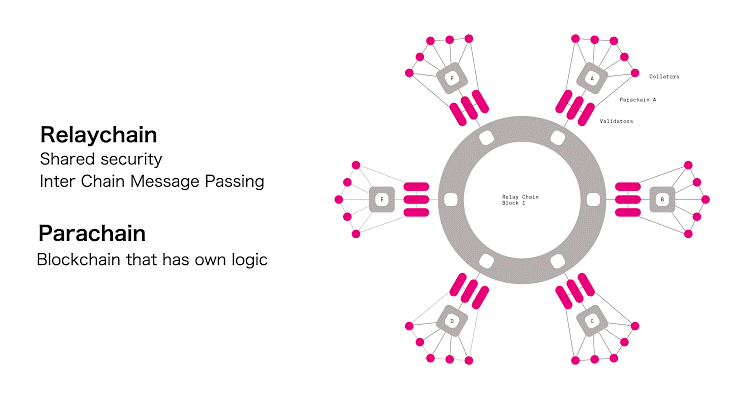
In the Polkadot 1.0 architecture, the core of the network consists of one Relay Chain and multiple Parachains. The Relay Chain does not have smart contract functionality. It is only responsible for the consensus security of the entire network and cross-chain message transmission, while the actual functions are implemented by the individual parachains.
To connect to the Relay Chain, projects had to compete for limited positions through slot auctions. In the early stage, this model attracted a large amount of capital participation through crowdloans, where users supported project bids by locking DOT. However, as market conditions changed, the slot auction model also exposed a number of challenges. Projects had to bear extremely high capital costs, and the lease period was fixed, usually for two years. For many startup teams or lightweight applications, this created an excessively heavy barrier to entry and, to some extent, limited the ecosystem’s flexibility for expansion.
3. Polkadot 2.0: Major Structural Adjustments and Strategic Shift
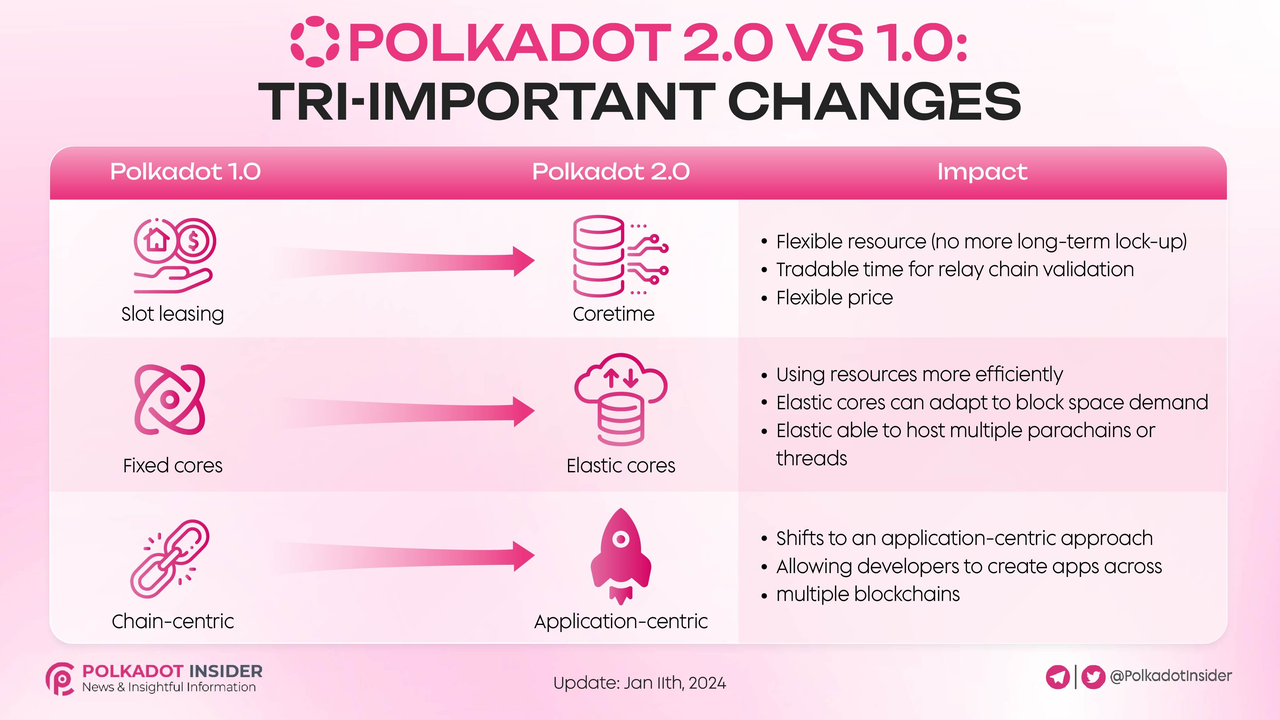
To address the efficiency and accessibility issues exposed by the 1.0 model in real-world operation, Gavin Wood formally proposed the Polkadot 2.0 vision in 2023. This phase of transformation marked a major shift in Polkadot’s core logic, moving from the earlier “leased slot” model to a “resource allocation” model that is better aligned with market demand for flexibility. Under the new 2.0 framework, Polkadot no longer uses fixed parachain slots as the leasing unit. Instead, it further abstracts the Relay Chain’s computational resources into “Coretime.” This means projects can acquire computational resources flexibly according to their needs, much like purchasing cloud computing services, rather than having to compete for two-year slot usage rights through large-scale, high-cost crowdloans.
In addition, Polkadot 2.0 introduced key technologies such as asynchronous backing, aimed at shortening block times and significantly increasing overall network throughput. This comprehensive architectural adjustment is essentially an active correction of the early development model by the official team. Its purpose is to reduce the burden on developers and attract a wider variety of applications into the ecosystem. By breaking through the high barrier to entry, Polkadot is attempting to address the lack of ecosystem vitality caused by the heavy slot auction mechanism in its early stage, thereby seeking a more sustainable path for development in the constantly changing public blockchain landscape.
4. Polkadot Ecosystem Development: From Multi-Chain Parallelism to Specialized Division of Labor
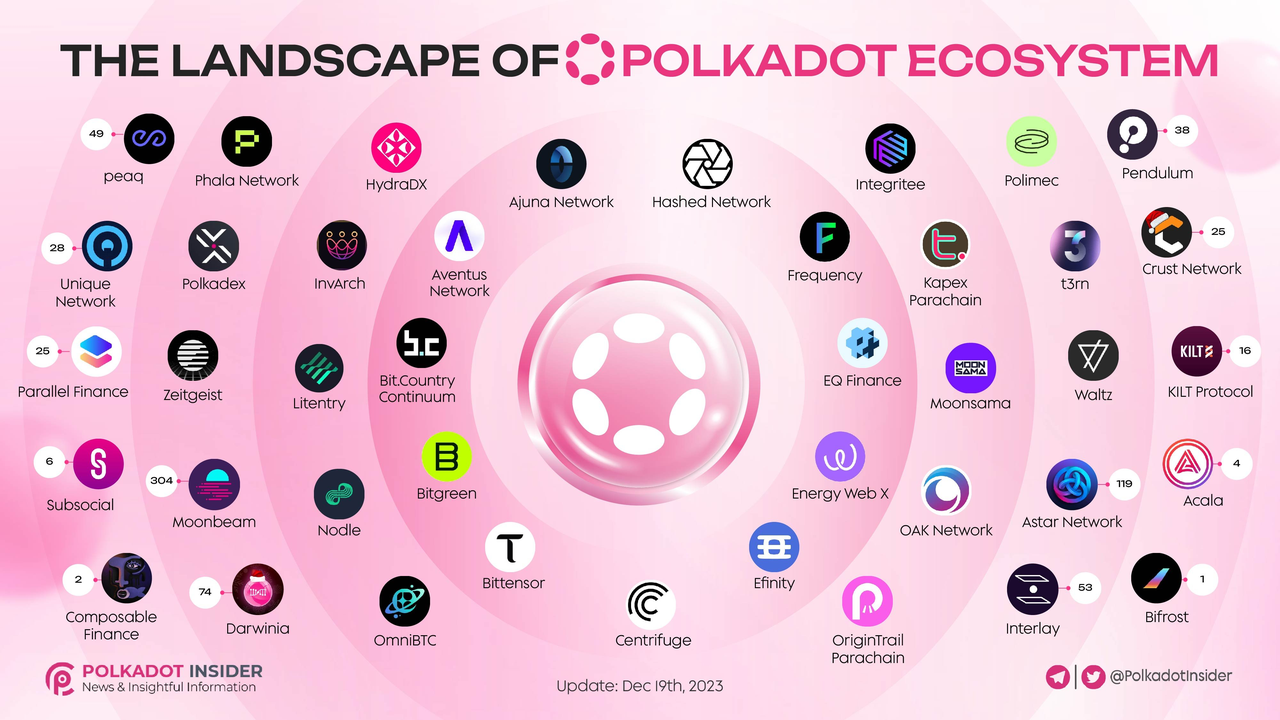
During the slot auction era of Polkadot 1.0, the ecosystem went through an initial phase of rapid expansion followed by market consolidation. Early projects that secured slots through crowdloans, such as Moonbeam, which focused on EVM compatibility, Astar, which specialized in multi-chain smart contracts, and Acala, which explored DeFi infrastructure, brought the first wave of technological diversity to Polkadot. Although the high entry threshold and asset-heavy model of early slot auctions once slowed ecosystem growth, some projects with strong core competitiveness still demonstrated technical resilience in their respective segments. One representative example is Centrifuge, which introduced real-world assets onto the blockchain. Centrifuge successfully tokenized traditional financial assets such as debt and real estate, and enabled asset interoperability through Polkadot’s cross-chain architecture. As global finance increasingly moves on-chain, its combination of compliance and technical stability has made it an important bridge between the real economy and decentralized finance within the Polkadot ecosystem.
In addition to the RWA sector, the Polkadot ecosystem has also built deep technical reserves in areas such as privacy computing, represented by Phala Network, decentralized identity, represented by Kilt Protocol, and cross-chain Bitcoin assets, represented by Interlay. As the Coretime mechanism of Polkadot 2.0 is gradually implemented, these established parachain projects will no longer be constrained by the heavy cost of slot leasing and will be able to allocate network resources in a more flexible and efficient way. This shift from “asset-heavy bidding” to “light-asset operations” is expected to give these mature projects renewed vitality, while also creating a more inclusive environment for innovative vertical projects such as Centrifuge to grow.
5. Functions and Uses of DOT (Polkadot Coin)
As the native token of the Polkadot network, the core value of DOT is deeply tied to the network’s governance and security mechanisms:
- Network Governance: Polkadot uses the OpenGov governance system. DOT holders can vote on treasury spending and protocol changes, which determine the future direction of the network’s evolution.
- Staking for Security: DOT is used to support the NPoS (Nominated Proof-of-Stake) mechanism. Participants can stake DOT to become validators or nominators, helping maintain the security of the Relay Chain while receiving corresponding inflation rewards.
- Resource Acquisition: In the 2.0 era, DOT will become the primary medium for purchasing Coretime, with its consumption logic directly linked to network usage demand.
6. How to Buy and Trade DOT on Bitunix Exchange
Investors and developers can participate in DOT in a variety of ways. For developers, the Substrate framework can be used for development. For ordinary users, participating in staking is one way to earn rewards.
By purchasing DOT through centralized cryptocurrency exchanges such as Bitunix, the platform acts as a trusted intermediary and supports users in directly purchasing crypto assets with fiat currency or stablecoins such as USDT. Some platforms also support instant purchases by credit card, which significantly lowers the barrier to entry. Before first use, users need to register an account and complete identity verification (KYC) to comply with global anti-money laundering (AML) and counter-terrorist financing regulations.
Bitunix has an industry-leading compliance and risk control system. Through hot and cold wallet segregation, multi-signature technology, and real-time monitoring mechanisms, it provides users with asset security protection above the market average.
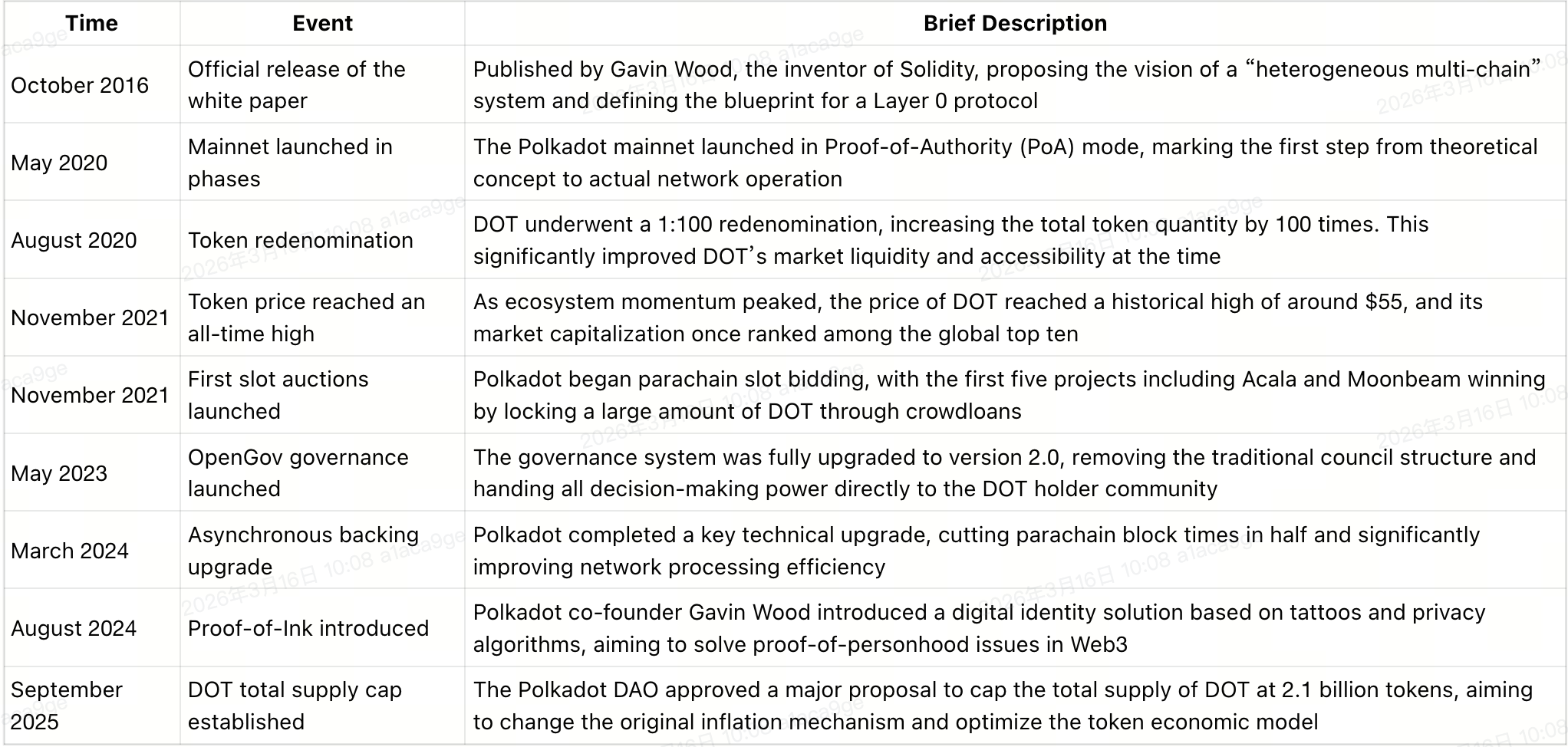
7. Timeline of Major Polkadot Events
Disclaimer
This article is not intended to provide:
(i) investment advice or investment recommendations;
(ii) an offer or solicitation to buy, sell, or hold digital assets; or
(iii) financial, accounting, legal, or tax advice.
Digital assets (including stablecoins and NFTs) involve high risk and may be highly volatile. You should carefully consider whether trading or holding digital assets is suitable for you based on your financial situation. For your specific circumstances, consult your legal, tax, or investment professionals. You are responsible for understanding and complying with all applicable local laws and regulations.
About Bitunix
Bitunix is a global cryptocurrency derivatives exchange trusted by over 3 million users across more than 100 countries. At Bitunix, we are committed to providing a transparent, compliant, and secure trading environment for every user. Our platform features a fast registration process and a user-friendly verification system supported by mandatory KYC to ensure safety and compliance. With global standards of protection through Proof of Reserves (POR) and the Bitunix Care Fund, we prioritize user trust and fund security. The K-Line Ultra chart system delivers a seamless trading experience for both beginners and advanced traders, while leverage of up to 200x and deep liquidity make Bitunix one of the most dynamic platforms in the market.
Bitunix Global Accounts
X | Telegram Announcements | Telegram Global | CoinMarketCap | Instagram | Facebook | LinkedIn | Reddit | Medium