The Birth of NEAR: From an AI Lab to a Breakthrough in Sharding Technology
If Ethereum is the “world computer” of the blockchain industry, then NEAR Protocol is the “infinite scaling engine” built to break through that computer’s performance ceiling. NEAR’s story began in 2017. It was originally founded by AI scientist Illia Polosukhin, one of the co-authors of the Transformer architecture, and veteran engineer Alexander Skidanov. While researching open-source AI, they sharply recognized the limitations of centralized infrastructure and gradually shifted their focus toward decentralized technology. In 2018, they officially began the development of NEAR.
At that time, the blockchain industry was still trapped by the “blockchain trilemma”, the challenge of balancing decentralization, security, and scalability at the same time. Ethereum mainnet’s high fees and network congestion had kept many ordinary users out of the ecosystem. NEAR’s goal was very clear: to build a public blockchain that is highly developer-friendly while delivering throughput comparable to mainstream internet applications. In 2020, the NEAR mainnet officially launched. With its original dynamic sharding technology, NEAR successfully achieved the ability to process thousands of transactions per second while keeping transaction costs below one cent. This allowed NEAR to stand out and establish itself as a core driver of Web3 infrastructure.
NEAR’s Technical Core: Data Availability (DA) and Its Complementary Role with Ethereum
As Ethereum fully shifted toward a Rollup-centric scaling roadmap, the Layer 2 ecosystem experienced rapid growth. However, this also introduced a new bottleneck: Layer 2 networks need to upload large amounts of transaction data back to the Ethereum mainnet for storage and verification, causing up to 90% of fees to be spent on “data availability.” At this point, NEAR showed a highly forward-looking strategic transformation by launching NEAR DA, the NEAR Data Availability layer.
Data availability refers to ensuring that all on-chain transaction data can be downloaded and verified by anyone. It is the foundation of Rollup security. NEAR DA can be understood as an “ultra-cost-efficient cloud storage drive” for Ethereum Rollups. By combining NEAR’s core sharding technology, Nightshade, with the Ethereum ecosystem, NEAR DA allows Layer 2 networks to outsource high-density transaction data to NEAR for archiving and publishing.
The reason NEAR DA is described as having a “lower-dimensional attack” advantage over the Ethereum ecosystem lies in its unmatched cost control and efficiency. Compared with storing data directly on the Ethereum mainnet, using NEAR DA can be up to 8,000 times cheaper. This means that Layer 2 networks such as Arbitrum and Base can return significant cost savings directly to users after integrating NEAR DA, bringing end-user transaction fees closer to zero.
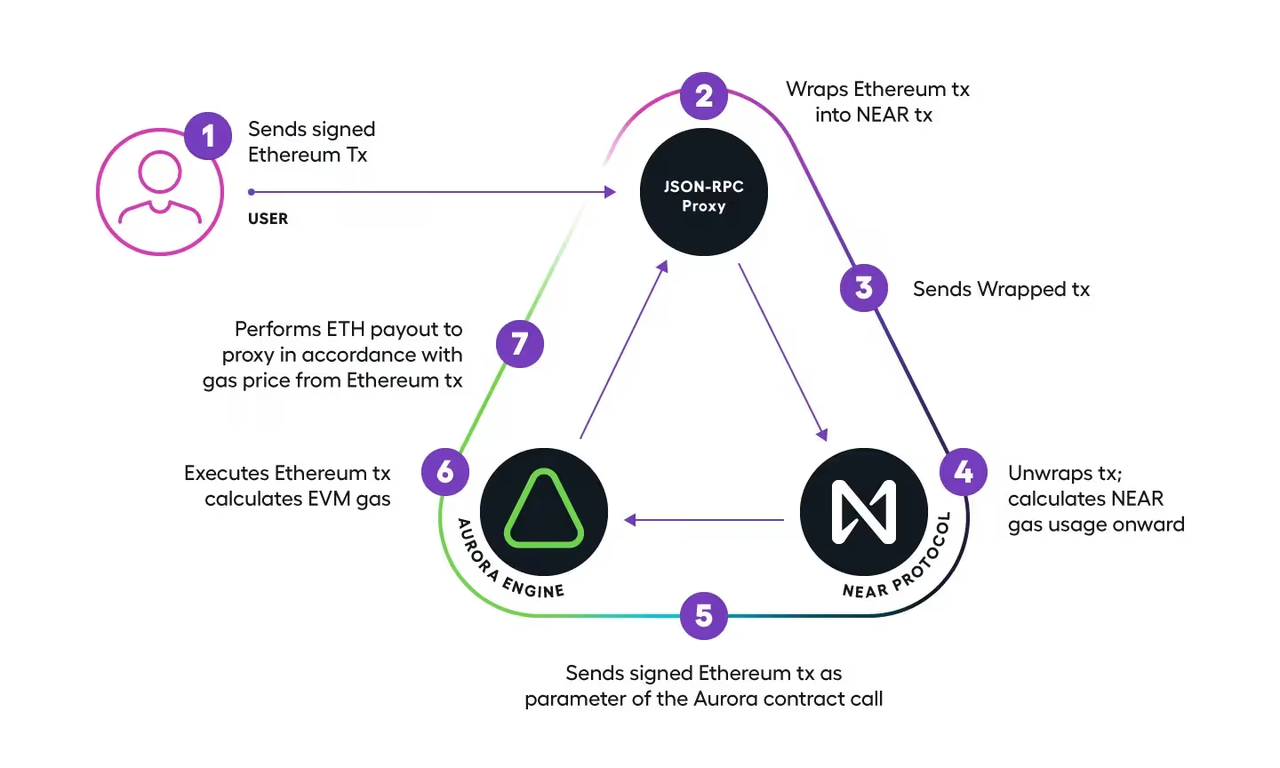
In addition, NEAR has achieved deep integration with the Ethereum Virtual Machine (EVM) ecosystem through the Rainbow Bridge and the fast finality layer developed in cooperation with EigenLayer. NEAR is not trying to “kill Ethereum.” Instead, it has become one of the most indispensable “golden assistants” in Ethereum’s scaling roadmap.
NEAR Token: From Network Fuel to a Value Anchor in the Modular Ecosystem
NEAR is the native token of NEAR Protocol and plays multiple core roles across the network. Similar to ETH on Ethereum, NEAR first serves as the network’s “fuel,” or gas. Users must use NEAR to pay transaction fees when making on-chain transfers or calling smart contracts. To maintain a healthy economic model, NEAR has introduced a deflationary mechanism: up to 70% of the tokens paid in transaction fees are directly burned.
At the same time, NEAR is also tied to network security and governance. Users who hold NEAR can stake their tokens to validator nodes, jointly maintain the security of the sharded network, and earn annual staking rewards. As NEAR DA is adopted by more Ethereum Layer 2 protocols, the value scope of the NEAR token is expanding from a single public blockchain ecosystem to the broader modular blockchain universe. When Layer 2 networks use NEAR DA, the fees paid for data storage ultimately translate into consumption of NEAR network resources. This provides continuous underlying value support for the NEAR token.
How to Buy NEAR Token?
As NEAR expands its market share in Ethereum’s DA layer and continues to gain attention in the AI sector, NEAR has become an increasingly important component in global crypto asset allocation. For retail investors, buying NEAR directly through a secure and reliable centralized exchange is the most convenient way to gain exposure to the NEAR ecosystem.
By purchasing NEAR through a professional cryptocurrency exchange such as Bitunix, users can benefit from a low entry barrier and high-standard security protection. Bitunix supports users in trading NEAR directly with stablecoins such as USDT and provides institutional-grade safeguards such as multi-signature protection, separation of hot and cold wallets, and real-time risk monitoring. After registering an account and completing the required identity verification (KYC), users can buy, deposit, and withdraw NEAR through Bitunix’s clean and intuitive interface. Whether you plan to hold NEAR long term for potential governance participation or interact with the NEAR ecosystem, Bitunix can provide a secure starting point for your crypto journey.
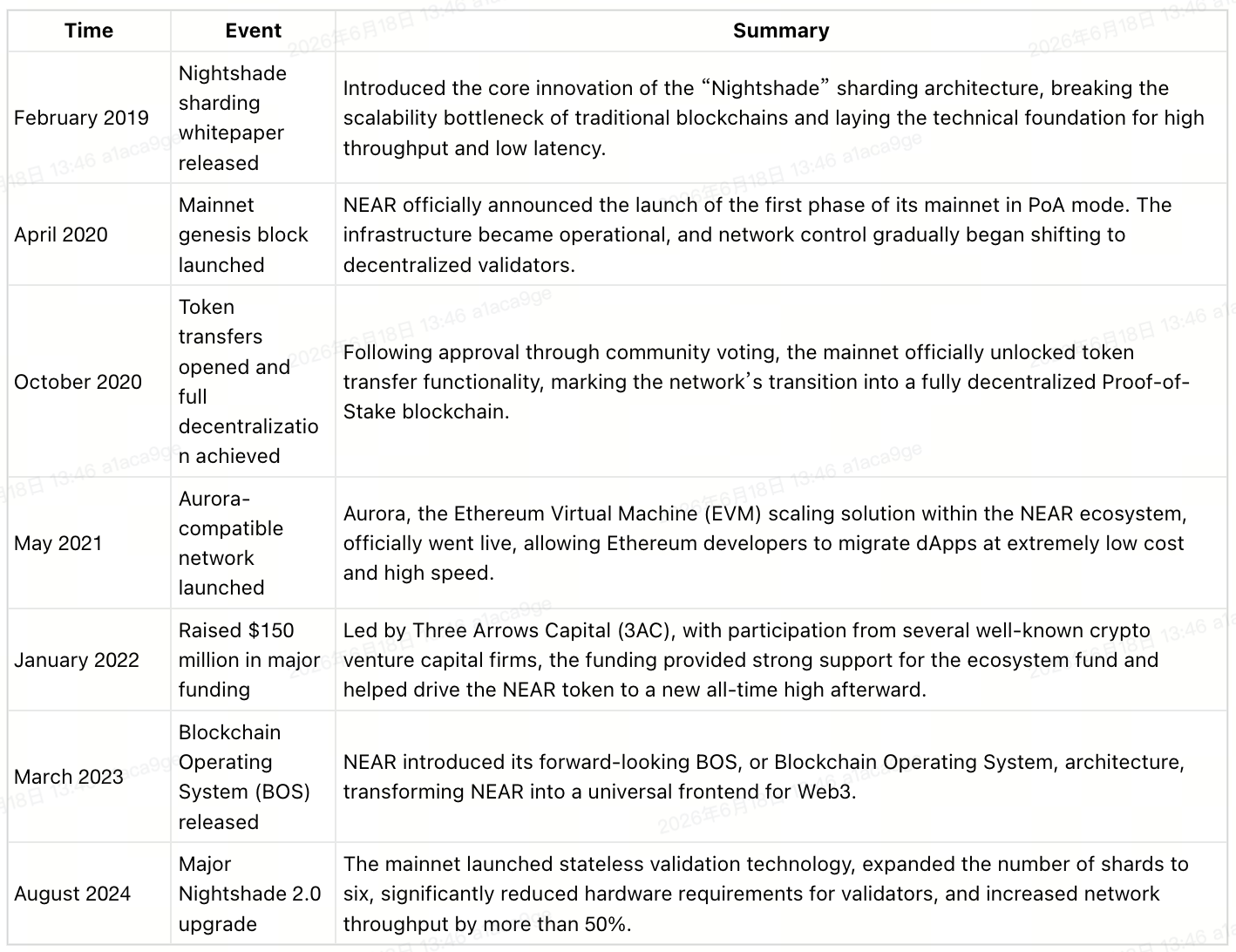
NEAR Major Events Timeline
Disclaimer
This article is not intended to provide:
(i) investment advice or investment recommendations;
(ii) an offer or solicitation to buy, sell, or hold digital assets;
(iii) financial, accounting, legal, or tax advice.
Holding digital assets, including stablecoins and NFTs, involves high risk and may experience significant volatility. You should carefully consider whether trading or holding digital assets is suitable for your financial situation. Please consult your legal, tax, or investment professional regarding your specific circumstances. You are solely responsible for understanding and complying with all applicable local laws and regulations.