Bitunix offers several order types designed to fit different trading strategies and market conditions.
This guide explains how Market Orders, Limit Orders, and Trigger Orders work in futures trading, along with examples to help you understand when and how to use each one effectively.
Order Types
Market Order
Definition
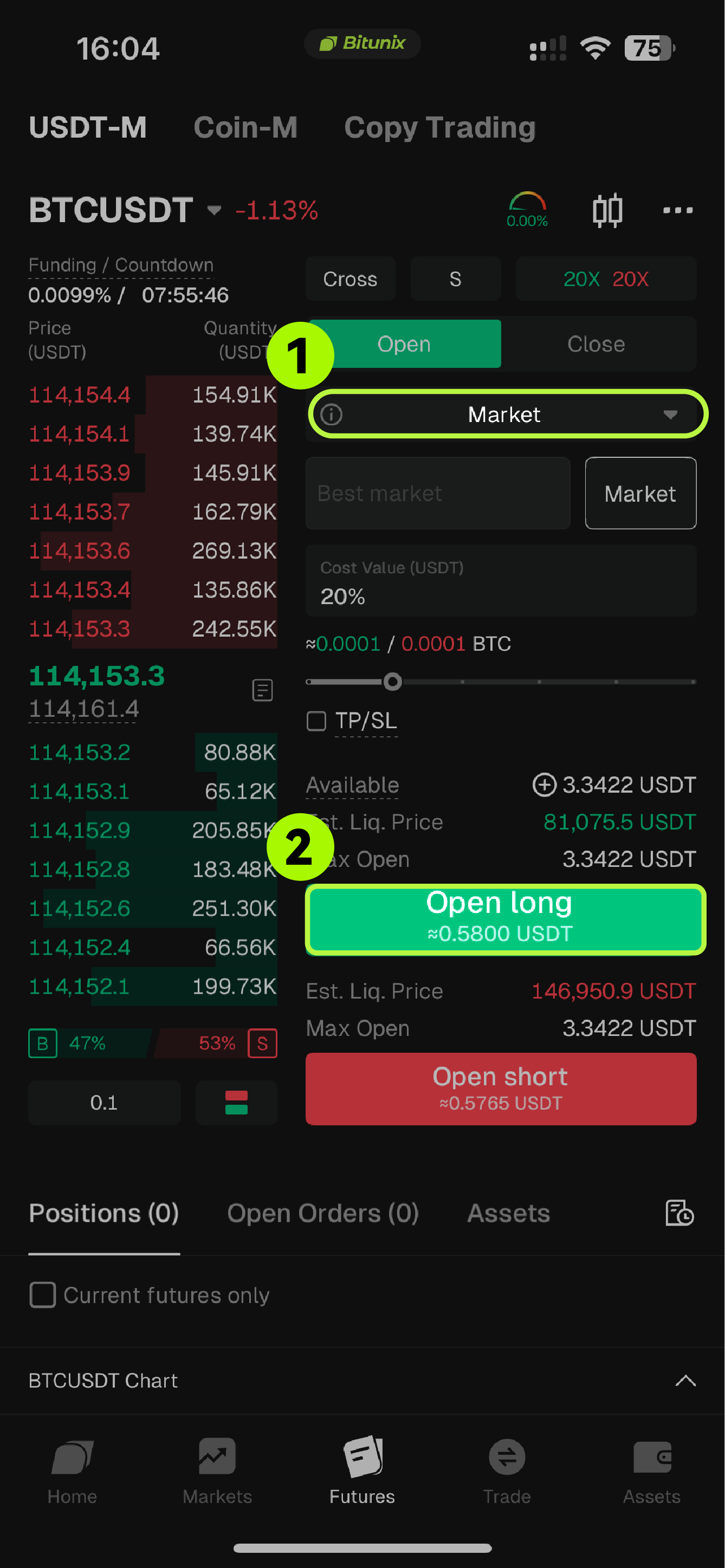
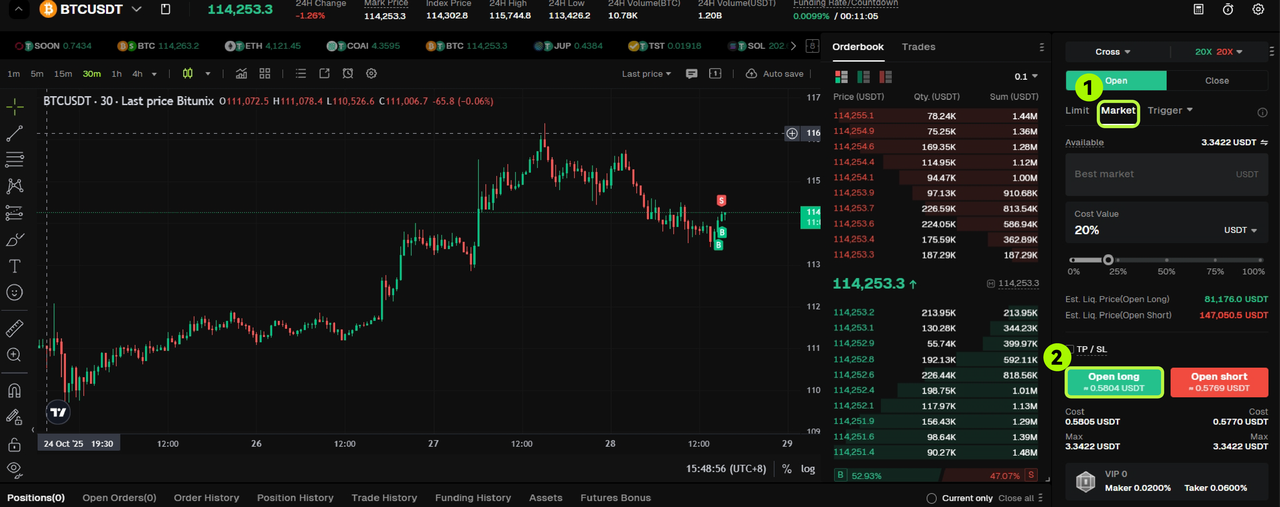
A Market Order executes immediately at the best available market price.
It’s ideal for traders who want to enter or exit a position quickly, but because prices can change rapidly, the final execution price might differ slightly from the price shown when you place the order.
Example
If BTC is trading at 114,200 USDT, and you want to buy it right away, select Market Order.
Your order will fill instantly, but depending on market volatility, the final trade price could be slightly higher or lower than 114,200 USDT.
App:
Website:
Limit Order
Definition
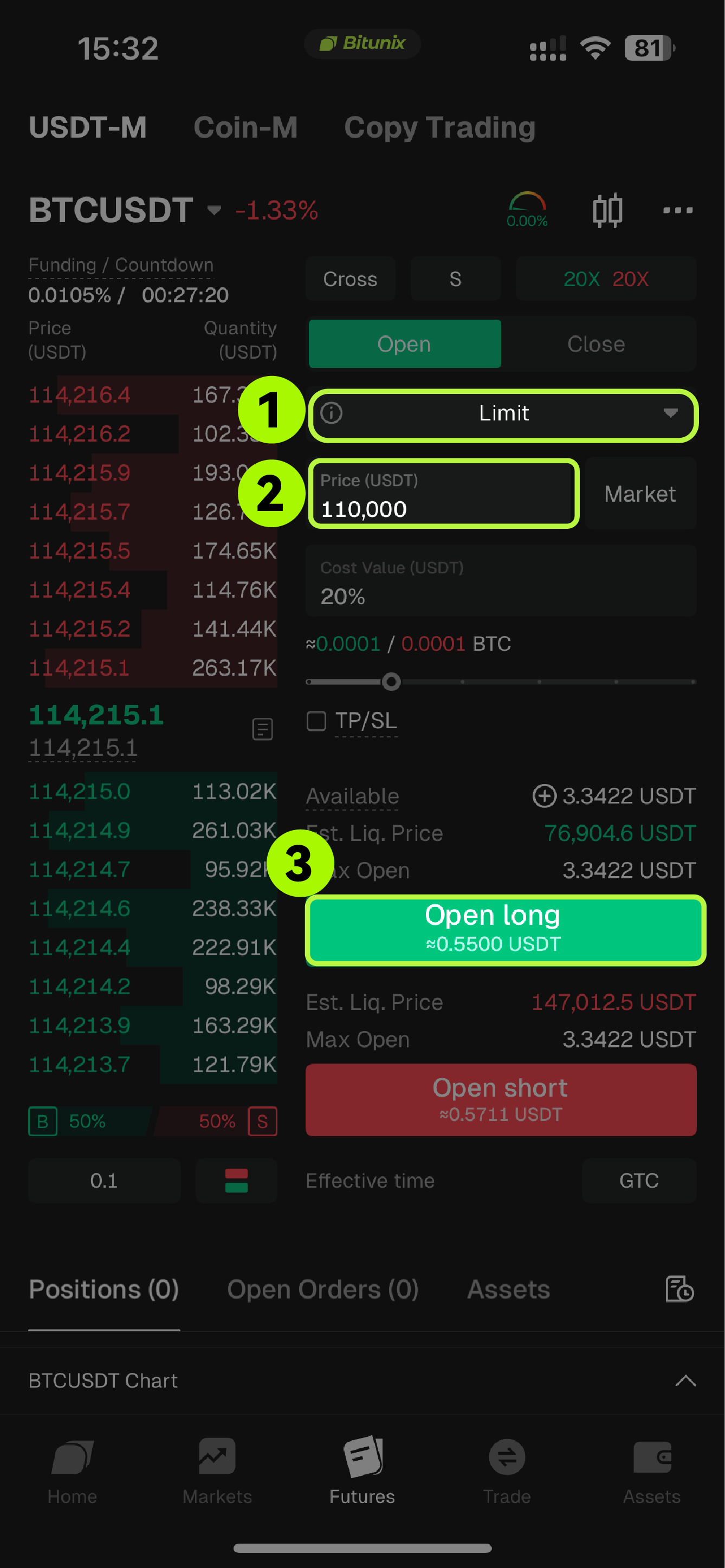
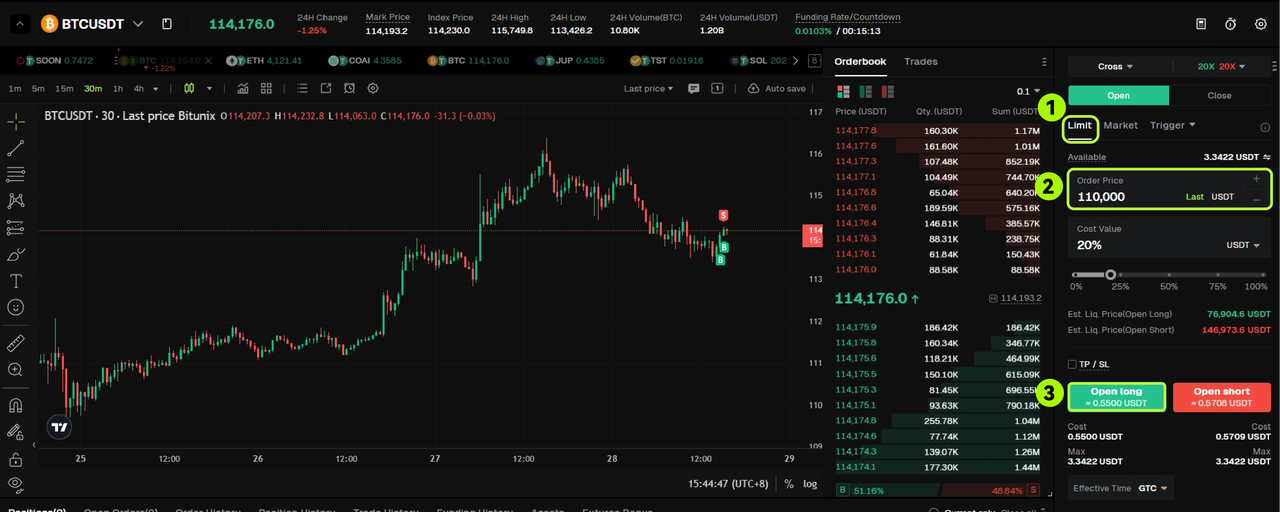
A Limit Order lets you set the exact price where you want to buy or sell.
The order will only execute when the market reaches that price, allowing you to control the cost of entry or exit.
Example
If BTC is priced at 114,200 USDT and you want to buy only if it drops to 110,000 USDT, place a Limit Buy Order at 110,000 USDT.
When the market hits that level or lower, your order will execute automatically.
App:
Website:
Trigger Order
Definition
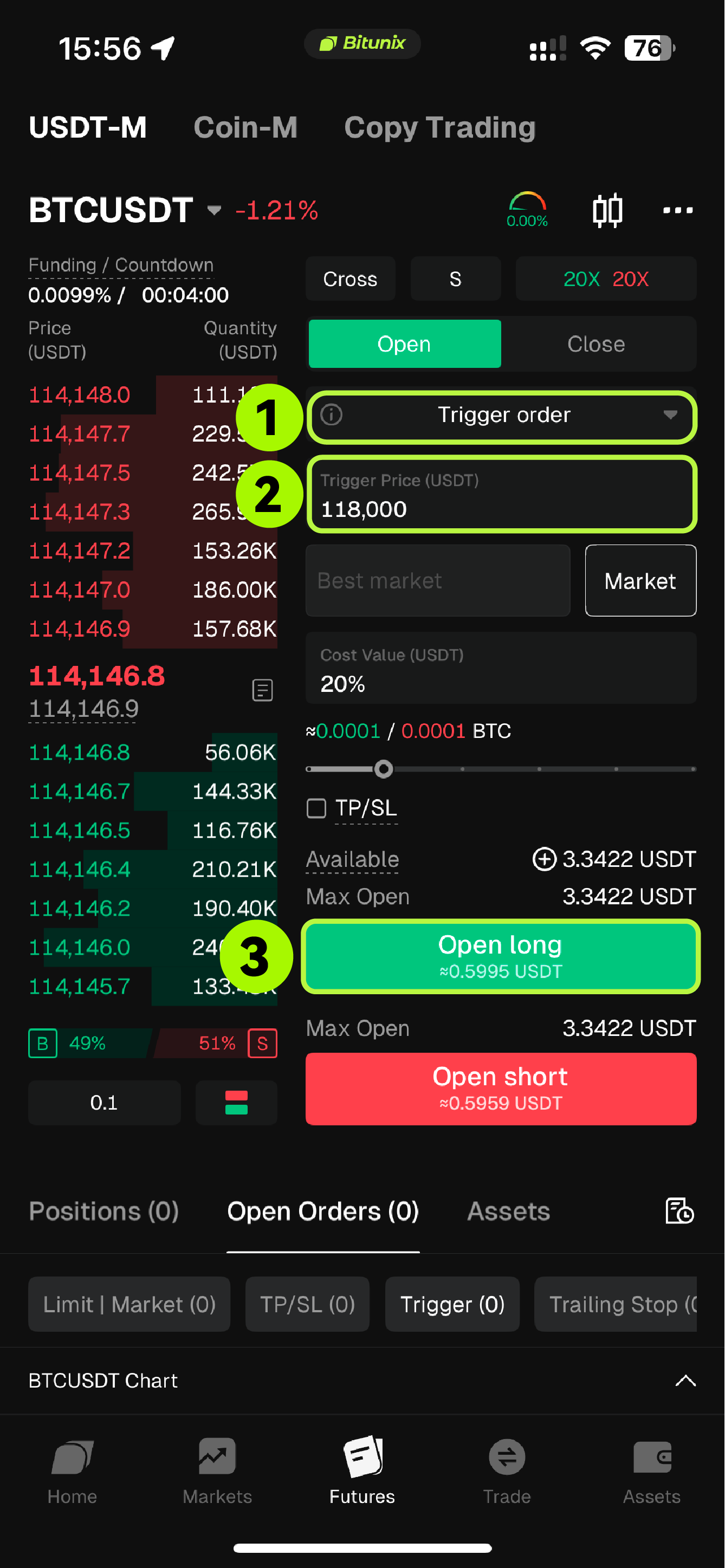
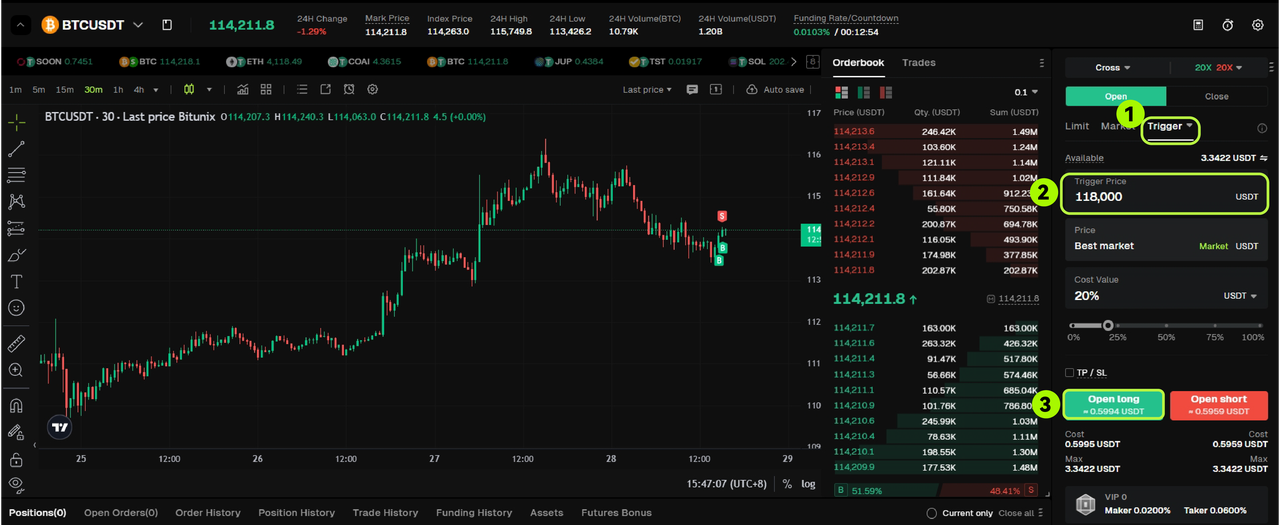
A Trigger Order activates automatically when the market reaches a specified trigger price.
Once triggered, the system places a Market or Limit Order based on the details you set in advance.
This order type helps automate entries or exits without the need to constantly watch the market.
Example
If BTC is trading at 114,200 USDT and you believe it will keep rising after breaking 118,000 USDT, you can place a Trigger Buy Order with a trigger price of 118,000 USDT.
When the market reaches 118,000 USDT, the system will execute your buy order automatically according to your preset conditions.
App:
Website:
Disclaimer
This article does not provide:
(i) investment advice or investment recommendations;
(ii) an offer or solicitation to buy, sell, or hold digital assets;
(iii) financial, accounting, legal, or tax advice.
Digital assets, including stablecoins and NFTs, involve high risk and may fluctuate significantly. Consider whether trading or holding digital assets is appropriate for you given your financial situation. Consult a qualified legal, tax, or investment professional when needed. You are responsible for understanding and complying with applicable local laws and regulations.
About Bitunix
Bitunix is a global cryptocurrency derivatives exchange trusted by over 3 million users across more than 100 countries. At Bitunix, we are committed to providing a transparent, compliant, and secure trading environment for every user. Our platform features a fast registration process and a user-friendly verification system supported by mandatory KYC to ensure safety and compliance. With global standards of protection through Proof of Reserves (POR) and the Bitunix Care Fund, we prioritize user trust and fund security. The K-Line Ultra chart system delivers a seamless trading experience for both beginners and advanced traders, while leverage of up to 200x and deep liquidity make Bitunix one of the most dynamic platforms in the market.
Bitunix Global Accounts
X | Telegram Announcements | Telegram Global | CoinMarketCap | Instagram | Facebook | LinkedIn | Reddit | Medium