
Bitcoin remains the most traded and analyzed digital asset in the world. Its high liquidity, constant volatility, and global adoption make it a prime candidate for artificial intelligence powered trading. Automated bitcoin trading can help shape your financial future by leveraging advanced technology to optimize trading decisions, thanks to the capabilities of modern automated trading platforms. In 2025, neural networks and deep learning have become essential tools for automating Bitcoin strategies.
While theory is important, real world case studies provide the clearest picture of how automated Bitcoin trading works in practice. By examining how traders use AI bots, neural networks, and machine learning models to manage Bitcoin trades, we can better understand both the opportunities and the risks. Traders can also create custom bots or strategies using neural networks to tailor their approach to specific market conditions. This article explores several case studies that highlight how automated Bitcoin trading with neural networks has been applied successfully, what lessons were learned, and how traders can use these insights to improve their own strategies. We will also briefly describe how to automate crypto trading using neural networks and AI for more efficient and effective trading, and examine how different platforms and their capabilities are explored in case studies. [ez-toc]Understanding Neural Networks in Bitcoin Trading
 Neural networks are systems inspired by how the human brain processes information. They learn from data, recognizing complex patterns that traditional technical indicators cannot. These neural networks are implemented as specialized software for bitcoin trading. A trading bot powered by neural networks can automate the execution of trading strategies, allowing users to benefit from advanced pattern recognition with minimal manual intervention.
- Input Data: Bitcoin price history, order book depth, funding rates, and even sentiment.
- Hidden Layers: Algorithms that detect relationships between inputs.
- Outputs: Trading signals such as buy, sell, or hold.
Case Study 1: The Scalping Model
 A trader built a neural network bot focused on short term Bitcoin scalping. The bot used one minute candles and combined technical inputs such as RSI and MACD with micro order book analysis. Selecting or designing a scalping trading bot often depends on the trader's skill level.
Some traders also use a grid bot as an alternative strategy to profit from small market fluctuations through automated trading algorithms.
A trader built a neural network bot focused on short term Bitcoin scalping. The bot used one minute candles and combined technical inputs such as RSI and MACD with micro order book analysis. Selecting or designing a scalping trading bot often depends on the trader's skill level.
Some traders also use a grid bot as an alternative strategy to profit from small market fluctuations through automated trading algorithms.
Key Results
- Average trade length: less than five minutes.
- Profitability: 0.4 percent average gain per trade.
- Volume: over 300 trades in two months.
Case Study 2: The Swing Trading Neural Network
 Another trader developed a neural network for swing trading Bitcoin. This model used longer timeframes, from four hour to daily candles, and combined trend indicators with sentiment analysis. The strategy also incorporated take profit levels to secure gains during major moves. The neural network enables users to trade automatically based on its signals, allowing them to start trading without manual intervention.
Key Results
- Held positions for several days to weeks.
- Captured major moves such as Bitcoin’s breakout above 118,000 dollars in 2025.
- Averaged 12 percent monthly returns over six months.
Case Study 3: Machine Learning Portfolio Management
 A group of traders created a portfolio bot that used deep learning to manage Bitcoin alongside Ethereum and stablecoins. The bot managed funds across multiple accounts and assets, ensuring optimal allocation and security. Users can link their exchange accounts to the bot through a secure connection, allowing them to manage all assets from one interface. The bot operates via API connections and does not have direct access to the funds in the exchange account. It rebalanced positions based on momentum and volatility models.
Key Results
- Rebalanced portfolio 10 times in four months.
- Bitcoin exposure was increased during bullish sentiment and reduced during corrections.
- Portfolio returned 28 percent in four months with lower volatility than holding Bitcoin alone.
Case Study 4: The Arbitrage Neural Bot
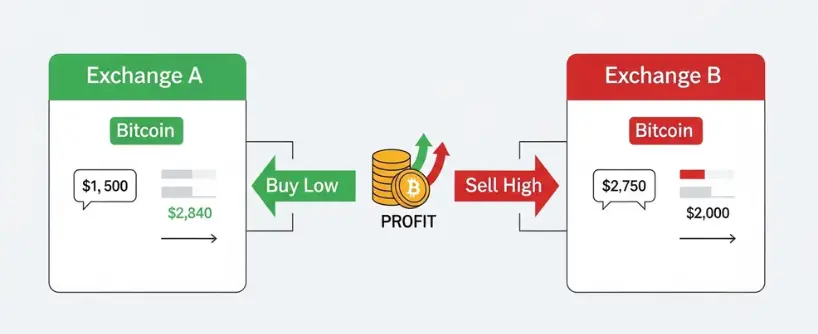 An institutional desk designed a neural network that scanned multiple exchanges for arbitrage opportunities in Bitcoin. To operate efficiently, the bot required secure connections to multiple exchanges, enabling it to identify and execute arbitrage transactions quickly and reliably. The model analyzed price discrepancies, trading fees, and latency. Accurate date and time synchronization was essential for reliable arbitrage execution. This arbitrage neural bot is considered one of the most powerful bots available for automated bitcoin trading.
Key Results
- Executed trades within milliseconds.
- Averaged 1 percent daily profit with minimal directional risk.
- Required significant infrastructure, including low latency connections.
Case Study 5: Sentiment Driven Bitcoin Trading
 A final example involved a bot trained to combine social media sentiment with Bitcoin price action. Neural classifiers processed millions of tweets daily, assigning sentiment scores that were fed into the trading model. The increased accuracy of the model gave traders greater confidence in their trading decisions. Users also benefited from the bot's trailing features, which allowed it to automatically follow market trends and optimize trade timing.
Key Results
- Detected positive sentiment surges before Bitcoin rallies.
- Successfully predicted two major upward moves in early 2025.
- Showed that combining sentiment and price signals increased accuracy.
Lessons Learned from Case Studies
- Data Quality Matters Poor data leads to poor signals. Clean, diverse data sources are essential.
- Risk Management Is Crucial Even the best models fail without stop losses and position limits.
- Strategies Must Match Goals Scalping, swing trading, and portfolio management require different models.
- Infrastructure Counts High frequency neural bots demand advanced computing power.
- Continuous Learning Is Key Markets change, so models must be retrained with fresh data regularly. It’s also important to optimize models during retraining to improve performance and adapt to new market conditions.
Risks of Automated Bitcoin Trading
 While case studies show success, risks remain.
- Overfitting: A model that works on historical data may fail in live conditions.
- Market Shocks: Unexpected news can override algorithmic predictions.
- Technical Failures: Bots rely on stable connections and accurate feeds.
- Emotional Overreliance: Traders may trust bots too much and neglect oversight.
- Losing Money: Automated trading bots can result in losing money if not properly managed or if market conditions change.
- Hidden Fees: Some trading platforms may have hidden fees that reduce overall profitability; always review fee structures carefully.