Cryptocurrency knowledge starts here
From beginner to advanced, your one-stop source for market analysis, trading strategies, and Web3 news

What Is a Cross-Chain Bridge? A Simple Beginner Guide to Multi-Chain Crypto
Learn what a cross-chain bridge is, how cross-chain bridges work, and how to move assets safely in multi-chain crypto. Step-by-step tutorials, risks, fees, and best practices.

Cross Chain Liquidity Pools Explained
Understand cross chain liquidity pools and how to swap assets across networks. Compare models, fees, settlement time, and security, so you can choose safe and fast routes.
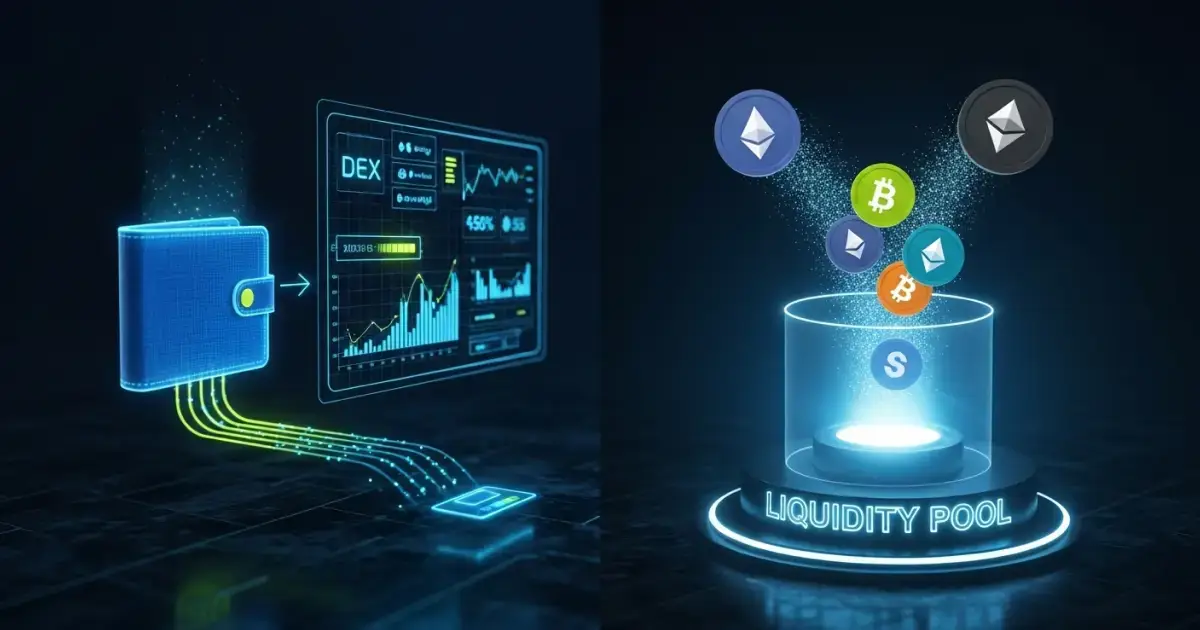
How Do Liquidity Pools Work? Beginner Guide to DeFi Liquidity
Learn how DeFi liquidity pools work in 2025 with this beginner-friendly guide. Discover the basics, risks, benefits, and real-world examples to start providing liquidity safely.

Bitunix Trading Fees Explained: How Much Does It Cost to Trade?
See Bitunix spot, futures, maker, taker and VIP trading fees. Learn how much you pay per trade and how Bitunix compares with Kraken fees.
Bitunix Market Update
Global macro analysis and crypto market insights for traders.
'%3e%3cpath%20d='M5.94835%2019.1026C6.38226%2019.5365%207.08578%2019.5365%207.51969%2019.1026L16.1621%2010.4602L6.73402%201.03213L6.34118%201.42496C5.90727%201.85888%205.90727%202.5624%206.34118%202.99631L13.8051%2010.4602L5.55551%2018.7098L5.94835%2019.1026Z'%20fill='%23919499'%20stroke='%23919499'%20stroke-width='1.25'/%3e%3c/g%3e%3cdefs%3e%3cclipPath%20id='clip0_161801_3374'%3e%3crect%20width='20'%20height='20'%20fill='white'/%3e%3c/clipPath%3e%3c/defs%3e%3c/svg%3e)

Fed Hike Bets Rise as Sticky U.S. Inflation Tests the 5% Treasury Yield Threshold | Bitunix Market Update
August U.S. inflation strengthened enough to reinforce expectations for a Federal Reserve rate hike, while rising energy prices, elevated Treasury yields and a $40 trillion debt burden are adding pressure to the broader market outlook. For crypto and other risk assets, the combination of tighter monetary policy and higher long-term yields could keep liquidity conditions challenging.

Bitunix Crypto Market Report: BTC Bounces 27% in August; ETHA Accumulates Nearly 600K ETH
The August 2026 crypto market experienced a decisive recovery fueled by favorable political momentum and sustained institutional adoption. Bitcoin reclaimed the $80,000 psychological barrier after rallying approximately 27%, triggering more than $2.5 billion in leveraged short positions. Meanwhile, Ethereum followed suit with gains exceeding 20%, driven significantly by aggressive spot ETF accumulation—the most notable being BlackRock’s ETHA absorbing nearly 600,000 ETH. Beyond price action, the month highlighted a shifting landscape in Web3 infrastructure. While traditional DEX volume receded, retail and speculative energy skyrocketed via meme-centric chains like Solana. Furthermore, macro trends show traditional banking accelerating its on-chain entry: 40 Japanese institutions initiated tokenized deposit trials, and major firms like JPMorgan evaluated proprietary stablecoin issuance. With VanEck citing market capitulation signals fading, the report concludes that the pullback may have ended, setting the stage for a broader macro trend reversal.

Bitunix Token Pulse Weekly Report: Ethereum Ecosystem Gains Momentum as NEAR Rallies 33%
The latest Bitunix Token Pulse Weekly Report (Sept 12–18, 2026) highlights the crypto market's remarkable resilience amid a volatile regulatory and macroeconomic landscape: Regulatory Crosscurrents: The U.S. Senate's CLARITY Act stalled with only 49 votes, falling short of the 60-vote threshold, while the Fed delivered a 25 bps rate hike to the 3.75%–4.00% range on September 16. However, major assets quickly shook off both negative catalysts, with the Bitunix Top 300 median return settling at +1.67% and over 65% of tokens posting weekly gains. SEC's Innovation Exemption as the Key Catalyst: On September 17, the SEC rolled out the "Innovation Exemption" for tokenized securities — a conditional framework offering up to 5 years of registration exemptions for eligible platforms trading tokenized NMS stocks via AMMs. This regulatory breakthrough ignited strong momentum across the DeFi and RWA sectors. Ethereum Ecosystem Outperforms: Benefiting directly from the tokenization narrative, Ethereum ecosystem tokens led the rally. ARB, NEAR, and UNI each surged more than 30% over the week, while standalone Layer-1 chains (Aptos, Cosmos, etc.) underperformed amid liquidity rotation. NEAR — The Week's Star Performer (+33.22%): NEAR stood out with a well-defined "stair-step" uptrend structure. Its fundamentals received a powerful boost when a dormant wallet executed a $8.21 million ETH-to-ZEC cross-chain swap via NEAR Intents in early September, generating 16.75 ETH in protocol fees. Meanwhile, Hyperliquid whale address 0x30af built a 10x leveraged long position near $1.95 and now sits on over $7.9 million in unrealized profits. Investors should remain cautious, however, of historical supply concentration around the $16 level. Broader Markets: U.S. equities stayed range-bound with Intel (INTC) extending its rally by another 8%; silver gained 4.51% in 24 hours, while Brent crude pulled back to $98 on easing geopolitical tensions. Next week, markets will watch the final September University of Michigan Consumer Sentiment Index for cues on monetary policy expectations.

Bitunix Blue-Chip Assets Biweekly Report: Fed Rate Hike and CLARITY Act Setback Put BTC’s $75,000 Support to the Test
The latest Bitunix Bi-Weekly Report on Blue-Chip Crypto Assets (Sept 4–17, 2026) analyzes the market's resilience and shifting dynamics amidst dual macro headwinds: the failure of the U.S. CLARITY Act in the Senate and the Federal Reserve's 25 bps interest rate hike (to the 3.75%-4.00% range). BTC's $75K Defense Line: BTC faced a sharp pullback to the $75,000-$76,000 range following regulatory and macro disappointments. Spot BTC ETFs experienced significant net outflows, and Strategy paused its accumulation while some whales took profits. However, on-chain holders still maintain a ~20% profit buffer above average costs, providing solid underlying support. ETH Whale Accumulation: ETH demonstrated relative resilience, oscillating strongly between $2,300 and $2,500. Despite spot ETF outflows, corporate treasury Bitmine aggressively added 55,200 ETH during this period, pushing its holdings close to the 5% total supply milestone. Meanwhile, derivatives whales maintain a highly bullish stance. BNB's Independent Trajectory: BNB exhibited lower volatility and moved largely independently of institutional ETF flows. Its highly concentrated token distribution among Binance-related addresses shields it from traditional corporate treasury trends, keeping its price driven by the Binance ecosystem's internal dynamics.
Market Insights
Decode the crypto market with the Bitunix Blog. Get professional technical analysis, macroeconomic updates, and data-driven trading reports to make smarter investment decisions.

October 2025 Crypto Market Report: Bitcoin Price Analysis, Ethereum Upgrade and Key DeFi Events
Bitunix October 2025 crypto market report covering Bitcoin and Ethereum price action, futures open interest, DeFi TVL, stablecoins, RWAs, and policy updates.

November 2025 Crypto Market Report: Bitcoin Price Analysis, Ethereum Upgrade and Key DeFi Events
November 2025 crypto report: BTC and ETH price action, on-chain metrics, DeFi and DEX trends, regulation updates, security incidents, and December outlook.

January 2026 Crypto Market Report: Bitcoin Price Analysis, Ethereum Trends, and Key On-Chain Data
January 2026 recap: BTC volatility, ETH weakness, DeFi and perp DEX volumes, on-chain fees, security incidents, and key February events to watch.

Canada Approves Solana Spot ETFs With Staking
First Solana ETF with on-chain yield launches in Canada, giving investors a dual benefit of price and passive income.
Bitcoin
Demystify Bitcoin with the Bitunix Blog. Explore beginner-friendly BTC guides, blockchain essentials, halving deep dives, and security tutorials to build your crypto knowledge.

How to Buy Bitcoin in 2026? The Most Completed Guide for Beginners
Learn how to buy Bitcoin safely using cards, bank transfers, Apple Pay, or P2P. Compare top platforms like Bitunix, Coinbase, and Kraken.

Bitcoin Futures Trading: How It Works, Benefits, and Risks
Bitcoin futures trading lets traders gain exposure to Bitcoin without directly owning BTC, while offering tools for hedging, short selling, leverage, and market analysis. This guide explains how Bitcoin futures and perpetual contracts work, compares futures with spot Bitcoin, and covers key metrics such as funding rates, open interest, basis, volume, and liquidations, along with practical risk management considerations.

Can You Cash Out Bitcoin for Real Money? Complete Off-Ramp Guide
Learn how to cash out Bitcoin for real money through exchanges, P2P platforms, crypto cards, Bitcoin ATMs, and OTC desks. This guide compares costs, settlement times, liquidity, fees, and withdrawal methods, while explaining how to transfer BTC to a bank account, manage slippage, prepare for KYC and tax reporting, and choose an off-ramp based on your needs.

Cathie Wood Bitcoin: Price Targets, Holdings & Track Record
Few Wall Street figures are as unabashedly bullish on Bitcoin as Cathie Wood. Here is a closer look at ARK’s latest price targets, their actual Bitcoin holdings, and how her past predictions have performed in reality.
Ethereum
Master Ethereum with the Bitunix Blog. Explore beginner-friendly ETH guides, smart contract mechanics, gas fee explanations, and staking tutorials to build your Web3 knowledge.

Ethereum Future Outlook: What's Next for ETH, Scaling, and Network Upgrades
Explore Ethereum's future through its latest upgrades, Layer-2 scaling strategy, and long-term roadmap. This guide covers Fusaka, Glamsterdam, Hegotá, ETH supply dynamics, staking, and institutional adoption shaping Ethereum's next phase.

Is Ethereum a Good Investment? Valuation Models, Risk Ratio, and Price Targets
Ethereum remains one of the most influential blockchain networks, but its investment case has become more complex as activity expands across Ethereum Layer-2 ecosystems. This article explores whether ETH is still a good investment by analyzing staking yields, fee revenue, valuation models, institutional adoption, key risks, and long-term growth prospects.

Tom Lee Ethereum Prediction: Why He Sees ETH as Wall Street's Next Big Asset
Tom Lee’s Ethereum prediction is built around the idea that ETH could become the settlement layer for tokenized finance, supported by stablecoin growth, institutional adoption, staking ETFs, and corporate Ethereum treasuries. This analysis examines Lee’s ETH price targets, BitMine’s Ethereum strategy, valuation models, market risks, and the key catalysts that could shape Ethereum’s future.

Will Ethereum Go Back Up? Market Analysis & ETH Price Prediction
Ethereum is down sharply in 2026. See why ETH dropped, and the answer for will ethereum go back up, as well as ETH price prediction in 2030.
TradFi
Master traditional finance on the Bitunix Blog. Explore beginner-friendly TradFi guides, macroeconomic concepts, central bank policies, and financial market essentials.

How to Trade Gold Futures on Bitunix: A Beginner's Guide
Learn how gold futures work on Bitunix, including XAUUSDT, perpetual futures, gold price drivers, leverage, margin, funding, and key risks for beginners.

What Is XAUT? How to Trade Tether Gold on Bitunix
XAUT, or Tether Gold, is a tokenized gold asset designed to represent one fine troy ounce of physical gold held in custody. This guide explains how XAUT works, what affects its price, how it differs from physical gold and other gold products, and how beginners can trade XAUT/USDT on Bitunix using spot or futures markets.

How to Trade US Stock Futures on Bitunix with USDT
Learn how to trade US stock futures on Bitunix using USDT. This guide explains stock-linked futures, available pairs, trading steps, leverage, market hours, and key differences from owning real US stocks.

SpaceX Stock: Can You Buy SpaceX Shares Before the IPO?
SpaceX is a private company with no publicly traded shares, but traders can gain indirect exposure to its estimated valuation through SPACEXUSDT perpetual futures on Bitunix, allowing speculation on its pre-IPO price movements without owning equity.
Trading
Learn about the basics of how to buy, sell, and trade cryptocurrencies, Tradfi CFD and more.

Nominal Value: 101 Guide - Overview & Examples
In this article, we will cover how the nominal value in crypto futures contracts can help you compare the underlying value of a token against its trading price.

Long Position in Crypto: Definition and Example
In this article, we will take you through the mechanism of opening a long position. What it means and how you can enter a long position in crypto perp trading.

Proof of Work vs Proof of Stake: What's the Difference?
Two of the most popular consensus mechanisms employed today are Proof of Work (PoW) and Proof of Stake (PoS). Proof of Work vs Proof of Stake.

The Beginner’s Guide to Margin Interest Rates in Crypto
One of the strategies in margin trading is allowing traders to borrow funds to increase their trading positions is referred to as margin interest rates.
Cryptocurrency
Master the digital asset market on the Bitunix Blog. Explore expert cryptocurrency guides, blockchain technology trends, market analysis, and essential web3 insights for all traders.

What Is Core DAO? CORE Token, Tokenomics & Bitcoin DeFi Explained
Core DAO is an EVM-compatible Layer 1 focused on Bitcoin DeFi, combining Satoshi Plus consensus, self-custodial Bitcoin staking, CORE staking, and Dual Staking. This guide explains how Core works, CORE tokenomics, its main use cases, 2026 developments, trading considerations, and key risks.

What Is Billions Network? BILL Token & Tokenomics Explained
Billions Network is a privacy-focused identity and verification project built for humans and AI agents. This guide explains how Billions works, what the BILL token does, its supply and allocation, current use cases, key risks, and what traders should check before trading BILL in 2026.

Pump.fun PUMP Token Guide: How It Works and How to Trade PUMP on Bitunix
Pump.fun is a Solana-based token launch platform that uses bonding curves to simplify memecoin creation and early trading. This guide explains how Pump.fun works, how tokens graduate to PumpSwap, what the PUMP token does, its tokenomics and supply dynamics, key risks, and how PUMP Spot and Futures trading works on Bitunix.

Best Solana Meme Coins 2026: BONK, WIF, POPCAT & Top Tokens to Watch
Discover the best Solana meme coins to watch right now. We dive into BONK, WIF, POPCAT, and other top contenders to see which coins are leading the Solana meme coin frenzy.
Bitunix Features
Welcome to the Bitunix Features category on our official blog. Whether you are a novice trader looking to navigate the platform or a professional seeking to optimize your derivatives strategy, this curated collection of articles, step-by-step tutorials, and technical deep dives has you covered.

Bitunix Earn Makes Idle Crypto Work For You
Learn how Bitunix Earn helps you grow idle BTC, ETH and USDT with our revamped Earn overview, Easy Earn savings products and Dual Investment strategies tailored for different risk levels.

Bitunix Investment Products Explained: Spot, Futures, Dual Investment, Auto-Invest, and Earn Options
Discover Bitunix investment products including spot trading, futures, dual investment, auto-invest, and savings to diversify, earn yield, and manage risk.

Crypto Liquidity, Security, and Execution: Key Insights From a 4th Anniversary AMA
Read key insights from Bitunix’s AMA on crypto liquidity, trading execution, exchange security, KYT monitoring, and custody infrastructure for pro traders.

Bitunix Earns Four International Awards in 2025, Marking Strong Global Momentum
Bitunix earned four international awards in 2025, including Best Futures Exchange and Best Emerging Exchange, reflecting product upgrades, regional expansion, and stronger security initiatives.
DeFi
Explore decentralized finance on the Bitunix Blog. Master DeFi basics, yield farming, liquid staking, and smart contract security through our expert guides and platform tutorials.

Solana Ecosystem 2026: DeFi, DApps, DePIN & Meme Coins
The Solana ecosystem has expanded far beyond decentralized exchanges and meme coins. This 2026 guide breaks down the network's major sectors, including DeFi, trading, wallets, infrastructure, DePIN, NFTs, consumer applications, and meme coins, with selected projects to help readers understand how the ecosystem fits together.

What Is Plume Network? PLUME Token, RWAfi & Tokenomics
Learn what Plume Network is, how PLUME works, why RWAfi matters, Plume tokenomics, key products, risks, and how to trade PLUME on Bitunix.

Cross-Chain Bridges: The Gateway to Multi-Chain DeFi and Its Risks
Explore cross-chain bridges in crypto. Learn how they enable multi-chain DeFi, their security risks, and the future of blockchain interoperability.
How Do Liquidity Pools Work? Beginner Guide to DeFi Liquidity
Learn how DeFi liquidity pools work in 2025 with this beginner-friendly guide. Discover the basics, risks, benefits, and real-world examples to start providing liquidity safely.
Price Prediction
Demystify forecasting with the Bitunix Blog. Explore professional price prediction models, technical indicator guides, fundamental analysis, and essential risk management tools.

Chainlink Price Prediction 2026–2030: LINK Outlook and Key Drivers
Chainlink (LINK) remains one of the most established infrastructure tokens in crypto, with its outlook increasingly tied to CCIP adoption, institutional tokenization, oracle usage, staking, and the network's evolving revenue model. This guide examines LINK price scenarios for 2026–2030, explains what could support or weaken those scenarios, and separates protocol adoption from speculative price targets.

Bitcoin Price Prediction 2026–2030: When Will BTC Reach a New All-Time High?
This Bitcoin price prediction 2026–2030 guide examines BTC's potential price scenarios through the next halving cycle. It combines Bitcoin's historical halving pattern with ETF demand, institutional adoption, liquidity, interest rates, on-chain supply, and market risks to outline high, medium, and low scenarios for 2026 through 2030.

RENDER Price Prediction 2026–2030: Can Render Capture the AI Compute Market?
Render Network has expanded from a decentralized GPU rendering marketplace into a broader compute network targeting AI, machine learning, generative imaging, and enterprise workloads. This RENDER price prediction guide examines the 2026–2030 outlook through network adoption, GPU supply, token economics, AI compute demand, competition, and broader crypto market conditions rather than relying on a single price target.

FIL Price Forecast 2026–2030: Can Filecoin Turn Storage Demand Into Sustainable Value?
Filecoin (FIL) combines decentralized storage, cryptographic proofs, and an onchain economy designed to turn unused storage capacity into a market. Its long-term outlook increasingly depends on paid storage demand, Filecoin Onchain Cloud, FVM adoption, network economics, and competition with centralized and decentralized storage providers. This guide examines the FIL price outlook for 2026–2030 using current network developments, supply dynamics, market conditions, and scenario-based analysis rather than a single price target.
AI
Master artificial intelligence with the Bitunix Blog. Explore beginner-friendly AI guides, algorithmic trading mechanics, machine learning models, and decentralized Web3 innovations.

GM.AI: The Solana AI Crypto on The Block
In this article, we will take you through what GM.AI is and how it is going to be the next big thing in the world of crypto and AI.

What is Based AI and How to Buy & Sell $BASEDAI?
Based AI (BAI) is an innovative cryptocurrency token that integrates artificial intelligence (AI) technology with blockchain to create a unique ecosystem for AI-powered trading and decentralized applications. Launched in 2024, Based AI aims to transform how AI models are owned, developed, and utilized within a decentralized P2P network (peer-to-peer) What makes Based AI ($BASEDAI) Unique? In the realm of new crypto ai tokens erupting every day, Based AI makes the interaction between blockchain networks d...

AI Bitcoin Trading: The Next Edge in Algorithmic Markets
Discover how AI and algorithmic trading are reshaping Bitcoin markets. Learn how smart traders use bitcoin trading bots and AI tools for a market edge.
Copy Trading
Master social trading with the Bitunix Blog. Explore beginner-friendly copy trading guides, trader performance analysis, and essential risk management settings for smart investing.

Copy Trading vs Manual Trading vs Bots: Which Crypto Trading Method Fits You?
Explore the pros and cons of copy trading, bots, and manual strategies in crypto. Find out which method fits your goals and how to get started on Bitunix.

How to Choose the Best Copy Trader: A Complete Guide to Win Rate, Drawdown, and Risk Analysis
Learn how to choose the best crypto copy trader in 2025. Evaluate ROI, drawdown, risk, and trading style to copy trade smarter with Bitunix.
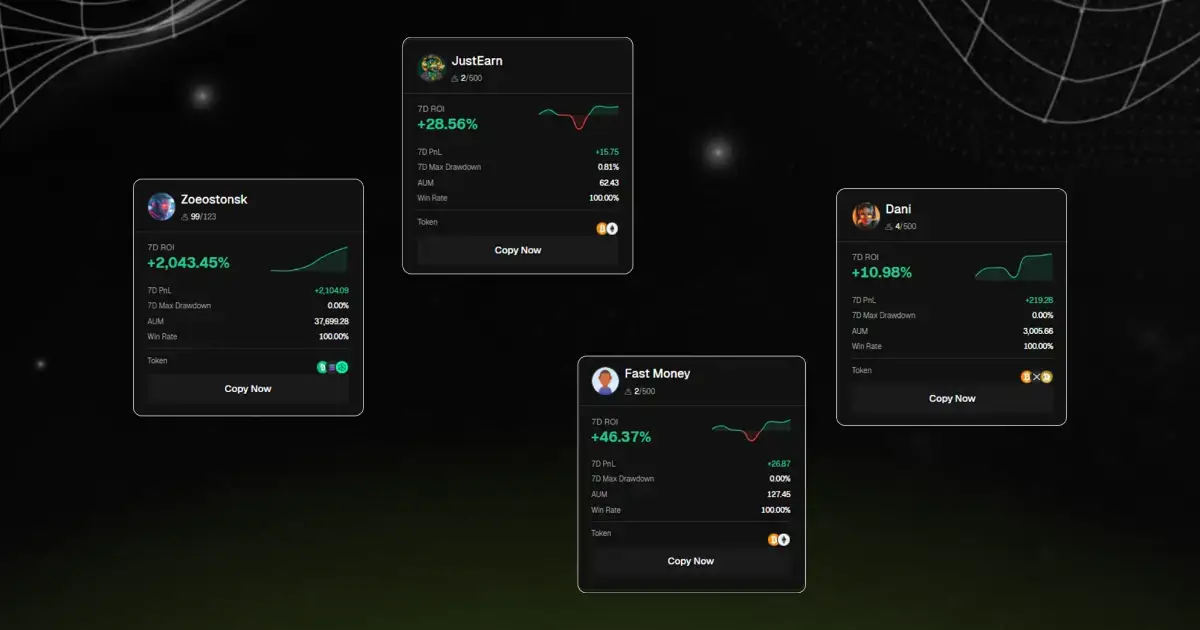
How to Copy Trade Crypto: The Ultimate Beginner's Guide (2026 Edition)
Learn how to copy trade like a pro. Follow expert traders, manage risk, and start smarter trading on Bitunix — perfect for beginners in 2025.

How to Choose the Best Copy Trading Platforms in 2026
Discover the best copy trading platforms in 2025. Compare features, risks, and benefits. Learn why Bitunix stands out for transparency and real-time trading.