1. The Birth of Arbitrum: From a Princeton Lab to the Frontline of Ethereum Scaling
If Ethereum is the “global computer” of the blockchain world, then Arbitrum is the most representative “high-performance external graphics card” for this computer. The story of Arbitrum began at Princeton University. Co-founder Ed Felten, who once served as Deputy U.S. Chief Technology Officer at the White House, began thinking about how to optimize blockchain computing efficiency as early as 2014. In 2018, Ed Felten, together with Steven Goldfeder and Harry Kalodner, co-founded Offchain Labs and officially started the development of Arbitrum.
At that time, Ethereum was deeply trapped in congestion and high transaction fees. Developers realized that relying only on upgrades to the mainnet itself, or Layer 1, would not be enough to support global-scale application demand. Arbitrum’s goal was very clear: to increase transaction processing speed by hundreds of times and reduce costs to one percent of the original level without compromising Ethereum’s security. In August 2021, the Arbitrum One mainnet officially opened to the public. This became a key turning point in the history of Ethereum scaling and laid the foundation for Arbitrum’s current dominant position in the Layer 2 network space.
2. Arbitrum’s Technical Core: Optimistic Rollup
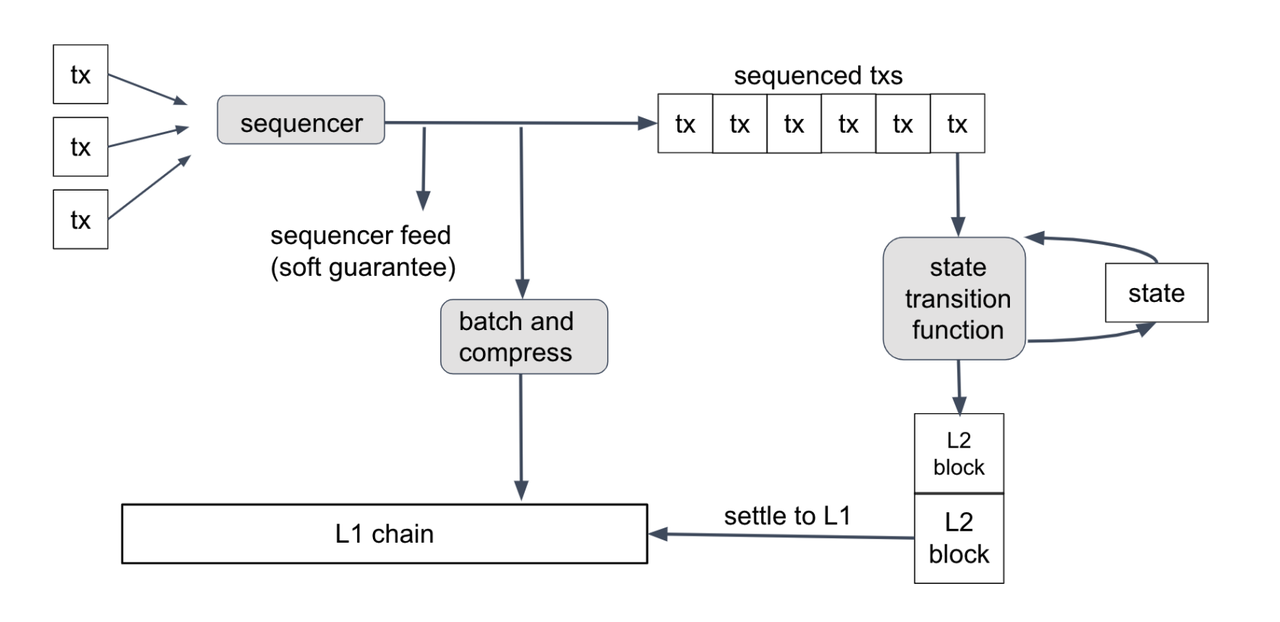
As an Ethereum Layer 2 network, Arbitrum uses Optimistic Rollup as its core technology. We can understand it as a highly trusted off-chain batch processing mechanism. In this process, the Sequencer plays an important role. It acts like an efficient dispatcher, responsible for receiving transactions sent by users and determining the transaction order based on a first-come, first-served principle. These transactions are then processed on the Arbitrum chain, and the Sequencer “rolls up” and compresses the data into a single data package, which is periodically submitted to the Ethereum mainnet for record keeping.
It is called “optimistic” because the system assumes by default that all transaction orders and results submitted by the Sequencer are valid. Therefore, users can receive nearly instant “soft confirmation” feedback, achieving extremely high processing efficiency. To ensure security, Arbitrum introduces a unique fraud proof mechanism. After data is submitted, there is an approximately seven-day challenge period. During this period, if any validator discovers fraudulent data submitted by the Sequencer, they can submit evidence to trigger an interactive dispute resolution mechanism for on-chain arbitration. This design allows Arbitrum to maintain extremely fast operating speed most of the time, while remaining fully protected by the security of the Ethereum mainnet at the underlying logic level.
In addition, Arbitrum has achieved a very high level of compatibility with the Ethereum Virtual Machine, or EVM. This means developers can migrate smart contracts running on the Ethereum mainnet to Arbitrum at almost zero cost. This seamless compatibility has allowed Arbitrum to quickly attract a large number of high-quality projects and developers, building a vast decentralized application ecosystem.
3. ARB Token: From Protocol Governance to Ecosystem Sovereignty
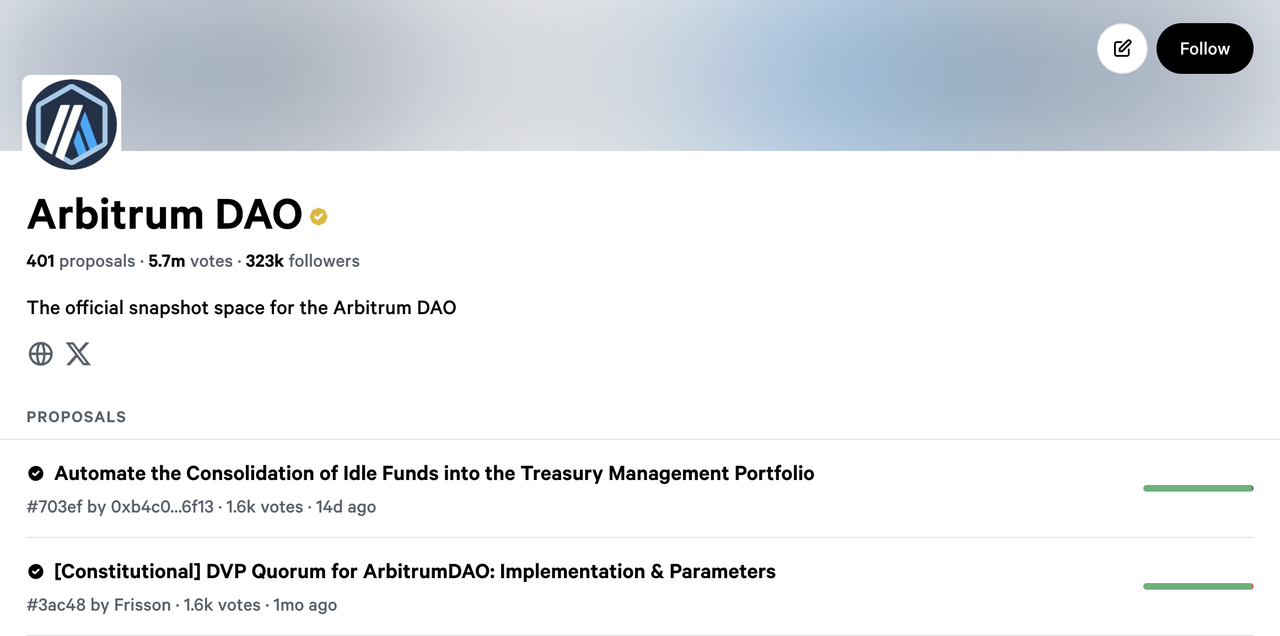
In March 2023, Arbitrum officially issued its native token, ARB, and conducted a large-scale airdrop to early contributors and users. This marked the project’s transition from centralized development to the community-driven Arbitrum DAO governance era. Unlike ETH, which serves as “fuel,” or gas, on Layer 2 networks, ARB mainly functions as a governance rights token within the Arbitrum ecosystem.
Users holding ARB can vote on key protocol parameter upgrades, treasury fund allocation, and the introduction of new features. Although users still pay transaction fees in ETH when trading on the Arbitrum network, which ensures strong alignment with Ethereum’s value system, ARB determines the future development path of this “elevated highway.” As Arbitrum launches new technologies such as Orbit, a one-click chain deployment framework, and Stylus, which supports smart contract development in C++ and Rust, the governance scope of the ARB token continues to expand, making it a core indicator for measuring the value of the entire ecosystem.
4. Arbitrum Ecosystem: A Liquidity Hub for Layer 2 Networks
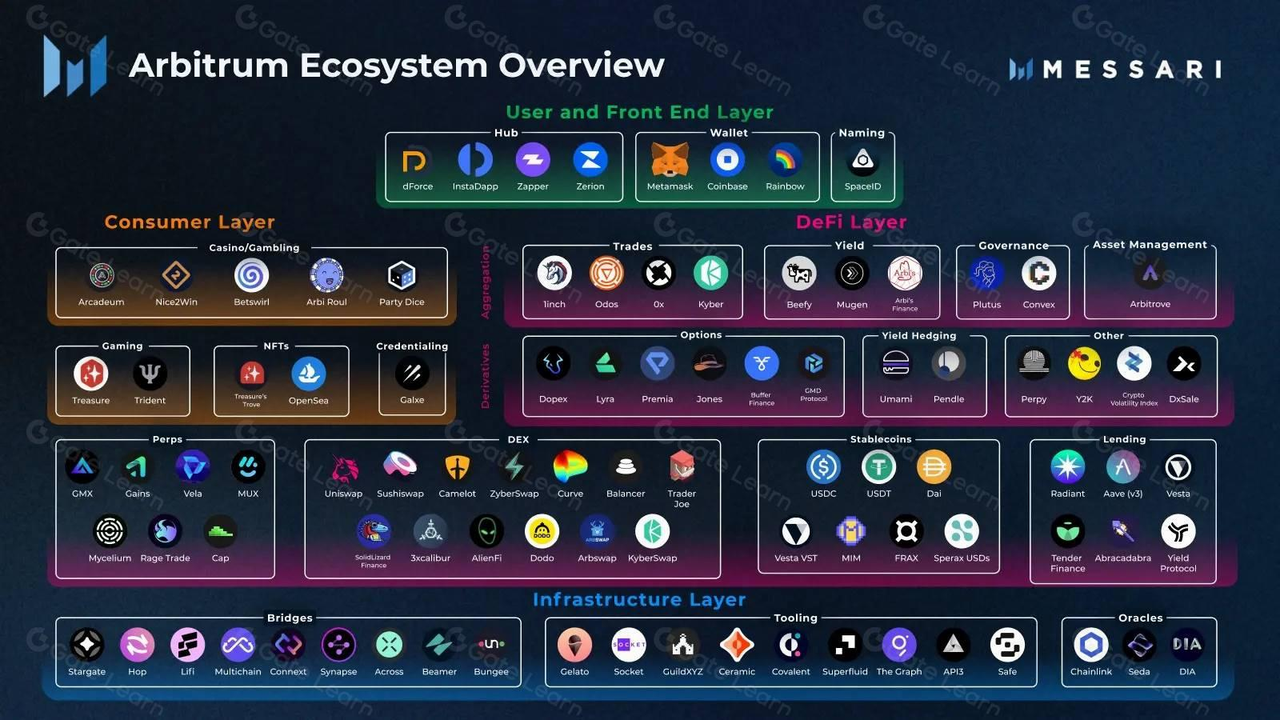
After years of development, Arbitrum has become one of the Layer 2 networks with the highest global trading volume and total value locked, or TVL. It is not merely Ethereum’s shadow, but has developed its own distinctive ecosystem culture. In the DeFi sector, Arbitrum has nurtured leading decentralized derivatives trading platforms such as GMX, attracting billions of dollars in liquidity.
Today, Arbitrum has formed a matrix composed of Arbitrum One, its core ecosystem, Arbitrum Nova, designed for gaming and social applications, and countless application-specific chains built on Orbit technology. Whether users are DeFi participants seeking high yields or game developers pursuing a smooth user experience, they can find a suitable space within this system. The Ethereum Foundation’s three major goals of scaling, user experience, and hardness are vividly reflected in Arbitrum’s continuous iterations.
5. How to Buy ARB
As the Arbitrum ecosystem continues to mature, ARB has become an important component in global investors’ asset allocation. For most users, participating in node governance through technical methods has a relatively high barrier to entry, while directly purchasing ARB through a centralized exchange is the most convenient way to participate in the Arbitrum ecosystem.
By purchasing ARB through a professional cryptocurrency exchange such as Bitunix, you can enjoy an extremely low operational barrier and high-standard security protection. Bitunix supports users in directly trading ARB using stablecoins such as USDT, and provides financial-grade protection measures such as multi-signature security, cold and hot wallet asset separation, and real-time risk monitoring. After registering an account and completing the necessary identity verification, or KYC, you can buy, deposit, and withdraw ARB through Bitunix’s simple and intuitive interface. Whether you intend to hold ARB long term for governance expectations or interact within the Arbitrum ecosystem, choosing Bitunix can provide a secure starting point for your crypto journey.
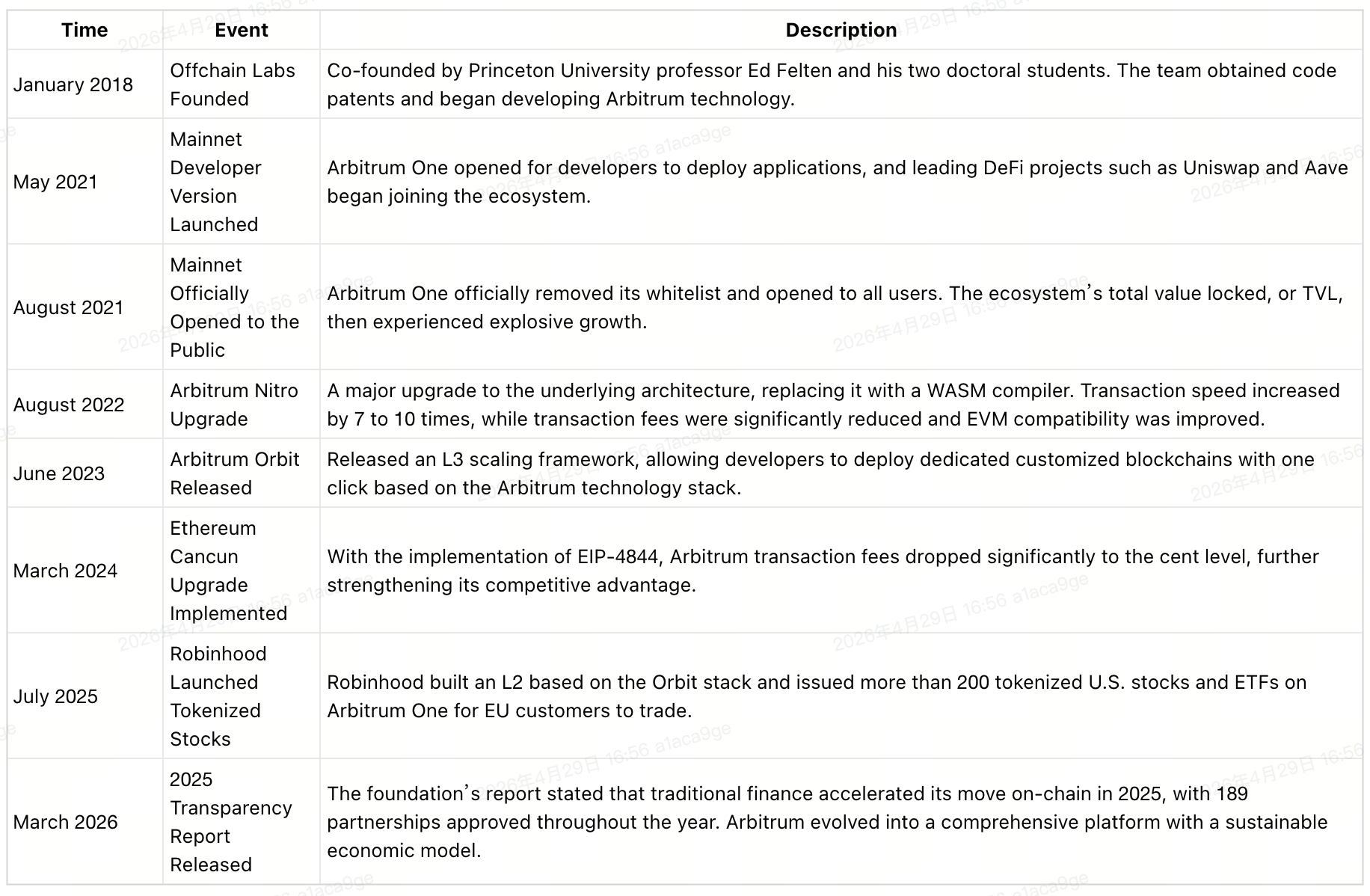
6. Arbitrum Major Events Timeline
Disclaimer
This article is not intended to provide:
(i) investment advice or investment recommendations;
(ii) an offer or solicitation to buy, sell, or hold digital assets; or
(iii) financial, accounting, legal, or tax advice.
Digital assets (including stablecoins and NFTs) involve high risk and may be highly volatile. You should carefully consider whether trading or holding digital assets is suitable for you based on your financial situation. For your specific circumstances, consult your legal, tax, or investment professionals. You are responsible for understanding and complying with all applicable local laws and regulations.
About Bitunix
Bitunix is a global cryptocurrency derivatives exchange trusted by over 3 million users across more than 100 countries. At Bitunix, we are committed to providing a transparent, compliant, and secure trading environment for every user. Our platform features a fast registration process and a user-friendly verification system supported by mandatory KYC to ensure safety and compliance. With global standards of protection through Proof of Reserves (POR) and the Bitunix Care Fund, we prioritize user trust and fund security. The K-Line Ultra chart system delivers a seamless trading experience for both beginners and advanced traders, while leverage of up to 200x and deep liquidity make Bitunix one of the most dynamic platforms in the market.
Bitunix Global Accounts
X | Telegram Announcements | Telegram Global | CoinMarketCap | Instagram | Facebook | LinkedIn | Reddit | Medium