

1. The Birth of Optimism: Originating from Ethereum’s Scaling Vision
If Ethereum is an increasingly crowded metropolis, then Optimism is the city’s most forward-looking “elevated rapid transit system.” The story of Optimism can be traced back to 2019, when it was founded by Jinglan Wang, Karl Floersch, Ben Jones, and others. Unlike projects that simply pursue technical metrics, most of Optimism’s core members came from the early Ethereum community, which meant that the project carried “Ethereum values” from the very beginning.
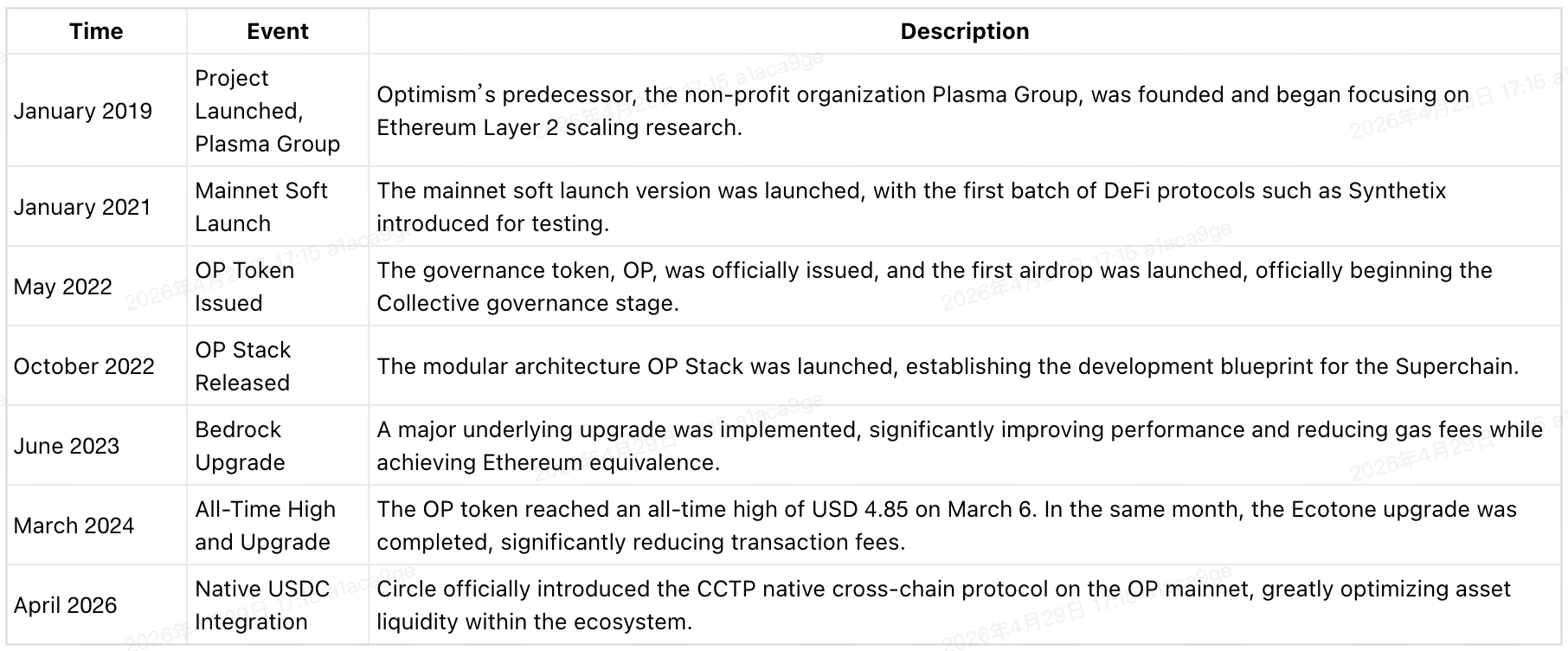
In 2019, the Ethereum mainnet was facing performance bottlenecks due to a surge in transaction volume. The Optimism team realized that blockchain scaling should not merely be a stack of technical parameters, but should also be an extension of social consensus. Their goal was very clear: to build a Layer 2 network fully compatible with Ethereum, allowing developers and users to enjoy the convenience of decentralized finance at extremely low costs while maintaining security. In 2021, the Optimism mainnet officially launched, opening a new era of intense competition in the Layer 2 sector. The OP token, launched in 2022, serves as Optimism’s governance token. OP is not only used for protocol decision-making and incentive allocation, but also serves as a core tool for the operation and value capture of the entire ecosystem.
2. Optimism’s Technical Core: Optimistic Rollup and OP Stack
As a pioneer of Ethereum scaling, Optimism uses Optimistic Rollup as its core technology. Its operating logic can be understood as a “presumption of innocence” trust mechanism. The system assumes by default that all transactions submitted to the Layer 2 network are valid, so there is no need to perform a large amount of computation on-chain immediately. This “optimistic” assumption gives the network extremely high response speed and throughput. To prevent malicious behavior, Optimism introduces a fraud proof mechanism. After the Sequencer compresses transactions and uploads them to the Ethereum mainnet, there is a seven-day challenge period. During this period, any observer who discovers fraudulent data may initiate a challenge. This design allows Optimism to operate efficiently most of the time while relying fully on Ethereum for underlying security.
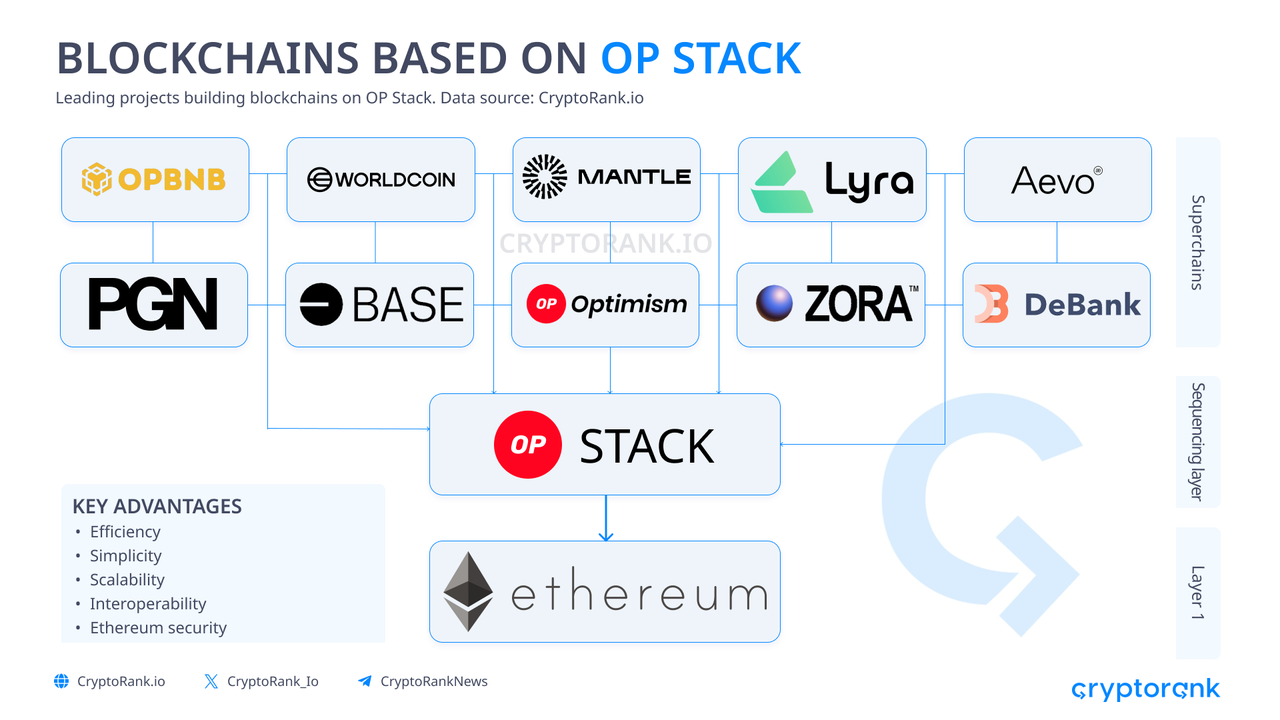
More revolutionary is the OP Stack introduced by Optimism. It is an open-source modular toolkit that allows developers to easily build customized Layer 2 chains, similar to stacking LEGO blocks. This technical openness led to the birth of the “Superchain” vision, where countless Layer 2 chains, such as Base developed by Coinbase, can share security and communication layers, forming an interoperable scaling network.
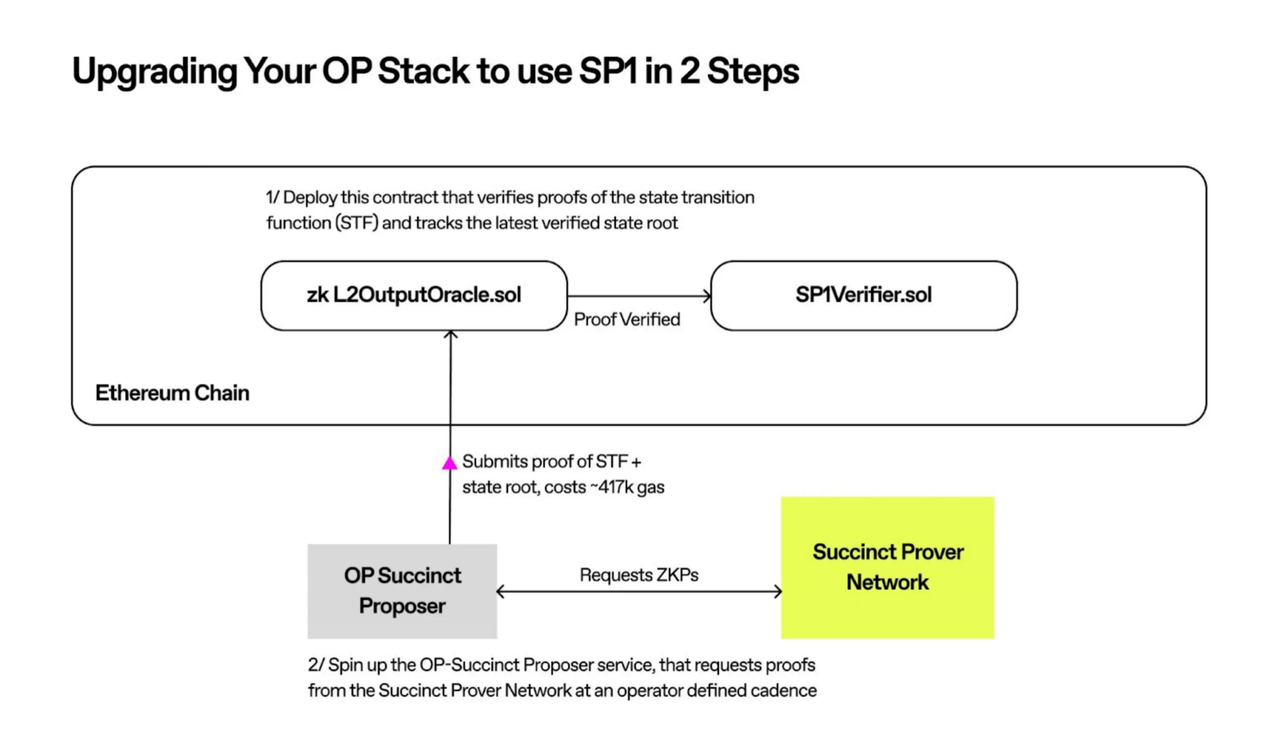
The modular design of OP Stack is not limited to Optimistic Rollup itself. From the beginning, it was designed to support multiple verification mechanisms, including zero-knowledge proofs. This means developers can choose different security verification paths under the same framework according to their needs, achieving the best balance between performance, security, and cost. Based on this design philosophy, teams such as Succinct Labs have further proposed solutions such as OP Succinct, attempting to seamlessly inject ZK technology into OP Stack while retaining the advantages of the original architecture, significantly shortening confirmation times and reducing costs.
3. OP Token: From Governance Rights to “Impact Equals Profit”
In May 2022, Optimism officially issued its native token, OP, and simultaneously launched its innovative governance framework, the Optimism Collective. The OP token is not merely a trading symbol, but a core credential for participating in this decentralized social experiment. Unlike most projects that rely solely on token voting, Optimism adopts a bicameral governance structure. The first is the Token House, composed of OP holders, which is mainly responsible for economic-layer decisions such as protocol upgrades, parameter adjustments, and incentive allocation. The second is the Citizens’ House, which uses a non-transferable identity-bound mechanism, or SBT, and focuses on allocating resources for Retroactive Public Goods Funding. This design separates capital governance from public-interest governance, attempting to strike a balance between efficiency and fairness.
In Optimism’s philosophy, “impact equals profit” forms the core logic of the entire ecosystem. OP holders are not only able to participate in decision-making, but also support a positive feedback ecosystem. Protocol revenue is used to support public goods and developers, encouraging more innovation and applications to emerge. This then attracts more users and capital inflows, ultimately feeding back into the overall network value and token performance. By embedding public goods funding into the protocol’s economic model, Optimism is not only a scaling solution, but also an institutional experiment in building a sustainable digital economy.
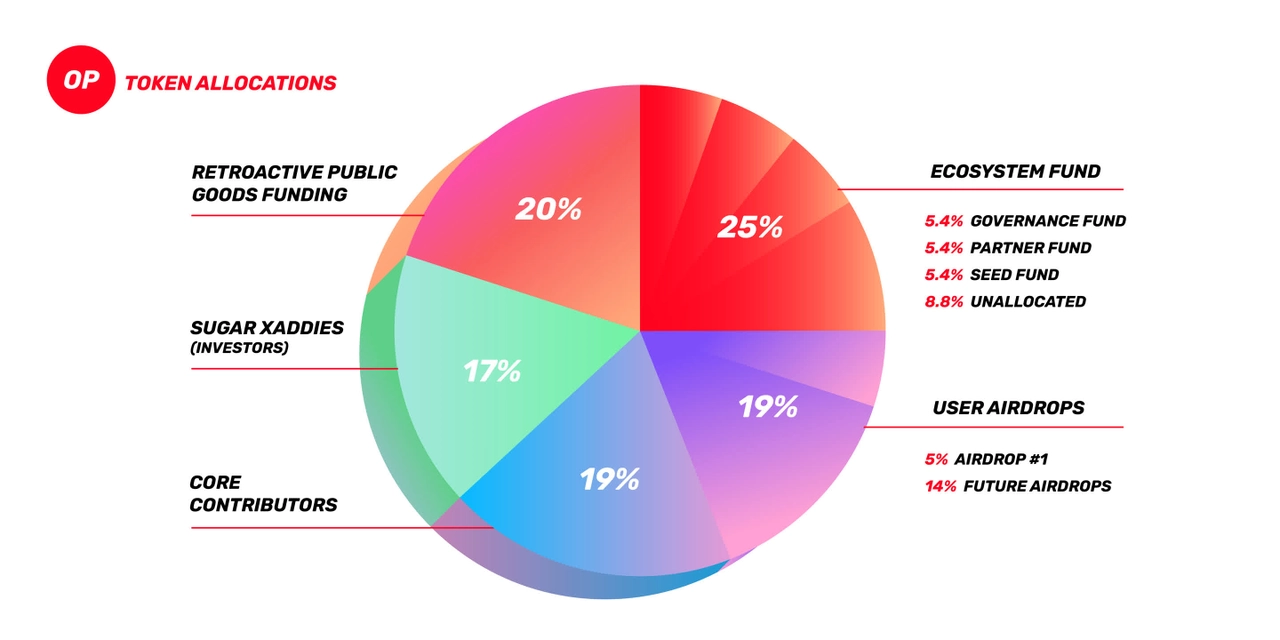
In terms of tokenomics, OP adopts a relatively balanced and ecosystem-oriented distribution structure. Approximately 25% of the tokens are allocated to the ecosystem fund to support developers, infrastructure, and application growth. Another 19% is allocated to user airdrops to incentivize early participants and promote community expansion. Another 19% is allocated to core contributors to reward the long-term contributions of the development and operations teams. Finally, 17% is allocated to investors to support the project’s early development.
4. Optimism Ecosystem: The Intersection of the Superchain and Real-World Applications
After several years of evolution, Optimism has grown from a single scaling chain into a large “Superchain” matrix. With the strong reach of OP Stack, many major projects have chosen to build within the Optimism ecosystem.
At present, the Optimism ecosystem not only includes leading decentralized liquidity layers such as Velodrome, but has also attracted Coinbase to build its L2 network, Base, as well as globally influential projects such as Worldcoin. This means that when you hold OP or operate on the network, you are accessing a comprehensive digital world covering social applications, gaming, finance, and identity verification. Optimism has successfully proven that Layer 2 is not only about cheaper gas fees, but also about building a more scalable and socially responsible decentralized future.
5. How to Buy OP
As the “Superchain” vision gradually takes shape, OP has become one of the most representative assets in the Layer 2 sector. For investors who want exposure to Ethereum scaling opportunities, purchasing directly through a centralized exchange is currently one of the most stable and efficient methods.
By purchasing OP through a professional cryptocurrency exchange such as Bitunix, you can enjoy an extremely low operational barrier and high-standard security protection. Bitunix supports users in directly trading OP using stablecoins such as USDT, and provides financial-grade protection measures such as multi-signature security, cold and hot wallet asset separation, and real-time risk monitoring. After registering an account and completing the necessary identity verification, or KYC, you can buy, deposit, and withdraw OP through Bitunix’s simple and intuitive interface. Whether you intend to hold OP long term for governance expectations or interact within the Optimism ecosystem, choosing Bitunix can provide a secure starting point for your crypto journey.
6. OP Major Events Timeline
Disclaimer
This article is not intended to provide:
(i) investment advice or investment recommendations;
(ii) an offer or solicitation to buy, sell, or hold digital assets;
(iii) financial, accounting, legal, or tax advice.
Digital assets held, including stablecoins and NFTs, involve a high level of risk and may fluctuate significantly in value. You should carefully consider whether trading or holding digital assets is suitable for you based on your financial situation. For your specific circumstances, please consult your legal, tax, investment, or other professional adviser. You are responsible for understanding and complying with all applicable local laws and regulations.
About Bitunix
Bitunix is a global cryptocurrency derivatives exchange trusted by over 5 million users across more than 100 countries. The platform is committed to providing a transparent, compliant, and secure trading environment for every user. Bitunix offers a fast registration process and a user-friendly verification system supported by mandatory KYC to ensure safety and compliance. With global standards of protection through Proof of Reserves (POR) and the Bitunix Care Fund, Bitunix prioritizes user trust and fund security. The K-Line Ultra chart system delivers a seamless trading experience for both beginners and advanced traders, while leverage of up to 200x and deep liquidity make Bitunix one of the most dynamic platforms in the market.
Bitunix Global Accounts
X | Telegram Announcements | Telegram Global | CoinMarketCap | Instagram | Facebook | LinkedIn | Reddit | Medium