
Article Summary
- This article provides a comprehensive guide to understanding and trading the DOGE/USDT pair, focusing on its unique meme-driven market dynamics.
- It breaks down the three primary price drivers for Dogecoin: Social Media Sentiment, Celebrity Endorsements, and Broader Market Trends.
- The guide analyzes the extreme volatility of DOGE, explaining how it differs from utility-driven tokens and how traders can approach it.
- It outlines three practical trading strategies for the DOGE/USDT pair: Momentum Trading, Social Media Sentiment Analysis, and Range Trading.
Dogecoin started as internet humor, then turned into a real market with real liquidity and real emotions. If you’re here, you’re probably watching DOGE because it moves fast, trends harder, and reacts to headlines like it has caffeine in its veins.
On the Bitunix crypto exchange, you’ll see DOGE/USDT listed alongside major pairs for a reason. Traders monitor it because it can trend cleanly when sentiment is strong, and it can chop in a predictable range when the hype cools down.
This guide will demystify the DOGE/USDT price, explain the key factors that move it, and provide you with actionable strategies to trade it effectively on Bitunix.
What Moves the DOGE/USDT Price
1) Social media sentiment and hype cycles
Most meme coins run on attention. DOGE is the blueprint. When Dogecoin starts trending on X, Reddit, or TikTok, the price often follows. That doesn’t mean every mention equals a pump. It’s more like a wave pattern.
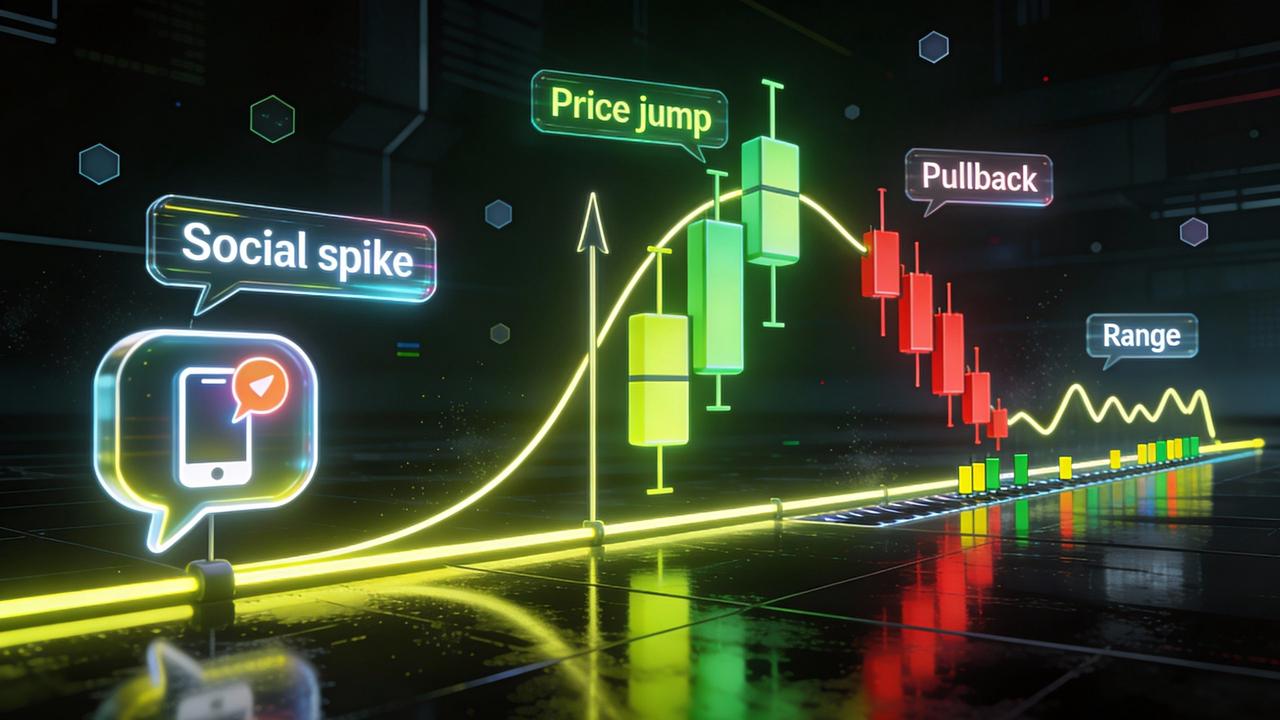
A typical hype cycle looks like this: mentions accelerate, price jumps, late buyers rush in, and then the market cools down. If you’ve ever seen a chart that goes up like an elevator and down like a staircase, you’ve seen the meme cycle in action.
This is why the DOGE/USDT price can move even when nothing fundamental has changed. The market is repricing attention in real time.
2) Celebrity endorsements and mainstream mentions
DOGE has an unusual trigger: famous people can move it. That sounds silly until it’s your P&L.
TradingView described it plainly: “Musk’s tweets famously fueled DOGE’s explosive 2021 rally from mere cents to nearly $0.73.”
Whether you love that fact or hate it, you have to respect it. Celebrity-driven markets can move fast, reverse faster, and punish traders who enter without a stop.
3) Broader market trends and altcoin season
DOGE still lives inside the larger crypto cycle. When Bitcoin is strong and risk appetite is high, speculative money tends to rotate into higher-beta assets, and meme coins often benefit. During risk-off weeks, DOGE can drop even if social chatter stays steady, because traders reduce exposure across the board.
Think of it like weather vs wind. Social media is the wind. Market sentiment is the weather system around it.
Understanding DOGE/USDT volatility: the meme factor
Dogecoin volatility is mostly narrative-driven. Compare that to a utility-driven token, where demand comes from users paying for transactions, staking, or DeFi activity. DOGE can rally because of a meme, a post, or a sudden community push.
That makes moves more extreme and less predictable. Double-digit daily swings happen, and they’re not rare. The flip side is opportunity. Big swings create room for momentum trades, quick mean reversion setups, and range strategies when price calms down.
One more twist: the community can create a psychological floor. Long-time holders sometimes refuse to sell into dips, which can slow down drawdowns and create bouncy support zones. It’s not a guarantee. It’s just a pattern you’ll see more in community coins than in quiet mid-caps.
Three strategies for DOGE/USDT trading on Bitunix
Strategy 1: Momentum trading
Momentum trading is the classic meme coin approach. When DOGE breaks out and volume expands, momentum traders ride the move and exit when the move stalls.
In practice, you’ll usually combine price action with indicators. RSI can help you spot stretched conditions, and volume helps confirm whether the move has real participation or just a quick wick. With meme coins, you don’t need a perfect entry. You need a defined exit.
Strategy 2: Social media sentiment checks
This doesn’t have to be fancy. You can literally watch whether DOGE is trending, whether major accounts are posting, and whether engagement is accelerating.
The key is timing. Social spikes tend to matter most at the start of a move. Late-cycle hype often marks the top. If the timeline is “everyone is talking about it again,” you may be late. If the timeline is “it’s starting to show up everywhere,” you may be early.
This is also where you keep your plan tight. Sentiment can flip in minutes.
Strategy 3: Range trading when the hype fades
After a large move, DOGE often cools off and trades sideways. That’s range territory. You mark support and resistance, and you trade the bounces instead of chasing breakouts that never follow through.
Range trading works best when you accept boredom. If you need constant action, DOGE will tempt you into bad entries. Don’t let it.
Why trade DOGE/USDT on Bitunix
DOGE is fast, so execution matters. When price moves quickly, you want an interface that lets you place and manage orders without friction. If you’re trading spot, start with Bitunix's spot trading walkthrough.
DOGE also demands risk controls. Sudden reversals are normal, so using protective orders makes a big difference. If you need a refresher on setting exits, here’s the guide to take-profit and stop-loss orders, also crafted by the Bitunix team.
And if you trade DOGE with leverage, you should understand liquidation mechanics and tiered risk limits before you size up. This is one of those “read it before you need it” pages: liquidation mechanism and tiered risk limit.
Conclusion: Trading the meme with a plan
Trading DOGE/USDT works better when you treat it like what it is: a sentiment asset that can trend hard, reverse fast, and range quietly between bursts of attention. If you track the drivers, respect dogecoin volatility, and use a clear risk framework, you can find real setups instead of random entries.
Open the chart, check the narrative, pick one strategy, and manage the trade as if it can turn on you. Because sometimes it will.
Ready to trade the world’s most famous meme coin? Log in to Bitunix or download the app, monitor the sentiment, and use these strategies to trade DOGE/USDT with a plan.
FAQ
Is Dogecoin a good investment for beginners?
Dogecoin is easy to understand, but it’s not “easy” to trade. Price reacts strongly to hype and headlines, so beginners often buy late and sell after a drop. If you’re new, start small, focus on learning order types, and treat it as a high-volatility asset.
How does Elon Musk affect the price of Dogecoin?
High-profile posts can trigger fast moves because they attract attention and liquidity at the same time. That creates bursts of buying or selling that can overwhelm normal market flow. The impact is real, but the direction and timing are unpredictable.
What are the best social media accounts to follow for Dogecoin news?
Follow official Dogecoin community channels, watch major crypto news accounts, and keep an eye on broader market commentators who can amplify narratives. The goal is not to chase every post, but to spot when attention is accelerating across multiple places.
How do I set a stop-loss when trading DOGE/USDT?
A stop-loss is an exit order that closes your position if the price reaches a level you define. It helps you cap downside when DOGE reverses quickly. Choose the stop level based on structure, like support zones, not on hope.
What is the difference between Dogecoin and Shiba Inu?
Dogecoin is the older meme coin with a long-standing community and a simpler narrative. Shiba Inu is a newer ecosystem-style meme project with more tokens and related products. Both are heavily sentiment-driven, but their catalysts and communities differ.
Can Dogecoin ever reach $1?
Markets can do surprising things, especially in bull cycles. But price targets like $1 depend on demand, liquidity, and market conditions at the time. If you trade with targets, anchor them to chart structure and risk rules, not viral numbers.
What are the trading fees for DOGE/USDT on Bitunix?
Fees depend on your market type and your fee tier. Before high-frequency trading, check the current fee schedule so you’re not surprised by costs that add up over many trades.
Is it better to hold Dogecoin long-term or trade it short-term?
Holding is simpler but exposes you to long drawdowns when sentiment fades. Trading can capture volatility but requires discipline and risk management. Your choice depends on your time horizon and whether you can follow a plan consistently.
How does the supply of Dogecoin affect its price?
Dogecoin has an ongoing issuance schedule, which can create steady sell pressure over time. In strong hype phases, demand can overpower issuance. In quiet markets, supply dynamics matter more.
What is the best time of day to trade DOGE/USDT?
DOGE often moves when overall crypto liquidity is high and when news breaks. Many traders focus on periods when US and EU market hours overlap because volumes tend to be stronger, but the “best” time is when your strategy gets clean signals and tight execution.
Glossary
Trading pair: Two assets quoted against each other, like DOGE priced in USDT.
Stablecoin: A token designed to track a stable value, often the US dollar.
USDT: A widely used USD-pegged stablecoin.
Liquidity: How easily you can buy or sell without moving price too much.
Order book: The list of buy and sell orders waiting to be filled.
Spread: The gap between the best bid and best ask.
Volatility: How fast and how far price moves over time.
Momentum trading: Trading that aims to ride strong moves while they last.
RSI: An indicator that helps spot overbought or oversold conditions.
Support: A price zone where buying tends to appear.
Resistance: A price zone where selling tends to appear.
Stop-loss: An order that closes a position if price hits a defined loss level.
Take-profit: An order that locks gains at a defined target level.
Slippage: The difference between expected price and actual fill price.
Altcoin season: A period when many non-BTC assets outperform due to high risk appetite.
About Bitunix
Bitunix is a global cryptocurrency derivatives exchange trusted by over 3 million users across more than 100 countries. The platform is committed to providing a transparent, compliant, and secure trading environment for every user. Bitunix offers a fast registration process and a user-friendly verification system supported by mandatory KYC to ensure safety and compliance. With global standards of protection through Proof of Reserves (POR) and the Bitunix Care Fund, Bitunix prioritizes user trust and fund security. The K-Line Ultra chart system delivers a seamless trading experience for both beginners and advanced traders, while leverage of up to 200x and deep liquidity make Bitunix one of the most dynamic platforms in the market.
Bitunix Global Accounts
X | Telegram Announcements | Telegram Global | CoinMarketCap | Instagram | Facebook | LinkedIn | Reddit | Medium