1. Litecoin (LTC) Overview
In October 2011, former Google engineer and MIT graduate Charlie Lee published Litecoin’s open source code on GitHub. Litecoin is an optimized fork of Bitcoin, with the core vision of complementing Bitcoin and positioning itself as “Bitcoin is gold, Litecoin is silver.” By adjusting block generation speed and the hashing algorithm, Lee aimed to address Bitcoin’s pain points such as slow confirmations and higher transaction fees, with the goal of creating “peer to peer electronic cash” that is better suited for everyday small value payments.
Since the genesis block was created on October 13, 2011, the Litecoin network has been operating stably for more than 14 years, making it one of the longest lived and most reliable tokens in crypto history. Although it originated from Bitcoin, its independent development path and multiple successful technical innovations have established an unshakable position in decentralized payments.
2. The Core Logic Behind How Litecoin Works
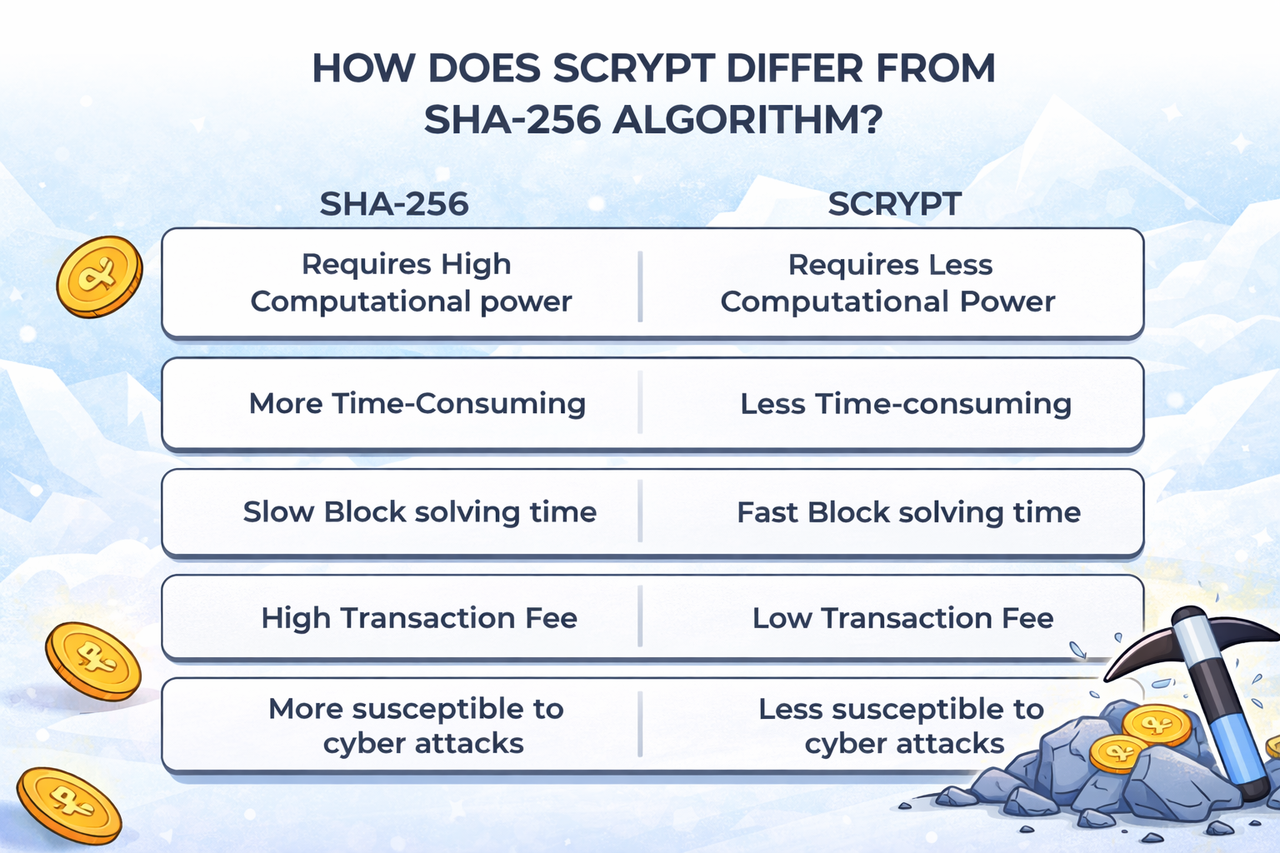
From an intuitive perspective, the biggest difference between Litecoin and Bitcoin is Litecoin’s “lightweight” design philosophy. Bitcoin produces a block every 10 minutes, which is extremely secure but can feel too heavy for everyday small value payments. Litecoin significantly shortened block time to 2.5 minutes, which means that after a user broadcasts a transaction, network confirmations arrive about four times faster than Bitcoin. To support this higher transaction frequency, Litecoin moved away from Bitcoin’s SHA-256 algorithm, which was designed around specialized mining hardware, and adopted the more flexible and more memory dependent Scrypt algorithm.
At a deeper technical level, Scrypt differs fundamentally from SHA-256 in resource usage. SHA-256 is a purely compute intensive algorithm, where miners mainly need very fast hashing computations. Scrypt, by contrast, was designed as a memory hard function. It generates a large amount of random data during computation and requires high speed cache and large memory capacity to access that data. The original intent was ASIC resistance, because integrating large amounts of high speed memory on a chip is far more expensive than integrating compute logic alone, which was meant to reduce the risk of early network monopolization by large mining pools. Although specialized Scrypt ASIC miners eventually emerged as technology advanced, this memory dependent sequential computation model still allows Litecoin to maintain network security while achieving lower computational complexity and better energy efficiency than Bitcoin.
3. How Miners Earn Litecoin
Litecoin also uses Proof of Work (PoW), and miners act as guardians of network security. Because of Scrypt’s characteristics, Litecoin mining hardware evolved from personal computers to specialized devices, and home computers can no longer earn profits in today’s highly competitive hash rate environment. If an individual investor wants to mine Litecoin, they typically need professional ASIC miners such as Bitmain’s Antminer L9 or L7 series.
Because Litecoin and Dogecoin use the same algorithm, major mining pools such as F2Pool and ViaBTC generally support merged mining, meaning miners can earn DOGE rewards in addition to mining LTC, which greatly improves income stability for miners.
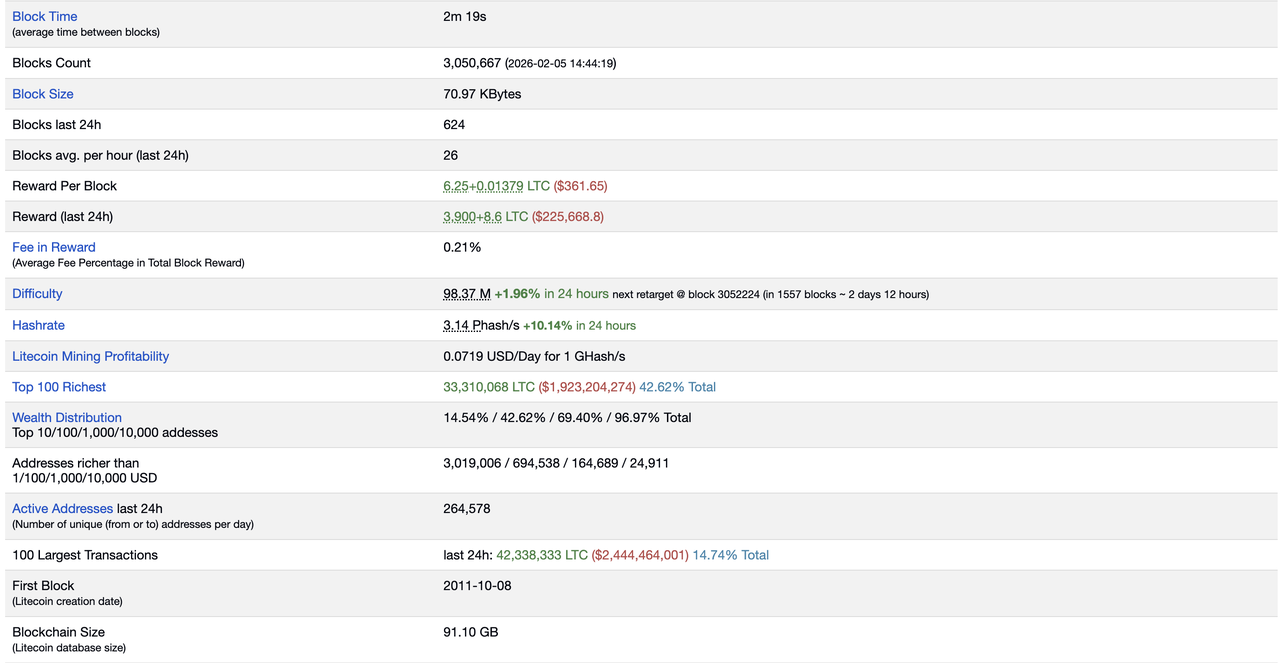
As of January 2026, Litecoin’s network hash rate is about 3.1 PH/s, which is roughly 1/320,000 of Bitcoin’s network hash rate of around 1 ZH/s. This extreme difference intuitively reflects major differences in algorithm complexity, security barriers, and market positioning. Even though Litecoin’s hash rate is far smaller than Bitcoin’s, thanks to Scrypt’s characteristics and merged mining with Dogecoin, Litecoin still maintains very strong network security and a high cost of attack.
4. How Investors Get Litecoin
Investors typically have two common ways to buy Litecoin: purchasing through a crypto exchange, or peer to peer (P2P) trading directly with other users. These two methods each have their own characteristics, and for beginners, it is usually recommended to start with a regulated exchange because the process is simpler and security is generally higher.
A mainstream path today is using a centralized crypto exchange such as Bitunix. These platforms act as trusted intermediaries, supporting users in buying LTC directly with fiat or stablecoins such as USDT, and some platforms even support instant credit card purchases, significantly lowering the entry barrier. Before first use, you need to register an account and complete identity verification (KYC). This process requires submitting personal information such as identity documents and proof of address, mainly to comply with global Anti Money Laundering (AML) and Counter Terrorist Financing regulations and to ensure the legality and compliance of platform fund sources. Bitunix has industry leading compliance and risk control systems and provides security protections through measures such as cold and hot wallet separation, multisignature technology, and real time monitoring mechanisms, which can provide security protection well above the market average. Choosing Bitunix is often a lower effort and more reassuring option for beginners.
Buying via P2P is a method that does not rely on an exchange matching engine and instead completes transactions directly between users. Although P2P trades can be flexible and may be more convenient in some regions, the potential risks are relatively higher, for example seller default and scams involving fake payment receipts. Therefore, before choosing P2P trading, you should carefully review the seller’s reputation and strictly follow the platform’s security recommendations. If you are new to crypto, it is generally recommended to prioritize mature, compliant exchanges with stronger security for your first purchases.
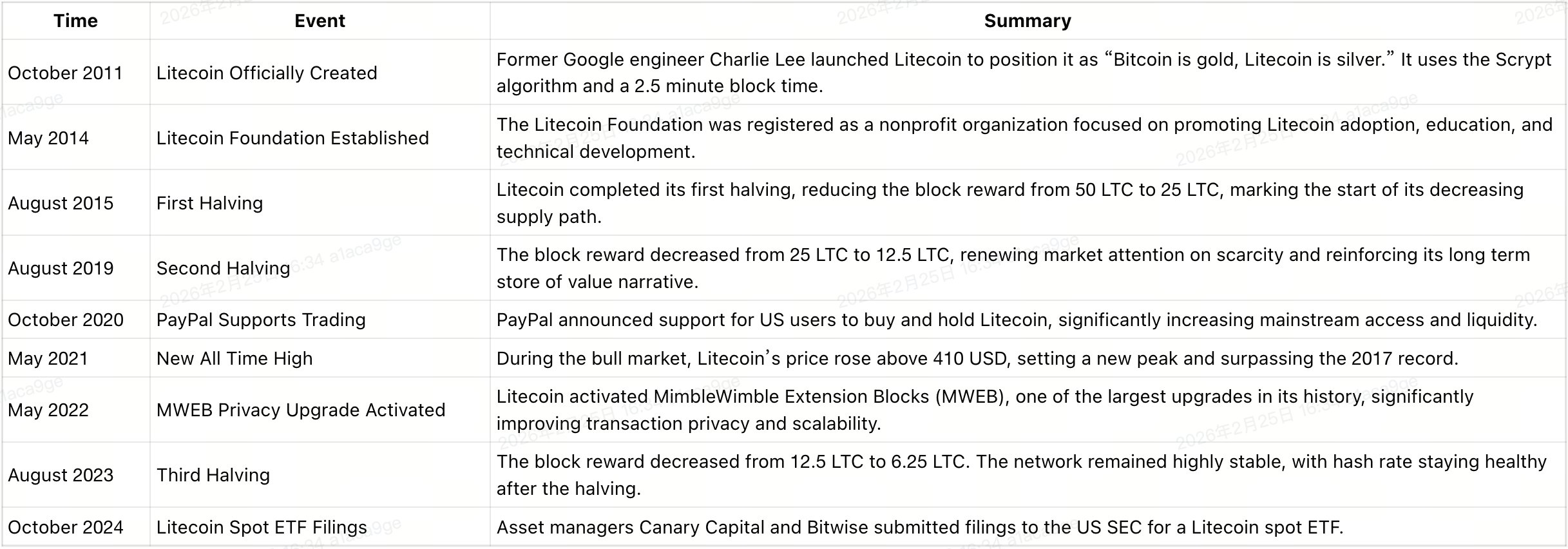
5. Litecoin Major Events Timeline
Disclaimer
This article is not intended to provide: (i) investment advice or investment recommendations; (ii) an offer or solicitation to buy, sell, or hold digital assets; or (iii) financial, accounting, legal, or tax advice. Digital assets (including stablecoins and NFTs) involve high risk and may be highly volatile. You should carefully consider whether trading or holding digital assets is suitable for you based on your financial situation. For your specific circumstances, consult your legal, tax, or investment professionals. You are responsible for understanding and complying with all applicable local laws and regulations.
About Bitunix
Bitunix is a global cryptocurrency derivatives exchange trusted by over 3 million users across more than 100 countries. At Bitunix, we are committed to providing a transparent, compliant, and secure trading environment for every user. Our platform features a fast registration process and a user-friendly verification system supported by mandatory KYC to ensure safety and compliance. With global standards of protection through Proof of Reserves (POR) and the Bitunix Care Fund, we prioritize user trust and fund security. The K-Line Ultra chart system delivers a seamless trading experience for both beginners and advanced traders, while leverage of up to 200x and deep liquidity make Bitunix one of the most dynamic platforms in the market.
Bitunix Global Accounts
X | Telegram Announcements | Telegram Global | CoinMarketCap | Instagram | Facebook | LinkedIn | Reddit | Medium