

1. Aave Overview
AAVE is the governance token of Aave, the decentralized lending protocol. As one of the most established names in DeFi, Aave is not only one of the largest lending protocols by total value locked (TVL), but also one of the go-to platforms for users who want to lend and borrow crypto assets, earn yield, and build more advanced on-chain financial strategies.
Aave’s origins trace back to ETHLend, which was founded in 2017 by Stani Kulechov. At the time, Stani was a law student at the University of Helsinki who recognized the potential of blockchain technology to reshape the lending market. ETHLend initially experimented with a peer-to-peer lending model, where borrowers and lenders had to be matched directly. However, that structure proved inefficient on-chain and made it difficult to concentrate liquidity.
In 2018, the team rebranded the project as Aave, which means “ghost” in Finnish, symbolizing the goal of creating transparent, open, and ever-present financial infrastructure. Aave then shifted its model from peer-to-peer lending to a liquidity pool-based system. That transition unlocked liquidity on a much larger scale, allowing users to supply and borrow assets at any time without waiting for a counterparty.
2. The Lending Mechanism: A Banking Revolution on the Blockchain
In traditional finance, lending depends on bank credit reviews and intermediaries, making the process slow and full of barriers. Aave automates this process through smart contracts, with its system centered on overcollateralization. In Aave’s model, there is no credit score. There are only liquidity pools.
Suppliers:
Users deposit assets into liquidity pools to provide market liquidity. In return, they receive aTokens, which represent both their deposit and the interest earned. For example, depositing ETH gives the user aETH. The balance of these aTokens increases in real time as interest accrues, allowing users to grow their assets automatically.
Borrowers:
Users must first deposit collateral worth more than the amount they want to borrow. For example, if you deposit $1,000 worth of ETH, you may be able to borrow around $750 worth of stablecoins. This design ensures that even during major market volatility, the protocol still has enough assets to protect suppliers and keep the system solvent.
In addition, Aave pioneered flash loans. This is a type of uncollateralized loan, provided that the borrowed amount is repaid within the same blockchain transaction. This innovation brought extremely high capital efficiency to on-chain arbitrage, liquidations, and asset swaps, and it has become one of the most important tools in DeFi.
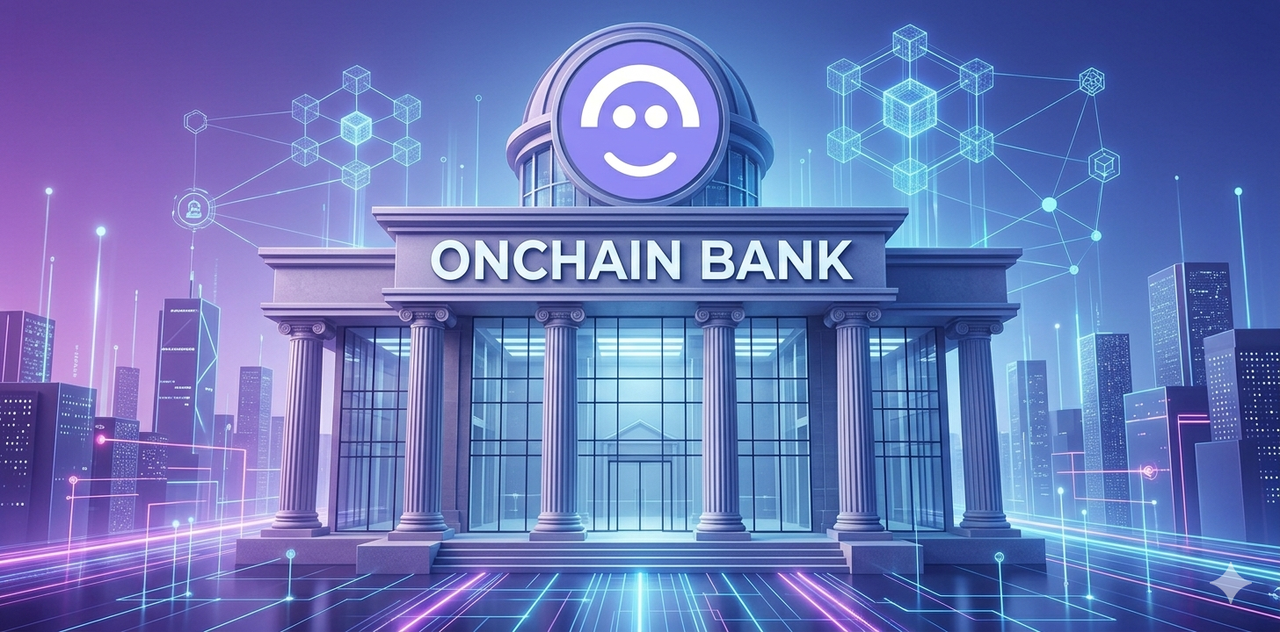
3. Aave’s Ongoing Evolution: From V1 to V4
Aave’s development history is a story of continuous improvements in capital efficiency and protocol security:
- Aave V1 (Foundation Stage)
Launched on Ethereum mainnet in early 2020, V1 put the liquidity pool model into practice and introduced the ability to switch between stable and variable interest rates, allowing users to better manage market volatility.
- Aave V2 (Efficiency Upgrade)
Released at the end of 2020, V2 introduced Collateral Repayment, allowing users to repay debt directly with their collateral. This simplified the user experience and reduced gas costs.
- Aave V3 (Multi-Chain and High Efficiency)
Released in 2022, V3 became the main production version of the protocol. It introduced Efficiency Mode (E-Mode), Isolation Mode, and Portal. E-Mode allows users to borrow with very high capital efficiency between strongly correlated assets, such as different stablecoins. Portal enables seamless liquidity movement across different blockchain networks, strengthening Aave’s position in the multi-chain ecosystem.
- Aave V4 (Modular Architecture and Infrastructure Upgrade)
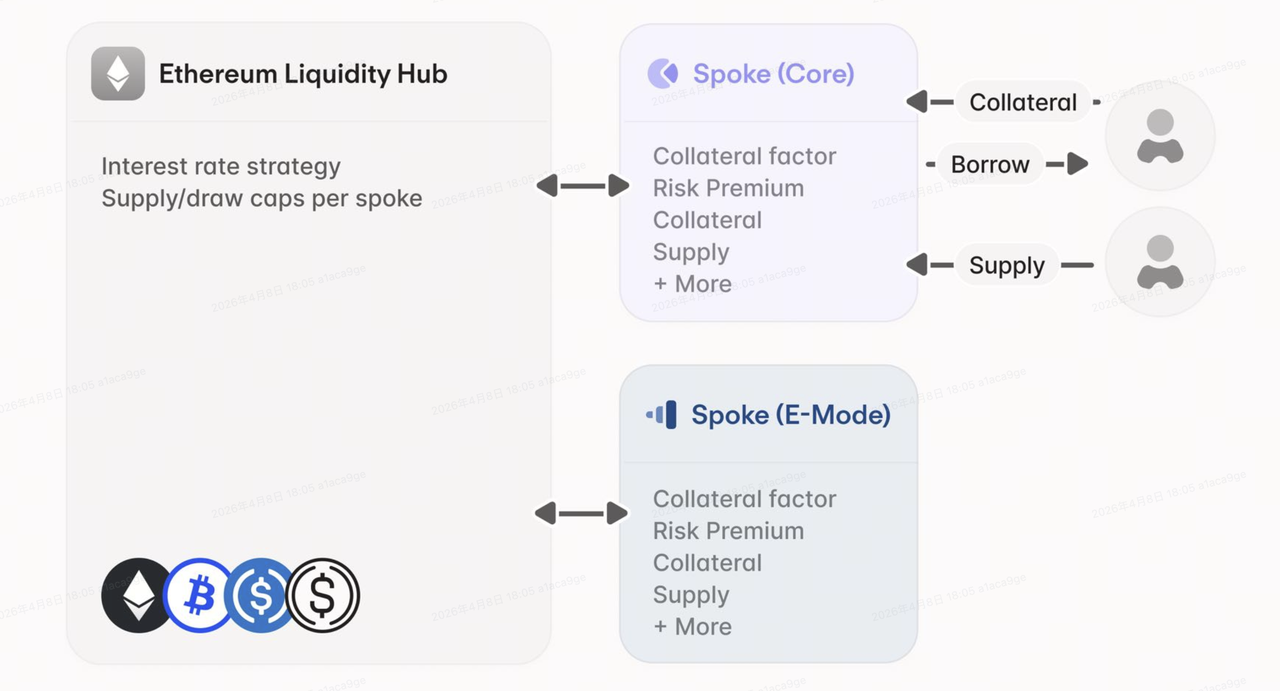
Officially launched on mainnet in March 2026, V4 marked a key turning point as Aave evolved from a standalone lending protocol into modular liquidity infrastructure. Its core innovation is the Unified Liquidity Layer, which breaks down the fragmented pool structure of earlier versions and allows liquidity to be allocated more efficiently across different markets and products, significantly improving both capital efficiency and scalability.
4. AAVE Tokenomics
The origin of the AAVE token can be traced back to the earlier LEND token. After a 100:1 migration, the total supply cap was fixed at 16 million tokens. As the core token of the protocol, AAVE is not designed as a purely speculative asset. Instead, its value is deeply anchored in two pillars: protocol governance and system security. This design ensures that the token has real functionality within the ecosystem while also providing institutional support and capital backing for the long-term stability of the lending market.
From a governance perspective, holding AAVE is equivalent to having decision-making power over this decentralized bank. Token holders can submit proposals and vote on key protocol parameters, including which new assets can be listed on the lending market, how collateral ratios and liquidation thresholds should be adjusted, and how treasury funds should be allocated and used. This highly decentralized governance system allows the protocol to adapt flexibly to market changes and technological progress, helping it remain competitive in DeFi.
To address bad debt risk during extreme market volatility, Aave introduced the Safety Module. Holders can stake AAVE into this module as the protocol’s last line of defense. If a black swan event causes systemic losses, staked tokens may be used to cover the shortfall. In exchange for taking on that risk, stakers receive additional token rewards. This mechanism tightly aligns the interests of token holders with the long-term survival of the protocol, creating a DeFi system with built-in self-repair logic and a strong balance between security and incentives.
5. How to Get AAVE
Users can earn AAVE rewards by supplying assets as collateral within the Aave protocol or by participating in specific liquidity incentive and staking programs. However, on-chain operations involve smart contract interactions and private key management, which require a certain level of technical understanding. Users must also monitor liquidation risk closely.
For most users, buying AAVE through a centralized cryptocurrency exchange such as Bitunix is a simpler option. As a trusted intermediary, the platform supports direct purchases using fiat currency or stablecoins such as USDT, and some platforms also support instant purchases by credit card, significantly lowering the barrier to entry. Before getting started, users need to register an account and complete identity verification, or KYC, to meet global AML and counter-terrorist financing compliance requirements. Bitunix maintains a strong compliance and risk-control system, using cold and hot wallet separation, multi-signature protection, and real-time monitoring to provide users with a level of asset security above the industry average.
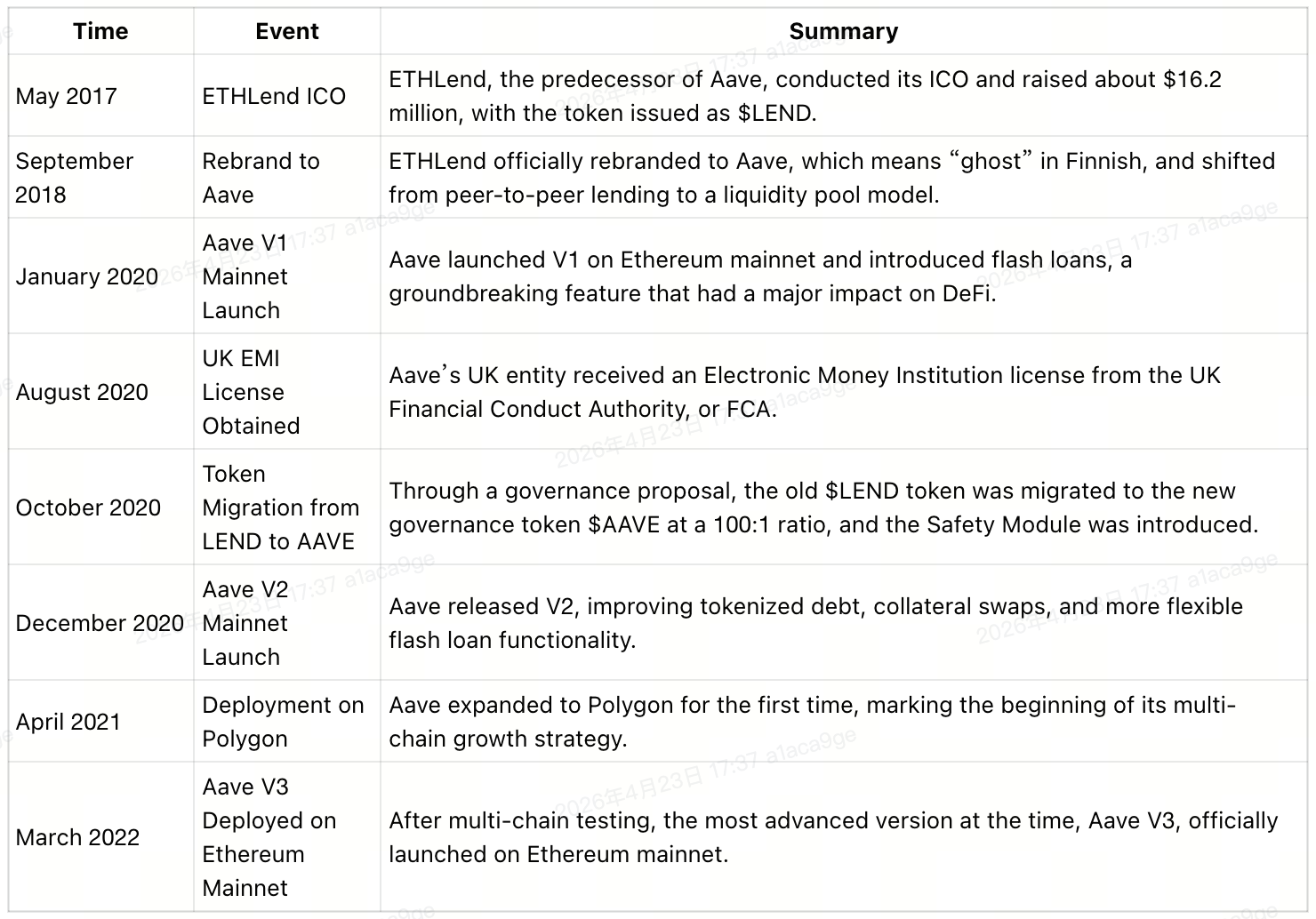
6. Major AAVE Milestones
Disclaimer
This article is not intended to provide: (i) investment advice or investment recommendations; (ii) an offer or solicitation to buy, sell, or hold digital assets; or (iii) financial, accounting, legal, or tax advice. Digital assets (including stablecoins and NFTs) involve high risk and may be highly volatile. You should carefully consider whether trading or holding digital assets is suitable for you based on your financial situation. For your specific circumstances, consult your legal, tax, or investment professionals. You are responsible for understanding and complying with all applicable local laws and regulations.
About Bitunix
Bitunix is a global cryptocurrency derivatives exchange trusted by over 3 million users across more than 100 countries. At Bitunix, we are committed to providing a transparent, compliant, and secure trading environment for every user. Our platform features a fast registration process and a user-friendly verification system supported by mandatory KYC to ensure safety and compliance. With global standards of protection through Proof of Reserves (POR) and the Bitunix Care Fund, we prioritize user trust and fund security. The K-Line Ultra chart system delivers a seamless trading experience for both beginners and advanced traders, while leverage of up to 200x and deep liquidity make Bitunix one of the most dynamic platforms in the market.
Bitunix Global Accounts
X | Telegram Announcements | Telegram Global | CoinMarketCap | Instagram | Facebook | LinkedIn | Reddit | Medium