
Article Summary
- Spot Crypto Trading: You buy the actual cryptocurrency and own it directly. It’s simple, like buying a stock. Your goal is for the price to go up over time. You Own the Asset.
- Futures Trading: You buy a contract to speculate on the price of a cryptocurrency without owning it. This allows you to profit from falling prices (shorting) and to use leverage to amplify your position. You Own a Contract.
- Spot crypto trading is straightforward and generally lower-risk, making it ideal for long-term investing and beginners.
- Futures trading is complex and higher-risk, designed for active, short-term trading and hedging.
- This guide will help you understand the fundamental differences so you can choose the strategy that aligns with your financial goals and risk tolerance.
Spot and futures trading are two distinct ways to approach the crypto market. They may sound similar, but they involve vastly different risks and rewards. Choosing the wrong one can be a costly mistake.
Most people start with a few low-volume, low-risk spot trades but are quickly exposed to the world of futures, which offer higher profit potential but also carry higher risks. It is crucial to understand the spot vs. futures meaning before committing to any of them.
This article provides a clear spot and futures trading comparison. We break down the meaning of each trading practice and compare its pros and cons. In the end, you should have the necessary information to pick the best strategy for your goals when trading on a crypto exchange.
Part 1: Spot Trading - The Investor’s Choice
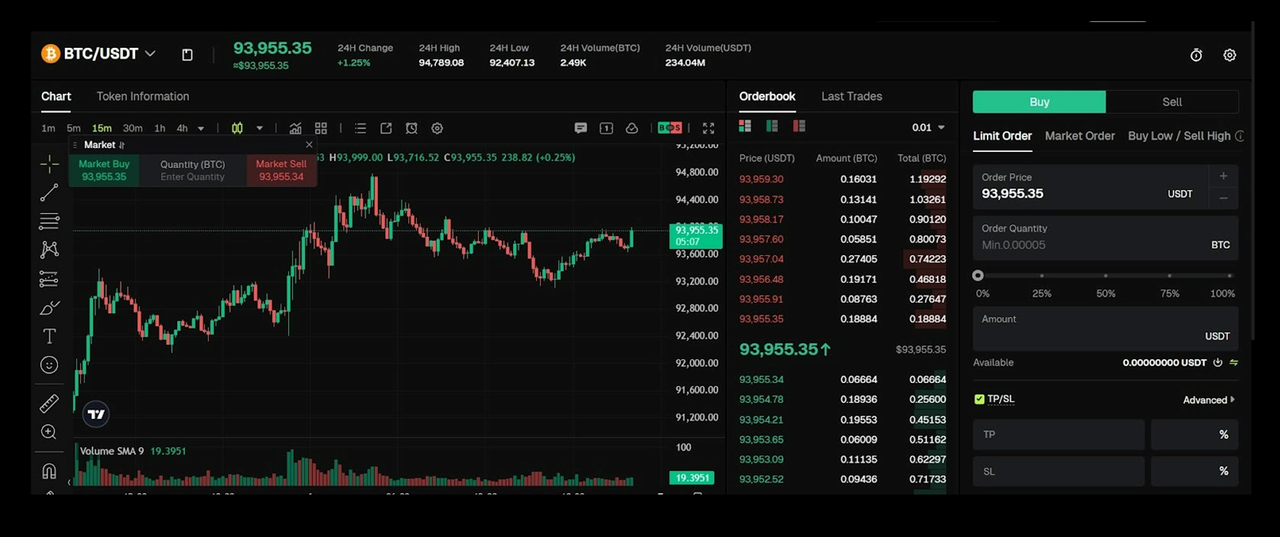
The spot market is a marketplace where cryptocurrencies are bought and sold “on the spot.” Their delivery is immediate, and the current price, also known as the spot price, applies. More importantly, all transactions are recorded on the blockchain, transferring full ownership from the seller to the buyer.
Spot crypto trading is the most straightforward way to buy and sell cryptocurrencies. You can buy and accumulate crypto assets and even sell them for a profit if their price rises. For example, you can buy 1 BTC at $90,000 and sell it when it reaches $100K. The extra $10,000 represents your profit.
This trading method does not involve any leverage, but it may include transaction fees, withdrawal costs, and other charges.
In layman’s terms, spot crypto trading is like buying a bar of gold. You own the physical gold, and you hope its value increases over time. If it does, you can sell it for a profit.
Pros:
- Intuitive and straightforward: Easy for beginners to understand.
- Direct Ownership: You hold the actual asset.
- Lower Risk: You can only lose what you invested. The asset can’t go below zero.
Cons:
- Profit Only When Price Rises: You can’t make money in a bear market (unless you sell).
- Capital Intensive: Your potential profit is directly tied to how much capital you can invest.
Part 2: Futures Trading - The Trader’s Tool
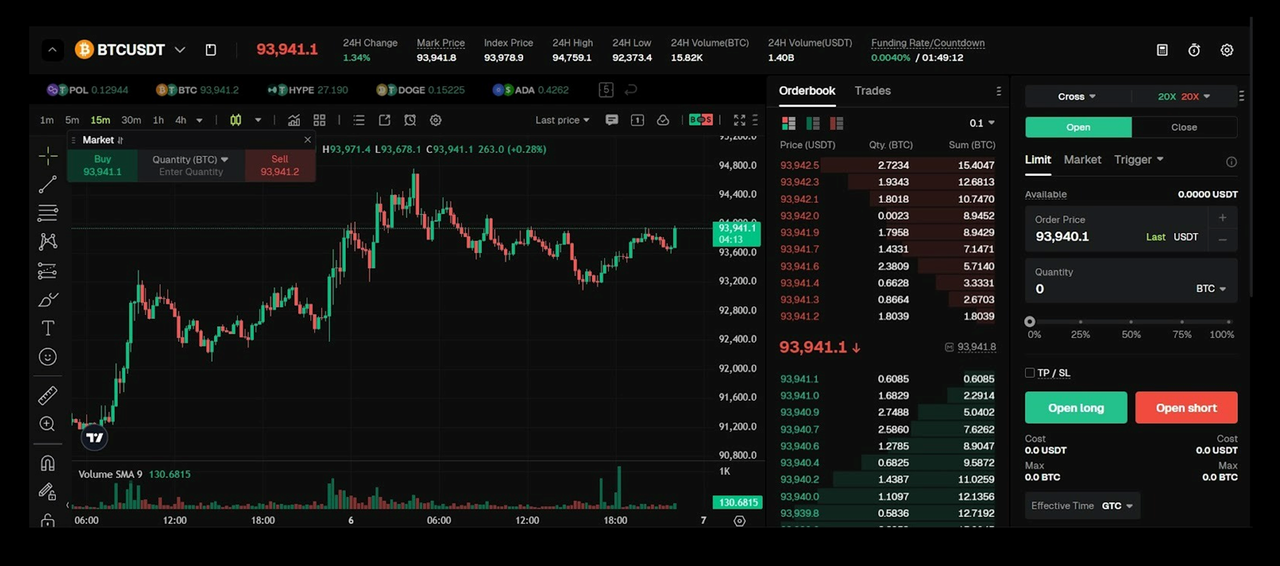
Crypto futures contracts are financial tools for speculating on or hedging against a cryptocurrency's future price. You do not own the underlying asset. Instead, you hold a contract to buy or sell a specific cryptocurrency at a set future date.
In a spot vs. futures trading comparison, we can see that futures contracts differ substantially from day-to-day crypto trading. A futures contract has expiration dates and is marked to market daily. Therefore, profits and losses are settled at the end of each trading day. However, if the market moves against your position, you could face margin calls or even forced liquidation.
Leverage is another feature of futures trading that makes it more capital-efficient than spot trading. For the latter, you would need to purchase BTC at its current value. However, with futures, you can open a 1 BTC position while holding a fraction of Bitcoin’s market value.
Spot crypto trading is profitable when the cryptocurrencies you hold appreciate over time. However, with futures contracts, you can profit from short-term price movements in either direction.
Futures contracts are more suitable for long-term investors and miners because they allow them to manage unexpected risks and extreme price volatility.
If we were to repeat the analogy used in the spot section, you can look at futures trading as betting on the future price of gold without ever touching the physical bar. You can bet it will go up (long) or bet it will go down (short).
Pros:
- Profit in Any Market: The ability to go short allows you to profit from falling prices.
- Leverage: You can control a large position with a small amount of capital, amplifying potential gains.
- Hedging: Can be used to protect a spot portfolio from downside risk.
Cons:
- Complex and High-Risk: Leverage also amplifies losses, and liquidation is a constant danger.
- No Ownership: You don’t own the crypto and can’t use it for staking, voting, etc.
Head-to-Head Spot vs. Futures Trading Comparison Table
| Feature | Spot Crypto Trading | Futures Crypto Trading |
| What You Own | The actual cryptocurrency (e.g., BTC) | A contract to buy/sell at a certain price |
| How You Profit | Price goes up | Price goes up (long) or down (short) |
| Key Tool | Capital | Leverage |
| Maximum Loss | Your initial investment | Can be your entire margin (liquidation) |
| Best For | Long-term investing, beginners, HODLing | Short-term trading, hedging, active traders |
| Primary Goal | Accumulate assets | Generate profit from price volatility |
Which Strategy is Right for Your Goals?
Below is a list of the most common scenarios that crypto traders find themselves in before committing to crypto trading. Discover the one that best fits your goals to ensure you choose the right strategy.
"I believe in Bitcoin long-term and want to hold it for years."
In this scenario, you should opt for spot trading. Evidently, your goal is to accumulate wealth in BTC and generate profit by selling it later at a higher price.
"I think the market is about to crash, and I want to profit from it."
In this case, you should opt for futures trading. You can open a futures contract betting that the market will become bearish, which would still deliver you a profit.
"I am an active trader who wants to capitalize on daily price swings."
Again, futures trading is your best strategy. Leverage and the ability to go long or short are essential tools for active, short-term trading.
"I am a beginner and just want to get started in crypto."
In this case, you should start with low-risk spot trades. Buy and hold a small amount of a major crypto to get comfortable with the market before even considering futures.
How Bitunix Serves Both Worlds
Bitunix is a high-performance crypto trading platform with a daily trading volume exceeding $5 million. The exchange reached global prominence by offering both a robust spot market and a professional-grade futures trading platform.
The platform lets you easily transfer funds between your spot and futures wallets. This way, you can quickly adapt and use the right tool for the right job if you wish to change your trading strategy.
Trading spot or futures contracts on Bitunix is straightforward, even for beginners. Here are a few simple steps you can follow:
- Sign up on Bitunix using your email or mobile number.
- Deposit crypto or link a fiat method (KYC required only for fiat operations).
- Go to the Spot Market to buy or sell cryptocurrencies instantly.
- Advanced traders who prefer margin trading crypto can open a perpetual futures position to trade with leverage and capitalize on market swings.
Additionally, users can start trading with as little as $10 or join the Earn program, which provides several staking opportunities.
The low Bitunix fees have convinced over 3 million traders to join the platform. Moreover, Bitunix reassures users that their assets are safe with a dedicated Protection Fund, high security, and compliance with global regulations.
Bitunix is available for both desktop and mobile users. You can download the Bitunix mobile application for iOS or Android on the app download page.
Whether you’re a long-term investor or an active trader, Bitunix has the tools you need. The platform takes spot and futures trading to the next level by providing efficient tools to help traders excel regardless of their strategy.
Final Thoughts on the Spot vs. Futures Meaning
Investopedia experts summarize the spot vs. futures meaning as follows: “A spot price is the current price at which an asset may be bought (or sold) for immediate ownership and delivery, after settlement. In contrast to the spot price, a futures contract price is an agreed-upon price for the future delivery of an asset.”
We can deduce from this definition that spot and futures trading are inherently different. Both strategies can deliver profits while carrying considerable risk. Before choosing your plan, make sure you have a good understanding of the market and practice efficient risk management.
Ultimately, there isn’t a spot vs. futures debate for experienced traders. Spot is for investing in the asset. Futures are for trading the price. The best strategy depends on your specific goals, timeline, and risk tolerance.
Start your journey the right way. If you’re an investor, explore our spot markets. If you’re a trader, learn about our futures platform. Join Bitunix today!
FAQ Section
Is futures trading more profitable than spot crypto trading?
Futures trading has a higher profit potential than spot crypto trading. However, it also entails greater risk, making it a strategy better suited to experienced traders.
Can I lose more money than I invest in spot crypto trading?
No, in spot crypto trading, you cannot lose more than your invested capital.
What does it mean to get liquidated in futures?
In futures trading, getting liquidated means your position is automatically and forcibly closed by the exchange or broker due to insufficient funds to cover your mounting losses.
Is it possible to do both spot and futures trading?
Yes, it's absolutely possible and common to do both spot and futures crypto trading, often on the same exchange. Bitunix offers several trading modes for both types, allowing users to test and refine their strategies.
As a beginner, should I try futures trading with a small amount?
Beginners can trade futures with a small amount of money by using micro futures contracts.
What is hedging with futures?
Hedging with crypto futures is a risk management strategy in which you take an opposite position in a futures contract to offset potential losses on your existing crypto holdings, without selling your actual coins.
Are the prices on the spot and futures markets the same?
No, spot and futures prices are generally not the same. The spot price reflects the immediate market value. Meanwhile, the futures price reflects future delivery and includes costs such as storage, interest, and market expectations.
What are the fees for spot vs. futures trading on Bitunix?
Bitunix uses a tiered maker/taker fee model. The specific rates depend on your VIP level, which is determined by your 30-day trading volume or asset balance.
What is the biggest mistake beginners make when moving from spot to futures?
Misunderstanding or mismanaging leverage is the biggest mistake traders make when switching from spot to futures. Generally, they risk too much capital on a single trade or fail to use stop-loss orders effectively.
Glossary
Layer 1: Base blockchain that verifies and records transactions.
Layer 2: A scaling solution that processes transactions off the main chain and posts proofs to L1.
Gas: Network fee for processing a transaction.
Altcoin: Any crypto asset that is not Bitcoin.
DeFi: Decentralized finance applications on public blockchains.
Volatility: Degree of price fluctuation for an asset over time.
Proof of Stake (PoS): Consensus where validators lock native tokens to secure the network and earn rewards.
Validator: Operator that proposes or attests blocks in PoS and shares rewards with delegators.
Incentive Program: Extra token rewards used to direct liquidity or votes.
Governance: Process for changing parameters or logic, often token-based with timelocks.
Trading Pair: A combination of two different digital or fiat currencies that can be exchanged for one another on a cryptocurrency exchange.
Stable Pair: A pool of assets that track similar values, such as two stablecoins.
TVL: Total value locked in a protocol, a rough usage proxy.
About Bitunix
Bitunix is a global cryptocurrency derivatives exchange trusted by over 3 million users across more than 100 countries. At Bitunix, we are committed to providing a transparent, compliant, and secure trading environment for every user. Our platform features a fast registration process and a user-friendly verification system supported by mandatory KYC to ensure safety and compliance. With global standards of protection through Proof of Reserves (POR) and the Bitunix Care Fund, we prioritize user trust and fund security. The K-Line Ultra chart system delivers a seamless trading experience for both beginners and advanced traders. At the same time, leverage of up to 200x and deep liquidity make Bitunix one of the most dynamic platforms in the market.
Bitunix Global Accounts
X |Telegram Announcements |Telegram Global |CoinMarketCap |Instagram |Facebook |LinkedIn |Reddit |Medium