
Article Summary
- This article serves as a beginner’s guide to investing in Decentralized Finance (DeFi), moving beyond simply holding crypto to actively using it to generate returns.
- It outlines the essential prerequisites for getting started: acquiring a DeFi wallet, funding it with crypto, and understanding gas fees.
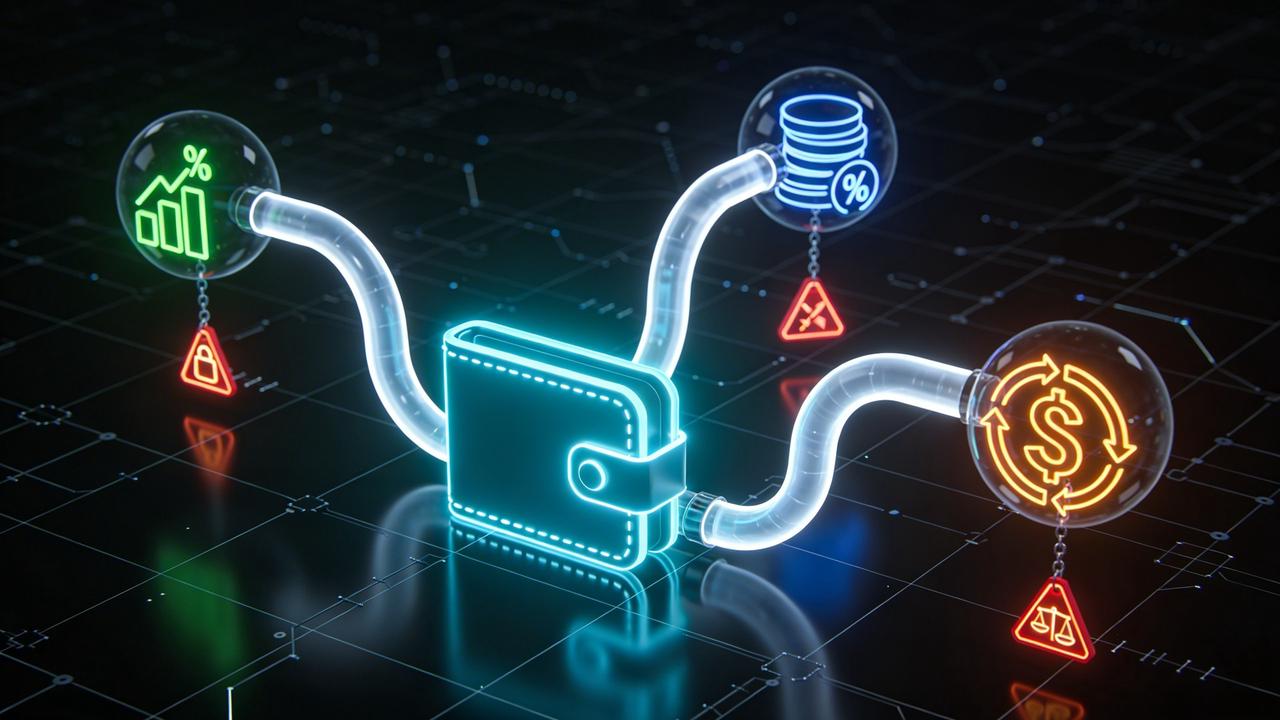
- The guide breaks down three core, beginner-friendly DeFi investment strategies: Staking, Lending & Borrowing, and Providing Liquidity.
- For each strategy, it explains the core concept, the potential rewards (yield), and the specific risks involved (e.g., impermanent loss for liquidity providing).
You already know how to buy and sell crypto on a crypto exchange, such as Bitunix. Now you want your assets to do more than sit there. DeFi investing does that by letting you use crypto inside decentralized apps, so you can earn yield instead of relying only on price moves.
DeFi looks big in 2026 for one simple reason: stablecoins became the default money layer for a lot of on-chain activity. DL News reports that the total stablecoin market cap rose to about $305B by early December 2025, up from $204B at the start of the year. That growth matters because most DeFi interest and trading fees get paid in stablecoins.
This guide will walk you through the essential first steps to get started in DeFi and introduce you to three of the most popular strategies for putting your crypto to work: staking, lending, and providing liquidity.
What You Need to Get Started
First, accept the basic setup. DeFi happens on-chain, so you need tools that can sign transactions and pay network fees.
Start with a DeFi wallet. This is a non-custodial wallet like MetaMask or Phantom that connects to apps. You keep control of your keys, and the wallet signs actions like deposits, swaps, and withdrawals. If you leave everything on an exchange account, you cannot use most on-chain apps directly.
Next, you need two kinds of assets. You need the asset you plan to use, like ETH, and you need the chain’s native token to pay fees. On Ethereum, that fee token is ETH. On Solana, it is SOL. If you forget the fee token, you will end up stuck.
Bring curiosity and caution at the same time, because DeFi security problems still show up fast. Chainalysis estimated that theft topped $3.4B in 2025 through early December, with one mega-incident doing a lot of damage. TRM Labs also reported $2.87B stolen across nearly 150 hacks in 2025, and noted attackers increasingly targeted keys, wallets, and access controls more than smart contract bugs.
So protect yourself with basics that work: double-check URLs, use a small burner wallet for new dApps, keep token approvals tight, and revoke permissions you no longer need. Treat your first deposits like test runs, then scale only after you understand every permission you granted.
DeFi Strategy 1: Staking
Staking is the simplest yield concept for many people. You lock or delegate tokens to help secure a proof-of-stake network, and the network pays rewards to participants. That reward often looks like interest, but it is really protocol inflation plus fees, minus validator costs.
Here is how it works:
- You delegate to a validator.
- The validator runs infrastructure and participates in block production and transaction processing.
- You earn a share of the rewards, and the validator takes a fee. Your wallet usually shows the validator’s commission rate, performance, and sometimes a history of uptime.
The reward profile tends to be steadier than trading fees because it is not tied to swap volume. But it is not risk-free. Networks can punish bad validator behavior through slashing, where part of the delegated stake gets penalized. Some chains also include unbonding or lock-up periods, which means you cannot instantly exit if markets move against you.
If you want staking to feel less like babysitting, many users choose liquid staking options. Those products give you a receipt token that represents your staked position, so you can move it around while still earning staking rewards. That adds convenience, but it adds extra layers of protocol and market risk.
DeFi Strategy 2: Lending and Borrowing
Lending protocols work like on-chain money markets. You deposit an asset into a pool. Borrowers take loans from that pool by posting collateral. The protocol sets the rate using supply and demand, plus risk parameters.
Every action here runs through a smart contract. That is why lending can scale globally, but it is also why bugs and exploits matter. The contract code enforces rules like collateral requirements, interest accrual, and liquidation.
Aave is a common example because it is a major DeFi lending-and-borrowing protocol: users supply crypto into liquidity pools to earn interest, and borrowers take overcollateralized loans from those pools, with metrics like health factor tracking liquidation risk.
DeFi Llama currently lists Aave V3 TVL at around $25.9B, which shows how much capital users have deposited into the protocol’s markets. If you want the official mechanics, Aave’s documentation covers supplying, borrowing, and risk parameters in detail.
Rewards in lending are usually variable. If lots of people want to borrow USDC, lenders earn more. If demand drops, your APY drops. The biggest user-level risk comes from liquidation. If you borrow against collateral and the collateral price falls, the protocol can sell your collateral automatically to protect lenders. That can happen fast during volatility.
DeFi Strategy 3: Providing Liquidity (LP)
Decentralized exchanges need liquidity pools so traders can swap tokens. When you provide liquidity, you deposit two assets into a pool and earn part of the trading fees. On Uniswap v3, liquidity is concentrated into price ranges, which changes the risk and reward profile for LPs.
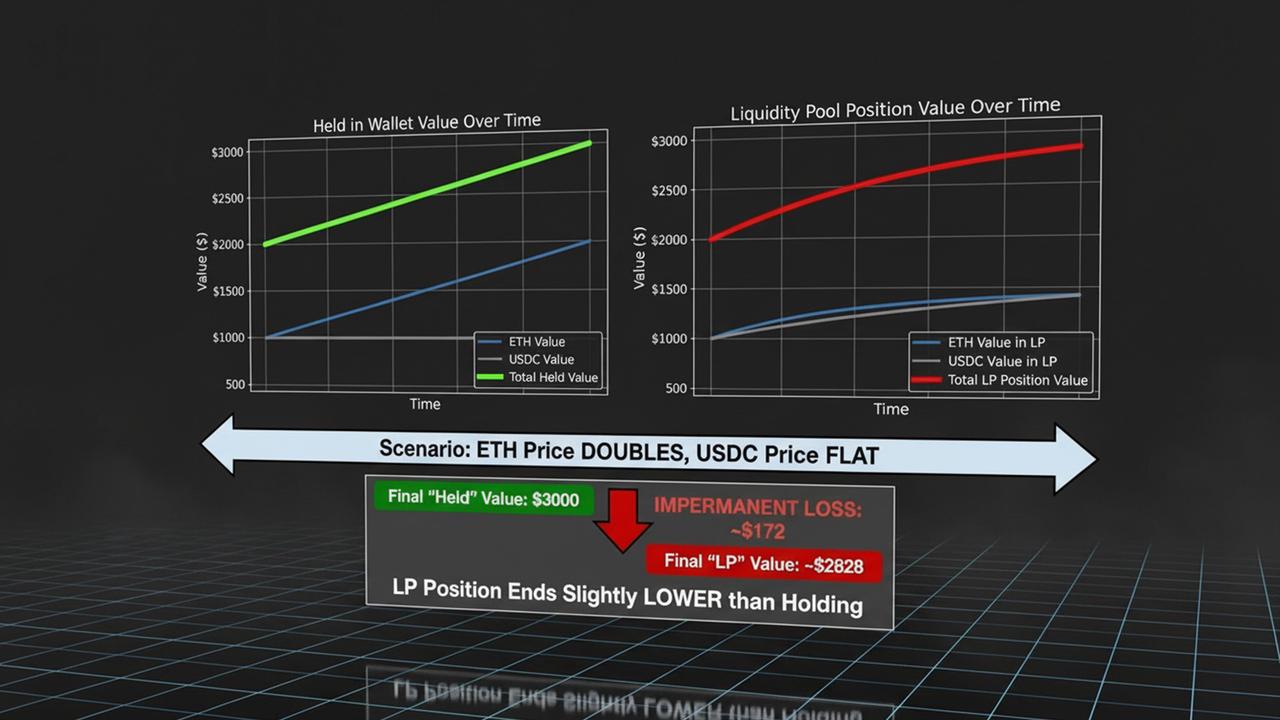
LP rewards can be strong when volume is high. But the main risk is impermanent loss. If one asset rises a lot relative to the other, the pool rebalances your position. You end up holding more of the asset that underperformed. That can leave you worse off than simply holding both assets in your wallet.
This risk shows up a lot in altcoin vs stablecoin pools, like ETH paired with USDT. One side moves, the other stays near one dollar. That divergence creates the classic impermanent loss scenario.
A Beginner’s Roadmap
You don’t need a complicated plan, but you do need a repeatable one. When you’re learning how to invest in DeFi, start with a simple setup you can repeat: one chain, one protocol, and one small position. Add complexity only after you understand the risks and results.
Here is the main step-by-step:
- Start with a plan. Pick one chain, one strategy, and one goal. Your goal can be simple, like earning yield on stablecoins without taking price exposure. When you try everything at once, you learn nothing and pay more fees.
- Do your research before you deposit. Read the docs. Look for audits. Check how long the protocol has operated without major incidents. Also, use independent dashboards. platform/protocol’s own contracts by users. DefiLlama is useful for comparing categories, protocols, and trends, and it straightforwardly defines TVL: "Total value locked inside a platform/protocol’s own contracts by users."
- Start small and assume mistakes happen. Use an amount you can afford to lose.
- Review and rebalance. Check your positions on a schedule. Weekly work is good for most beginners. Look for rate changes, pool composition changes, and updates from the protocol. Then decide if you still like the risk you are taking.
The Next Frontier of Your Crypto Journey
DeFi expands what ownership means. You can stake to support networks, lend to earn variable interest, or provide liquidity to earn trading fees. The tradeoff is that you carry more responsibility and more technical risk than you do on an exchange.
You now have the basics of how to invest in DeFi without guessing. Keep learning, keep positions small until you trust your process, and treat risk controls as part of the strategy. When you need to buy assets first, you can use Bitunix, then withdraw to your wallet and interact with on-chain apps.
Your DeFi journey begins with a secure source of assets. Download the app, register, and use Bitunix to purchase the crypto you need, then withdraw it to your DeFi wallet and start exploring the world of decentralized finance today.
FAQ
Is DeFi investing safe?
DeFi includes real risk. Hacks, exploits, and user mistakes still cause large losses. Use well-known protocols, start with small amounts, and avoid chasing extreme yields. If you cannot explain the product, skip it.
What is yield farming?
Yield farming means moving assets between protocols to maximize returns. Returns can come from interest, trading fees, or incentive tokens. It often increases complexity and risk because you rely on more contracts and more price assumptions.
What is Total Value Locked (TVL) and why is it important?
Total Value Locked (TVL) is the value deposited into a protocol. Higher TVL often signals usage and liquidity, which can reduce slippage and improve borrowing depth. It does not prove safety, but it helps you compare protocol size and category trends. Use it alongside audits and time-in-market.
How are DeFi interest rates determined?
Most lending protocols set rates based on utilization. When many users borrow a pool’s assets, the protocol raises rates to attract more supply and discourage more borrowing. When utilization falls, rates drop. This is why APYs change daily, especially during volatility.
Do I have to pay taxes on my DeFi earnings?
Tax rules depend on where you live. Many places treat interest, staking rewards, and incentive tokens as taxable income, and swaps can trigger capital gains. Track every deposit, withdrawal, claim, and swap. Use a crypto tax tool if you have many transactions, and ask a tax professional if unsure.
What is a contract audit?
An audit is a security review where a third-party firm analyzes protocol code and reports vulnerabilities. Good audits include clear findings and fixes, plus follow-up reports. An audit reduces risk but does not remove it. Bugs still slip through, and some hacks target integrations, not just core code.
What is impermanent loss?
Impermanent loss is the gap between holding two assets in your wallet versus providing them as liquidity. If prices diverge, the pool rebalances, and you end up with more of the weaker asset. Fees can offset the loss, but they do not always, especially during sharp moves.
Can I lose all my money in DeFi?
Yes. You can lose funds through exploits, bad approvals, fake apps, bridge failures, or liquidation if you borrow. You reduce risk by using reputable protocols, limiting approvals, avoiding leverage, and keeping most funds in safer storage.
What is the difference between staking and lending?
Staking earns rewards for supporting a network’s consensus, usually through delegation. Lending earns interest from borrowers in a money market. Staking risk centers on validator performance and lockups. Lending risk centers on code security and liquidation mechanics if you borrow against collateral.
Where can I find new DeFi projects?
Start with established dashboards and ecosystems, then work outward. DeFiLlama is useful for browsing categories and spotting growing protocols. For new projects, prioritize those with public docs, audits, and clear risk parameters.
Glossary
- Annual Percentage Yield (APY): Estimated yearly return, often variable and updated frequently.
- Audit: Third-party security review of protocol code and deployment configuration.
- Collateral: Asset you deposit to back a loan and protect lenders.
- Decentralized application (dApp): On-chain app you access with a wallet, not an account login.
- Decentralized exchange (DEX): Exchange that matches swaps through pools rather than order books.
- Gas fee: Network fee paid to process and record transactions.
- Health factor: Risk metric that shows how close a loan is to liquidation.
- Impermanent loss: Underperformance versus holding due to price divergence in LP positions.
- Liquidation: Automatic sale of collateral when a loan breaches risk limits.
- Liquidity pool: Shared pool of assets that enables swaps and pays fees to providers.
- Non-custodial wallet: Wallet where you control the private keys and approvals.
- Proof of Stake: Consensus mechanism where validators secure the network using staked tokens.
- Slashing: Penalty that reduces stake due to validator misbehavior or protocol rules.
- Stablecoin: Token designed to track a stable value, often pegged to a currency.
- TVL: Total value deposited into a protocol as a rough measure of scale and liquidity.
About Bitunix
Bitunix is a global cryptocurrency derivatives exchange trusted by over 3 million users across more than 100 countries. The platform is committed to providing a transparent, compliant, and secure trading environment for every user. Bitunix offers a fast registration process and a user-friendly verification system supported by mandatory KYC to ensure safety and compliance. With global standards of protection through Proof of Reserves (POR) and the Bitunix Care Fund, Bitunix prioritizes user trust and fund security. The K-Line Ultra chart system delivers a seamless trading experience for both beginners and advanced traders, while leverage of up to 200x and deep liquidity make Bitunix one of the most dynamic platforms in the market.
Bitunix Global Accounts
X | Telegram Announcements | Telegram Global | CoinMarketCap | Instagram | Facebook | LinkedIn | Reddit | Medium
Disclaimer: Trading digital assets involves risk and may result in the loss of capital. Always do your own research. Terms, conditions, and regional restrictions may apply.