
1. Lido Finance Overview
LDO is the governance token of Lido Finance, the decentralized liquid staking protocol. As one of DeFi’s core liquidity engines, Lido is currently the protocol with the highest total value locked (TVL) across the market. Its core mission is to solve one of the biggest pain points in Proof-of-Stake (PoS) systems: the trade-off between earning staking rewards and maintaining asset liquidity.
Lido’s origins date back to late 2020, when Ethereum was preparing for its transition to Ethereum 2.0. Under the original staking design, users who wanted to participate in Ethereum staking needed to meet the high threshold of 32 ETH, and their assets would be locked in the validator contract and remain inaccessible. Lido’s founding team recognized early that this lockup model would significantly reduce capital efficiency. Lido was built to provide users with an intermediate layer that could preserve liquidity while still allowing them to earn staking rewards.
2. The Liquid Staking Mechanism: Breaking the Lockup Model
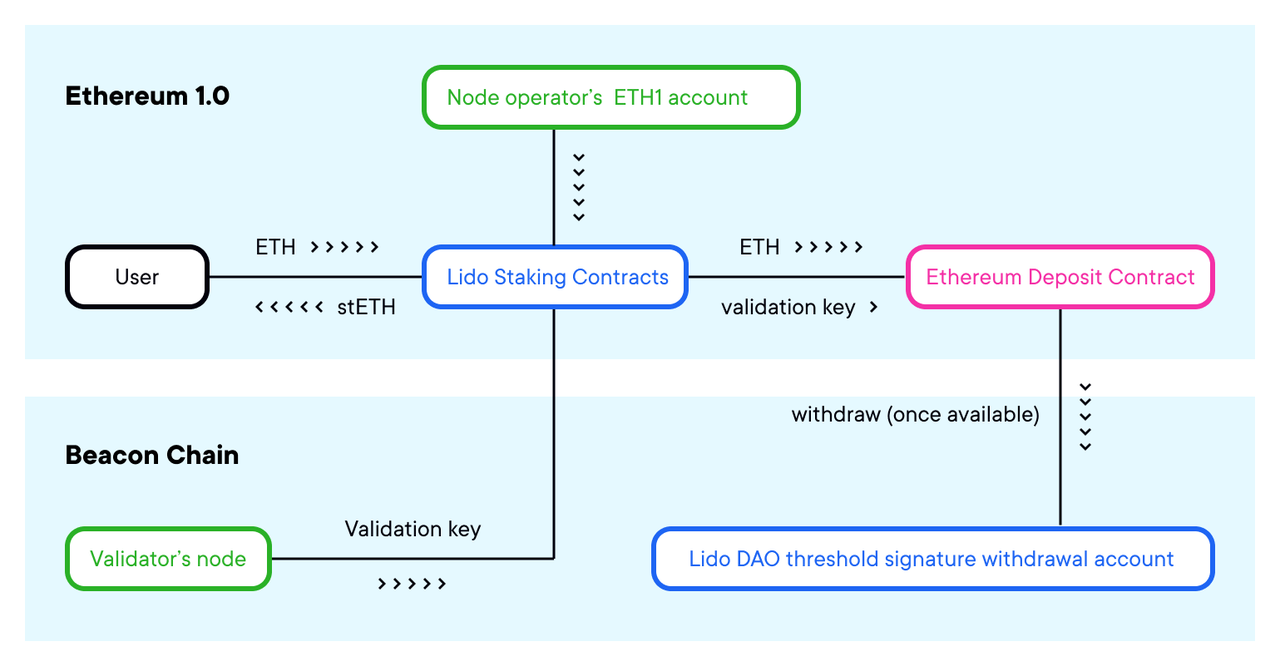
In traditional PoS staking systems, assets are often locked like a fixed-term deposit. During the staking period, they cannot be traded or used as collateral, which greatly limits capital efficiency. Lido completely changed this model through liquid staking. When users stake ETH through the Lido protocol, the system automatically mints stETH at a 1:1 ratio as a receipt representing the staked asset and its future reward entitlement. This transforms otherwise idle staked assets into a liquid tokenized position.
This design not only lowers the participation barrier, but also improves the way staking rewards are received. The balance of stETH updates automatically through a rebase mechanism based on staking rewards distributed by the Ethereum network. This means users do not need to run or maintain validator nodes themselves, and they do not need to bear hardware costs, yet they can still earn native Ethereum staking rewards.
The most revolutionary breakthrough is that stETH gives staked ETH both strong liquidity and composability. Users can trade stETH on decentralized exchanges such as Uniswap, use it as collateral on lending protocols such as Aave, or deploy it across different DeFi protocols for liquidity mining and other strategies. This allows users to achieve what is often described as double yield from a single asset: they earn native PoS staking rewards while also unlocking the purchasing power and flexibility of that same asset across the broader DeFi ecosystem.
3. Professional Node Operators: The First Line of Defense for Lido Staking Security
In the staking process, node operators carry critical technical responsibility. They maintain enterprise-grade hardware infrastructure and validator signing keys to ensure validators remain online 24/7, providing security and stability to the Ethereum network. In return for validation work, node operators receive staking rewards that include both consensus rewards and MEV, or maximal extractable value. After a small portion, typically 10%, is deducted to cover DAO treasury allocation and node operating costs, the remaining 90% of rewards is passed on to stETH holders. This structure is designed to keep value distribution transparent and fair.
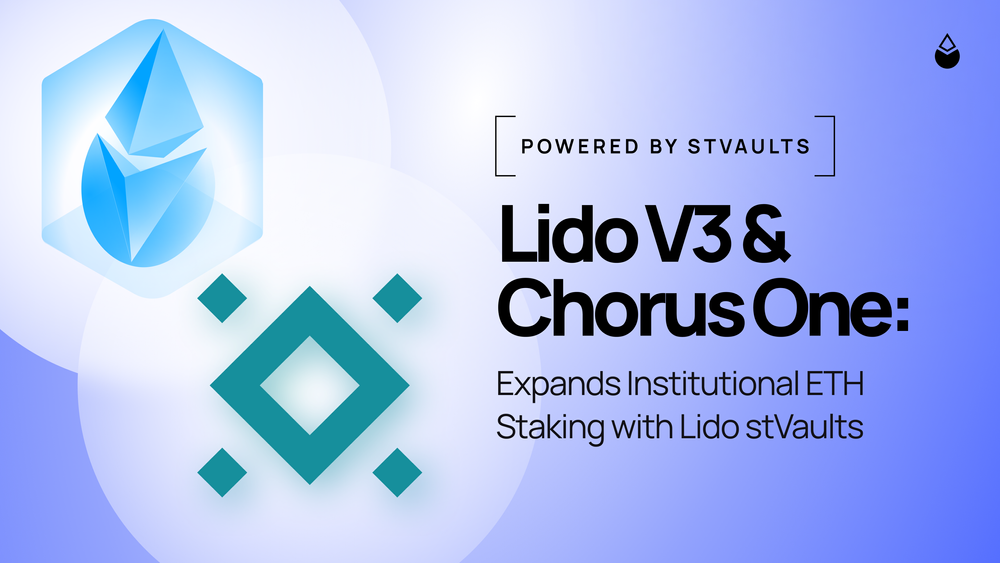
To ensure the safety of staked assets and reduce the risk of over-centralization, Lido does not choose node operators randomly. Instead, node operators must pass a multi-dimensional review and governance vote through the Lido DAO. These partners are leading infrastructure providers with strong operational stability and anti-slashing capabilities. Lido’s major partners include Ebunker.io, which focuses on non-custodial staking, P2P Validator, Blockdaemon, Figment, Chorus One, Staking Facilities, and Allnodes. Together, they form one of the strongest security foundations in DeFi.
Through this distributed architecture, Lido has built an efficient bridge between users and complex validator infrastructure. This model helps individual users avoid the difficulty of node maintenance and technical setup, while also distributing capital and operational responsibility across multiple high-quality operators. That reduces the risk of systemic concentration and strengthens Ethereum’s staking decentralization.
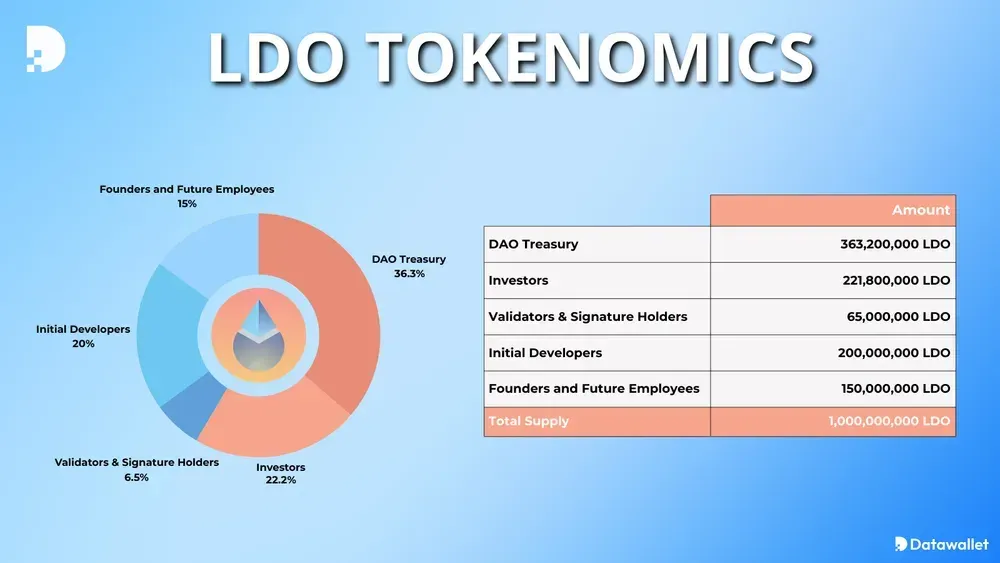
4. LDO Tokenomics: Governance and the Security Core of the Ecosystem
As the native governance token of Lido DAO, LDO is designed to place protocol decision-making power in the hands of community participants and support a transparent decentralized autonomous organization with built-in resilience.
- Governance rights: Holding LDO gives users voting power over the Lido treasury and protocol decisions. Token holders can decide how protocol fees are allocated, review and approve new node operators, vote on technical upgrades, and direct ecosystem grant programs. This collective governance structure helps ensure that Lido is not controlled by any single entity.
- Parameter management and security: LDO holders are also responsible for overseeing the protocol’s key risk parameters. For example, if node operators face a serious slashing risk, the DAO can step in by adjusting protocol parameters or using treasury funds to reduce losses for stakers.
- Ecosystem incentives: LDO is frequently used to encourage the adoption of stETH across DeFi. By distributing LDO incentives to users who provide liquidity, Lido has successfully built a deep and relatively stable secondary market for stETH and related products.
5. How to Get LDO
Users can obtain LDO by staking assets directly through the Lido website or by participating in early ecosystem incentive programs. However, direct on-chain staking and governance voting generally require paying relatively high Ethereum gas fees and involve wallet signatures and more complex smart contract interactions.
For most users, buying LDO through a centralized cryptocurrency exchange such as Bitunix is a more accessible option. As a trusted intermediary, the platform supports direct crypto purchases using fiat currency or stablecoins such as USDT, and some platforms also support instant purchases by credit card, significantly lowering the barrier to entry. Before getting started, users need to register an account and complete identity verification, or KYC, to comply with global AML and counter-terrorist financing regulations. Bitunix maintains an industry-leading compliance and risk-control system. Through cold and hot wallet separation, multi-signature protection, and real-time monitoring, it provides users with a level of asset security above the market average.
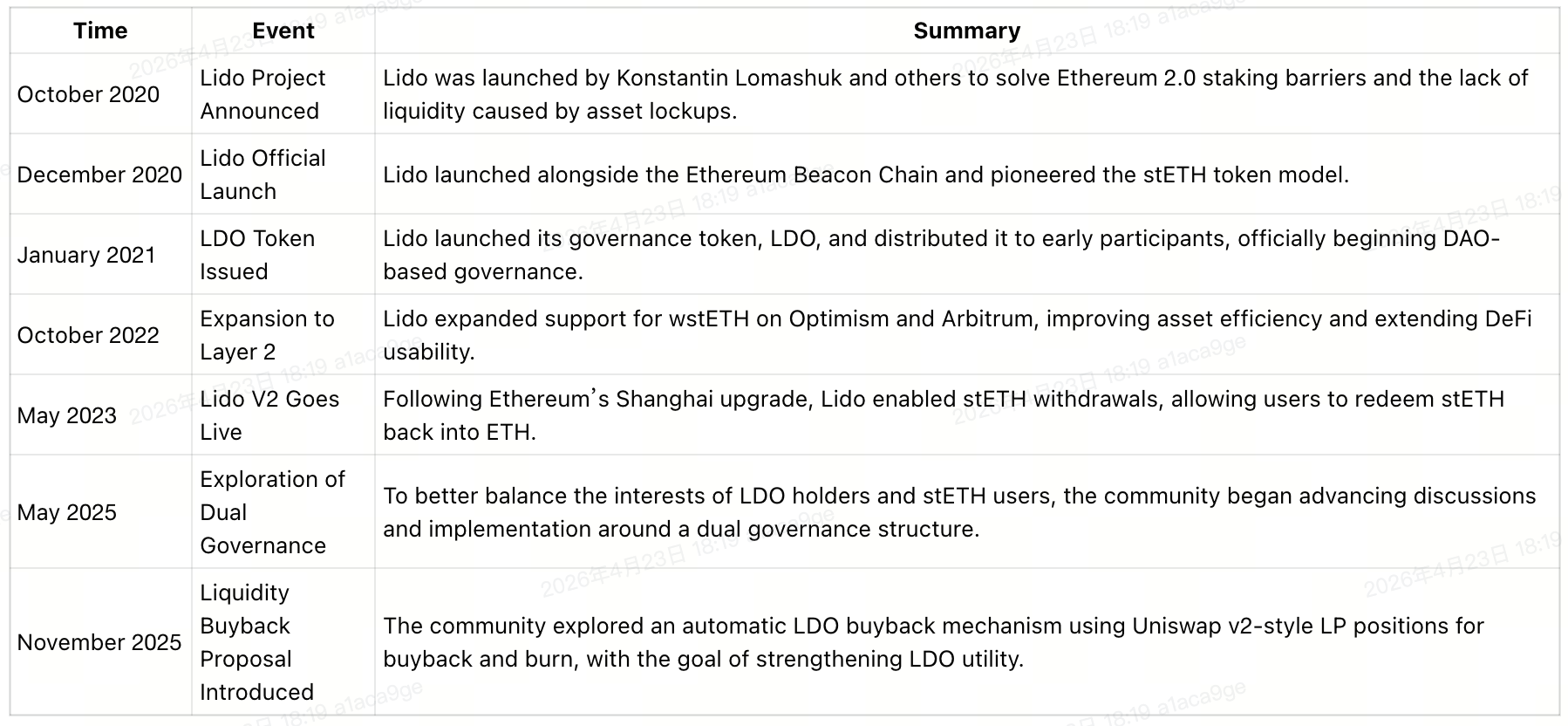
6. Major Lido Milestones
Disclaimer
This article is not intended to provide: (i) investment advice or investment recommendations; (ii) an offer or solicitation to buy, sell, or hold digital assets; or (iii) financial, accounting, legal, or tax advice. Digital assets (including stablecoins and NFTs) involve high risk and may be highly volatile. You should carefully consider whether trading or holding digital assets is suitable for you based on your financial situation. For your specific circumstances, consult your legal, tax, or investment professionals. You are responsible for understanding and complying with all applicable local laws and regulations.
About Bitunix
Bitunix is a global cryptocurrency derivatives exchange trusted by over 3 million users across more than 100 countries. At Bitunix, we are committed to providing a transparent, compliant, and secure trading environment for every user. Our platform features a fast registration process and a user-friendly verification system supported by mandatory KYC to ensure safety and compliance. With global standards of protection through Proof of Reserves (POR) and the Bitunix Care Fund, we prioritize user trust and fund security. The K-Line Ultra chart system delivers a seamless trading experience for both beginners and advanced traders, while leverage of up to 200x and deep liquidity make Bitunix one of the most dynamic platforms in the market.
Bitunix Global Accounts
X | Telegram Announcements | Telegram Global | CoinMarketCap | Instagram | Facebook | LinkedIn | Reddit | Medium