
Article Summary
- This article provides a price prediction for ZetaChain (ZETA) for 2026, focusing on its unique value proposition as a chain-agnostic interoperability layer.
- It explains ZetaChain's core technology as a Layer 1 blockchain built on the Cosmos SDK that features built-in, generic smart contract support that can read and write to other connected blockchains (like Ethereum, Bitcoin, etc.). This enables the creation of omnichain dApps.
- The bullish case for ZETA is centered on its ability to solve the fragmentation problem in crypto. By allowing developers to build a single dApp that can access liquidity and users across all blockchains, it could unlock massive value.
- The bearish case highlights the intense competition from other interoperability solutions (like LayerZero and Chainlink's CCIP), the technical challenges of maintaining secure cross-chain communication, and the difficulty of attracting a critical mass of developers and users.
- It presents three price scenarios for 2026 based on ZetaChain's success in building a vibrant omnichain ecosystem and the overall growth of the multi-chain crypto world.
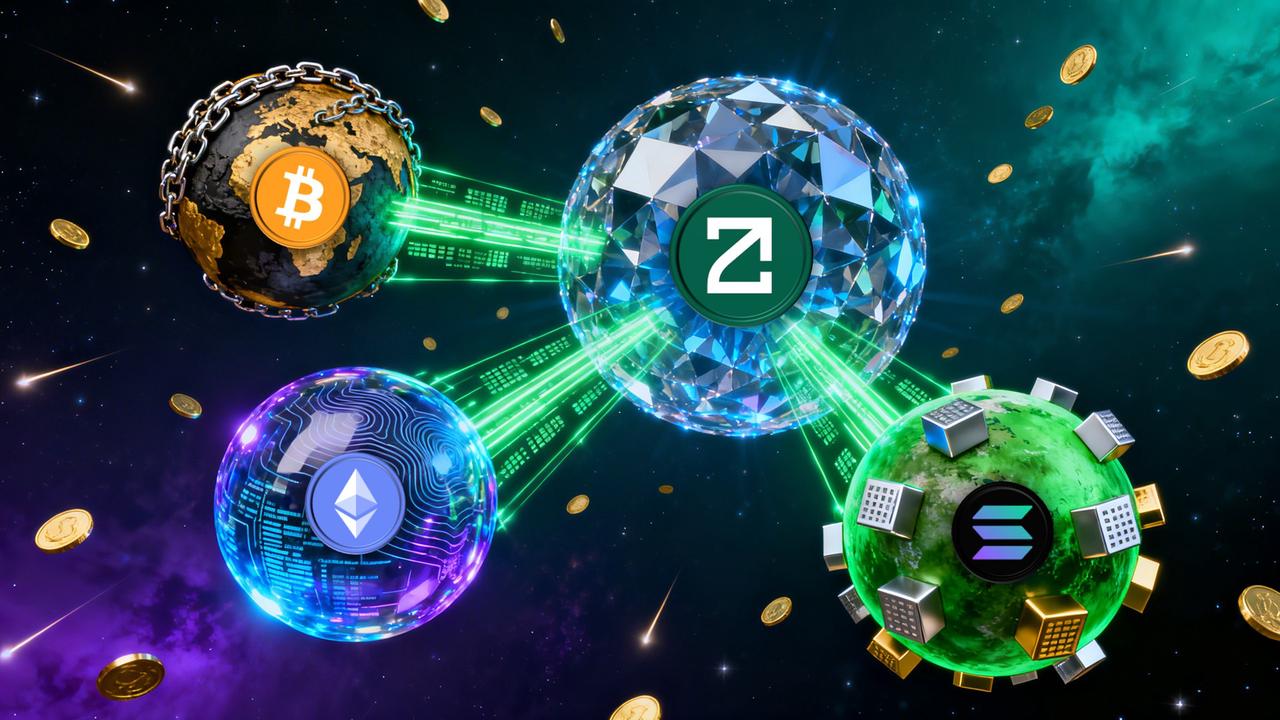
The crypto universe is a collection of isolated galaxies—Ethereum, Bitcoin, Solana, each with its own users and liquidity. ZetaChain is building the wormholes between them. It's a blockchain designed to connect everything, allowing for the creation of omnichain applications that can operate across any chain. But what will this powerful vision be worth in 2026?
ZetaChain's idea is simple to say and hard to build: cross-chain logic should live at the protocol level, so developers can ship apps that work across chains without pushing users through manual bridging. If you track tokens on a crypto exchange like Bitunix, you already see how interoperability narratives change liquidity and sentiment quickly.
This analysis explains ZetaChain's chain-abstraction design, maps its competitive landscape, and turns those inputs into realistic 2026 price scenarios for ZETA.
The Bullish Case for ZetaChain (The Omnichain Future)
Before we talk about price, we need a clear picture of what ZetaChain is trying to become. It positions itself as a universal network where cross-chain asset access and cross-chain contract calls are native features, not bolt-on integrations.
A key adoption signal is whether the product removes real friction for builders and users. ZetaChain's own 2025 writing frames fragmentation as a structural cost, not just an inconvenience, and it cites over $90B in DeFi TVL spread across siloed ecosystems as one example of capital sitting in separate pools.
1. True Chain Abstraction
When we ask what is ZetaChain, the most practical answer is that it runs an L1 designed for universal contracts that can coordinate assets and calls across connected chains. ZetaChain describes this approach as native cross-chain logic built into consensus, including connectivity to Bitcoin.
The concept you should focus on is chain abstraction at the contract layer. Instead of deploying separate contracts on five chains and gluing them together with bridges and relayers, a single universal contract can manage assets and trigger actions across multiple networks.
This is where the keyword omnichain dApps belongs. ZetaChain's thesis is that users should interact from whichever chain they already use, while the universal contract handles the cross-chain steps in the background, including outbound transactions and state updates across networks.
2. Access to Bitcoin
Bitcoin is the liquidity giant, and most interoperability stacks treat it as a special case. ZetaChain puts Bitcoin support in the core product, using a gateway model backed by threshold signatures.
Here is how ZetaChain’s developer documentation explains how Bitcoin interaction works:
"Interacting with universal contracts on ZetaChain from Bitcoin happens through the Bitcoin Gateway, a threshold signature scheme address."
The same docs explain that the private key is distributed among validators using MPC, which is the mechanism that allows outbound Bitcoin transactions to be signed without a single custodian holding the full key.
For investors, the bullish angle is that if ZetaChain can make Bitcoin deposits, contract-triggered actions, and withdrawals feel reliable and routine, it can pull more BTC-denominated activity into multi-chain applications without relying on wrapped-token trust assumptions.
3. Simplified User Experience
Interoperability often fails on the user side, even when the cryptography works. Most people do not want to switch networks, hunt for the right bridge, and hold three different gas tokens just to complete one action.
ZetaChain's late-2025 ZetaClient upgrade targeted that pain directly by adding multi-deposit and multi-call behavior, where a single cross-chain transaction can trigger multiple steps for a universal application. The same release also ties these changes to a roadmap goal of roughly two-second block times and faster finality under load.
Another practical UX improvement arrived in October 2025, when ZetaChain moved its explorer to Blockscout and highlighted real-time cross-chain transaction tracking across networks like Base, Polygon, Solana, Avalanche, and Sui. In that post, ZetaChain reported 7.3M accounts over the prior year and over 215M total transactions as of September 17, 2025, giving analysts concrete on-chain growth numbers to monitor.
4. Growing Developer Ecosystem and Incentives
Adoption is a two-sided market. Builders need tooling, capital, and distribution, while users need applications that feel easier than the alternatives.
ZetaChain's December 2025 protocol update highlighted developer incentives by pointing to an ecosystem growth program that committed 5% of total ZETA supply for grants, including a portion explicitly aimed at projects that use ZetaChain to unlock Bitcoin-based use cases.
ZetaChain also publishes larger-scale usage claims that, while not a guarantee of sticky retention, still help you track momentum. In its official 2025 recap, the team stated the network grew to more than 11.5M unique users and processed 225M transactions in 2025, citing its explorer as the source.
The Bearish Case Against ZetaChain
Now for the uncomfortable part. Interoperability is one of the highest-risk categories in crypto because failures often have a large blast radius and attract sophisticated attackers.
Even if ZetaChain executes well, it still competes against well-funded incumbents and must prove that its security model holds up under real adversarial pressure, not just testnet conditions.
1. Fierce Competition
ZetaChain competes against two kinds of rivals: middleware standards and message-layer networks. Both categories already have integrations, mindshare, and tooling.
Chainlink pushes CCIP as a cross-chain standard and publishes adoption-style metrics that shape builder trust. Chainlink's metrics page reported roughly $28.42T in transaction value enabled as of February 2026, signaling scale, even if that figure spans products beyond CCIP alone.
LayerZero competes from the messaging layer and frames interoperability as the default infrastructure across many chains. Its own public messaging highlights activity across 150+ blockchains, and its 2025 year-end research emphasizes rapid adoption signals like 173% growth in OFT adoption.
ZetaChain's edge is architectural simplicity for developers, building universal contracts once and letting the base protocol handle cross-chain execution. The risk is that middleware networks keep improving and remain the default choice for teams that do not want to commit to a new execution environment.
2. Security Risks of Cross-Chain Communication
Stripe's February 2026 risk guidance states that nearly $2.9B in value has been stolen via bridge attacks, which shows how much adversarial attention cross-chain plumbing gets.
Chainalysis reported over $3.4B in crypto theft from January through early December 2025, and it highlighted how a small number of mega-hacks can dominate annual totals. That pattern matters for interoperability systems because one exploit can permanently damage trust in the whole stack.
ZetaChain's model uses validator-secured threshold signatures and protocol-controlled gateways, which aim to reduce the patchwork of third-party bridges. That design still concentrates responsibility into core infrastructure, so auditing, bug bounties, and incident response discipline become existential requirements.
3. The Network Effect Challenge
To win, ZetaChain needs both builders and recurring users, and the category is crowded with alternative ways to move value cross-chain.
Current on-chain economics on ZetaChain look small compared to major ecosystems, which is normal for an emerging network but still important for valuation. DeFiLlama's ZetaChain dashboard showed daily DEX volume around $40k and daily chain fees around $18 at the time of viewing, alongside a reported ZETA price near $0.054 and market cap around $70.8M.
Those numbers can improve quickly if a breakout application shows up and keeps users without heavy incentives. They can also stagnate if liquidity and builders stay elsewhere, especially when competing platforms already offer acceptable cross-chain UX for many use cases.
4. The ZETA Token's Utility and Supply Dynamics
Token value needs real demand. ZetaChain links ZETA utility to fees, staking, and governance, so usage and security participation drive baseline demand.
Supply dynamics can work against you, especially in a market that overreacts to unlocks. ZetaChain has a circulating supply of 1.315 B ZETA and a fixed total supply of 2.1B, implying continued unlock pressure until distribution completes.
ZetaChain also made a security-focused token change that affects how analysts think about cross-chain exposure. Its docs describe anchoring 1.5B ZETA permanently to the native network and capping the amount that can move back to Ethereum as an ERC-20 at 600M, framing the change as a step toward decentralization and improved safety.
Zeta Price Prediction 2026: Three Scenarios
A ZetaChain price prediction 2026 works best when we start with measurable inputs and keep assumptions explicit. We can estimate a 2026 price range by combining expected circulating supply with plausible market cap outcomes based on adoption strength and competitive position.
For the supply side, ZetaChain has 1.315B ZETA circulating today and 2.1B total supply, which lets us model dilution through 2026 without guessing unlimited issuance. We use an end-2026 circulating estimate of about 1.6B to reflect ongoing unlocks, since the distribution schedule extends beyond the current period.
For the market context, DeFiLlama shows ZetaChain's current on-chain activity and current market cap order of magnitude, which anchors scenario ranges to something real. In parallel, competition benchmarks like Chainlink's scale metrics and LayerZero's adoption signals help us set realistic upside ceilings for a single interoperability platform.
If you want a simple trading reference for liquidity and sentiment, the ZETA/USDT market often reacts quickly to unlocks, integration news, and application launches, so it can be a useful barometer alongside on-chain usage dashboards.
Conclusion: A Bold Bet on a Connected Future
ZetaChain offers a clean technical thesis that is to put cross-chain execution primitives into the base protocol, so universal contracts can coordinate assets and actions across major networks, including Bitcoin. Its 2025 communications also back the thesis with usage claims like 11.5M unique users and 225M transactions, plus product upgrades aimed at simplifying multi-chain actions into fewer user steps.
At the same time, interoperability remains a high-risk arena with real historical losses, and competition is relentless from networks that already sit in many teams' default stack. Bridge-related attack totals and broader 2025 theft numbers show how fast trust can evaporate after one incident, even if the underlying tech is solid.
When we ask is ZetaChain a good investment, we end up evaluating one core bet: ZetaChain becomes essential connective infrastructure in a multi-chain world, and it does so without major security failures or stalled adoption. If you use the scenarios above for Zeta price prediction, track three things each month: active usage, meaningful liquidity, and net dilution from unlocks.
The future of crypto is multi-chain, and many traders prefer access to interoperability tokens in one place. Bitunix offers markets for tokens like ZETA alongside other infrastructure assets, but you still need to size risk carefully and avoid treating any scenario model as a guarantee. So, before trading, download the official Bitunix app and register your account.
FAQ Section
Is ZetaChain a Layer 1 or Layer 2?
ZetaChain runs its own proof-of-stake network and consensus, and its blog and docs describe it as an L1 that natively connects major chains. That design differs from rollups or app-specific L2s because security and execution live on ZetaChain's validator set.
How does ZetaChain connect to Bitcoin?
ZetaChain uses a Bitcoin Gateway model where deposits and calls originate from Bitcoin transactions and are observed by the network. The gateway relies on threshold signatures, and the private key is distributed across validators using MPC, so no single party controls outbound Bitcoin signing.
What is an omnichain application?
An omnichain application coordinates assets and actions across multiple blockchains from one logical user experience. On ZetaChain, the idea centers on universal contracts that can accept inbound calls from connected chains and trigger outbound transactions on other networks, while users stay on their preferred chain entry point.
How does ZetaChain compare to LayerZero or Chainlink CCIP?
ZetaChain is a full blockchain that puts cross-chain execution into the base protocol and validator set, aiming to reduce bolt-on bridge complexity. LayerZero and CCIP act as interoperability layers that applications integrate on top of existing chains, emphasizing messaging standards and existing ecosystem integrations.
Can we stake ZETA?
Yes, ZETA supports staking and delegation to secure the proof-of-stake network, and stakers participate in governance. ZetaChain's documentation also describes planned validator rewards and an inflation component after initial emissions, tying security participation directly to network operation and long-term sustainability.
What is the total supply of ZETA?
ZETA's total supply is 2.1B tokens, with about 1.315B circulating at the time of viewing. That fixed maximum supply means future dilution depends on the remaining locked allocations and unlock schedule, rather than unlimited issuance, which helps model 2026 scenarios.
Is ZetaChain EVM-compatible?
ZetaChain ships an EVM environment, often described as a Universal EVM, and its 2025 UNISON upgrade post highlights improved Ethereum compatibility and familiar tooling support for builders.
What is the Cosmos SDK?
The Cosmos SDK is a modular framework for building proof-of-stake blockchains, and ZetaChain references it in its upgrade communication and technical positioning. In practice, it provides common building blocks for networking, consensus integration, and module-based chain logic that teams can customize for features like governance and staking.
Who is the team behind ZetaChain?
ZetaChain presents itself as community-driven, and public communications in 2025 and 2026 repeatedly reference named core contributors such as Ankur Nandwani and other contributors involved in product and ecosystem development.
What was the launch price of ZETA?
There is no single universal launch price across all venues, since early liquidity differed by exchange and market pair. The clean way to confirm a launch range is to compare the earliest recorded candles on major spot markets and aggregators, then cross-check with listing timestamps for those venues.
Glossary
- Interoperability — The ability for blockchains to exchange messages and value securely across networks.
- Chain abstraction — Design that hides chain-specific steps so users interact without manual bridging.
- Universal contract — A contract that can respond to inbound cross-chain calls and coordinate outbound actions.
- Gateway — Onchain component that routes deposits, withdrawals, and contract calls between ZetaChain and connected chains.
- ZRC-20 — Token standard used to represent external assets on ZetaChain after protocol-managed deposits.
- Threshold Signature Scheme (TSS) — Signing scheme where a validator set collectively signs without one party holding the full key.
- MPC (Multi-Party Computation) — Method that distributes key control across participants for signing and security.
- Proof of Stake (PoS) — Consensus where validators stake tokens to secure blocks and finalize state changes.
- Delegation — Process where token holders assign stake to validators to help secure the network.
- Token unlock — Scheduled release of locked tokens that increases circulating supply over time.
- Circulating supply — Tokens currently available to the market, excluding locked or restricted allocations.
- Total supply — Maximum tokens that will ever exist, used to model dilution ceilings.
- Explorer — Interface for tracking transactions and cross-chain records, useful for verifying activity and growth.
- Cross-chain transaction record — A lifecycle record that tracks a transfer or call across origin and destination chains.
- Validator rewards and emissions — Incentives paid to validators over time, including planned inflation after early pools.
About Bitunix
Bitunix is a global cryptocurrency derivatives exchange trusted by over 5 million users across more than 100 countries. The platform is committed to providing a transparent, compliant, and secure trading environment for every user. Bitunix offers a fast registration process and a user-friendly verification system supported by mandatory KYC to ensure safety and compliance. With global standards of protection through Proof of Reserves (POR) and the Bitunix Care Fund, Bitunix prioritizes user trust and fund security. The K-Line Ultra chart system delivers a seamless trading experience for both beginners and advanced traders, while leverage of up to 200x and deep liquidity make Bitunix one of the most dynamic platforms in the market.
Bitunix Global Accounts
X | Telegram Announcements | Telegram Global | CoinMarketCap | Instagram | Facebook | LinkedIn | Reddit | Medium
Disclaimer: Trading digital assets involves risk and may result in the loss of capital. Always do your own research. Terms, conditions, and regional restrictions may apply.