What is Crypto Staking and How Does It Work?
Crypto staking is the practice of locking up your cryptocurrency to support and secure a blockchain network that uses the Proof-of-Stake (PoS) consensus mechanism. Stakers receive rewards varying by the length of the staking period, and generally in the same coin expressed as an APY (Annual Percentage Yield).
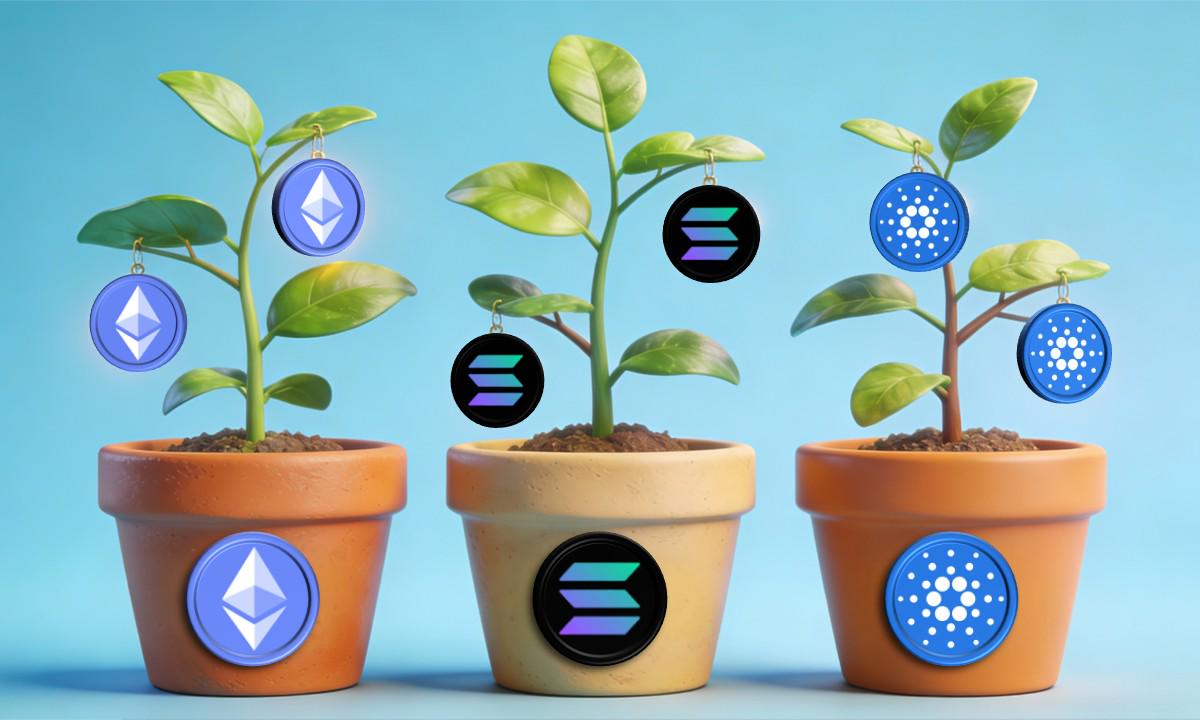
The Proof-of-Stake consensus mechanism allows validators to lock native tokens to secure the network and earn rewards. Several major blockchain networks have robust staking programs, including Ethereum (ETH), Cardano (ADA), and Solana (SOL).
Staking remains a premier way for crypto users to earn passive income. For example, you can put your holdings to work and earn USDT daily without selling your underlying assets. Additionally, you help the network grow, secure its operations, and restake the rewards so they compound over time.
Market Trends: Liquid Staking TVL Insights (2025-2026)
According to the latest market data from CryptoRank, the broader crypto staking and DeFi landscape is navigating a period of capital consolidation in 2026. While the absolute value across all native PoS networks remains massive, the total value locked (TVL) specifically within liquid staking protocols has adjusted to a two-year low of $33.4 billion in Q2 2026, down 56.1% from its all-time high of $76.0 billion in Q3 2025.
Timeline | Liquid Staking TVL Metrics | Market Status |
Q3 2025 | $76.0 Billion | All-Time High (ATH) |
Q4 2025 | $61.4 Billion | Initial Capital Contraction |
Q1 2026 | $45.2 Billion | Continued Compression |
Q2 2026 | $33.4 Billion | Current Two-Year Low Baseline |
Top Staking Coins for 2026: Highest Yield Market Leaders
The best staking coins 2026 has to offer include established market leaders and high-growth ecosystems:
Ethereum (ETH) Staking
Ethereum is the world's largest platform for decentralized applications (dApps), smart contracts, and decentralized autonomous organizations (DAOs). Despite launching over a decade ago, Ethereum has been a fully operational PoS network since its historic transition from Proof-of-Work.
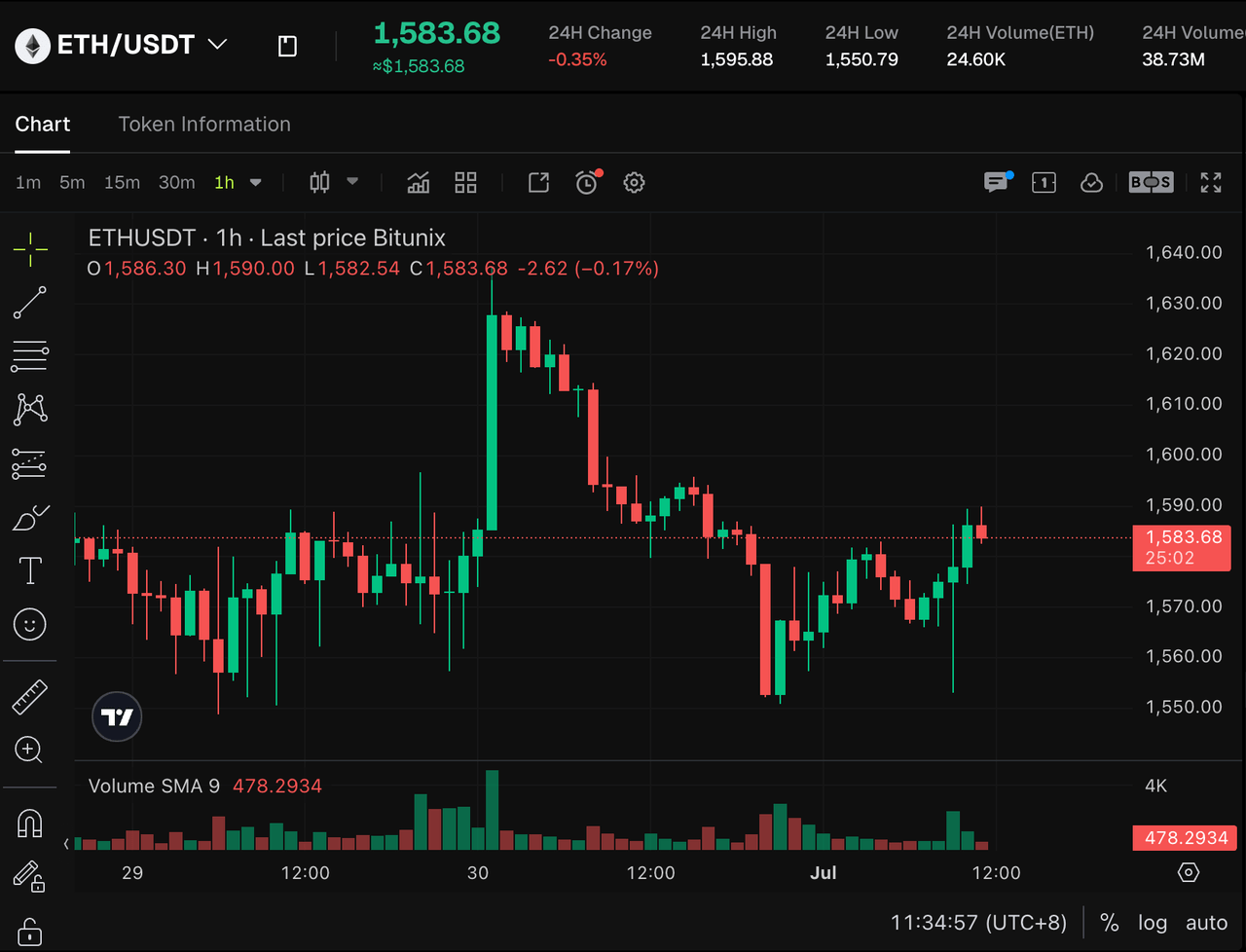
ETH/USDT chart. Source: Bitunix
ETH holders can stake their assets to confirm transactions on the network. In 2026, their projected APY ranges from 3% to 3.5%, depending on the total staked ETH and network activity. In the current market landscape, Ethereum staking has evolved further with the mainstream adoption of Liquid Staking Tokens (LSTs) and Restaking protocols, allowing users to maximize capital efficiency. Staking Ethereum remains ideal for both beginners and institutional investors due to the network's high security, longevity, and long-term asset appreciation.
Cardano (ADA) Staking
Cardano is a science-based blockchain launched in 2017 by a team led by Charles Hoskinson, one of Ethereum's co-founders. The network has grown consistently since then, incorporating staking programs with its 2020 Shelley upgrade.
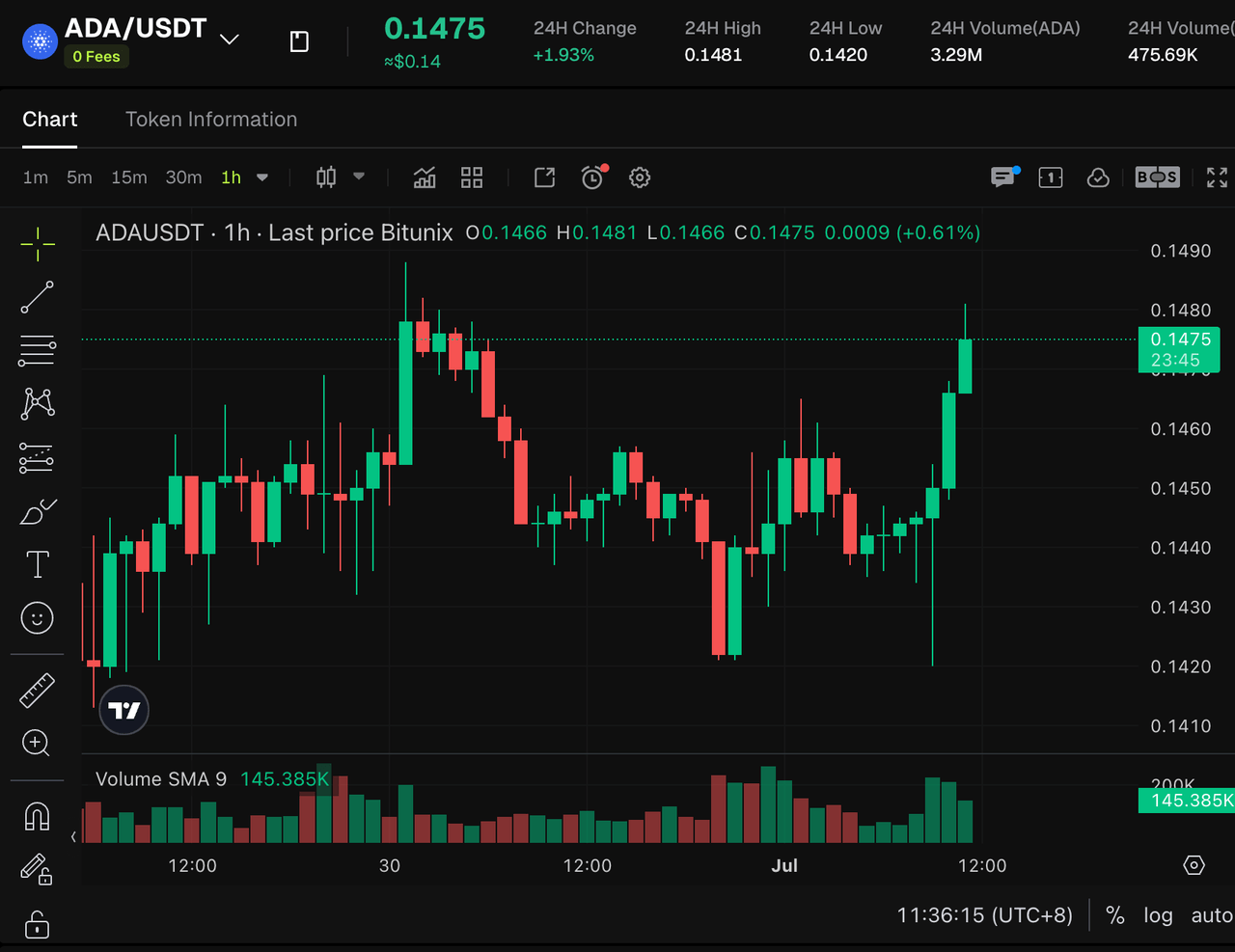
ADA/USDT chart. Source: Bitunix
Cardano is renowned for its sustainability-first approach, validating decentralized applications only after they obtain peer-reviewed approval. The network is also popular for its high speed, low fees, cross-chain interoperability, an()d liquid staking model that doesn't lock assets in the traditional sense.
ADA staking offers a dynamic APY that ranges from around 2% to over 4.5%, depending on the platform, network parameters, and the stake pool you select.
Solana (SOL) Staking
Solana is a notable entry on this list because the network uses two consensus mechanisms: its own proof-of-history mechanism and PoS. The blockchain launched in 2020 and quickly became one of the most popular networks for developers and dApps, launching a rivalry with Ethereum.
Solana is renowned for its wide range of applications, including NFTs, meme coins, trading platforms, crypto wallets, and more. Solana prioritizes extreme speed and low latency, capable of clearing up to 65,000 transactions per second.
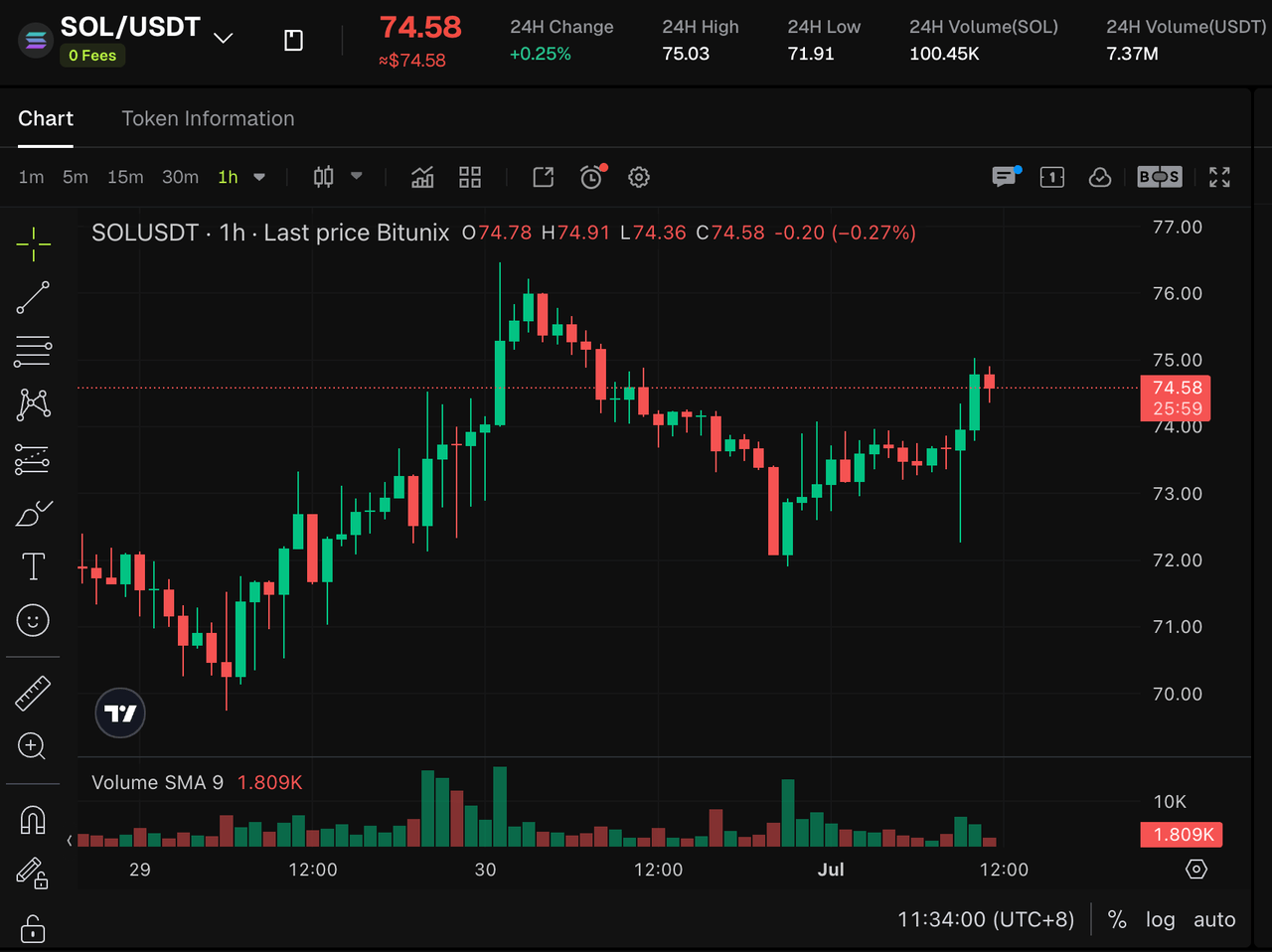
SOL/USDT chart. Source: Bitunix
In 2026, Solana (SOL) staking APYs generally range from 5.5% to 7.5%, depending on the platform, validator selection, and network inflation conditions. The consistently attractive staking rewards, combined with booming DeFi and meme ecosystems, are primary reasons for the network's sustained global popularity.
Alternative Cap Options: Investors looking for smaller or mid-cap networks with staking programs offering substantial earning potential can also explore Avalanche (AVAX), Polygon (POL), and Cosmos (ATOM).
How to Choose the Best Staking Coins for Your Portfolio
You should consider various factors before choosing your next staking program. For starters, you should pick a reliable platform that supports staking or yield-generation for different coins and features deep liquidity. Tokenomics, rewards schedules, and token inflation are equally important determinants of a successful strategy. Other crucial factors include:
Staking Annual Percentage Yield (APY) Metrics
Understanding APY helps you compare staking programs across different coins. It allows you to calculate potential returns and determine how fast your holdings can grow over a specific period. You can do so by comparing these indicators for several staking programs:
Projected APY
Platform fees
Validator performance
Total staked amount
The token's volatility and potential for long-term growth
Lock-up Periods & Liquidity Risks
The length of lock-up periods can directly impact your liquidity. Fixed-term staking requires locking up assets for days to months but usually yields higher rewards. Flexible options allow you to unlock assets at any time but offer lower base yields.
Network Security, Stability & Slashing
The crypto network's stability is crucial to your actual net returns. If a token's market price drops significantly, nominal staking rewards won't offset the capital loss. Your safest bet is to stake your coins on reputable, highly secure blockchain networks.
Step-by-Step Guide: How to Stake on Bitunix
Here's a short guide on how to stake crypto on Bitunix.
Go to the Bitunix Sign up page and register using your email or mobile number.
Deposit crypto or link a fiat method.
Find and click on the Earn section.
Choose between "Flexible" or "Fixed" terms for USDT.
Specify the amount of USDT you wish to stake.
Complete the process to start earning interest.
Alternatively, you can opt for Spot crypto trading or open a perpetual Futures position to trade with leverage and capitalize on market swings.
Why Trade and Stake on Bitunix?
Bitunix is a user-focused crypto trading platform that caters to both beginner and expert traders. New users can complete a fast registration process and a user-friendly verification system, with optional KYC, to start trading right away. A one-chart interface provides them with all the necessary market analysis and metrics to make informed investment decisions.
Bitunix prioritizes security and compliance above all, ensuring that the Protection Fund safeguards users' assets. The platform also has one of the deepest liquidity pools in the market. It gives users access to over 1,000 trading pairs across 500+ cryptocurrencies.
Bitunix is available for both desktop and mobile users. You can download Bitunix for iOS or Android on the app download page.
How to Earn USDT Daily with Passive Income
The best staking and yield-generating coins in 2026 represent some of the most resilient altcoins powering the industry's strongest PoS networks. Platforms like Ethereum, Cardano, and Solana remain premier choices for users thanks to their high security, predictable yields, and expanding ecosystems.
Crypto staking and digital asset yield programs have matured into a fundamental element of the broader Web3 ecosystem. They provide a reliable path to access passive income streams without forcing you to liquidate your long-term portfolio.
Start staking today! You can earn USDT daily on Bitunix through its Easy Earn program, which offers up to a 2% Annual Percentage Rate (APR) on stablecoins like USDT with flexible and fixed-term options.