The Evolution of Bitcoin Volatility
 Bitcoin’s history is a story of dramatic price movements and shifting market dynamics. Since its inception, Bitcoin has experienced periods of intense volatility, with prices reaching all time highs only to decline sharply in subsequent months.
For example, during the 2017 bull run, Bitcoin’s price soared to unprecedented levels before undergoing a significant correction, illustrating how quickly fortunes can change in this market. These events have shaped the strategies of market participants, leading many investors to adopt approaches like dollar cost averaging to manage the impact of price fluctuations.
By studying these periods and understanding the factors that drove volatility, investors can better prepare for future events and make more informed decisions about their investment strategies.
Bitcoin’s history is a story of dramatic price movements and shifting market dynamics. Since its inception, Bitcoin has experienced periods of intense volatility, with prices reaching all time highs only to decline sharply in subsequent months.
For example, during the 2017 bull run, Bitcoin’s price soared to unprecedented levels before undergoing a significant correction, illustrating how quickly fortunes can change in this market. These events have shaped the strategies of market participants, leading many investors to adopt approaches like dollar cost averaging to manage the impact of price fluctuations.
By studying these periods and understanding the factors that drove volatility, investors can better prepare for future events and make more informed decisions about their investment strategies.
Understanding Digital Assets: Beyond Bitcoin
 While Bitcoin remains the flagship digital asset, the market has expanded to include a wide range of other major asset classes and cryptocurrencies. The total market cap of digital assets has grown rapidly, reflecting increased interest and innovation in the space.
However, with this growth comes greater complexity and risk. Investors are encouraged to conduct their own research before committing capital, as each digital asset carries its own set of risks and potential rewards. It’s important to remember that past performance is not a guarantee of future results, and the value of any asset can rise or fall unexpectedly.
By diversifying across different digital assets and staying informed about market trends, investors can better manage risk and position themselves for future opportunities.
While Bitcoin remains the flagship digital asset, the market has expanded to include a wide range of other major asset classes and cryptocurrencies. The total market cap of digital assets has grown rapidly, reflecting increased interest and innovation in the space.
However, with this growth comes greater complexity and risk. Investors are encouraged to conduct their own research before committing capital, as each digital asset carries its own set of risks and potential rewards. It’s important to remember that past performance is not a guarantee of future results, and the value of any asset can rise or fall unexpectedly.
By diversifying across different digital assets and staying informed about market trends, investors can better manage risk and position themselves for future opportunities.
What Drives Bitcoin Volatility?
 Volatility in the Bitcoin market refers to sharp, unpredictable price changes over a short period. These swings are influenced by several key factors:
- Supply shocks from halving events or exchange outages
- Demand surges following adoption news, ETF launches, or whale activity
- Macroeconomic factors, such as interest rate policy or inflation
- Geopolitical tensions and crypto regulation debates
- Liquidations in leveraged markets, especially during futures trading frenzies
Bitcoin’s Role in Global Financial Sentiment
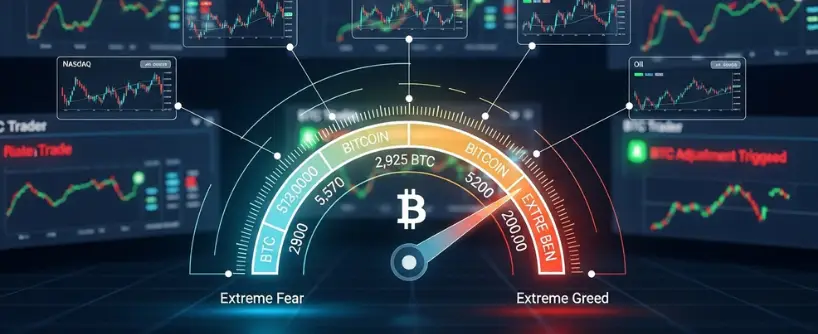 In the past, Bitcoin’s price was largely isolated from legacy markets. That’s no longer true.
Today, Bitcoin acts as a sentiment gauge—a barometer of investor confidence. If BTC falls 10% in a day, you’ll often see ripple effects in:
In the past, Bitcoin’s price was largely isolated from legacy markets. That’s no longer true.
Today, Bitcoin acts as a sentiment gauge—a barometer of investor confidence. If BTC falls 10% in a day, you’ll often see ripple effects in:
- Nasdaq-listed tech stocks (especially crypto-adjacent ones)
- High-risk emerging market currencies
- Commodities like gold and oil (safe-haven rotations)
Correlation Between Bitcoin and Global Events
In 2025, Bitcoin price swings are regularly tied to global headlines.Central Bank Policies
Major rate changes from the Fed or ECB affect liquidity and risk appetite. When interest rates rise sharply, Bitcoin often dips as speculative capital exits. Conversely, dovish policy tends to spark short-term rallies.War and Geopolitical Risk
When tensions rise (such as the early 2025 Taiwan Strait incident), investors initially flee crypto. But Bitcoin often rebounds as a hedge against fiat instability, especially in regions with inflation.Regulatory Shocks
Announcements from countries like the U.S., South Korea, or the EU on stablecoin laws or taxation policies directly impact BTC volatility. In Q1 2025 alone, over $30B in BTC trading volume was driven by regulatory news alone.Bitcoin Volatility vs. Traditional Markets
Compared to traditional assets, Bitcoin remains more volatile but its peaks and troughs are better understood today. A chart comparing Bitcoin's volatility to other asset classes, such as gold, equities, and bonds, helps contextualize how Bitcoin's volatility trends over time relative to these markets.
This volatility, while extreme by legacy standards, is part of what attracts short-term traders and institutional alpha seekers to Bitcoin markets.
A chart comparing Bitcoin's volatility to other asset classes, such as gold, equities, and bonds, helps contextualize how Bitcoin's volatility trends over time relative to these markets.
This volatility, while extreme by legacy standards, is part of what attracts short-term traders and institutional alpha seekers to Bitcoin markets.
How Bitcoin Futures Contribute to Volatility
Bitcoin futures trading plays a key role in amplifying short-term volatility. Large leveraged positions can trigger liquidation cascades, especially when BTC moves sharply. For example, during the March 2025 CPI report, BTC dropped 12% in 36 hours, leading to $800 million in liquidations. Sellers can trigger sharp moves by attempting to sell large positions at key support levels, intensifying downside pressure. Breaking above resistance or below support often signals a shift in market momentum, with traders looking to gain an advantage by anticipating these moves—seeking upside when resistance is broken and managing downside risk if support fails. Price action is often expected to follow certain patterns, with traders watching for the form of higher lows or lower highs. If Bitcoin remains in the half of a recent price range, it may indicate consolidation. A clear sign of trend reversal is often sought by both buyers and sellers in the futures market. Bitunix allow traders to go long or short with up to 125x leverage. While this creates opportunity, it also increases volatility—especially when market sentiment flips quickly.Institutional Adoption and Volatility Suppression
While retail traders often chase volatility, institutions aim to reduce it. In 2025, the rise of institutional spot Bitcoin ETFs, structured products, and custody services has introduced stabilizing forces:- OTC desks absorb large trades off-exchange
- Market makers add liquidity at key price levels
- Algorithmic arbitrage reduces cross-exchange price gaps
Bitcoin and Currency Market Volatility
Bitcoin’s volatility has begun influencing sovereign currencies, especially in inflation-hit or politically unstable economies. In countries like Argentina, Nigeria, and Turkey, BTC is used as a hedge against devaluation. When local currencies drop, demand for Bitcoin rises—adding to BTC’s global relevance and volatility. In 2025, several nations with high capital outflow restrictions have seen BTC trading volumes spike during monetary crises, proving that Bitcoin volatility is now part of FX policy considerations in some countries.Why Volatility Matters to Traders
Volatility equals opportunity. Professional traders thrive in environments where prices move sharply. It creates setups for:- Scalping short-term reactions
- Swing trading larger reversals
- Arbitrage between spot and futures
- Options plays on implied volatility
How to Manage Bitcoin Volatility in Your Strategy
- Use lower leverage on volatile days
- Avoid overtrading during news events
- Diversify across trading styles (trend, range, breakout)
- Backtest with real volatility data
- Use platforms with reliable infrastructure, like Bitunix, which ensures fast execution even during high-traffic spikes