Article Summary
- This article provides a long-term, speculative price prediction for Floki (FLOKI) for the year 2030, assessing its potential to grow beyond its meme coin status.
- It frames Floki's core investment thesis as a project attempting to build a genuine ecosystem with real utility, including a metaverse game (Valhalla), a DeFi platform, and a crypto education portal.
- The bullish case for 2030 is built on the successful launch and adoption of these ecosystem components, a strong community, and aggressive marketing efforts.
- The bearish case highlights the immense competition from other meme coins and established gaming/metaverse projects, the inherent volatility and risk of the meme coin category, and the challenge of transitioning from a hype-driven asset to a utility-driven one.
- It presents three potential price scenarios for 2030 (bullish, neutral, bearish) based on the success or failure of its ecosystem development and the overall growth of the crypto market.
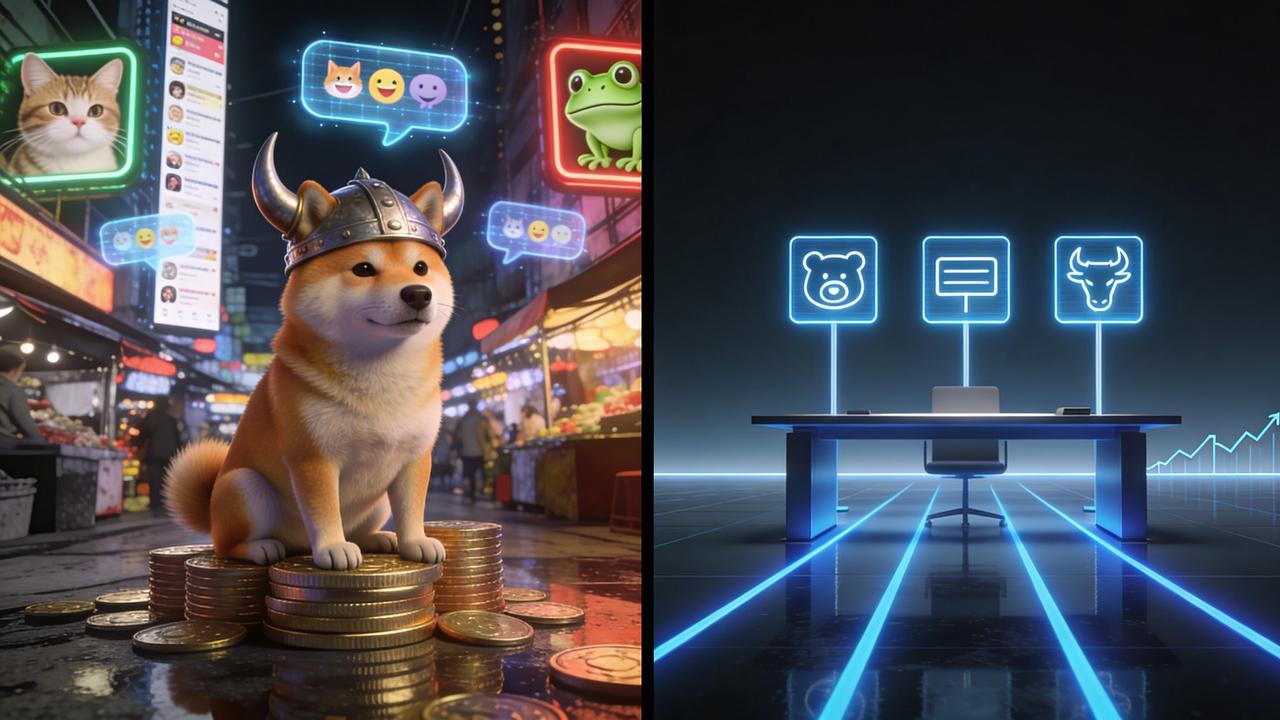
Floki started as a meme inspired by Elon Musk’s dog, then tried to grow into a broader product set. That pivot matters because meme coins usually live and die by attention. Floki’s own positioning is that it runs on three pillars: community, utility, and marketing.
So this is not only a dog coin story. It is a bet that the Floki ecosystem can keep users engaged across a game, DeFi tools, tokenization products, and education, even when the market gets quiet. If you use a crypto exchange like Bitunix, you will see FLOKI/USDT trade like a high-beta asset anyway.
This analysis will evaluate Floki's potential to achieve its ambitious roadmap. We will dissect its ecosystem, assess the competition, and project realistic price scenarios for 2030 based on its ability to deliver real utility.
The Bullish Case For Floki (2030)
The bullish thesis is that Floki survives the meme phase and becomes one of the few tokens that can point to repeat usage. Here are the main elements that might contribute to it.
1) The Ecosystem Play: Valhalla, DeFi Tools, And Education
Valhalla is Floki’s flagship game narrative. The docs describe it as an NFT metaverse game where FLOKI acts as the main utility token.
A direct line from the Valhalla documentation explains this approach:
"Valhalla is FLOKI’s NFT Metaverse game that aims to tap into the $1 trillion Metaverse industry."
Even if you don't trust market-size claims, the practical point is that games can create token sinks. Players spend tokens for progression, upgrades, and in-game assets. That can support demand if the game retains users.
Floki also offers DeFi-style products. It describes FlokiFi as a suite of DeFi tools and positions FlokiFi Locker as a core product. The February 2025 whitepaper legal page says FlokiFi Locker lets users lock tokens and earn rewards.
If you want a concrete adoption signal, FLOKI staking lets users stake FLOKI and earn the sister reward, TokenFi’s token, TOKEN. It also shows an update that over 460,000 holders are staking.
Finally, Floki keeps a learning narrative through its education platform. The whitepaper describes the University of Floki as an attempt to fill a crypto education gap and introduce users to the ecosystem.
One small but telling detail is that these pieces can reinforce each other. A game brings in attention, tools create reasons to stay, and education lowers the friction for new users who want to invest in DeFi without getting confused by basic mistakes.
2) Strong Community And Branding
Community is not a side detail for meme-driven assets. It is a distribution channel. Floki’s site frames the Vikings as the core of the project and lists large social followings, which matter for reach during hype cycles and for user acquisition when new products ship.
On-chain distribution signals are also important for meme coins, since a few wallets can control the narrative by dumping into rallies. CoinMarketCap shows FLOKI with hundreds of thousands of holders and a circulating supply in the trillions, which indicates broad distribution compared to microcap memes.
3) Aggressive Marketing That Keeps It Visible
Marketing only helps if it converts into users, but it does keep a token in the conversation. In 2025, Floki published multiple campaigns aimed at Valhalla discovery. For example, Floki announced a partnership with PlayToEarn, describing it as a platform with over 2,900 games listed across more than 50 blockchains, and it also cited distribution stats like over 1 million monthly visitors.
Floki also announced a partnership with Method to reach the MMO community, including jersey placement through 2025 and 2026. And it ran a global YouTube campaign to increase Valhalla's visibility, a four-week campaign targeting users across multiple regions.
The bullish read is that Floki keeps buying attention long enough to ship products that keep users.
The Bearish Case Against Floki (2030)
The bearish thesis is that Floki builds a lot, but usage stays niche, and price continues to follow hype cycles more than product traction. Here are the main elements that might contribute to a bearish scenario.
1) Immense Competition On Two Fronts
Floki competes in a meme market where attention and liquidity concentrate in a few large brands. CoinGecko’s 2025 memecoin report said DOGE held 47.3% of memecoin market share, which makes it hard for smaller dog-themed tokens to stay top-of-mind when narratives rotate fast.
At the same time, Floki aims for gaming and metaverse utility, where users expect real retention and product quality. DappRadar’s Q3 2025 report showed 4.66M daily unique active wallets in blockchain gaming, but metaverse NFT trading volume fell to about $17M (down 55% QoQ), and even major players like The Sandbox made big cuts.
2) The Meme Coin Stigma
Some investors will never treat a meme origin as serious. That can reduce institutional interest and keep liquidity concentrated in retail cycles. You will see this most clearly during meme coin season. Tokens can rip up fast, then deflate just as fast once attention rotates. Projects that rely on narrative more than usage often struggle to hold value when the cycle turns.
3) Market Cycles And Hype Dependence
Even with real products, FLOKI often trades like a sentiment gauge. CoinGecko’s history shows how quickly that can change: market cap rose from about $269.7M on Feb 25, 2026, to $291.1M on Feb 26, while 24h volume jumped from $26.0M to $48.0M.
When price swings like this occur, people hesitate to spend tokens in games or apps, because the cost feels different every hour. Quiet phases add another problem, volume compresses, and execution gets worse, so exits hurt.
4) Tokenomics: Big Supply Makes Price Targets Harder
Floki’s own site lists a total supply of 10,000,000,000,000 FLOKI and a 0.3% buy/sell tax on DEX trades, with burn mechanics tied to FlokiFi Locker fees and prepaid card fees. CoinMarketCap shows total supply around 9.65T and circulating supply around 9.53T.
That supply level makes per-token targets psychologically tricky. If FLOKI trades at $0.01, and the circulating supply is roughly 9.53T, you are talking about roughly $95B of market cap. That is a different league of adoption and liquidity than where FLOKI sits in early 2026.
Floki Price Prediction 2030: Three Scenarios
Price per token sounds simple, but market cap gives you a clearer picture of FLOKI because the supply is huge. Floki's site lists about 9.32T circulating tokens and 10T total supply, so even small price changes can imply very large market-cap moves.
Regarding price predictions for 2030, CoinCodex's model projects about $0.00007712 by the end of the year, which works out to roughly $736M market cap if circulating supply stays near that level.
Kraken's price tool uses a fixed annual-change assumption and lands near $0.000046 for 2030, or about $439M market cap at similar supply. It's a useful baseline because it keeps assumptions simple, but it is not a thesis on Floki adoption.
More aggressive estimates exist, Changelly-based projections around $0.0016 to $0.0019 in 2030, which implies roughly $15B to $18B market cap using the same circulating supply. Treat that as an upper-range scenario that requires strong, sustained usage and demand.
With that in mind, here is a practical scenario table that focuses on Floki’s market cap:
To connect this to prices, you can do quick math using the 10T total supply figure Floki publishes. A $1B market cap implies roughly $0.0001 per token. A $5B market cap implies roughly $0.0005. A $20B market cap implies roughly $0.002.
How To Trade FLOKI On Bitunix
Whether you care about the Floki ecosystem long-term or you just trade volatility, execution basics matter. Bitunix lists a FLOKI/USDT spot market page you can use for order entry.
Here is a simple step-by-step:
- Create an account on Bitunix and secure it with strong authentication.
- Deposit crypto or buy USDT using Bitunix’s funding and deposit tools.
- Open the spot market page for FLOKI/USDT and check liquidity, spread, and recent volatility.
- Choose an order type:Market order if you want immediate execution.Limit order if you want a specific entry price.
- Set position size first, then place the order. Treat meme coins as high-volatility assets and avoid sizing trades based on hope.
- Decide custody:Keep on exchanging for active trading.Withdraw to a wallet if your plan is longer-term holding.
If you use futures, read the contract specs and liquidation rules before you touch leverage. Bitunix supports both spot and derivatives markets, so you can choose based on your risk tolerance.
Conclusion: A Project With Something To Prove
Floki is one of the meme-origin projects that keeps trying to justify a higher valuation with products. You have a flagship game narrative, an education angle, and DeFi tooling, plus ongoing marketing pushes to keep Valhalla visible.
The honest verdict is that Floki’s long-run value depends less on memes and more on repeat usage. If Valhalla retains players and Floki’s tools stay relevant, Floki can earn a higher market cap over time. If those products do not scale, price will keep behaving like a sentiment trade.
Do your own research, play the game, join the community, and if you decide to invest in the Floki saga, Download the Bitunix app, register, and enjoy a secure platform for your trades.
FAQ Section
Is Floki related to Shiba Inu or Dogecoin?
Floki is not a fork of Dogecoin or Shiba Inu. It launched later and took inspiration from the meme culture around Musk’s dog. It runs as a multichain token on Ethereum and BNB Chain, with its own contracts and product roadmap.
What is Valhalla?
Valhalla is Floki’s NFT metaverse game concept, where FLOKI is positioned as the main utility token. The documentation describes on-chain gaming interactions and upgradeable NFTs, and it frames the game as the center of long-term token utility.
Can I stake Floki to earn rewards?
Yes, Floki’s site describes a staking product where users stake FLOKI and earn the reward token TOKEN. The same page shows a snapshot claiming more than 460,000 holders are staking, with the page marked updated May 10, 2025.
What is the total supply of Floki?
Floki’s official site lists the total supply at 10 trillion tokens. CoinMarketCap shows a total supply of around 9.65T and a circulating supply of around 9.53T in its live statistics.
Is Floki available on major exchanges?
Floki lists FLOKI on over 100 exchanges and includes both centralized and decentralized venues on its site. Availability varies by region, and liquidity differs by market, so check spreads and volume before you trade.
Who are the developers behind Floki?
Floki started with anonymous founders and still uses a mostly pseudonymous core team. Public profiles often cite core figures known as B, Sabre, and MrBrown Whale, plus a publicly named lead developer, Jackie Xu, who leads technical development.
What is the difference between Floki and other dog-themed coins?
Floki tries to differentiate through products, such as Valhalla as a game, FlokiFi tools, TokenFi tokenization, and a crypto education platform. The trade-off is execution risk, since building multiple products is harder than staying meme-only.
Has Floki’s smart contract been audited?
Yes. Floki’s contracts have audit coverage from firms such as CertiK and SourceHat, and CertiK’s project dashboard tracks findings and security telemetry for Floki.
What is TokenFi, and how is it related to Floki?
TokenFi is a Floki-linked platform focused on token creation and tokenization tools, positioned as part of the broader Floki ecosystem’s shift toward utility. Floki’s documentation describes TokenFi as an ecosystem product with its own token (TOKEN) and services aimed at making token launches and tokenization easier.
Will Floki ever reach 1 cent?
At current supply levels, $0.01 implies roughly $95B–$100B market cap, depending on which supply figure you use. That would require major adoption, deep liquidity, and sustained product usage. It is not impossible in theory, but the market cap bar is very high.
Glossary
- Market Cap: Token price multiplied by circulating supply.
- Circulating Supply: Tokens currently available in the market.
- Total Supply: Total tokens minted, including locked or reserved tokens.
- Tokenomics: Supply, fees, burns, and incentives that shape token behavior.
- Burn: Permanent token removal from supply, often via a burn address.
- Staking: Locking tokens to earn rewards, often paid in another token.
- Utility Token: A token meant to be used inside products, not only traded.
- DEX: Decentralized exchange using liquidity pools for swaps.
- Liquidity: How easily you can buy or sell without moving price much.
- Spread: The gap between the best bid and the best ask in a market.
- On-Chain: Activity recorded directly on a blockchain.
- Multichain Token: A token that exists on more than one chain (ETH and BNB Chain).
- NFT: Non-fungible token, commonly used for game items and collectibles.
- GameFi: Crypto games that integrate tokens and in-game economies.
- Audit: A third-party review of smart contracts to find known vulnerabilities.
About Bitunix
Bitunix is a global cryptocurrency derivatives exchange trusted by over 5 million users across more than 100 countries. The platform is committed to providing a transparent, compliant, and secure trading environment for every user. Bitunix offers a fast registration process and a user-friendly verification system supported by mandatory KYC to ensure safety and compliance. With global standards of protection through Proof of Reserves (POR) and the Bitunix Care Fund, Bitunix prioritizes user trust and fund security. The K-Line Ultra chart system delivers a seamless trading experience for both beginners and advanced traders, while leverage of up to 200x and deep liquidity make Bitunix one of the most dynamic platforms in the market.
Bitunix Global Accounts
X | Telegram Announcements | Telegram Global | CoinMarketCap | Instagram | Facebook | LinkedIn | Reddit | Medium
Disclaimer: Trading digital assets involves risk and may result in the loss of capital. Always do your own research. Terms, conditions, and regional restrictions may apply.