1. Introduction to Chainlink
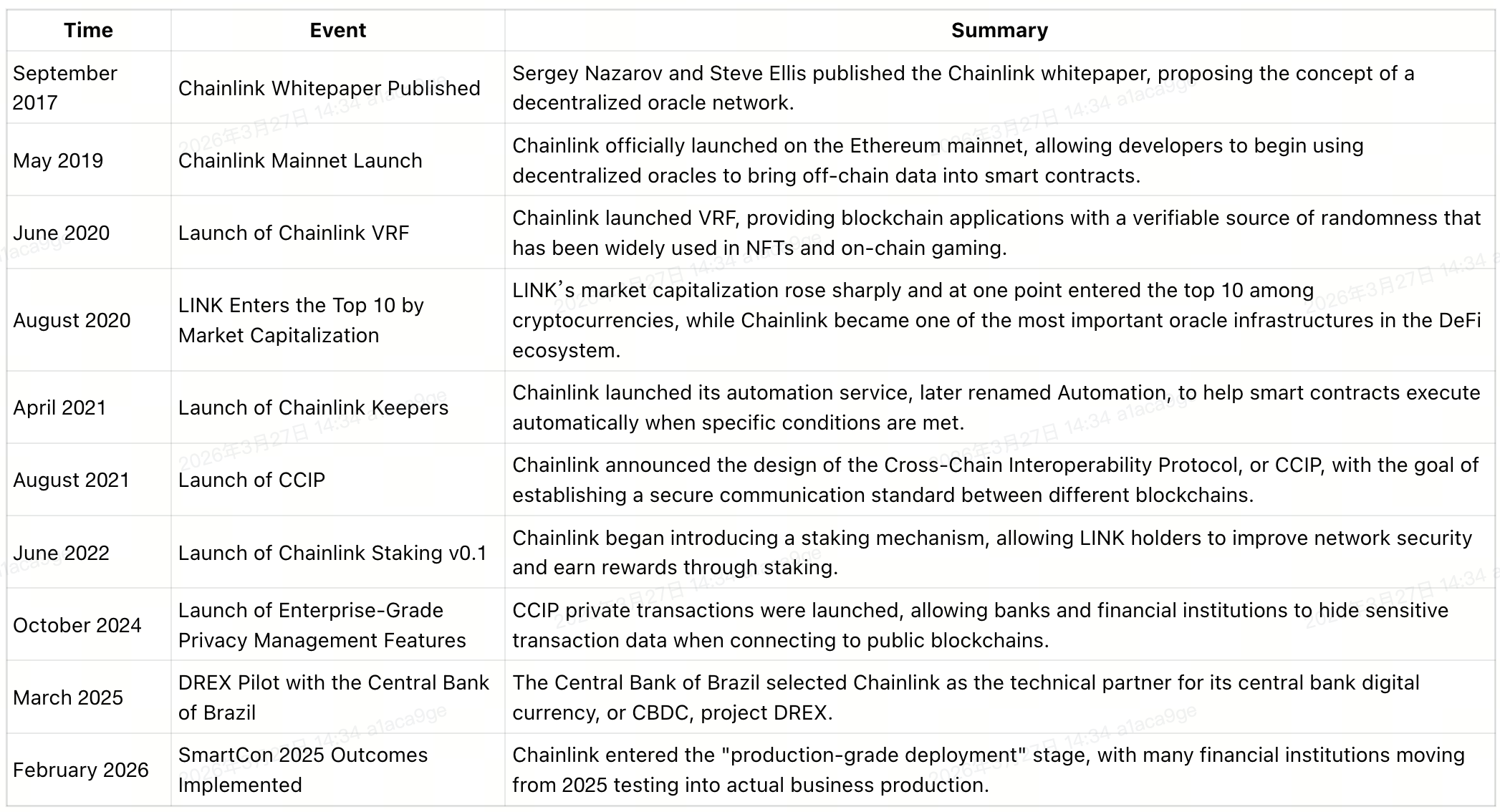
In the world of blockchain, we often hear about "decentralized finance" or "smart contracts." However, when blockchain was originally designed, in order to ensure absolute security and decentralization, it was built as a closed system. This means blockchain nodes can only process on-chain data and cannot actively perceive external market price fluctuations, real-world weather, or sports event results. Without external data, the application scenarios of smart contracts would be greatly limited. To solve this technical bottleneck known as the "oracle problem," Sergey Nazarov and Steve Ellis published the Chainlink whitepaper in 2017, proposing a decentralized oracle network architecture for the first time.
In September 2017, Chainlink launched its initial coin offering (ICO), successfully raising $32 million and issuing its native token, LINK. LINK is mainly used to pay oracle nodes for providing data services, while also playing an important role in the network security mechanism. Chainlink’s vision is to become the "bridge" between blockchain and the real world, providing secure and reliable external data for smart contracts. After years of development, Chainlink has grown from a technical solution addressing a specific problem into indispensable core infrastructure for the entire DeFi world and even the broader Web3 sector. Today, the value of on-chain assets secured by Chainlink, or TVS, has reached tens of billions of dollars, making it the undisputed leader in the oracle sector.
2. Chainlink, the Decentralized Oracle Network
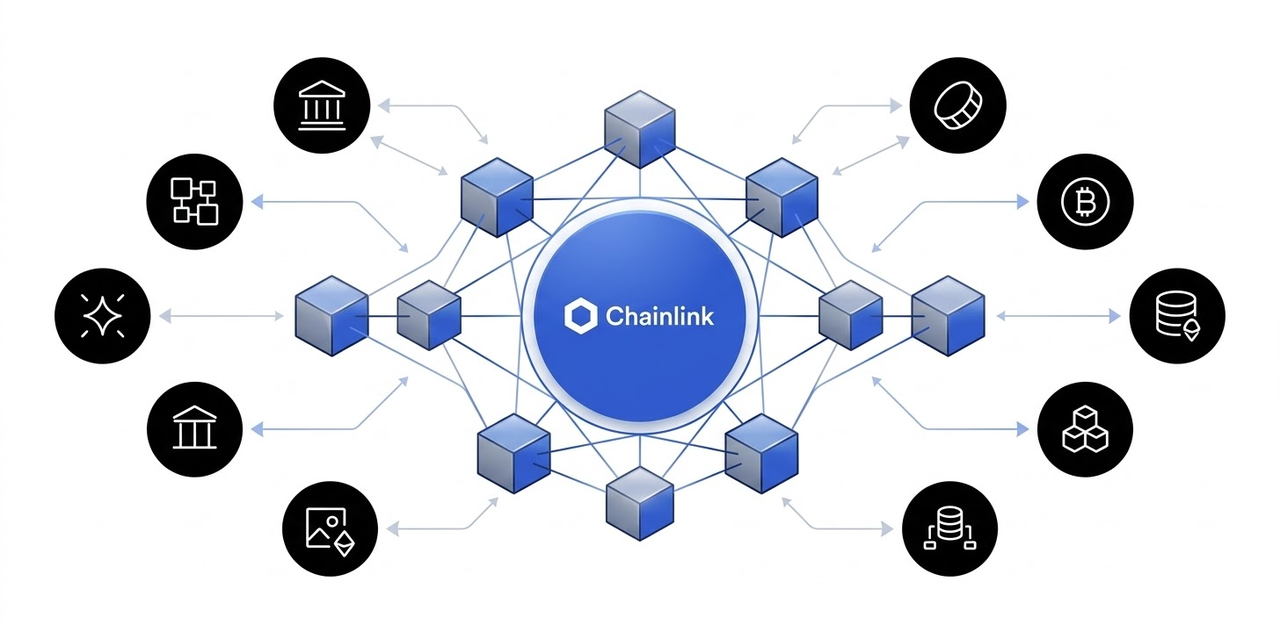
Since Chainlink is known as the "eyes" of blockchain, it must first solve the problem of "single point of failure." If data comes from only one centralized source, then once that source crashes or is manipulated by hackers, the smart contracts relying on that data will execute incorrect instructions, causing massive asset losses. Chainlink’s biggest breakthrough lies in building a "decentralized oracle network" composed of a large number of independent nodes.
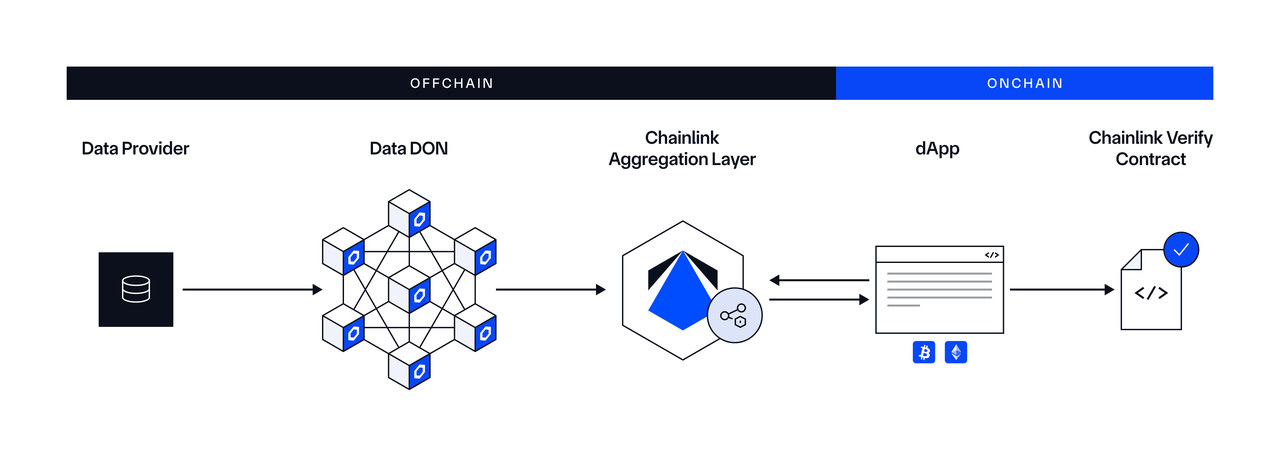
Chainlink’s current mainstream technical standard is the "Push Model" architecture. Under this model, data collectors, or nodes, distributed around the world continuously gather information from multiple high-quality data sources. When an on-chain protocol needs to obtain an asset price, these nodes first clean the data locally and then submit the results to an on-chain aggregation contract. The contract then filters the submissions and calculates a median price quote, proactively "pushing" the latest data to the smart contracts that need it. This multi-node aggregation mechanism greatly reduces the risk of malicious behavior from any single data source and ensures the objectivity and fairness of on-chain data.
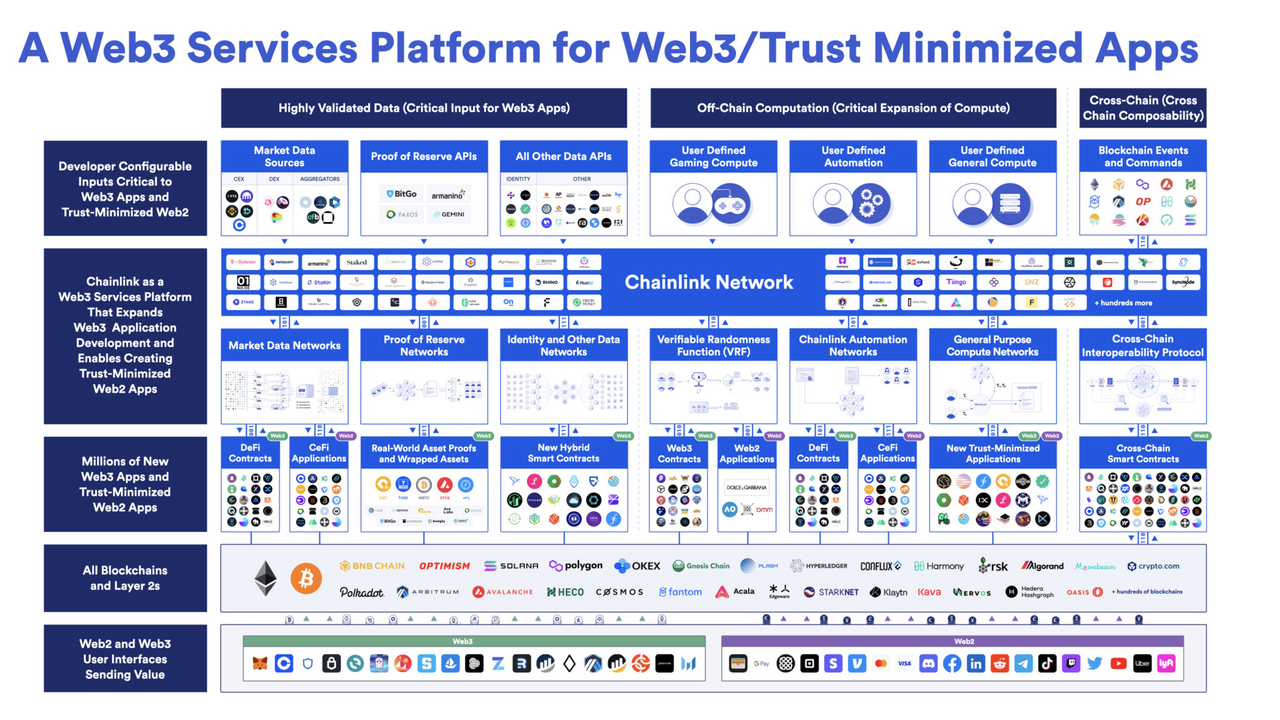
More than that, Chainlink also provides developers with extremely high composability. Whether obtaining the price of ETH on Ethereum or providing randomness for blockchain games, Chainlink’s standardized modules greatly lower the barrier for developers. This has also laid the foundation for Chainlink to become the largest oracle network in the world.
3. LINK, Tokenomics and the Staking Mechanism
In terms of its economic model, the native token LINK is the core fuel that drives the entire Chainlink ecosystem. Unlike Bitcoin or Ethereum, where the underlying public chain token is used for gas fees, LINK’s main role is to coordinate the economic incentives and constraints within the oracle network. When DeFi protocols such as Aave and Synthetix use the precise price feed services provided by Chainlink, they must pay LINK to node operators as compensation for data requests. This ensures that nodes have sufficient motivation to maintain their servers and continuously provide high-quality data.
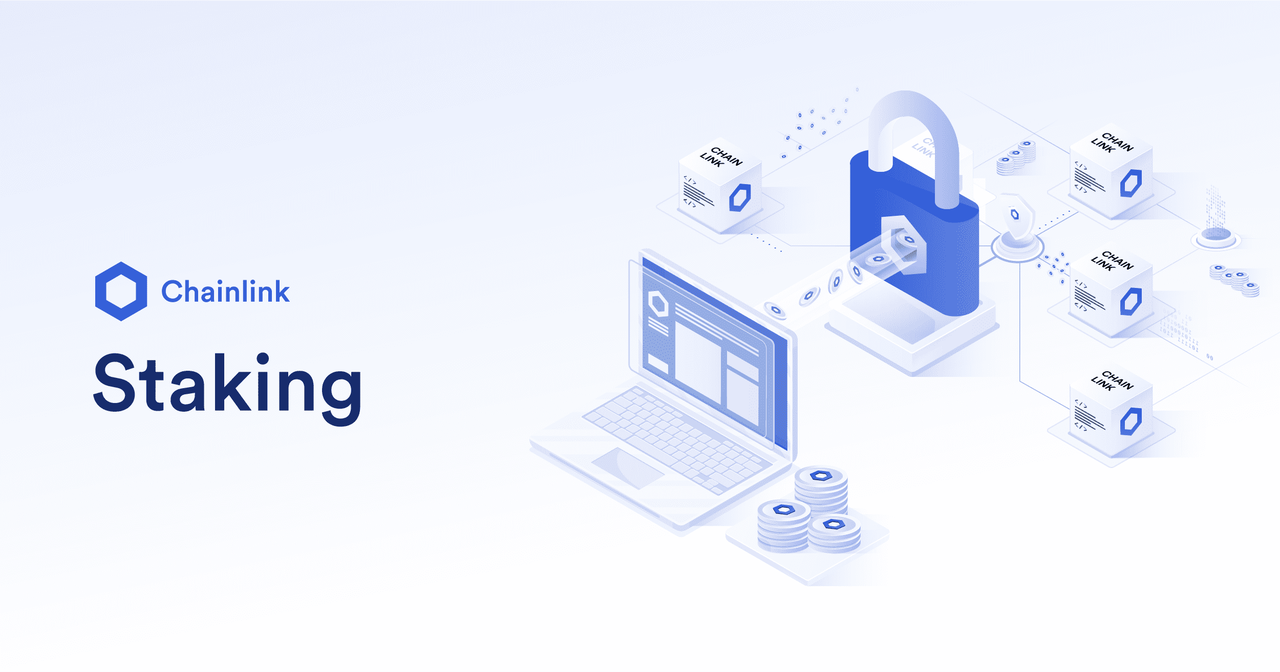
To further improve network security, Chainlink introduced Chainlink Staking. To prevent nodes from providing false data and damaging the network’s reputation, node operators and community members can stake LINK tokens in smart contracts. Once the system detects that a node has acted maliciously, provided inaccurate data, or failed to respond in time, the LINK tokens it staked may be penalized through deductions.
This design cleverly binds the economic interests of nodes to the secure operation of the network. Compared with systems that rely solely on computing power, LINK’s staking mechanism ensures at the most fundamental level that the cost of malicious behavior is far greater than the potential gains. This is what enables Chainlink to become the most solid data foundation in the DeFi world.
4. The Chainlink Ecosystem
From its initial "Price Feeds" to today’s diversified services, Chainlink’s infrastructure has become increasingly complete, laying a solid foundation for ecosystem expansion. The "DeFi Summer" of 2020 was a key moment in the development history of the Chainlink ecosystem. Decentralized lending protocols, derivatives exchanges, and similar platforms experienced explosive growth, and almost all of them relied on Chainlink to ensure the proper functioning of their liquidation mechanisms.
As the industry has developed, Chainlink’s boundaries have continued to expand. In addition to financial data, Chainlink launched VRF, or Verifiable Random Function, providing fair and tamper-proof random number generation services for GameFi and NFT projects, with projects such as Polychain Monsters benefiting from it. In addition, to solve the silo effect between Layer 2 networks and different public blockchains, Chainlink launched CCIP, or Cross-Chain Interoperability Protocol, enabling assets and information to be transmitted securely between different blockchains. Today, Chainlink not only serves Ethereum, but has also seamlessly integrated with dozens of public blockchains including Solana, Arbitrum, and Base, forming a vast and sophisticated cross-chain ecosystem.
5. Chainlink Labs
Throughout Chainlink’s development, the Chainlink Labs team, with Sergey Nazarov at its core, has consistently played the role of direction setter and technology driver. Unlike projects that rely entirely on spontaneous community contributions, Chainlink Labs has had a decisive influence on upgrades to the core architecture, the research and development of new products such as the CCIP protocol, and collaboration with enterprise-level clients.
To realize the vision of bringing "real-world assets," or RWA, onto the blockchain, Chainlink Labs has long been committed to breaking down the barriers between Web3 and traditional finance. In recent years, Chainlink has actively collaborated with traditional financial giants such as the Society for Worldwide Interbank Financial Telecommunication, or Swift, and the Depository Trust & Clearing Corporation, or DTCC, exploring how oracle and cross-chain technology can enable traditional financial institutions to interact securely with blockchain networks. Although Chainlink occasionally faces community discussion regarding its token release mechanism or the degree of node centralization, there is no denying that the central role Chainlink Labs has played in planning the technology roadmap and expanding the project’s reach across industries is one of the key cornerstones of Chainlink’s thriving ecosystem today.
6. How to Obtain LINK
As the core asset supporting the operation of the oracle network, the most direct and widely used way to obtain LINK tokens is to buy them through cryptocurrency exchanges. For individual investors, setting up their own oracle nodes to earn LINK rewards involves an extremely high technical barrier and requires professional server architecture as well as continuous operational maintenance. Therefore, directly purchasing LINK on the secondary market has become the first choice for the vast majority of users.
By purchasing LINK through centralized cryptocurrency exchanges such as Bitunix, the platform acts as a trusted intermediary and supports users in directly buying LINK with fiat currency or stablecoins such as USDT. Some platforms also support instant purchases by credit card, lowering the barrier to investment. Before using the platform for the first time, you need to register an account and complete identity verification, or KYC. This process requires the submission of personal information such as identification documents and proof of address, mainly to comply with global anti-money laundering, or AML, and counter-terrorist financing regulations, ensuring that the source of funds on the platform is lawful and compliant. Bitunix has an industry-leading compliance and risk control system, with cold and hot wallet separation, multi-signature technology, and real-time monitoring mechanisms. The platform has also publicly released Proof of Reserves, or PoR, allowing users to transparently verify asset status. Choosing Bitunix is the most worry-free and secure option for you.
7. Timeline of Major Chainlink Milestones
Disclaimer
This article is not intended to provide: (i) investment advice or investment recommendations; (ii) an offer or solicitation to buy, sell, or hold digital assets; or (iii) financial, accounting, legal, or tax advice. Digital assets (including stablecoins and NFTs) involve high risk and may be highly volatile. You should carefully consider whether trading or holding digital assets is suitable for you based on your financial situation. For your specific circumstances, consult your legal, tax, or investment professionals. You are responsible for understanding and complying with all applicable local laws and regulations.
About Bitunix
Bitunix is a global cryptocurrency derivatives exchange trusted by over 3 million users across more than 100 countries. At Bitunix, we are committed to providing a transparent, compliant, and secure trading environment for every user. Our platform features a fast registration process and a user-friendly verification system supported by mandatory KYC to ensure safety and compliance. With global standards of protection through Proof of Reserves (POR) and the Bitunix Care Fund, we prioritize user trust and fund security. The K-Line Ultra chart system delivers a seamless trading experience for both beginners and advanced traders, while leverage of up to 200x and deep liquidity make Bitunix one of the most dynamic platforms in the market.
Bitunix Global Accounts
X | Telegram Announcements | Telegram Global | CoinMarketCap | Instagram | Facebook | LinkedIn | Reddit | Medium