What is Proof of Reserves (POR)?
In simple terms, Proof of Reserves is a public demonstration that an exchange actually holds the assets it claims to have. It’s a way to verify that if you deposited Bitcoin (BTC), Ethereum (ETH), or Tether (USDT) on the platform, the exchange has those funds available to pay you back whenever you want to withdraw. Proof of Reserves is crucial because, in the past, some exchanges claimed to have user funds when they didn’t. This sent shockwaves to the entire crypto industry, making it difficult for users and exchanges to rebuild the trust. To ensure that we uphold our transparency virtue, we built the proof of reserves portal that allows users to check their on-chain balances in real time.How Does Bitunix Proof of Reserves Work?
The core principle behind Bitunix PoR is simple. If you have deposited 1 Bitcoin then only 1 BTC will reflect on the ledger. This is the same for all major cryptocurrencies. We not only meet the minimum balance amount but often have more liquidity in the treasury. While many believe that these numbers can be false or tampered with, we went ahead and built the POR system on blockchain. This means that anyone can verify the data on the blockchain, making it trustless and reliable. At Bitunix, we took the non-traditional approach and opted to share proof of reserves using a cryptographic method called merkle tree. It is a data structure that securely combines and summarizes all user balances on the platform. Let's break down what a merkle tree looks like. Imagine a tree whose leaves are individual user balances. The branches combine those balances into groups and the root is a single, secure fingerprint (called the Merkle Root Hash) representing all balances.What is the Merkle Root Hash?
The Merkle Root Hash is a cryptographic code that proves all user balances are included in the exchange’s reserves without revealing individual data. It’s like having a secure receipt that confirms your funds are part of Bitunix’s fully-backed reserves.How to Verify Your Own Funds on Bitunix?
One of the most important aspects of our Proof of Reserves system is that users can verify their holdings at any time. Here is how you can check your own reserves on the Bitunix platform:Step 1
Access the Proof of Reserves Page: To check the POR, visit the home page of Bitunix and scroll to the bottom. Next, click on Proof of Reserves.
Step 2
View Your Personal Audit: On the Proof of Reserves page, select “My Audit” to access your account’s reserve details.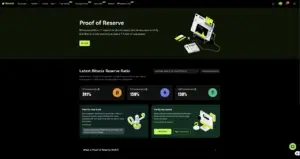
Step 3
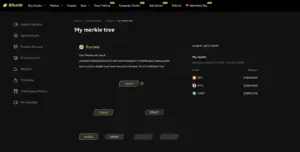
You will see your recent audit results, including a unique cryptographic code called the Merkle Leaf. Verify Your Holdings Using the Merkle Leaf: To verify, simply copy the merkle leaf and return to the Reserves dashboard and past the leaf data in the verifier.
The system will confirm whether your assets are included in the total reserves, providing cryptographic proof that your funds are fully backed. (see image below)
Verify Your Holdings Using the Merkle Leaf: To verify, simply copy the merkle leaf and return to the Reserves dashboard and past the leaf data in the verifier.
The system will confirm whether your assets are included in the total reserves, providing cryptographic proof that your funds are fully backed. (see image below)
 Watch our tutorial on How to Verify Your Proof of Reserves on Bitunix?
https://youtu.be/DzKnrSc4DOw?si=X2k0gI_tluYDULFy
Watch our tutorial on How to Verify Your Proof of Reserves on Bitunix?
https://youtu.be/DzKnrSc4DOw?si=X2k0gI_tluYDULFy
Why Proof of Reserves Matters for Bitunix Users?
Our commitment to Proof of Reserves offers significant benefits to our users:- Trust and Transparency: With publicly available reserve data and user-verifiable audits, we ensure complete transparency about our asset holdings.
- Guaranteed Security of Funds: With our 1:1 asset backing and over-reserving policy, users can trust that their deposits are safe and immediately accessible.
- Personalized Verification of Reserves: Our Merkle Tree-based system allows each user to independently verify their holdings, reinforcing trust and transparency.
- Protection from Liquidity Crises: With over 100% reserves and periodic third-party audits, we mitigate the risk of insolvency and ensure users can always withdraw their funds.