Reporting Period: October 17–23, 2026 Data as of: October 23, 2026
Market Overview: Bitcoin Surges to $84,000 Before Retreating as Fed Rate-Cut Expectations Shift
From October 17 to 23, 2026, shifting expectations for U.S. monetary policy and changing economic data kept cryptocurrency markets volatile. Early in the week, several Federal Reserve officials voiced concerns about a weakening labor market, prompting investors to anticipate continued monetary easing and further rate cuts. Bitcoin (BTC) rebounded from around $81,000 to $84,000. Institutional fund flows also supported the rally, with spot Bitcoin ETFs recording net inflows of approximately $526 million on October 19 and $524 million on October 21.
However, U.S. economic data released between October 21 and 22, including retail sales and initial jobless claims, came in better than expected on some measures. This tempered expectations for consecutive, aggressive Fed rate cuts. After reaching $84,000, Bitcoin retreated to around $81,000, reversing much of its earlier advance. Whale activity, changes in ETF flows, and liquidations in derivatives markets further amplified short-term volatility. With the U.S. midterm elections approaching, prediction markets' shifting odds of victory for the two major parties have also drawn attention. Political uncertainty could continue to influence investor expectations for policy and risk assets.
The Bitunix Token Pulse Weekly Report tracks the performance of the top 300 tokens by market capitalization on Bitunix, alongside key U.S. stock contracts, to provide investors with market insights and a reference for trading strategies.
Crypto Market Performance: Broad-Based Losses Across the Top 300 Tokens
Cryptocurrency markets came under broad selling pressure this week. Only around 20% of the top 300 tokens by market capitalization on Bitunix posted gains, while the median seven-day return was -3.98%. Bitcoin fell 0.71%, outperforming the broader market, while several major altcoins, including ADA, NEAR, and SUI, declined by more than 5%.
Top Gainers: LIT Rises 12% as DeFi and AI Tokens Show Relative Resilience
Despite widespread losses, some tokens in the decentralized finance (DeFi) and artificial intelligence (AI) sectors moved higher. Among DeFi tokens, CVX, LIT, and COMP each gained more than 10% over the week. In the AI sector, WLD and BTT advanced by more than 5%.
However, all five tokens experienced notable pullbacks over the latest 24-hour period. LIT, in particular, fell more than 11%, erasing part of its weekly gains and highlighting continued short-term selling pressure.
Top Gainers | Latest Price | 7-Day Change |
CVX | $2.48 | 24.46% |
LIT | $3.43 | 12.19% |
COMP | $24.45 | 10.32% |
WLD | $0.55 | 9.04% |
BTT | $0.00 | 7.30% |
Source: Bitunix. Prices and percentage changes recorded at 1:30 a.m. UTC.
Top Losers: ZK-Proof Tokens Retreat Sharply, BAT Drops 17%
Several tokens lost more than 10% this week, with the zero-knowledge proof (ZKP) sector experiencing particularly sharp corrections. STRK and ZK fell 39% and 21%, respectively. BAT, which topped last week's gainers list, also dropped more than 17%, giving back a substantial portion of its previous gains. The pullback suggests that as risk appetite weakened, previously strong performers faced increased profit-taking pressure.
Top Losers | Latest Price | 7-Day Change |
STRK | $0.05 | -39.20% |
PONS | $0.25 | -26.71% |
STX | $0.33 | -23.09% |
ZK | $0.01 | -21.20% |
BAT | $0.17 | -17.18% |
Source: Bitunix. Prices and percentage changes recorded at 1:30 a.m. UTC.
Token Spotlight: LIT — A Token at the Center of Decentralized Perpetual Trading
LIT is the native token of Lighter, a decentralized derivatives trading platform built within the Ethereum ecosystem. Lighter focuses on perpetual futures and uses technologies such as zero-knowledge proofs (ZK proofs) to verify trade execution and matching processes, aiming to improve transparency and verifiability without compromising trading performance.
Unlike traditional centralized exchanges, Lighter emphasizes on-chain settlement and a verifiable trading architecture designed to deliver a low-latency, high-performance derivatives trading experience. LIT is a core token within the platform's ecosystem, with roles related to governance, incentive mechanisms, and ecosystem development. As the decentralized derivatives market evolves, Lighter's trading volume, user activity, and liquidity are important metrics to monitor when assessing LIT's market performance.
LIT Technical Analysis: Heightened Short-Term Volatility After a Rebound From Lows
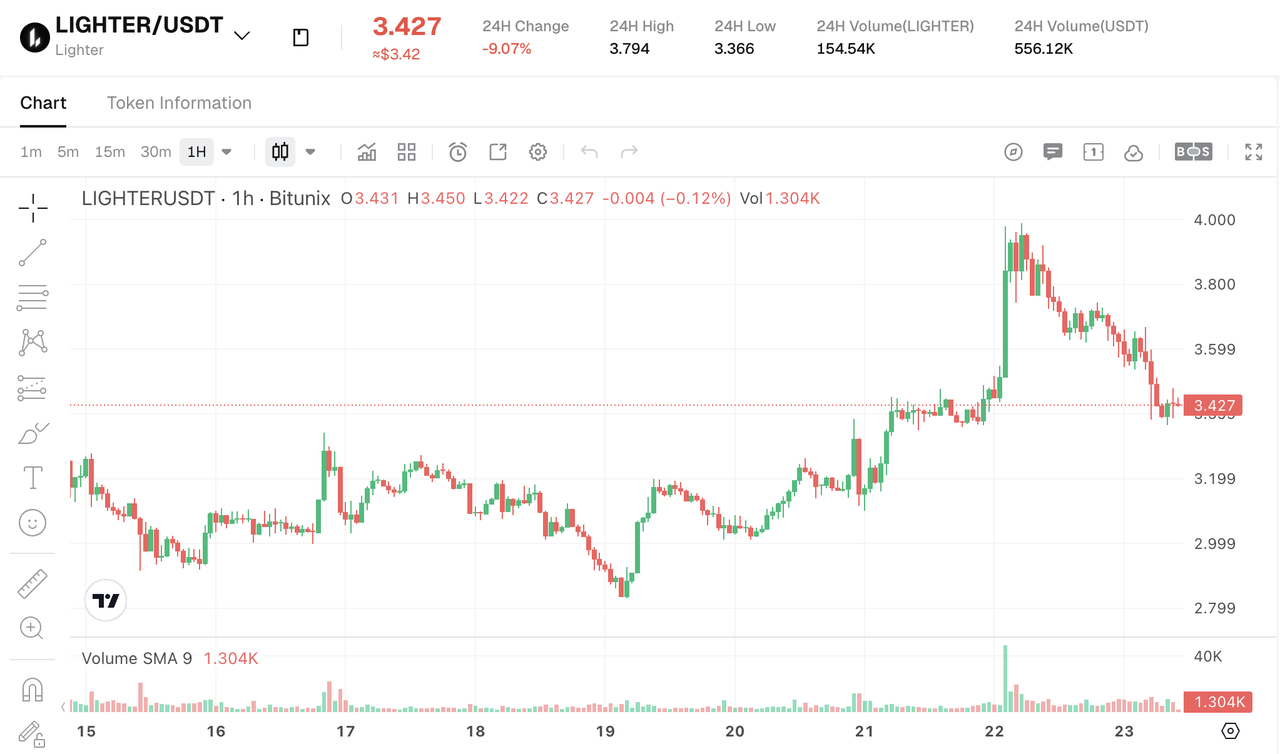
LIT completed its token generation event (TGE) in late 2025. Following its launch, airdrop-driven enthusiasm pushed the token to an all-time high of $7.80. It subsequently entered a prolonged period of choppy declines, reaching a low of around $0.80 in May 2026. From June onward, LIT began a sustained recovery as the perpetual decentralized exchange (Perp DEX) sector strengthened. After several rallies, the token climbed back above $5.
More recently, however, short-term volatility has intensified as early gains have attracted profit-taking. LIT has rallied toward the $4 level three times, only to suffer subsequent declines of more than 20% on each occasion. This repeated rejection suggests significant selling pressure around $4, making it a key resistance level to watch. Whether LIT can break above this zone convincingly, along with trading-volume trends during pullbacks, will help determine whether its recovery can continue.
Data Source: Bitunix
Lighter Trading Activity: A Top-Five Perp DEX With Daily Volume Above $1 Billion
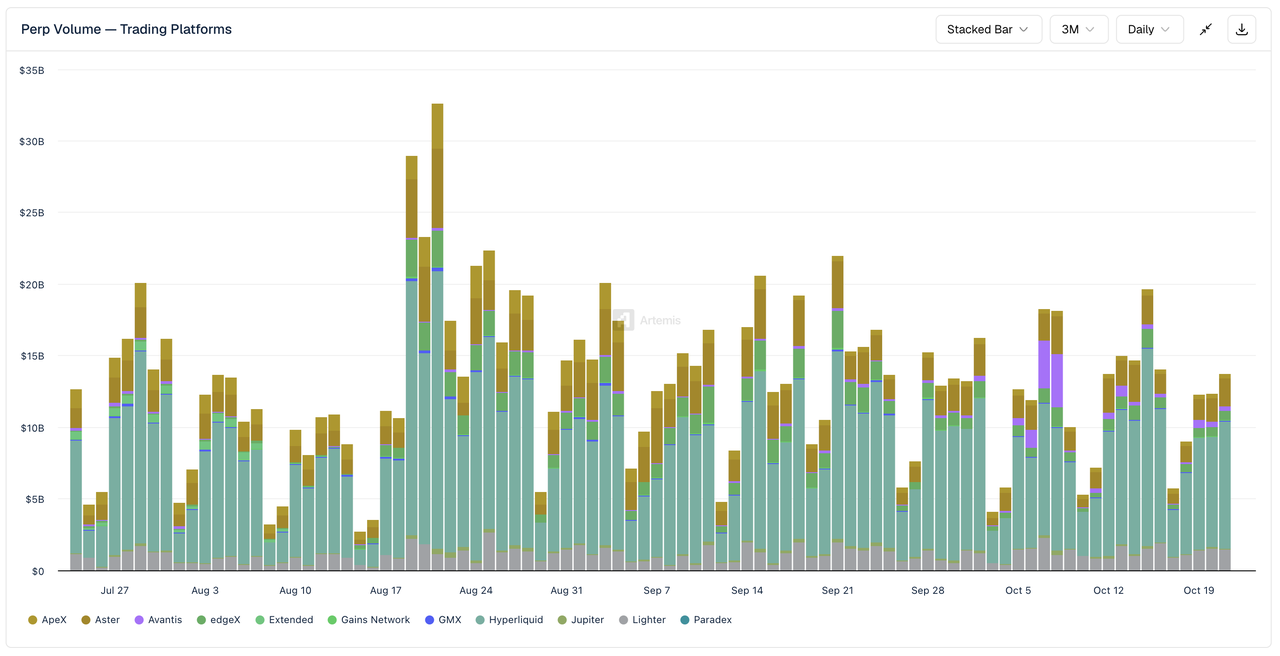
Lighter has consistently ranked among the five largest perpetual decentralized exchanges by trading volume, with daily volume exceeding $1 billion. Hyperliquid remains the dominant platform in the sector, with daily trading volume consistently above $8 billion. Its volume exceeds the combined total of platforms ranked second through fifth, giving it a substantial lead that competitors are unlikely to challenge in the near term.
Competition is considerably tighter among the platforms ranked second through fifth. Lighter slipped to fifth place in March 2026 but has gradually recovered since late September as trading activity improved. It has since re-established itself among the leading platforms behind Hyperliquid and is competing with Aster for second place. Whether Lighter can sustain its volume growth will be an important indicator of its competitive position and the underlying fundamentals supporting LIT.
Data Source: X
Lighter's Q3 Performance: Plans to Apply for U.S. Derivatives Trading and Clearing Licenses in November
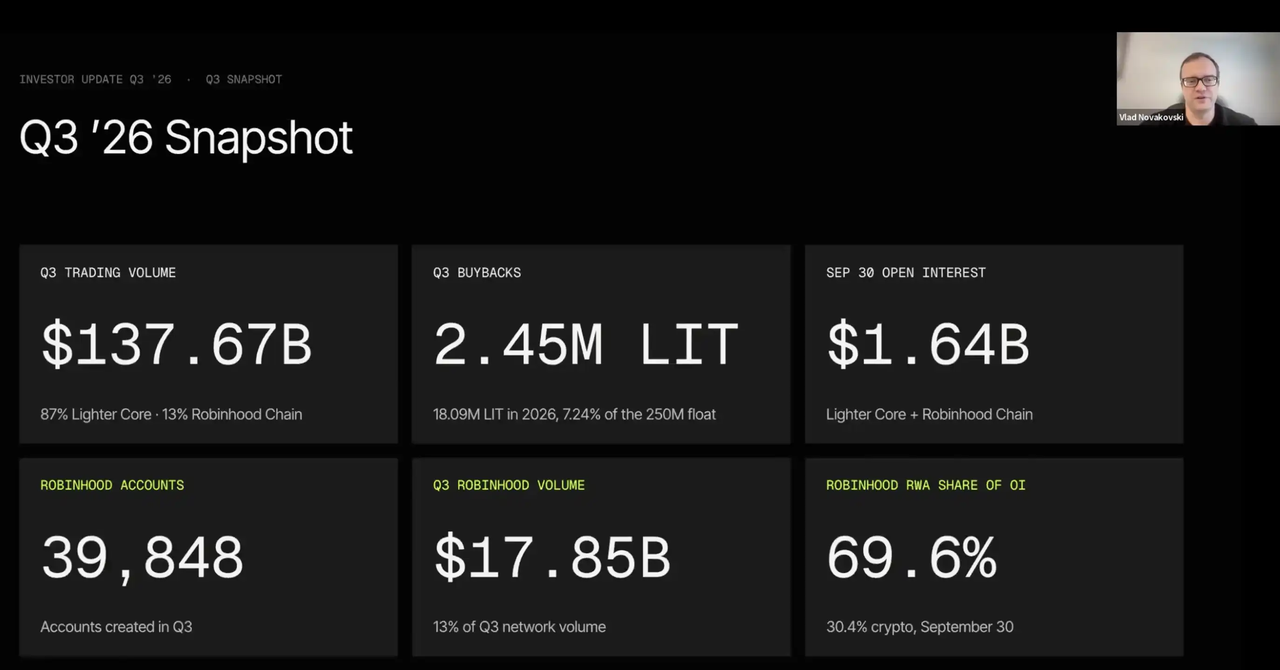
Lighter Protocol is among the projects that proactively disclose financial and operational metrics. On October 22, CEO Vladimir Novakovski shared an update on the platform's third-quarter performance. By the end of Q3, Lighter's open interest had reached $1.64 billion, approximately double its Q2 level. Quarterly trading volume totaled $137.67 billion, ranking second among Perp DEX platforms, while quarterly fee revenue reached $8.55 million.
Beyond its growth in trading volume and fee revenue, Lighter plans to apply to the U.S. Commodity Futures Trading Commission (CFTC) in November for Designated Contract Market (DCM) and Derivatives Clearing Organization (DCO) registrations. The move is intended to support its expansion into the U.S. institutional market. If successful, these registrations could broaden the platform's potential customer base and business opportunities. Following the announcement, LIT's price rose by as much as 15% over a 24-hour period, reflecting market interest in Lighter's business growth and regulatory plans.
Data Source: X
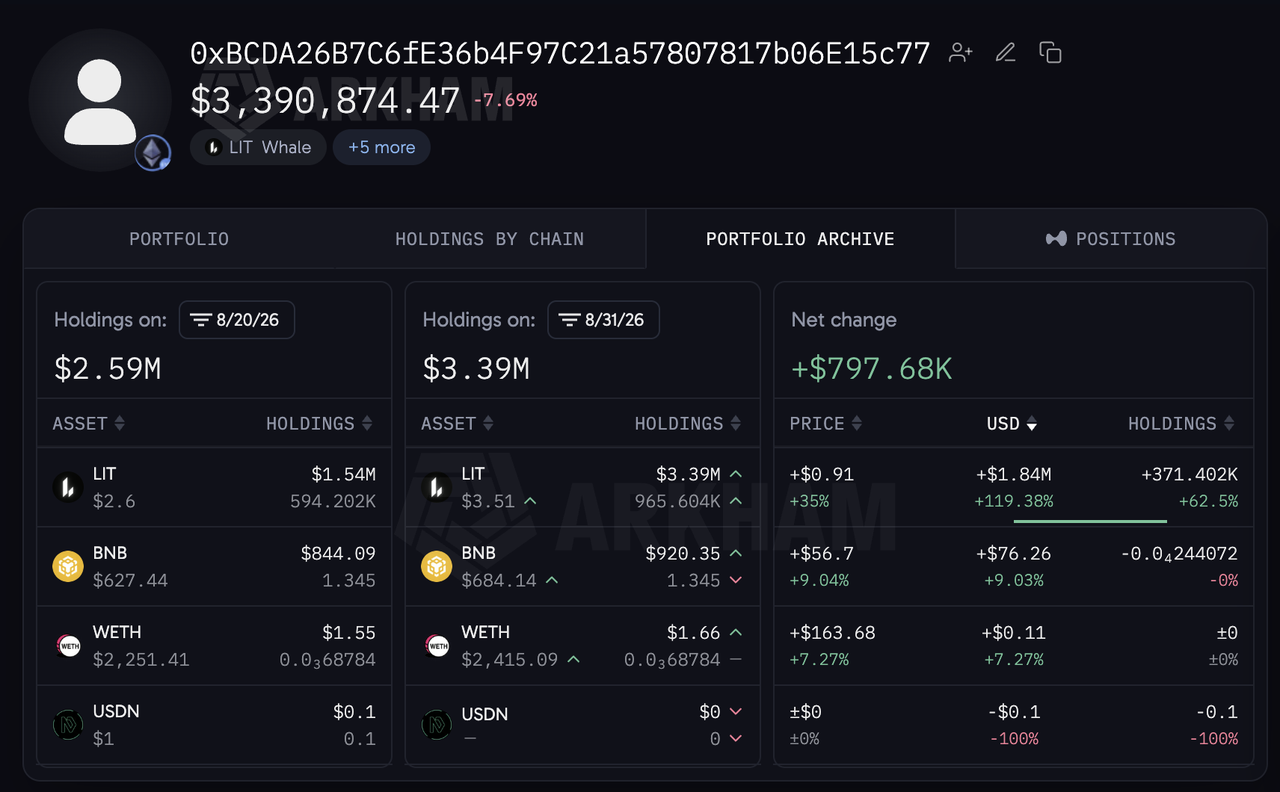
LIT On-Chain Smart Money Analysis: Whale Address “0xBCDA” Has Continued Accumulating LIT Since August
According to Arkham data, the on-chain address “0xBCDA” began accumulating LIT on August 19 and made multiple purchases and sales through CoW Protocol during the period. By August 31, the address held 960,000 LIT. Notably, this accumulation period coincided with a sharp rally in LIT from $2.60 to $4.80, suggesting that the address may have built up substantial unrealized gains. As of October 23, the address still held 960,000 LIT and was labeled a LIT whale by Arkham.
Data Source: Arkham
Is LIT Still Worth Buying?
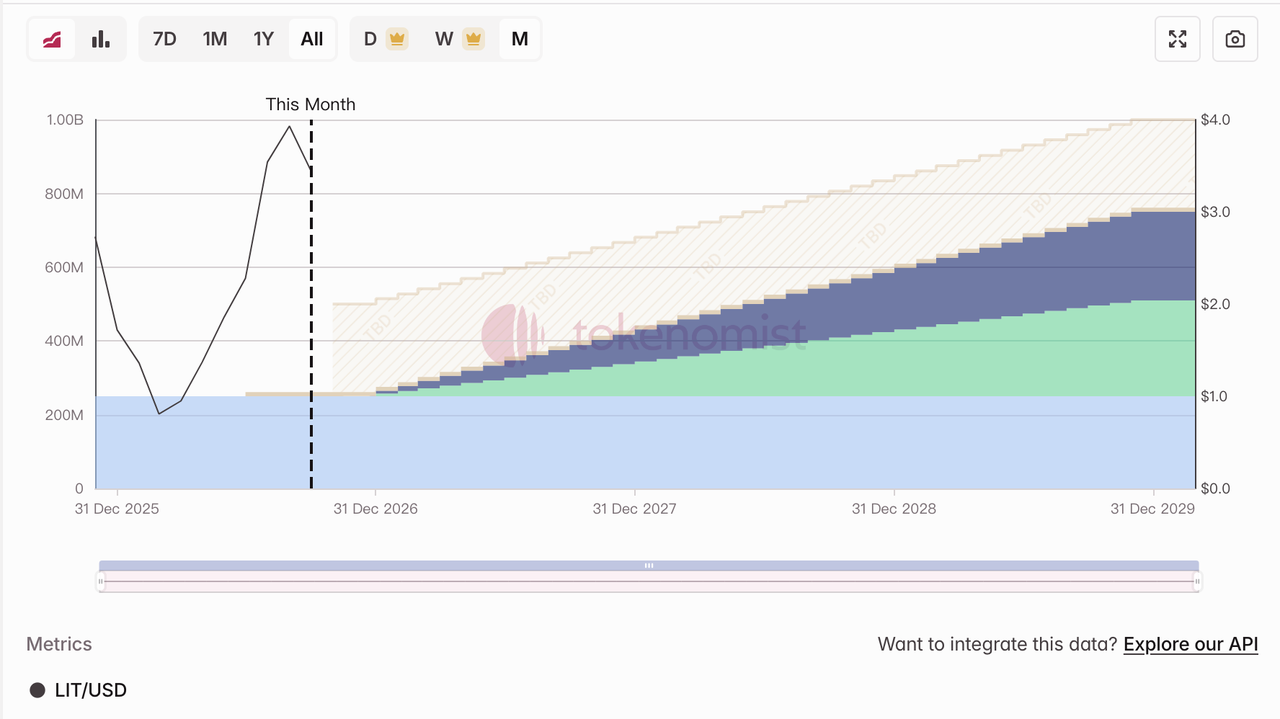
Since beginning its recovery in June, LIT has shown a stronger overall price trend, while Lighter has also recorded growth in trading volume and fee revenue, providing some fundamental support for the token. However, improving platform metrics do not guarantee further price appreciation. In the short term, LIT remains vulnerable to shifts in market sentiment, profit-taking, and broader cryptocurrency market conditions. Investors should also monitor LIT's token unlock schedule over the coming year, as the token was launched in late 2025. Unlocks involving early investors and other holders warrant particular attention. If a large number of tokens enter circulation within a short period, the resulting increase in potential selling pressure could weigh on the price.
Data Source: Tokenomist
LIT Price Outlook: Key Levels and Catalysts to Watch
LIT has rebounded since June 2026 alongside a broader recovery in the Perp DEX sector, briefly climbing back above $5. However, repeated rejections near $4 have intensified short-term volatility. On the fundamental side, Lighter's open interest rose to $1.64 billion in Q3, while quarterly trading volume reached $137.67 billion. The platform's plan to apply for U.S. Derivatives trading and clearing registrations has also attracted market attention. Looking ahead, several factors will be key to LIT's price trajectory: whether the token can break through the resistance zone around $4, whether Lighter can sustain trading-volume growth, and whether upcoming token unlocks introduce additional selling pressure.
Stock Contract Performance: Chip Stocks Take Another Hit, With INTC Down More Than 10%
U.S. equities broadly declined this week, mirroring the weakness in cryptocurrency markets. Semiconductor and memory stocks recorded some of the steepest losses, extending a sell-off that had already lasted several sessions. SanDisk, Micron, and Intel fell 9.61%, 8.05%, and 10.52%, respectively. Tesla, by contrast, gained 3.86% for the week after unveiling its second-generation Roadster, a high-profile event that boosted investor interest in the company's technological ambitions and future product pipeline.
Company | Contract Ticker | Core Business | Stock Price | 7-Day Change |
SanDisk | SNDK | Memory | $1,260 | -9.61% |
Micron | MU | Memory | $856 | -8.05% |
NVIDIA | NVDA | GPUs | $212 | -2.30% |
Intel | INTC | CPUs | $85 | -10.52% |
Strategy | MSTR | Cryptocurrency holdings | $145 | -3.97% |
Circle | CRCL | Cryptocurrency and stablecoin infrastructure | $86 | 0.00% |
Tesla | TSLA | Automotive | $374 | 3.86% |
Alphabet | GOOG | Internet and technology | $320 | -6.97% |
SpaceX | SPCX | Aerospace | $144 | -2.70% |
Featured Stock Contract: Tesla's Second-Generation Roadster Debut Boosts Expectations for Rocket-Propulsion Technology
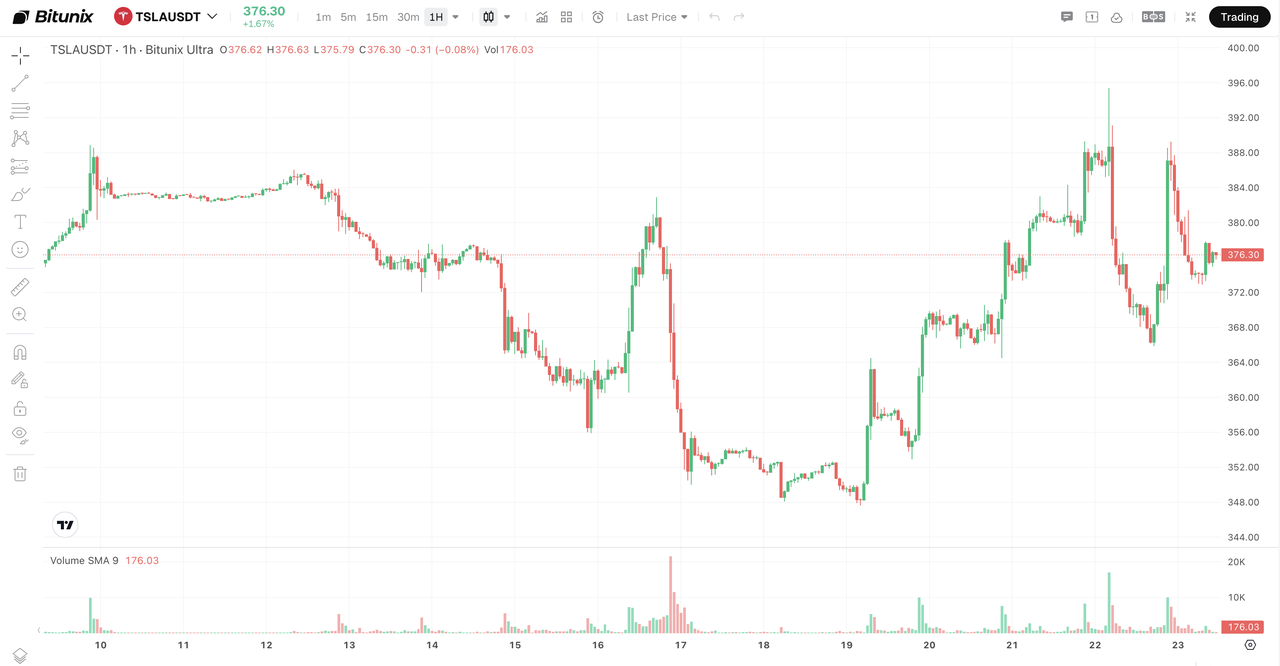
Tesla (TSLA) officially unveiled its new second-generation Roadster electric sports car on October 15, 2026, drawing market attention the following day. The main highlight was a set of cold-gas thrusters developed in collaboration with SpaceX. Demonstrations showcased the vehicle performing midair flips, adjusting its orientation, and making short jumps. Tesla also introduced three versions—Performance, Thrust, and Rocket—with some higher-end models emphasizing extreme acceleration and propulsion technology. The event generated significant attention and reinforced Tesla's ambition to combine electric-vehicle engineering with aerospace technology. Following the announcement, TSLA shares rose by approximately 5% in premarket trading on October 16.
Data Source: Bitunix
Commodity Contract Analysis: Gold Falls 4.5% While Brent Crude Gains 6.8%
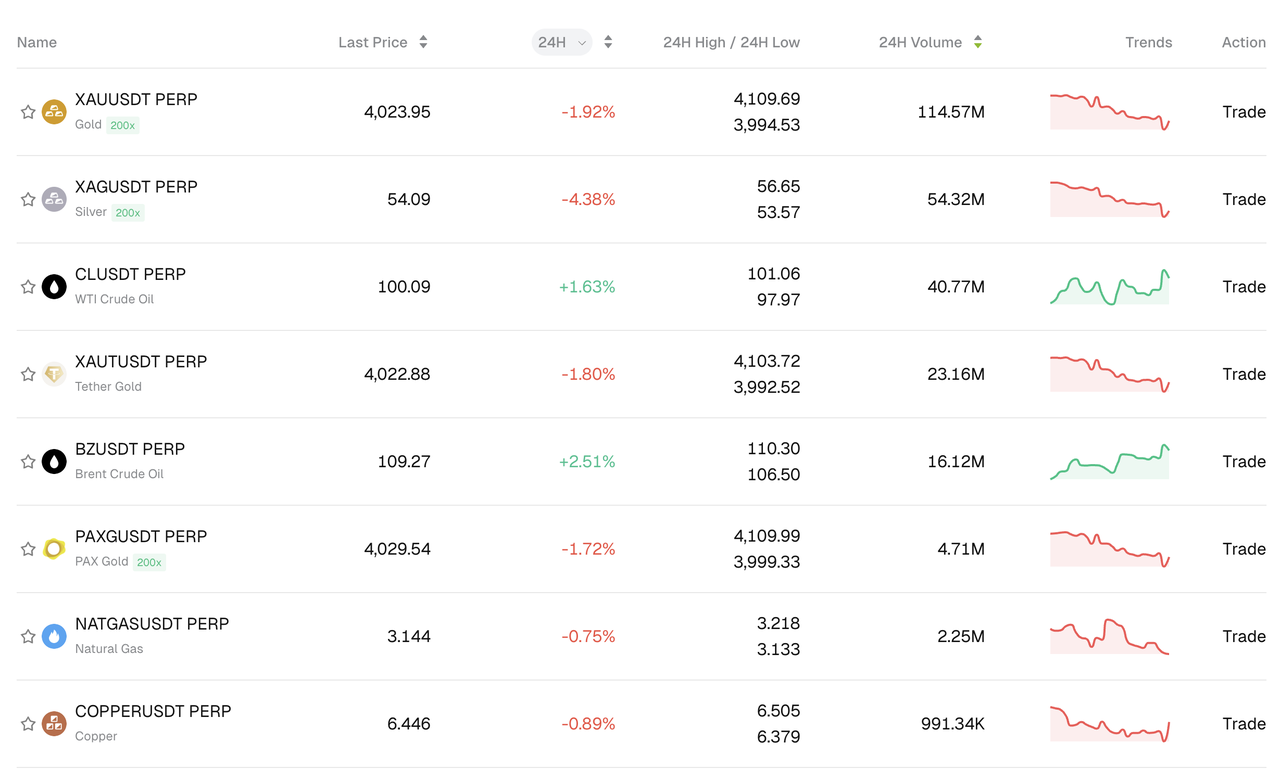
Bitunix offers contracts on a range of commodities, including gold, silver, crude oil, and natural gas, giving users more opportunities to trade across different markets. Commodity performance diverged sharply this week. Precious metals, led by gold, came under heavy pressure, with gold falling 4.5% to around $4,000 per ounce. Brent crude moved in the opposite direction, rising 6.8% to approximately $109 per barrel as escalating geopolitical tensions in the Middle East supported oil prices.
Data Source: Bitunix
Macro Catalyst: Key Event Next Week — U.S. September Core PCE Inflation
Looking ahead, markets will focus on the U.S. Personal Consumption Expenditures (PCE) Price Index for September, scheduled for release on October 29. The core PCE Price Index, which excludes food and energy prices, is a key measure the Federal Reserve uses to assess underlying inflation trends. According to the latest data from the U.S. Bureau of Economic Analysis (BEA), annual core PCE inflation stood at 3.0% in August 2026, remaining above the Fed's long-term inflation target of 2%. The upcoming release should help investors assess whether inflation in the United States is continuing to ease and what the latest figures could mean for the Fed's future interest-rate decisions.
The gap between actual core PCE inflation and market expectations will be an important driver of short-term financial market performance. If annual core PCE inflation comes in above expectations, it could signal persistent inflationary pressures, reduce expectations for Fed rate cuts, and push Treasury yields higher, weighing on U.S. equities and risk assets such as BTC. Conversely, a lower-than-expected reading could reinforce expectations of cooling inflation and a more accommodative monetary policy, potentially supporting stocks and cryptocurrencies. However, a single month's inflation data is unlikely to determine the Fed's policy direction on its own. Investors should also consider labor-market conditions, consumer spending, and other inflation indicators, while assessing whether market expectations have already priced in the outcome.
Conclusion
Cryptocurrency markets remained volatile this week as expectations for Fed rate cuts shifted. The median return among the top 300 tokens by market capitalization on Bitunix was -3.98%, while BTC climbed to $84,000 before retreating to around $81,000. LIT stood out as a relative outperformer, gaining approximately 12% over the week. U.S. equities broadly weakened, with chip stocks among the biggest losers: Intel fell 10.52% and SanDisk dropped 9.61%. Tesla bucked the trend, rising 3.86% as the unveiling of its second-generation Roadster boosted interest in its technological ambitions. Commodity markets diverged, with gold falling 4.5% to around $4,000 per ounce and Brent crude rising 6.8% to approximately $109 per barrel amid escalating geopolitical tensions in the Middle East. Next week's U.S. core PCE release will be a key indicator to watch for clues about the inflation outlook and the Fed's future rate policy.