
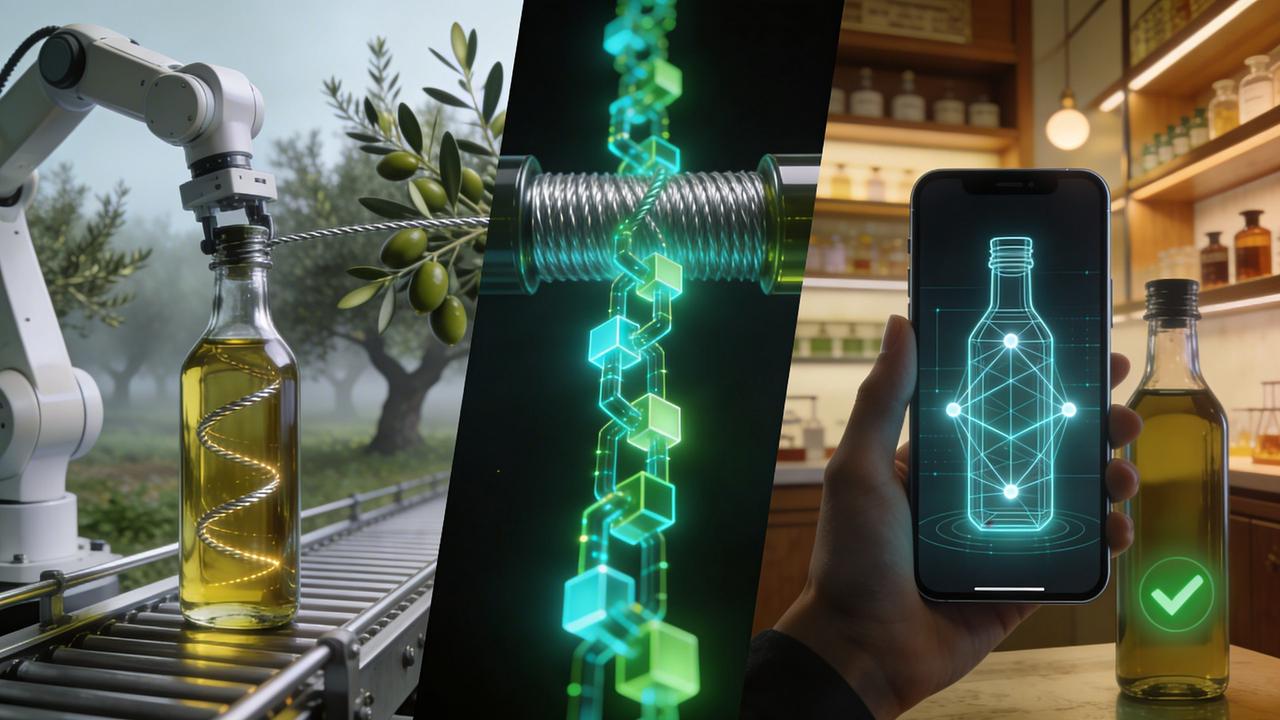
Article Summary
- This article provides a comprehensive overview of VeChain, a blockchain platform specifically designed for enterprise-level applications, with a strong focus on supply chain management.
- It explains VeChain's unique two-token model: VET (the primary value-transfer and governance token) and VTHO (the "gas" token used to pay for transactions), which is designed to create a stable and predictable cost environment for businesses.
- The guide details VeChain's primary use cases, including anti-counterfeiting for luxury goods, traceability for food and pharmaceuticals, and carbon credit tracking.
- It highlights VeChain's impressive list of real-world partnerships with major corporations like Walmart China, PwC, and DNV GL, showcasing its focus on tangible business adoption rather than just DeFi speculation.
- The article explains its Proof-of-Authority (PoA) consensus mechanism, which prioritizes efficiency and low energy consumption, making it suitable for enterprise needs.
Most crypto conversations orbit around trading, tokens, and the latest meme. VeChain sits in a different corner. It tries to make business data easier to trust, share, and audit across companies that do not naturally trust each other, like suppliers, shippers, retailers, and regulators.
New investors often first notice VeChain on a crypto exchange, such as Bitunix, when they see VET/USDT on the market list. The real question is whether VeChain's business-first design creates enough ongoing usage to justify long-term attention.
This guide explains what VeChain is, why it uses two tokens instead of one, how its consensus model fits enterprise needs, and what kinds of real-world deployments keep showing up in VeChain's ecosystem.
The Two-Token Model: VET and VTHO
VeChain's token design is easier to understand if you separate ownership from usage. VeChain VET is the network's primary value and governance asset. VTHO is the energy token used to pay for transactions on VeChainThor. The docs describe that the goal is to keep business transaction costs predictable even when markets get noisy.
When people ask what is VeChain, they often really mean, Why do I need two tokens? The answer is that many businesses hate variable operating costs. On a single-token network, if the token price spikes, transaction costs can spike too. VeChain tries to dampen that effect by letting VTHO represent usage costs while VET represents network value.
VeChain's documentation frames this as an adoption problem. It says VeChain worked with business partners and found that unpredictable usage costs were a major blocker, so it implemented the dual-token model to reduce the impact of speculation on fees.
VeChain's developer notes that VTHO pays transaction fees and that a portion of the fees is burned, which is a practical lever for managing supply as network usage grows.
The model also changed in late 2025. VeChain's Hayabusa upgrade tied VTHO generation more directly to staked VET and shifted rewards to protocol-level distribution for participants who help secure the network. This is a meaningful change for investors because it links network security participation and token economics more tightly than the older passive model.
How VeChain Works: Proof-of-Authority And The 2025 Shift
VeChain's original design focused on predictable performance for enterprise users. In Proof-of-Authority (PoA), a limited set of known validators produces blocks, which can improve throughput and reduce energy use. VeChain's docs describe PoA 2.0 as a mechanism designed to balance speed and security with lower energy consumption, which fits enterprise and sustainability use cases.
If you want a concrete spec sheet view, VeChain's developer documentation lists VeChainThor's consensus mechanism as Proof-of-Authority (PoA) 2.0, plus practical network details such as a 10-second block time and deterministic finality. These details matter to business users because they want predictable confirmation behavior.
Then VeChain made a big move in 2025. The Hayabusa phase of VeChain's Renaissance roadmap transitioned VeChainThor from PoA to Delegated Proof-of-Stake. VeChain explains that DPoS lets VET holders stake and delegate to validators, and it ties VTHO generation to staked VET via block rewards.
Here's the simple way to think about it. PoA is like a small, vetted group running a high-speed train schedule. Delegated Proof-of-Stake keeps the train fast while letting more people decide who gets to drive and how they get paid, thereby increasing decentralization while keeping enterprise performance goals in view. VeChain's StarGate documentation also describes a 101-validator DPoS system after Hayabusa, with staking and delegation available to regular users through the StarGate platform.
This shift also helps answer a common enterprise question: Who is accountable? With PoA, validators are known entities. With DPoS, there's broader participation and competition among validators, but performance and reliability remain part of the selection pressure. VeChain's own explanation frames this as aligning incentives across stakeholders while keeping transaction costs predictable for builders and partners.
Real-World Use Cases and Partnerships
If you're trying to learn what VeChain is used for, it helps to ignore the token price for a minute and look at the kinds of data the network tries to anchor. VeChain keeps aiming at making real-world events verifiable, whether that's product provenance, compliance records, or sustainability actions logged by people and companies. This is where the word blockchain becomes more than a buzzword, because the goal is evidence that multiple parties can audit later.
VeChain also shares some ecosystem-level scale signals in its official partnership materials. In its announcement with Rekord, VeChain describes itself as a Layer 1 network with over 5 million users and more than 350 applications built on VeChainThor. Those are big numbers for an enterprise-leaning ecosystem, and they help explain why VeChain keeps attracting compliance-heavy use cases.
1. Anti-Counterfeiting and Product Authentication
Anti-counterfeiting is basically a data integrity problem. You need to prove that an item is real, and you need that proof to survive handoffs between factories, warehouses, distributors, and retail shelves. VeChain's Digital Product Passport work is a modern version of this, aimed at regulated environments that require traceable product data.
In its partnership announcement with Rekord, VeChain says the collaboration extends its role in product authentication and supply chain transparency and that enterprises can secure logs, documents, and product events on-chain without rebuilding core systems. That is exactly the sort of promise that matters to logistics teams, because ripping out existing systems is usually the part that kills new technology rollouts.
The same article frames the EU's Digital Product Passport direction as a regulatory drive. It says ESPR mandates begin from 2026, so infrastructure that can anchor compliance records becomes relevant on a deadline.
2. Supply Chain and Logistics
Supply chain tracking is VeChain's classic use case. The idea is to record key checkpoints and conditions as goods move through the supply chain so participants can later verify provenance, handling, and compliance. The hard part is getting large organizations actually to deploy it in production.
Walmart China is the partnership most people have heard about, and it's still the go-to example when explaining VeChain's enterprise positioning. A Cointelegraph profile in late 2025 describes Walmart China building a blockchain-based traceability platform on the VeChain network as one of VeChain's early high-profile partnerships.
That matters for investors because it shows VeChain partnerships aren't only pilot talk. They include cases where a large retailer put the concept into real operations, which is rare in enterprise blockchain. Even if you don't know the internal transaction volumes, the fact that the platform existed as a real program is a stronger signal than most brand-name crypto.
3. Sustainability and Carbon-Related Reporting
VeChain has leaned harder into sustainability during 2025 and 2026, and the data points here are more recent and easier to measure. One track is consumer behavior apps. Another track is business reporting and verification.
On the consumer side, VeChain's own January 2026 post says its VeBetter platform had 5.5 million users and describes VeBetter as an ecosystem of over 50 consumer apps built on VeChainThor. It frames the model as tokenizing real-world actions into data that can be verified and used for transparent impact reporting. In January 2026, MEXC said VeBetter recorded more than 43 million logged actions and listed example impact metrics such as energy saved and water conserved.
On the partnership side, VeChain's work with 4ocean is a concrete example of verified impact infrastructure. 4ocean's December 9, 2025, press release says it partnered with VeChain to launch a cleanup campaign through the Cleanify platform, with cleanups verified and recorded using VeChain's verification system.
If you care about sustainability reporting, the key idea is auditability. You can argue about token incentives all day, but a verifiable log of actions and timestamps is still more defensible than trust us spreadsheets. That's the niche VeChain is trying to own.
Conclusion: A Bridge Between The Digital And Physical Worlds
VeChain has stayed focused on the promise to use verifiable data to make business processes more transparent and less fraud-prone. The two-token model tries to keep usage costs predictable. Its consensus approach started with PoA for performance, then shifted toward DPoS in late 2025 to broaden participation and tighten incentive alignment.
So, is VeChain a good investment? It depends on what you want exposure to. If you want enterprise adoption and compliance-driven use cases, VeChain is at least trying to build measurable activity in that direction. If you want pure upside from narrative cycles, enterprise blockchains often move slower and get less retail attention.
If you decide to trade VET, use basic discipline. Treat it as a volatile asset that still depends on adoption outcomes. If Bitunix is part of your toolkit, you can download the Bitunix app, register, and monitor VET alongside your other holdings while you track VeChain's ecosystem updates and partnership rollouts.
FAQ
Is VeChain an ERC-20 token?
VET is the native token of the VeChainThor network, so it is not an ERC-20 token. VeChain uses Ethereum-style 0x addresses, but VET lives on its own chain, and VTHO is the gas token used for fees on VeChainThor.
How can I earn VTHO?
You earn VTHO by holding VET, and after the 2025 Hayabusa changes, VTHO generation became more tied to staked VET and protocol rewards distributed to network participants. If you stake through StarGate, you can participate indirectly by delegating to validators.
Who is Sunny Lu?
Sunny Lu is a co-founder and leading executive associated with VeChain. In VeChain's ecosystem communications and partner announcements, he is frequently cited as the CEO and public representative discussing VeChain's direction and real-world adoption strategy.
What is the VeChainThor blockchain?
VeChainThor is VeChain's Layer 1 network. It uses VET as the native token and VTHO as the gas token. It supports EVM-style development patterns and includes features like multi-clause transactions, with network specifications documented for developers.
Is VeChain decentralized?
VeChain's decentralization model evolved. It historically relied on PoA with a limited validator set, and it shifted to DPoS with Hayabusa to expand participation via staking and delegation. The trade-off is that VeChain targets predictable performance and accountability, which often means less anyone-can-validate instantly freedom than some chains.
What is the difference between VeChain and VET?
VeChain refers to the project, ecosystem, and network. VET is the primary token used for value transfer, governance, and staking-related participation. VTHO is the separate token used to pay transaction fees, which helps keep operational costs more stable for users.
How does VeChain's Proof-of-Authority work?
In PoA, a fixed set of known validators produces blocks, which supports high throughput and low energy usage. VeChain's docs describe PoA 2.0 as designed to balance speed and security for enterprise use, and VeChain later transitioned toward DPoS to broaden participation while retaining performance goals.
What are some other companies that use VeChain?
VeChain's enterprise users and partners include long-term deployments like Walmart China for traceability, plus DNV for assurance and sustainability data. In 2025–2026, it also added partners like Rekord (EU digital product passports) and 4ocean (verified cleanup tracking), and it named new business partners such as Lululemon China.
Can I stake VET?
Yes. With the 2025 Hayabusa changes, VeChain introduced staking and delegation through StarGate. StarGate's documentation explains that users can stake VET and delegate to validators without running a validator node themselves.
What was the all-time high for VET?
VET's all-time high was around $0.28, reached in mid-April 2021 (about Apr 16–17, 2021). CoinMarketCap lists $0.2782, while CoinGecko lists $0.2810. Small differences come from exchange data sources and timing.
Glossary
- VeChainThor — VeChain's Layer 1 network where transactions and apps run, using VET and VTHO.
- VET — The primary VeChain token used for value transfer, governance, and staking participation.
- VTHO — The gas token used to pay transaction fees on VeChainThor, designed to stabilize usage costs.
- Dual-token model — A design that separates the value token (VET) from the fee token (VTHO) to reduce fee volatility.
- Gas fee — The cost paid to execute a transaction, paid in VTHO on VeChainThor.
- Fee burn — A mechanism where part of transaction fees is destroyed, which can reduce token supply growth over time.
- Proof of Authority (PoA) 2.0 — A consensus model with known validators designed for speed, security, and low energy usage.
- Delegated Proof of Stake (DPoS) — A consensus model where token holders stake and delegate to validators who produce blocks.
- Validator — An operator that produces blocks and secures the network under PoA or DPoS rules.
- Delegator — A token holder who stakes and delegates voting power to a validator in exchange for rewards.
- StarGate — VeChain's staking and rewards platform that supports delegation and network participation.
- Digital Product Passport (DPP) — A compliance-oriented product data record tied to sustainability and supply chain rules, especially in the EU.
- Traceability — The ability to track a product's origin and lifecycle events across a supply chain using verifiable records.
- On-chain record — A data entry recorded on a blockchain ledger, intended to be tamper-resistant and auditable later.
- Enterprise adoption — Real use by businesses in production workflows, usually involving integration, compliance, and long-term operations.
About Bitunix
Bitunix is a global cryptocurrency derivatives exchange trusted by over 3 million users across more than 100 countries. At Bitunix, we are committed to providing a transparent, compliant, and secure trading environment for every user. Our platform features a fast registration process and a user-friendly verification system supported by mandatory KYC to ensure safety and compliance. With global standards of protection through Proof of Reserves (POR) and the Bitunix Care Fund, we prioritize user trust and fund security. The K-Line Ultra chart system delivers a seamless trading experience for both beginners and advanced traders. At the same time, leverage of up to 200x and deep liquidity make Bitunix one of the most dynamic platforms in the market.
Bitunix Global Accounts
X | Telegram Announcements | Telegram Global | CoinMarketCap | Instagram | Facebook | LinkedIn | Reddit | Medium