
Article Summary
- This article provides a price prediction and fundamental analysis for the ONDO token.
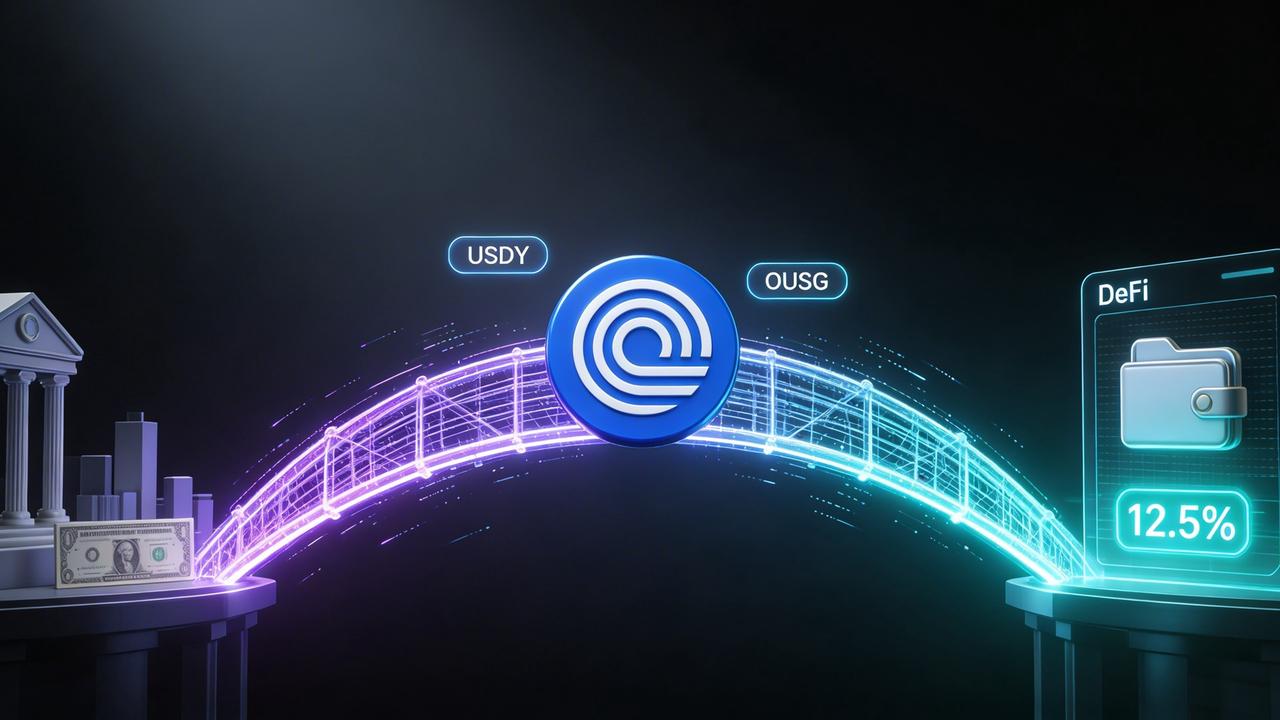
- It explains Ondo Finance's core mission: bridging traditional finance (TradFi) and decentralized finance (DeFi) by tokenizing real-world assets (RWAs), specifically US Treasuries (via USDY and OUSG).
- The bull case focuses on the massive Total Addressable Market (TAM) for RWAs, Ondo's strong institutional partnerships (BlackRock, major exchanges), and its first-mover advantage in compliant tokenization.
- The bear case highlights regulatory uncertainty surrounding tokenized securities, competition from traditional financial institutions entering the space, and the reliance on high traditional interest rates to attract DeFi users.
- It presents detailed price prediction scenarios (bearish, neutral, bullish) for both 2026 and 2030, based on the pace of institutional adoption and regulatory clarity.
Crypto keeps reinventing itself, but the biggest shift in the last couple of years has been simple: more real financial assets are moving on-chain. That is the Real-World Asset theme, where things like U.S. Treasuries and funds get wrapped into tokens you can hold and move like crypto.
Ondo Finance sits right in the middle of that shift. And for anyone who wants to trade ONDO/USDT like any other altcoin, a liquid spot market on a crypto exchange helps you enter and exit without needing to touch on-chain minting, safelists, or fund admin steps.
This piece explains what pushes ONDO up or down, what the project has already shipped, and how to think about scenarios into 2026 and 2030 without pretending anyone can see the future.
The Bull Case: The Trillion-Dollar RWA Market
The bullish view starts with the idea that Tokenized Treasuries are already a real category. In March 2026, the tokenized U.S. Treasuries dashboard on RWA.xyz shows a total value of around $10.93B, with Ondo listed near $2.0B in that category at the time.
Forecasts try to translate that adoption into price targets, with very different results. CoinCodex projects ONDO around $0.598 by the end of 2026 and about $0.6509 by the end of 2030. Changelly's model is much higher, with 2030 estimates ranging roughly from $2.03 to $3.37 depending on the month. Coinpedia goes wider still, publishing 2026 ranges up to $4.15 and a 2030 target of around $9.30.
1. Massive Total Addressable Market (TAM)
The Massive Total Addressable Market (TAM) argument is about how large traditional debt and securities markets already are, and how small tokenization still is relative to that base. Reuters cited the Institute of International Finance putting global debt near $345.7 trillion by the end of Q3 2025. Even capturing a tiny slice of that with tokenized products can move the needle for platforms that become standard rails.
You can also see the growth curve inside crypto itself. In March 2025, CoinDesk covered tokenized Treasury products hitting a then record $4.2B market cap during a broader crypto correction, describing a rotation into safer, yield-bearing on-chain assets. By June 2025, CoinDesk reported the tokenized treasury market at about $7.2B as Ondo expanded its Treasury token onto XRP Ledger.
2. Institutional Credibility
Ondo's flagship Treasury product has a straightforward pitch. OUSG is described as a tokenized short-term U.S. Treasury bills ETF, with the significant majority of the portfolio held in the iShares Short Treasury Bond ETF (SHV), plus small cash-like buffers for liquidity. If you are trying to sell the idea of tokenized Treasuries to institutions, starting with well-known underlying instruments is part of the point.
That matters because institutions tend to care more about custody, settlement, and operational risk than about hype cycles. When CoinDesk covered Ondo bringing OUSG to XRP Ledger, the framing was enterprise cash management and 24/7 mint and redeem for qualified participants. And in September 2025, CoinDesk reported Fidelity rolling out a tokenized money market fund on Ethereum, with Ondo as the main investor and using it as a reserve asset for OUSG. This type of connectivity to large issuers and funds is exactly what the bull case wants to see.
3. Yield Generation in DeFi
Tokenized Treasuries are popular because crypto has a constant problem: where do you park capital when you want lower volatility, but still want to stay on-chain?
That is where tokenized treasuries and yield-bearing dollar products come in. RWA.xyz lists a 7D APY snapshot for tokenized U.S. Treasuries around 3.01% in March 2026. On the TradFi side, BlackRock's SHV page shows a 30-day SEC yield around 3.5% in late March 2026. The exact yield level moves with rates, but the structure is consistent: these products aim to turn conservative yield into a token you can hold, move, and sometimes use as collateral.
Ondo's broader ecosystem also leans into the idea of on-chain cash management. CoinMarketCap's February 2026 explainer describes USDY as backed by short-term U.S. Treasuries and bank deposits, aimed at giving non-U.S. users stablecoin-like access to yield. That is a clean bridge between DeFi mechanics and traditional yield.
4. Regulatory Compliance Focus
RWA tokenization dies quickly if regulators treat everything as an unregistered security offering with no guardrails. The bullish view is that the market is slowly moving toward clearer lanes, especially for tokenized versions of familiar instruments.
In March 2026, an article by Reuters on US Regulators reported U.S. banking regulators say banks will not face extra capital charges simply for dealing with tokenized securities, emphasizing a technology-neutral approach. Around the same period, an article by Reuters on US securities also reported that the SEC issued guidance categorizing crypto assets and applying securities laws to digital securities. That kind of classification is not automatically good for every token, but it is a step away from pure ambiguity.
Ondo also pushes into regulated venues outside the U.S. In March 2026, MEXC noted that Ondo's tokenized stocks and ETFs were approved for trading under the Abu Dhabi Global Market framework on Binance's regulated MTF, and the piece referenced over $11B in processed volume tied to the platform. Whether that expansion directly drives ONDO price is a separate question. But it strengthens the institutional narrative that regulated access points are being built.
The Bear Case: Regulation and Competition
The bearish view does not need Ondo to fail technologically. It only needs adoption to slow, regulatory friction to rise, or competition to compress margins and attention.
This is where forecasts are useful for double-checking. DigitalCoinPrice's 2026 table shows prices mostly in the $0.19 to $0.26 range across 2026, far below the optimistic multi-dollar models. CoinLore's long-range model shows 2030 around $1.94, which is higher than sub-$1 estimates but still nowhere near the most aggressive targets. The Ondo Finance price prediction gap across sources is basically the market telling you that uncertainty is the product.
1. Regulatory Uncertainty
Tokenized Treasuries sit on top of securities and fund structures. That tends to invite more scrutiny than a memecoin. Even if regulators get clearer, they can still tighten who can access which product, what disclosures are required, and how secondary markets operate.
The 2026 SEC guidance puts token classification front and center, with securities laws attaching to digital securities. That can be a positive long-term foundation, but it can also slow expansion in the short term, especially if platforms need approvals jurisdiction by jurisdiction. For ONDO holders, the risk is a long period of compliance drag where growth continues, just slower than bulls priced in.
2. TradFi Competition
Tokenized Treasuries are attractive precisely because they look familiar to institutions. That also means institutions can decide to build their own rails, or partner with the biggest distribution networks, and leave DeFi-native brands fighting for mindshare.
CoinDesk's March 2025 coverage named several large issuers growing in the category, including BlackRock's BUIDL and Franklin Templeton's BENJI, alongside Ondo's OUSG and USDY. By September 2025, Fidelity entered with a tokenized fund on Ethereum. By March 2026, RWA.xyz showed a crowded leaderboard across platforms and issuers. The bear case is simple: as the space grows, being early matters less than distribution and regulatory reach.
3. Interest Rate Dependence
A lot of RWA demand in crypto has been driven by one macro fact: yields became attractive relative to many on-chain alternatives, especially during risk-off periods. If rates fall materially, Treasury yields fall, and the pitch becomes less compelling.
You can see the direction in the data snapshots. RWA.xyz showed tokenized U.S. Treasuries with a 7D APY around 3.01% in March 2026. BlackRock's SHV also showed a 30-day SEC yield around the mid-3% range in late March 2026. If those numbers compress further, some capital rotates back into higher-risk DeFi or simply exits crypto altogether. That does not kill Ondo, but it can reduce the urgency of the narrative.
4. Token Utility
Even if Ondo products grow, the ONDO token needs a value story that markets respect. CoinMarketCap describes ONDO as a governance token for the Ondo DAO, with specific rights pertaining to Flux Finance governance.
There is utility, though, and it shows up in how ecosystems bootstrap liquidity. A March 2026 Ondo governance proposal requested allocating 12,500,000 ONDO tokens from an ecosystem growth reserve to incentivize participation from liquidity providers, tokenized RWA holders, and Flux Finance participants in Q2 2026. Incentives support growth, but they also add sell pressure if recipients treat rewards as income. That tension is part of the bear case.
Ondo Finance Price Prediction Scenarios (2026 & 2030)
Below is a scenario table that turns the narrative into ranges. These ranges are anchored to published forecasts and then adjusted into three buckets.
ONDO price outlook table comparing bearish, neutral, and bullish scenarios for 2026 and 2030 based on adoption, tokenized Treasury growth, and RWA market expansion.
Conclusion: The Future of Finance
Ondo is one of the cleanest expressions of the RWA thesis. Tokenized Treasuries went from a niche product to a multi-billion dollar category, and Ondo stayed near the top of that list through multiple market phases.
At the same time, ONDO holders are buying a governance-driven asset tied to an ecosystem that operates in a heavily regulated arena. That creates upside if Ondo becomes a standard tokenization layer, and it creates friction if compliance slows expansion or if bigger institutions capture distribution.
So, is ONDO a good investment depends on what the buyer actually wants exposure to. If the goal is the growth of RWA crypto as a category, Ondo has real traction and a real product footprint. If the goal is simple token price reflexivity, the same uncertainty that creates upside can also create long drawdowns. For anyone who wants to trade ONDO/USDT, Bitunix offers a straightforward spot venue. Download the Bitunix app, register, and start with position sizes that still let you sleep.
FAQ
What is Ondo Finance (ONDO)?
Ondo Finance is a real-world asset platform focused on bringing traditional financial products on-chain. The ecosystem includes tokenized Treasury products and governance around protocol decisions. The ONDO token mainly supports DAO governance, including decisions tied to Flux Finance.
What are Real-World Assets (RWAs) in crypto?
RWAs are tokens that represent claims on off-chain assets like Treasuries, funds, real estate, or invoices. The idea is to use blockchains for settlement and portability while keeping exposure to familiar assets. Tokenized Treasuries are one of the largest RWA categories.
How does Ondo Finance generate yield?
Yield comes from the underlying assets, mainly short-term U.S. Treasuries or Treasury-like funds, plus cash equivalents. Token holders get exposure to that yield either through token price appreciation, rebasing mechanics, or distribution structures, depending on the product design.
What is the difference between ONDO, USDY, and OUSG?
ONDO is the governance token. USDY is a yield-bearing dollar product designed to track a dollar value while earning yield from Treasuries and deposits. OUSG is a tokenized Treasury exposure product that mirrors returns from a short-term Treasury fund structure.
Is Ondo Finance regulated?
Ondo's products and access rules depend on jurisdiction and product type. Some offerings use eligibility checks, such as KYC and investor status, especially where securities rules apply. Regulation is a moving target, so users should always check the rules in their region before participating.
What is the utility of the ONDO token?
ONDO is primarily a governance token. It can be used to vote on proposals that guide ecosystem incentives, protocol parameters, and governance for related components like Flux Finance. Its value depends on how markets price governance influence relative to direct cash flow exposure.
Who are Ondo Finance's main competitors?
Ondo Finance competes with other RWA and yield platforms, especially those offering tokenized treasuries or yield products in DeFi. Key competitors include Centrifuge (RWA lending), Maple Finance (institutional credit), Pendle (yield trading), BlackRock BUIDL (tokenized Treasuries), and Ethena (yield-bearing synthetic dollars).
How do traditional interest rates affect Ondo?
Rates directly affect the yield on Treasury-based products. When rates are high, tokenized Treasuries look more attractive as on-chain parking. When rates fall, yields compress, and some capital rotates into higher-risk assets, which can reduce demand for Treasury tokens.
Where can I buy the ONDO token?
ONDO trades on centralized and decentralized venues depending on the region. For many users, a spot market is the simplest route because it avoids on-chain minting steps. Bitunix offers ONDO spot markets where available, with standard exchange onboarding and trading interfaces.
Is ONDO a good long-term investment?
ONDO is a long-term bet on tokenization becoming core financial infrastructure and on Ondo staying a top platform in that category. The upside comes from category growth and distribution wins. The downside comes from regulation, competition, and governance-token valuation limits.
Glossary
- Real-World Assets (RWAs): Tokens that represent claims on traditional off-chain assets like bonds, funds, or real estate.
- Tokenized Treasuries: On-chain tokens that give exposure to U.S. Treasury bills, notes, or Treasury-backed funds.
- Total Value Locked (TVL): The total value of assets deposited into a protocol or product, often used as an adoption proxy.
- DAO (Decentralized Autonomous Organization): A governance structure where token holders vote on proposals and protocol changes.
- Governance Token: A token that grants voting power over protocol rules, incentives, and upgrades.
- Flux Finance: A DeFi lending protocol governed by the Ondo DAO, tied to the Ondo ecosystem governance scope.
- Mint and Redeem: The process of creating new tokens by depositing collateral, and burning tokens to withdraw collateral.
- Qualified Investor: An investor category used in some jurisdictions that gates access to certain financial products.
- KYC (Know Your Customer): Identity verification required by many financial platforms to meet compliance obligations.
- Equity-Linked Note: A security whose value tracks an underlying stock or ETF, often used for tokenized equity products.
- Market Share: The percentage of a category's total value captured by one issuer or platform.
- APY (Annual Percentage Yield): A yield metric that includes compounding, commonly used to compare interest-bearing products.
- SEC Yield (30-Day SEC Yield): A standardized yield calculation used for bond funds and ETFs, often shown for Treasury funds.
- Liquidity: How easily an asset can be bought or sold without moving the price too much.
- Value Accrual: The mechanism that links a token's price to underlying usage, revenue, governance demand, or incentives.
Disclaimer
This article does not provide:
(i) investment advice or investment recommendations;
(ii) an offer or solicitation to buy, sell, or hold digital assets;
(iii) financial, accounting, legal, or tax advice.
Digital assets, including stablecoins and NFTs, involve high risk and may fluctuate significantly. Consider whether trading or holding digital assets is appropriate for you given your financial situation. Consult a qualified legal, tax, or investment professional when needed. You are responsible for understanding and complying with applicable local laws and regulations.
About Bitunix
Bitunix is a global cryptocurrency derivatives exchange trusted by over 4 million users across more than 100 countries. At Bitunix, we are committed to providing a transparent, compliant, and secure trading environment for every user. Our platform features a fast registration process and a user-friendly verification system supported by mandatory KYC to ensure safety and compliance. With global standards of protection through Proof of Reserves (POR) and the Bitunix Care Fund, we prioritize user trust and fund security. The K-Line Ultra chart system delivers a seamless trading experience for both beginners and advanced traders. At the same time, leverage of up to 200x and deep liquidity make Bitunix one of the most dynamic platforms in the market.
Bitunix Global Accounts
X | Telegram Announcements | Telegram Global | CoinMarketCap | Instagram | Facebook | LinkedIn | Reddit | Medium