
Article Summary
- This article provides a strategic guide for investors on how to navigate a Bitcoin bear market, shifting the focus from fear to opportunity.
- It defines a bear market and explains it as a natural phase in cryptocurrency market cycles, historically followed by new bull runs.
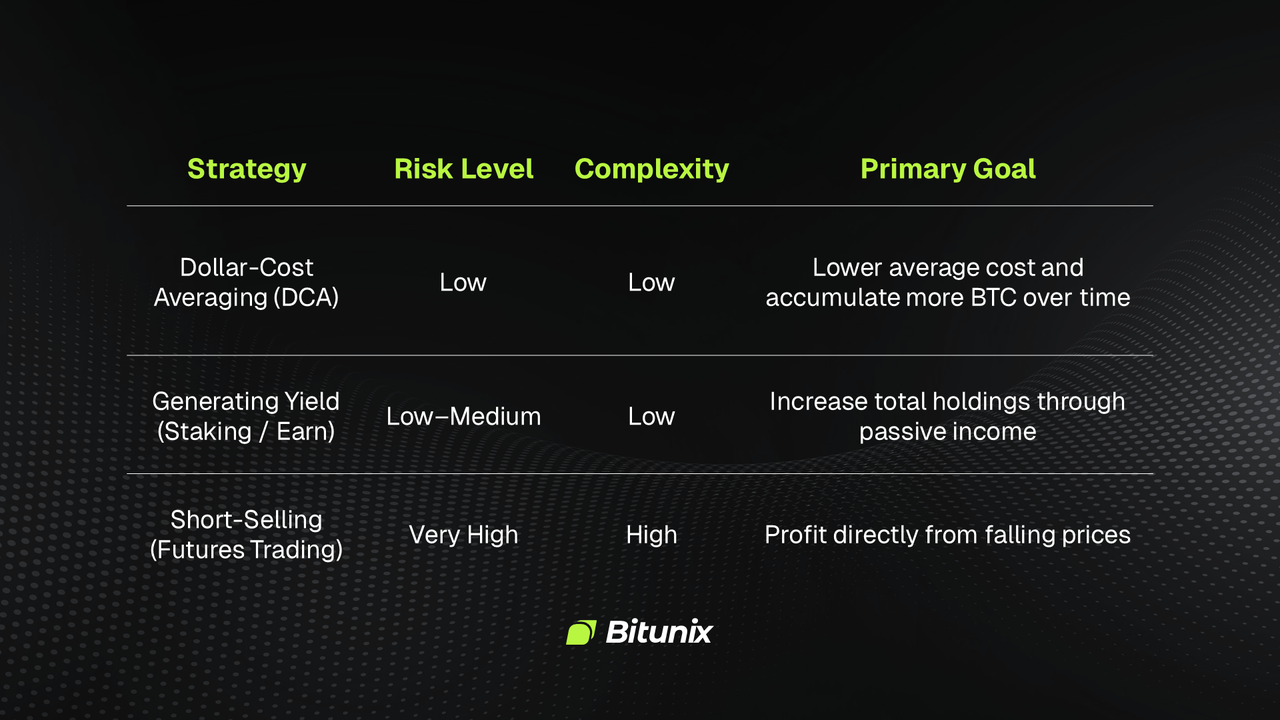
- The guide details three core strategies: Accumulating (via Dollar-Cost Averaging), Generating Yield (through savings or staking products), and Short-Selling (for advanced traders).
- It emphasizes the psychological challenge of a bear market and provides a framework for maintaining a long-term perspective.
It’s been a brutal start to 2026 for Bitcoin holders. Following an extremely bullish 2025, which saw the leading crypto hit several new all-time highs, it is now trading below $69,000, which is lower than its 2021 all-time high. The altcoin market has not fared any better. One look at the ETH/USDT or SOL/USDT chart shows that the bears are firmly in control and could remain in control without some sort of catalyst driving a long-term reversal.
There is no point denying the situation. The charts are heading south across most major pairs, short sellers are stacking gains, and volatility remains elevated. Anyone sitting in a leveraged long position is firmly on the hit list, with liquidations accelerating every sharp downside move.
For this reason, it is important to have a clear Bitcoin bear market strategy for success. Blindly holding or panic selling rarely leads to good outcomes in prolonged downturns. This guide will cover practical approaches you can use to survive the bear market, manage risk, and position yourself for the next recovery using the Bitunix crypto exchange.
Part 1: 2026 Kicks off Deep in The Red
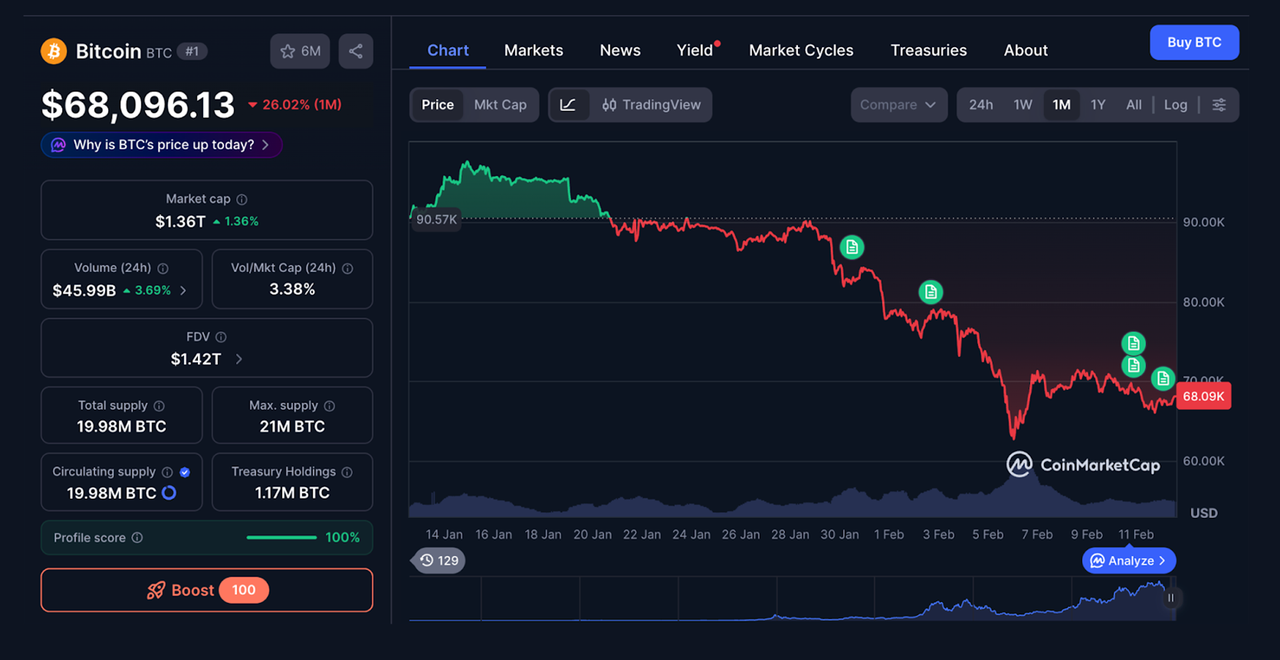
The BTC/USDT spot chart does not look good. The market started to slide in November 2025 after it reached an all-time high of $123,000, but few expected the reversal to pick up so much pace in the new year. As the chart shows, there was a brief bounce in early 2026, but the bears have since taken complete control, pushing the price from around $90,000 to well below $70,000.
From a technical perspective, momentum has clearly shifted to the downside. Key moving averages have rolled over and entered sell territory, confirming the broader bearish trend. At the same time, RSI readings suggest Bitcoin may be approaching oversold conditions, while the Fear and Greed Index has dropped into extreme fear, highlighting how negative market sentiment has become. These are just some of the explanations as to why Bitcoin is dropping.
The altcoin market has fared even worse than Bitcoin. ETH, SOL, and SUI have all taken major hits, with SOL looking especially bearish after crashing below $90 for the first time in well over a year. This move wiped out all of Solana’s gains from 2025 and more, showing how aggressively capital has rotated out of higher-risk assets.
While fear currently dominates the market, it is important to zoom out. There have been several cycles like this in the past, and Bitcoin has historically recovered over the long term and gone on to reach new all-time highs.
For example, in 2022, Bitcoin collapsed from $69,000 to below $16,000, while SOL dropped under $10, reminding traders that deep drawdowns are part of crypto’s cycle before eventual recoveries.
Strategy 1: The Accumulator – Dollar-Cost Averaging (DCA)
Bitcoin has repeatedly survived bear cycles and come back stronger. As a result, traders who have decided to dollar-cost average positions and build their BTC holdings have generally ended up sitting on healthy profits at the peak of market cycles. This long-term approach removes the pressure of trying to perfectly time bottoms.
The power of DCA comes from consistency. Instead of waiting for the “perfect” entry, investors commit to buying at regular intervals regardless of short-term price movement. Over time, this builds discipline, reduces emotional decision-making, and creates a structured accumulation strategy that works well across volatile markets.
DCA is especially effective during Bitcoin bear markets because it gradually lowers your average entry price as prices fall. This strategy works for most major cryptocurrencies with established track records, but it becomes far riskier with micro-cap tokens, which have not proven their ability to survive multiple bear cycles and may never recover.
For example, imagine buying $200 worth of BTC every month for one year during a downturn. Some months you buy higher, others much lower, but your average cost smooths out over time. If the market later recovers and BTC returns to previous highs, this steady accumulation can translate into strong gains, while also reducing the stress of trying to pick exact bottoms.
Strategy 2: Staking – Earning Passive Income
Another way to build a position and earn returns during a bear market is through yield farming and staking, as these tools allow users to grow their holdings regardless of short-term price action. Instead of relying purely on market appreciation, staking provides a way to generate passive income while waiting for conditions to improve. This approach is popular among long-term holders who want their assets to remain productive.
Staking works by locking your cryptocurrency into a blockchain network to help validate transactions and secure the protocol. In return, participants receive rewards paid in the same asset.
On networks like Solana, users stake SOL to support validators and in exchange they earn regular staking rewards, allowing them to gradually increase their holdings even when prices are falling.
Stablecoins and Bitcoin can also generate yield by being lent out to borrowers through centralized or decentralized platforms. In this model, users provide liquidity and receive interest payments, making stablecoins a lower-volatility option for earning passive returns. However, lending still carries platform and counterparty risk, so it is important to understand where funds are deployed. Generally, it's important to only use exchanges that publish clear Proof-of-Reserve audits.
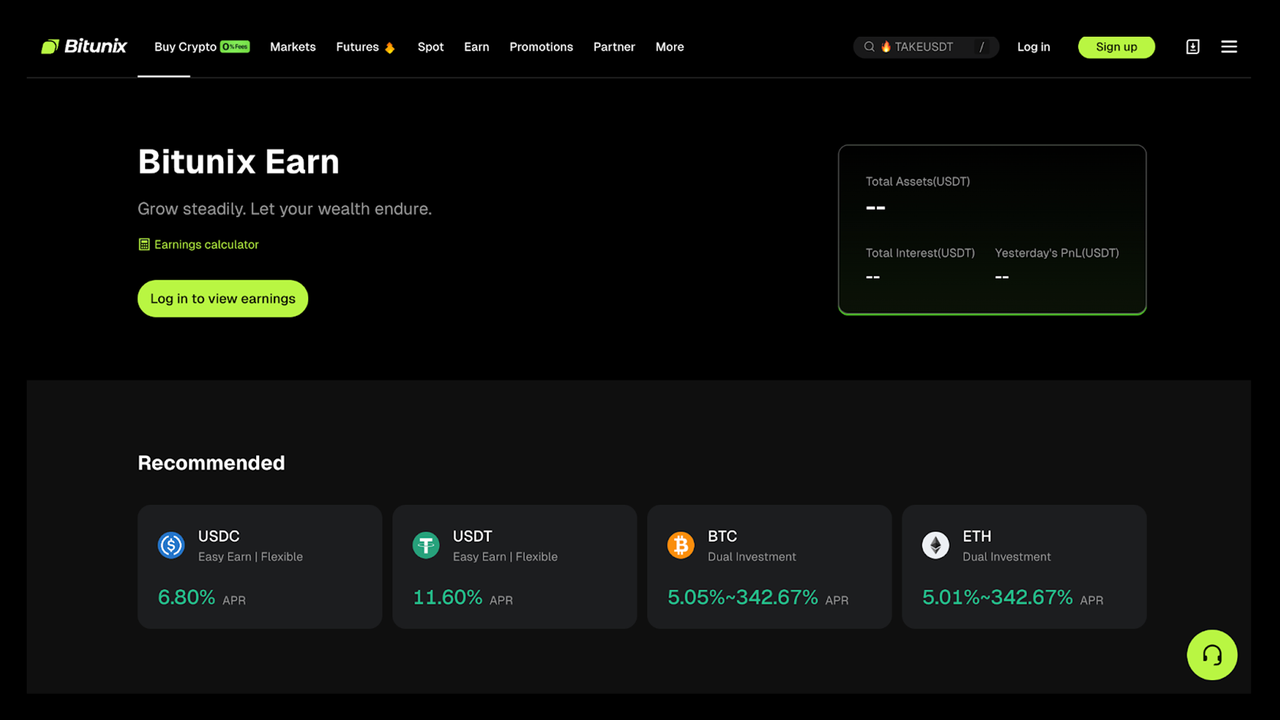
Not all platforms offer Bitcoin-earning features, but Bitunix Earn simplifies the process. Users can stake their Bitcoin for up to 5% APY with the easy earn feature and far more with dual investment.
Strategy 3: The Advanced Trader – Profiting from the Downtrend
Earning from downtrends by taking out short positions is extremely risky. It can result in massive losses and should only be used by traders with a high risk appetite who can absorb considerable drawdowns. Stories of short positions being liquidated and traders losing their entire portfolios are not uncommon.
But despite the risk, shorting has proven very successful for traders who use fundamental and technical analysis to anticipate downturns, so it is certainly a bear market strategy worth understanding, even if you do not plan to use it immediately.
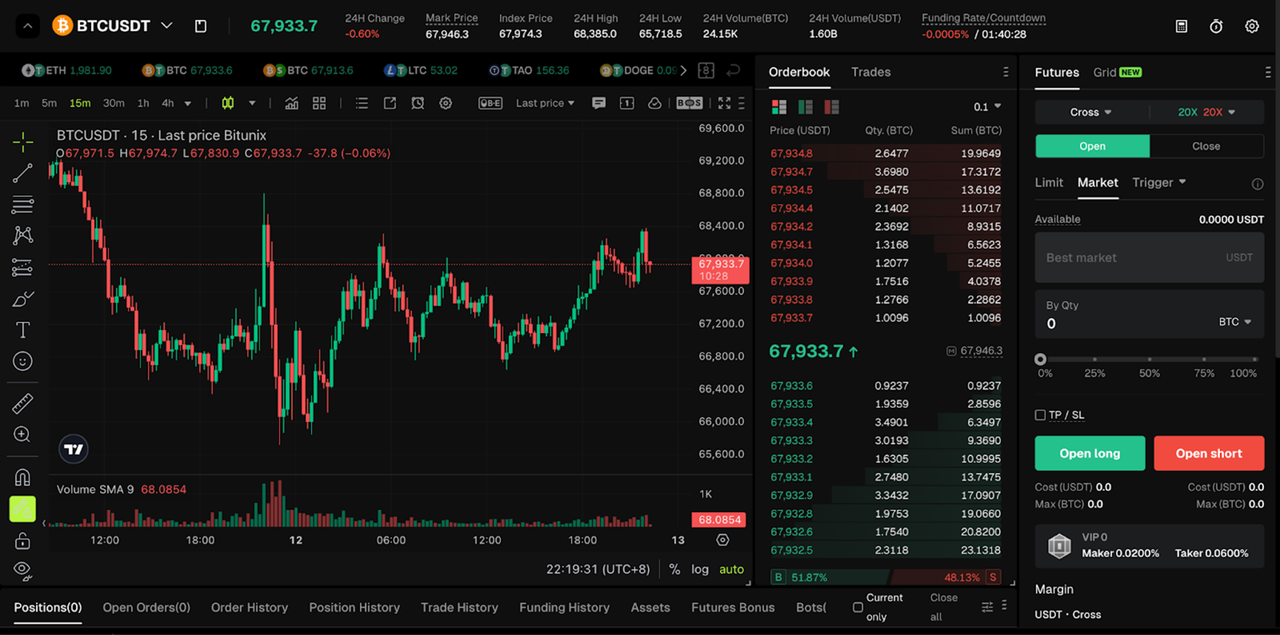
Short selling is done through futures contracts. Instead of buying BTC and hoping the price rises, you open a short position, which means you are effectively selling BTC at the current price and aiming to buy it back later at a lower level. If the price falls, you keep the difference as profit. If price rises, losses increase, and without proper risk management, your position can be liquidated.
For example, on Bitunix Futures, a trader might open a BTC/USDT short when Bitcoin is trading at $70,000. If the price drops to $60,000, the trader can close the position and capture the $10,000 move (minus fees and funding). However, if BTC rallies instead, losses grow quickly, which is why leverage, position sizing, and stop-losses are critical when using this strategy.
Comparing Bitcoin Bear Market Options
Final Thoughts on What to Do in a Crypto Bear Market
Bitcoin bear markets come and go. It is part of the natural Bitcoin cycle, but that does not make them any less painful for long-term holders. Strategies such as dollar-cost averaging and the Bitunix Earn features allow users to build their positions and earn returns even as the bear market rages on.
Another option for generating profit during a Bitcoin bear market involves opening short positions, and while this can produce large returns, it is also extremely risky. To get started with any of these features, sign up for Bitunix or download the application and start trading.
FAQs
How long do Bitcoin bear markets usually last?
Historically, Bitcoin bear markets have lasted anywhere from several months to over a year, depending on macro conditions and liquidity.
Should I sell all my Bitcoin in a bear market?
Selling everything is rarely ideal. Many investors prefer DCA or partial profit-taking while keeping a core long-term position.
What is a “bull trap” and how do I avoid it?
A bull trap is a short-lived price bounce that tricks traders into buying before the downtrend resumes. Waiting for confirmation from volume, moving averages, and RSI can help avoid entering too early.
Is it a good idea to buy altcoins during a Bitcoin bear market?
Altcoins often fall harder than Bitcoin during bear markets. While opportunities exist, they carry higher risk, especially for newer or low-cap projects without proven resilience.
What is Bitcoin “halving” and how does it affect market cycles?
The halving cuts Bitcoin mining rewards in half roughly every four years, reducing new supply. Historically, this has preceded major bull cycles, although timing and impact vary.
How do I know when the bear market is over?
There is no exact signal. Traders typically look for higher highs, higher lows, improving RSI, rising volume, and broader market sentiment shifting from fear to optimism.
What are the safest ways to store my Bitcoin during a bear market?
Many users move funds to hardware wallets for long-term storage, while others keep assets on reputable exchanges with strong security if they plan to trade or earn yield.
Besides DCA, are there other ways to accumulate?
Yes. Some traders use staking, yield products, or strategic limit orders to gradually build positions while prices remain depressed.
What are the risks of yield farming or staking products?
Risks include smart contract vulnerabilities, platform risk, impermanent loss, and changing reward rates. Always understand where your funds are deployed before committing capital.
Where can I track the overall sentiment of the crypto market?
You can monitor sentiment using tools like the Fear and Greed Index, on-chain metrics, social media trends, and volume data across major exchanges.
Glossary
- Bear Market – Prolonged period of falling prices and negative market sentiment
- Dollar-Cost Averaging (DCA) – Investing fixed amounts regularly regardless of price
- Short Selling – Profiting from price drops by selling first and buying back lower
- RSI (Relative Strength Index) – Momentum indicator showing overbought or oversold conditions
- Moving Average – Indicator smoothing price data to identify trend direction
- Bull Trap – Temporary price bounce that quickly reverses lower
- Staking – Locking crypto to earn rewards while supporting a blockchain network
- Fear and Greed Index – Metric measuring overall crypto market sentiment
About Bitunix
Bitunix is a global cryptocurrency derivatives exchange trusted by over 3 million users across more than 100 countries. The platform is committed to providing a transparent, compliant, and secure trading environment for every user. Bitunix offers a fast registration process and a user-friendly verification system supported by mandatory KYC to ensure safety and compliance. With global standards of protection through Proof of Reserves (POR) and the Bitunix Care Fund, Bitunix prioritizes user trust and fund security. The K-Line Ultra chart system delivers a seamless trading experience for both beginners and advanced traders, while leverage of up to 200x and deep liquidity make Bitunix one of the most dynamic platforms in the market.
Bitunix Global Accounts
X | Telegram Announcements | Telegram Global | CoinMarketCap | Instagram | Facebook | LinkedIn | Reddit | Medium
Disclaimer: Trading digital assets involves risk and may result in the loss of capital. Always do your own research. Terms, conditions, and regional restrictions may apply.